Why Social Media Reputation Management Matters More Than Ever
Social marketing and online reputation management is the practice of monitoring and influencing your brand’s perception across all digital channels. It combines proactive content creation with reactive crisis management to build trust and drive revenue.
Effective reputation management involves:
- Social listening: Tracking brand mentions and conversations.
- Review management: Responding to customer feedback on sites like Google and Yelp.
- Content strategy: Creating content that reinforces a positive brand image.
- Crisis response: Quickly addressing negative feedback and threats.
- Performance measurement: Tracking sentiment, response times, and review ratings.
Why does it matter? More than half of shoppers research brands before buying, and 60% avoid businesses with negative reviews. Conversely, 74% of consumers trust a business more after seeing positive reviews. Your digital reputation directly impacts revenue—companies with ratings between 1.1 and 1.5 stars earn 33% less than better-rated competitors.
The challenge is constant. With 5.04 billion social media users and 73% expecting a brand response within 24 hours, maintaining a positive presence requires vigilance.
I’m Rusty Rich, founder of Latitude Park. For over 15 years, I’ve helped businesses, especially franchises, build and protect their online reputations. I’ve seen how a proactive social marketing and online reputation management program transforms brands into trusted industry leaders.
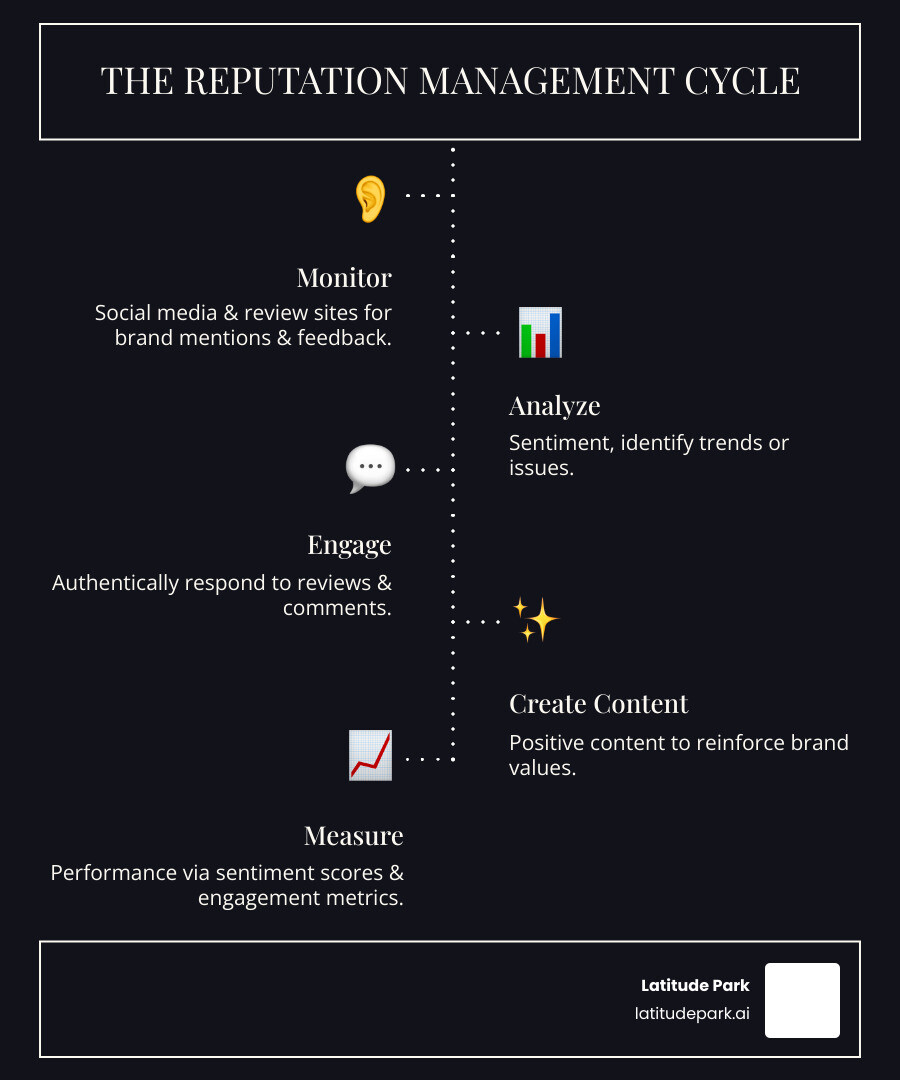
Why Your Digital Reputation Is Your Most Valuable Asset
Your brand’s online reputation is the foundation of your business success. Every review and social media comment shapes how potential customers see you.
Think about your own buying habits. Most of us check reviews before a significant purchase. This shift means digital word-of-mouth is incredibly powerful. In fact, a Brightlocal study found that 42% of customers trust reviews as much as personal recommendations.
The numbers are sobering: 95% of people share bad experiences online, while only 87% share positive ones. This imbalance means one negative review can cost you up to 30 customers. Even worse, 60% of consumers have avoided a business entirely due to negative reviews. The good news? Positive reviews make 74% of consumers trust a business more. By actively managing your reputation, you build an asset that works for you 24/7. Are Online Reviews Important? Yes, and Here’s Why explores this further.
The Financial Impact of Online Perception
Your online reputation directly affects your bottom line. Companies with ratings between 1.1 and 1.5 stars see 33% lower revenue than their better-rated competitors.
A strong online presence lowers your customer acquisition cost. Customers who see positive reviews arrive ready to buy, improving your sales conversion rates without extra ad spend. Conversely, negative reviews cause real financial damage, deterring dozens of potential customers. Volume also matters; an estimated 60% of consumers consider the number of online reviews a business has crucial. A business with fifty 4.5-star reviews is often more trusted than one with five perfect 5-star reviews.
The star rating threshold is clear: customers rarely trust companies with ratings below 4 stars. Why Having Great Online Business Ratings Will Help Your Company Succeed details how ratings impact revenue.
Your reputation also affects talent acquisition. 84% of job seekers consider an employer’s reputation important. Positive employer branding attracts twice as many applicants and reduces recruitment costs.
Building Customer Trust and Loyalty
Consumers no longer trust traditional advertising; 84% tune it out. They value transparency and authenticity. 94% of customers are more likely to trust brands that demonstrate transparency. Being open about your business practices and values builds brand credibility.
However, transparency isn’t enough. Customer engagement turns trust into loyalty. Yet, 75% of companies don’t respond to customer feedback. This is a missed opportunity, as 53% of customers expect a response to their reviews, and 73% of social media users expect a reply within 24 hours. For negative reviews, 53% of customers expect a response within a week. Responding quickly and empathetically shows everyone that you care.
This is the core of effective social marketing and online reputation management: engaging authentically to build lasting relationships and create brand advocates. Effective Strategies: Building & Managing Brand Online Reputation offers practical steps to protect and grow your brand.
The Core of Social Marketing and Online Reputation Management
Social marketing and online reputation management involves both building and protecting your brand. Think of it as proactive work (creating positive content, encouraging reviews) and reactive work (addressing negative feedback, managing crises). Both are essential for a resilient online presence.
The foundation for both is social listening—a deliberate process of monitoring conversations about your brand, industry, and competitors. As Brian Wright, Head of Social Listening at Wells Fargo, noted, “Social listening provides real-time insights for strategic decision-making.” It helps you spot trends and catch problems early.
Content creation is your proactive voice, shaping your brand’s narrative. Crisis management is your safety net, allowing you to respond quickly and transparently when issues arise. Given social media’s huge influence, these strategies are essential. Digital Media Marketing: The Impact of Social Media explores this impact in detail.

Proactive Strategies: Building an Unshakable Reputation
A strong reputation is built through consistent, intentional effort.
One of the most powerful proactive strategies is actively encouraging customer reviews. Make it easy for happy customers to share their experiences via email, text, or QR codes. Since positive reviews make 74% of consumers trust a business more, this is crucial. A steady stream of authentic testimonials is key, as an estimated 60% of consumers consider the number of online reviews a business has crucial. Learn more in our guide to a Proactive Online Review Strategy: Importance.
Amplify user-generated content by sharing customer posts (with permission) to turn satisfied clients into brand advocates. Use high-quality content marketing—blogs, social updates, videos—to position your brand as a trusted industry resource and control your search engine narrative.
Finally, use social media monitoring to stay aware of conversations and empower your team through employee advocacy. Authentic promotion from employees generates powerful positive sentiment.
Reactive Strategies: The Art of Responding and Repairing
Negative feedback is inevitable. How you respond defines your brand.
When you see negative reviews or comments, respond quickly (ideally within 24 hours) with empathy. Acknowledge the issue, apologize if necessary, and offer to take the conversation offline to resolve it. This demonstrates accountability. The Google Reviews Management Guide offers practical advice for these situations.
A crisis communication plan is non-negotiable. Develop protocols, assign roles, and create messaging guidelines before a crisis hits. A swift, transparent response can strengthen your brand’s reputation.
Here are the essential do’s and don’ts for handling negative feedback:
- Do: Respond quickly, acknowledge concerns, apologize when appropriate, offer solutions, and stay professional.
- Don’t: Ignore criticism, get defensive, blame customers, use generic responses, or delete legitimate complaints.
Customers understand that mistakes happen. They are evaluating whether you care enough to make it right.
Leveraging Specific Social Media Platforms
With 5.04 billion users, social platforms are where brand perception is shaped in real time. Each platform has unique strengths.

- Facebook: With 3.049 billion users, it’s the top platform for marketers. Use it to build communities with diverse content and live Q&A sessions.
- Instagram: With 2.4 billion users and high engagement rates, it’s perfect for visual storytelling. Use Stories and Reels for authentic, behind-the-scenes content.
- TikTok: Now with over 1.7 billion users, it’s essential for reaching younger audiences through short-form videos, trends, and influencer partnerships.
- X (formerly Twitter): The hub for real-time engagement and customer service. Its speed is ideal for monitoring brand mentions and trending topics.
- LinkedIn: A vital B2B platform with over 1 billion members. Use it to build professional authority, share industry insights, and generate quality leads.
- YouTube: With 2.70 billion users, it’s a powerful platform for showcasing expertise through educational videos, product demos, and customer testimonials.
Choosing the right platforms is key. How to Find the Right Social Media Platform for Your Campaign can help you strategize your efforts.
Essential Tools, Technologies, and Tactics
Managing your online reputation manually is unrealistic. The right tools and technologies are essential for visibility and efficiency.
Reputation management tools act as your digital radar, tracking brand mentions and conversations in real-time. They compile feedback from review sites like Google and Yelp, giving you a comprehensive view of customer sentiment.
A key feature is sentiment analysis, which gauges the emotional tone (positive, negative, neutral) of online mentions. This transforms overwhelming data into actionable insights, helping you prioritize responses.
Reputation management and SEO also work together. A strong reputation signals credibility to search engines, boosting rankings. Smart SEO ensures positive content about your brand appears prominently in search results, which is vital since only 5% of users look past the first page of Google. How to Combine SEO and Social Media for Your Marketing Strategy explores this synergy.
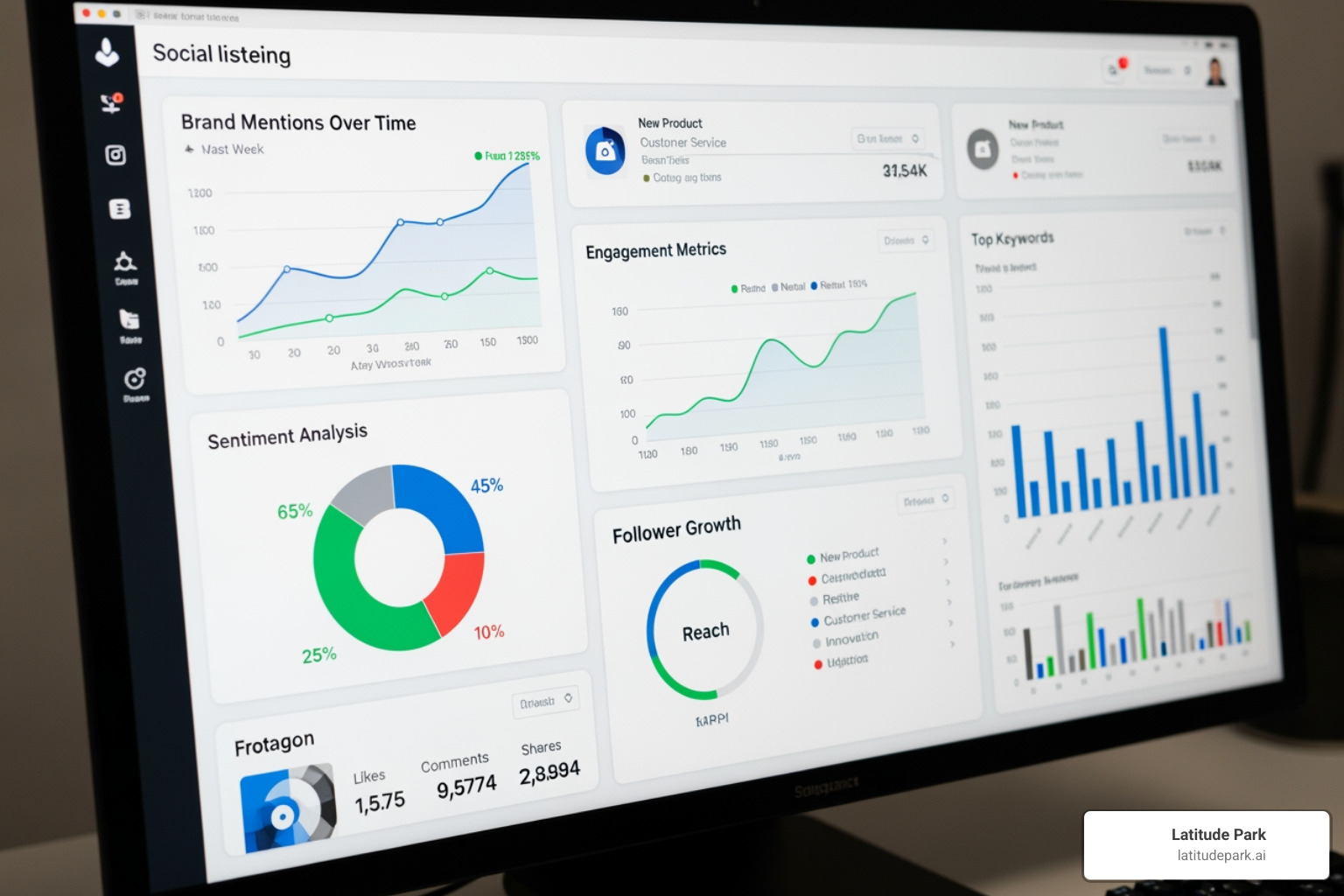
The Role of AI in Enhancing Social Reputation Management
Artificial intelligence is reshaping brand reputation management by providing efficiency and deeper insights.
- AI-powered sentiment analysis processes thousands of comments in seconds, allowing you to gauge customer sentiment at scale and spot trends early.
- AI chatbots handle instant customer inquiries on social media, ensuring prompt responses (which 73% of users expect) and freeing up your team for more complex issues.
- Predictive analytics analyze data to identify potential reputation risks before they escalate, changing reputation management from reactive to proactive.
- Content personalization uses AI to deliver the right message to the right audience, strengthening customer relationships.
For businesses facing complex challenges, professional services can amplify these AI capabilities. 11 Reasons to Hire Review Management Services for Your Business explains how expert assistance can lift your strategy.
Measuring Success: KPIs for Your Social Marketing and Online Reputation Management
If you don’t measure your efforts, you’re flying blind. Key Performance Indicators (KPIs) provide the data needed to refine your strategy.
- Sentiment Score: Quantifies whether online conversations are positive, negative, or neutral, acting as an emotional barometer for your brand.
- Share of Voice (SOV): Measures your brand’s share of the online conversation in your industry compared to competitors. A higher SOV indicates greater brand awareness. Learn more with our Social Media Competitor Analysis guide.
- Response Rate and Time: These KPIs track how quickly and consistently you engage with customers, directly impacting satisfaction.
- Net Promoter Score (NPS): Measures customer loyalty by asking how likely they are to recommend your business, which influences online reviews and sentiment.
- Online Review Ratings: Your average star ratings on Google, Facebook, and other sites are direct measures of customer satisfaction. Aim for a consistent 4-star-plus score to maintain trust.
Analyzing these KPIs provides a complete picture of your reputation’s health, turning reputation management into a strategic, measurable business function.
Frequently Asked Questions about Social Media Reputation Management
We hear these questions all the time from business owners navigating online reputation. Let’s clear up some common points.
What’s the difference between online reputation management and SEO?
Think of it like this: SEO helps people find you, while reputation management ensures they like what they find.
- SEO (Search Engine Optimization) focuses on improving your visibility in search results to drive organic traffic.
- Reputation Management focuses on shaping the overall perception of your brand across all digital channels, including social media, review sites, and forums.
The two are complementary. A great reputation (e.g., positive reviews) can boost your SEO rankings. In turn, SEO can be used to promote positive content, pushing down negative mentions in search results where only 5% of users look past the first page.
How long does it take to repair a damaged online reputation?
The timeline depends on the severity of the damage and the consistency of your repair efforts.
Minor issues, like a few negative reviews, can often be improved within a few weeks to a couple of months with prompt responses and a push for new positive content. Major crises or widespread negative sentiment can take several months or even a year of sustained, transparent effort to fix. Patience and persistence are key.
Should I delete negative comments or reviews?
In almost all cases, no. Deleting legitimate criticism can look like censorship and erode trust, often making the situation worse.
A better approach is to respond publicly, professionally, and empathetically. Acknowledge the customer’s experience, apologize if warranted, and offer to resolve the issue offline. This shows everyone that you are accountable and care about making things right.
The only exception is for comments that violate a platform’s policies, such as spam, hate speech, or fake reviews. These should be reported to the platform administrators for removal, rather than being deleted by you. This maintains transparency while protecting your brand from abuse.
Conclusion: Making Reputation Your Strategic Advantage
Your brand’s reputation isn’t a one-time project. Reputation management on social media is an ongoing conversation with your customers. When approached strategically, it’s not just damage control—it’s a powerful tool for sustainable growth.
Lasting success rests on three pillars: consistency, authenticity, and a proactive mindset. Consistency means showing up daily to monitor, respond, and create valuable content. Authenticity means being genuine, admitting mistakes, and celebrating wins with your community. A proactive approach means you’re always building goodwill, not just reacting to problems.
For complex organizations like multi-location franchises, this challenge is amplified. Managing brand perception across hundreds of unique local communities requires a specialized strategy that balances central brand standards with local responsiveness.
When you integrate strategic social marketing with diligent reputation management, you build a loyal community of advocates who drive referrals and growth. Your reputation transforms from a defensive shield into your most powerful competitive advantage.
The digital landscape will continue to evolve, but with the right strategies and commitment, your brand can stay golden in the eyes of your customers.
Learn more about our expert review management services and let us help you craft a reputation that shines.