
Franchise website designs: Winning 2025 Design
Why Franchise Website Designs Matter More Than Ever
Franchise website designs serve a dual purpose: they must attract customers and persuade entrepreneurs to invest. Your site is often the first impression for both audiences, so every design choice, from color palette to call-to-action placement, carries extra weight. The challenge is balancing brand consistency across potentially hundreds of locations while allowing for local customization.
Key elements of effective franchise website designs:
- Consistent branding to maintain trust
- High-quality imagery of products or services
- Clear navigation for both audiences
- Mobile responsiveness for the 62%+ of mobile traffic
- Dedicated franchise opportunity pages
- Social proof like testimonials and success stories
- Fast page load speeds to reduce bounce rates
- Prominent calls-to-action to drive conversions
A great site can significantly increase conversions and help secure funding. The difference lies in understanding what makes franchise website designs unique.
I’m Rusty Rich, President and founder of Latitude Park. With over 15 years of experience, I’ve helped franchises build digital presences that drive sales and recruitment. I’ve seen how the right design approach can transform a brand’s growth.
The examples ahead showcase real-world franchise websites that excel in specific areas, offering lessons you can apply to your own site.
The Blueprint for a Winning Franchise Website
Before we dive into examples, let’s cover the non-negotiables that separate amateur franchise websites from those that convert visitors into customers and franchisees. These elements form the blueprint for success, whether you’re launching your first location or managing hundreds.
Essential Design and Branding Components
Think of a McDonald’s anywhere in the world. You instantly recognize the golden arches and red-and-yellow color scheme. That’s the power of consistent branding, and your website needs to deliver that same recognition.
Your brand identity is in the details: the logo in your header, the specific color palette on every page, and the readable, on-brand fonts. Consistency builds visitor confidence. Chick-fil-A nails this, using its signature red and white to build trust. A potential franchisee sees the same visual identity that a customer does.
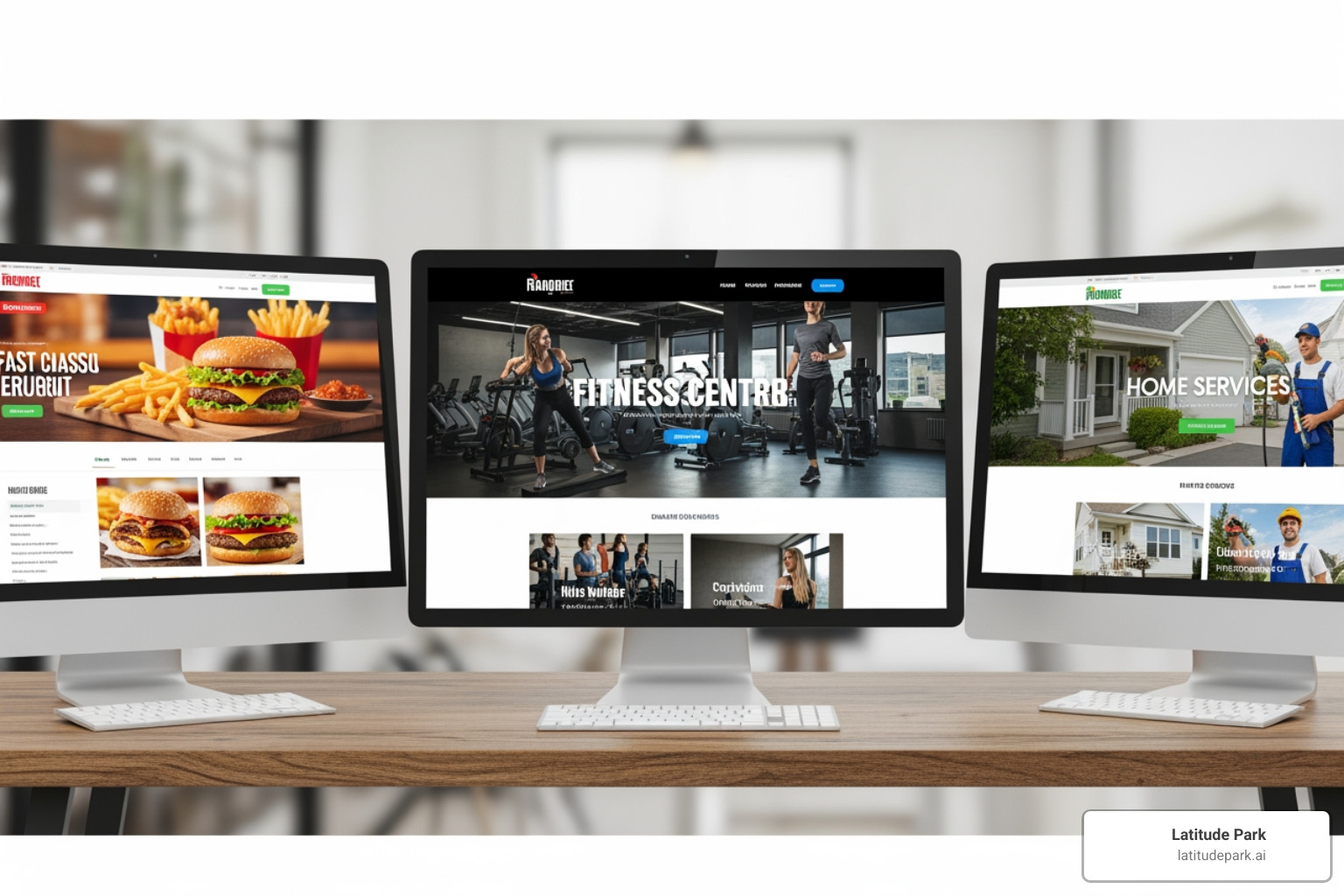
High-quality imagery communicates value faster than text. This is crucial for food franchises but just as important for service businesses showing their results. Your color palette triggers emotional responses; warm reds and yellows can stimulate appetite, while blues and greens convey trust. Use your brand’s colors consistently.
Finally, use web-safe fonts to ensure your message displays correctly on all devices. Ace Hardware uses clean, readable fonts that make information accessible everywhere. The goal is instant brand recognition and professional polish.
Creating an Intuitive User Experience (UX)
If visitors can’t find what they need in a few clicks, they’re gone. User-centric design anticipates what each visitor wants, whether it’s a customer ordering food or a potential franchisee seeking investment details, and provides a clear path.
RE/MAX understands this, making its home search tools prominent and effortless. This is deliberate design based on user needs. Use simple navigation with clear, broad categories. The UPS Store uses straightforward headings that prevent confusion.
Breadcrumbs (e.g., “Home > Services > Printing”) are small navigational aids that show users their location within your site’s structure, preventing them from getting lost. Learn more about breadcrumbs here. Your footer navigation is valuable real estate for important links that don’t belong in the main menu, such as your “About Us” page, contact info, and FAQs.
Building Trust and Showcasing Success
People are skeptical online. To convince them to buy or invest, you need proof that others have succeeded with your brand. Social proof is your secret weapon. Molly Maid integrates customer reviews directly on its site, letting real people share real experiences. This authenticity cuts through marketing noise.
Testimonials answer the visitor’s question: “Will this work for me?” A story from a successful franchisee provides a relatable roadmap for others. Video testimonials are even more powerful, building a genuine connection as viewers see and hear a real person’s success story.
For franchisee recruitment, case studies offer the detailed accounts serious investors need. They should cover challenges, corporate support, and profitability. The MaidPro Franchise website showcases franchisee stories to make the opportunity feel tangible. Authenticity is key; use real names, photos, and stories to convert skeptical visitors.
A Gallery of Inspiring Franchise Website Designs
Let’s explore how leading brands master specific aspects of web design, offering valuable takeaways for your own site.
Mastering Brand Identity and Storytelling
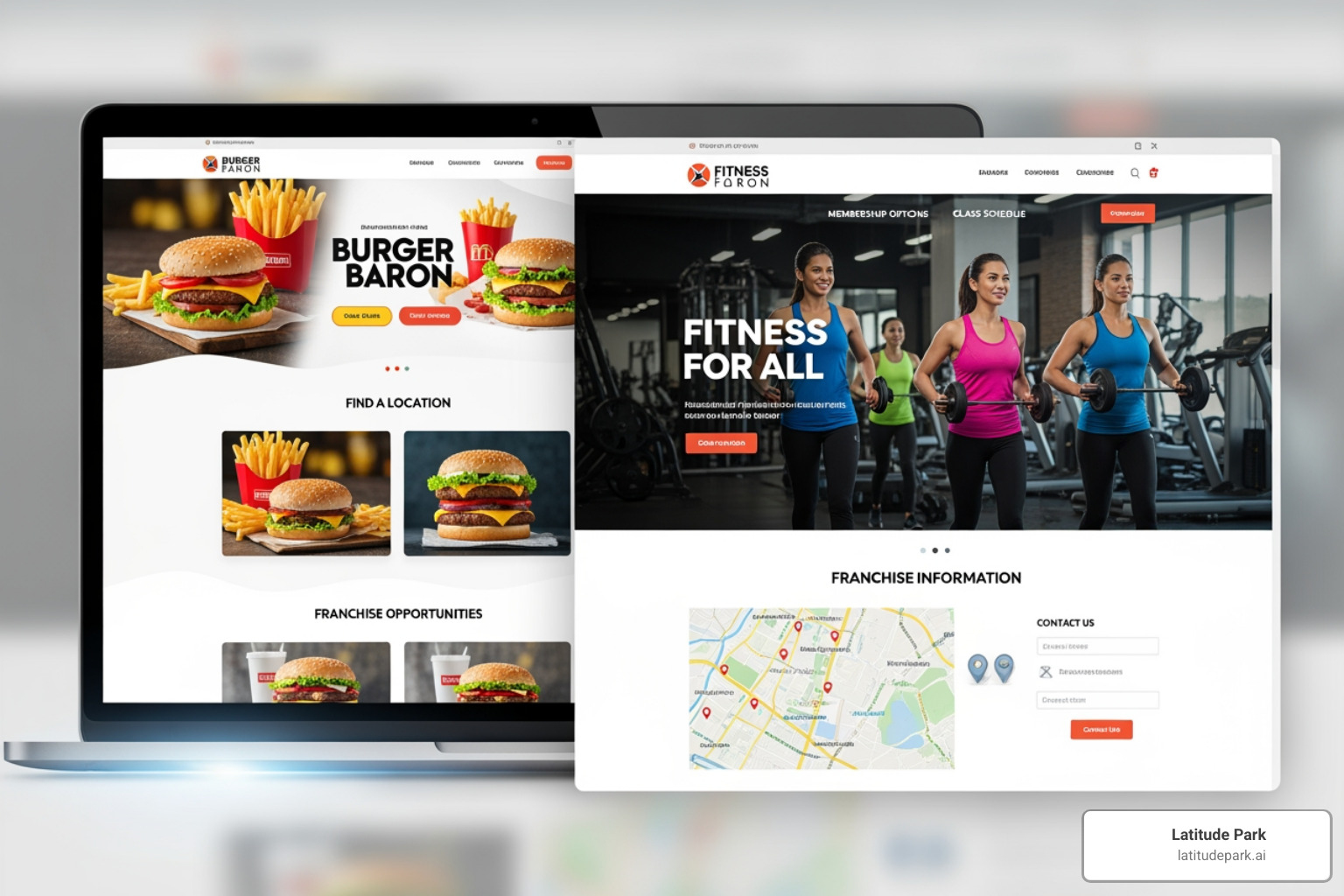
A franchise is a story and a promise. Effective franchise website designs weave this narrative into every element, making the brand instantly recognizable and resonant.
Here’s how top brands do it:
-
McDonald’s is a masterclass in brand recognition. Their website reflects this global identity with iconic red and yellow colors, creating a sense of familiarity. Their “Who We Are” section shares the founder’s legacy and brand promise.
-
Burger King uses high-quality, mouth-watering images to showcase its offerings. The modern design and appetizing visuals, balanced with clear calls-to-action, make its flame-grilled identity palpable.
-
Dunkin’ integrates its iconic pink and orange color scheme throughout its site. By blending graphics with authentic photos, their website feels vibrant and accessible.
Your ‘About Us’ or ‘Our Story’ page is vital. It shares the brand’s journey and values, humanizing the business and helping you attract like-minded franchisees.
Excelling in Lead Generation and Calls-to-Action (CTAs)
A beautiful website must also convert visitors. For franchise website designs, effective lead generation and strategic Calls-to-Action (CTAs) are the engines of growth, guiding users to take the next step.
Here’s how to make your CTAs effective:
-
Clear CTAs: Use unambiguous phrases like “Order Now” or “Join Our Franchise.” McDonald’s uses bold, attention-grabbing buttons.
-
Contrasting Colors: Make CTAs visually distinct from the rest of the page so they don’t get lost. Plato’s Closet effectively uses different colors for adjacent CTAs.
-
Action-Oriented Text: Use compelling text that tells the user what’s next, such as “Get a Free Quote” or “Download Our Franchise Kit.”
-
Lead Capture Forms: Keep forms simple and place them where they are easy to find to collect contact information from interested prospects.
-
Pop-up Email Signups: When designed well, pop-ups can be highly effective. BatteriesPlus offers a discount in its pop-up, creating a valuable exchange.
-
Streamlined Processes: A frictionless online ordering process is key. Papa John’s has a notable checkout that makes it easy to order, reducing frustration and increasing conversions.
Showcasing the Franchise Opportunity
Your website is a critical recruitment tool. Showcasing the franchise opportunity effectively is essential for attracting qualified candidates.
Here’s how leading franchise website designs excel:
-
Dedicated “Franchise With Us” Pages: Create a specific section for franchising. Subway’s Franchise Sales Website offers a user-friendly experience with comprehensive details on the process.
-
Clear Franchise Process: Break down the journey into digestible steps, from inquiry to opening day, to explain the process.
-
Transparent Investment Details: Clearly outline costs, fees, and financial qualifications to build trust and pre-qualify candidates.
-
Testimonials from Existing Owners: Hearing from successful franchisees is powerful. The MaidPro Franchise website uses videos and stories to make the opportunity feel authentic.
-
Interactive Maps for Available Territories: Visualizing where one could open a business makes the opportunity more real. The Smoothie King Franchise Website uses an interactive map and a creative “recipe” metaphor for the ownership journey.
-
Support and Training Information: Detail your training programs, ongoing support, and marketing assistance to reassure prospects.
-
Brand Cohesiveness: The Baskin-Robbins Franchising website uses its new logo and vibrant color palette to project professionalism, which is crucial for attracting serious investors.
Technical Must-Haves for Modern Franchise Websites
A beautiful website is useless if it’s slow or broken on mobile. The technical foundation of your site determines whether visitors stick around. A site that loads slowly, doesn’t work on mobile devices, or excludes users with disabilities is actively costing you customers and potential franchisees.
Mobile Responsiveness and Page Speed
With over 62% of global website traffic coming from mobile devices, a poor mobile experience means you’re ignoring the majority of your audience.
Mobile-first indexing is how Google now operates. Since 2021, Google only considers the mobile version of your site for search rankings. A clunky mobile experience will hurt your SEO, no matter how great your desktop site is.
Mobile responsiveness ensures your website automatically adapts to any screen size. Text should be readable and buttons easy to tap without zooming. Fast loading times are also critical. If a page takes more than a few seconds to load, visitors will leave for a competitor. Domino’s understands this, with a site that loads quickly so you can start ordering without delay.
Google’s Core Web Vitals measure user experience. Key metrics include Largest Contentful Paint (LCP) for loading speed (under 2.5s), Cumulative Layout Shift (CLS) for visual stability, and Interaction to Next Paint (INP) for responsiveness (under 200ms). You can use Google’s free PageSpeed Insights tool to analyze your site’s performance and get clear recommendations.
Web Accessibility and ADA Compliance
An inaccessible website is like a storefront with stairs but no ramp for the 1.3 billion people with disabilities worldwide. Building accessible franchise website designs is not just about legal compliance; it’s good business and basic decency.
Inclusive design means considering people of all abilities from the start. This includes users with visual, auditory, motor, or cognitive impairments. Key accessibility features include:
- Screen Reader Compatibility: Use proper HTML structure so assistive technologies can read your content aloud accurately.
- Alt Text for Images: Provide descriptive text for images so users who can’t see them understand their purpose and context.
- Captions and Transcripts: Make video and audio content accessible to hearing-impaired users and those who prefer to read.
- Keyboard Navigation: Ensure your entire site can be steerd using only a keyboard, with clear visual focus indicators.
The WCAG 2.2 guidelines are the international standard for web accessibility. Following them helps you avoid legal risks and reach a wider audience. With only about 4% of US web pages being ADA-compliant, prioritizing accessibility gives you a significant advantage and shows that your brand values every potential customer and franchisee.
Frequently Asked Questions about Franchise Web Design
What are the biggest mistakes to avoid in franchise web design?
Several common, avoidable mistakes can undermine a franchise website:
- Inconsistent branding: When your logo, colors, or messaging differ between pages, it erodes trust with both customers and potential franchisees.
- Poor mobile experience: With over 62% of traffic coming from mobile and Google’s mobile-first indexing, a site that is difficult to use on a phone is actively harming your business.
- Slow page speeds: Visitors expect instant results. If your site takes more than a few seconds to load, they will leave.
- Unclear calls-to-action (CTAs): Visitors should know exactly what to do next, whether it’s ordering, calling, or filling out a form. Make your CTAs prominent and clear.
- Neglecting the franchisee audience: Many sites focus only on customers. Your website must have a clear path and dedicated information for entrepreneurs you want to recruit.
- Outdated information: Old promotions or incorrect contact details make your brand look unprofessional. Keep your site fresh and accurate.
How do you balance providing comprehensive information with a clean design?
Franchises have a lot of information to share, but cramming it all on one page is overwhelming. The key is strategic organization and clean design.
- Use strategic white space: Generous spacing gives your content room to breathe and helps important elements stand out. Pizza Hut uses this well to create an inviting feel.
- Employ drop-down menus: Organize extensive links into intuitive drop-down or mega menus to keep your main navigation clean.
- Create dedicated pages: Don’t try to explain everything on the homepage. Use dedicated “Franchise With Us” or “About Us” sections with sub-pages for detailed topics.
- Use accordions or tabs: For FAQs or service details, use interactive elements like accordions that let users expand only the content they’re interested in.
- Break up text with visuals: High-quality images, infographics, and videos make complex information easier to digest and more engaging.
Prioritize your most important information and make everything else easily accessible through clear navigation.
What are the key differences in design for various franchise industries?
While core principles apply everywhere, effective franchise website designs must adapt to industry-specific needs.
- Food franchises like Subway and Papa John’s depend on visual appeal. Their sites feature mouth-watering imagery and prominent “Order Now” CTAs. A seamless online ordering system is essential.
- Service franchises like Molly Maid must build trust. Their sites focus on testimonials, reviews, and clear service explanations. The goal is to convert interest into appointments, so booking forms and contact options are crucial.
- Real estate franchises like Century 21 function as sophisticated search tools. They require robust property search filters, interactive maps, and detailed listings. Functionality and immediate access to information are top priorities.
Each industry has a unique customer journey. A successful design recognizes these differences and tailors the experience accordingly.
Conclusion: Turning Design Excellence into Franchise Growth
So, you’ve seen how a fantastic website can truly be your franchise’s digital heartbeat. It’s that friendly face welcoming both eager customers and ambitious future owners. By putting careful thought into consistent branding, creating a super easy-to-use experience, and making your calls-to-action crystal clear, you’re building a platform that earns trust and gets real results. This foundation of strong franchise website designs is what sets you apart.
But a beautiful website, like a shiny new car, needs fuel to go places! A stellar design is an amazing start, but the next big step is making sure the right people actually see it. That’s where we, Latitude Park, come in. We’re experts in crafting smart advertising strategies, especially using Meta (Facebook) ads, to connect your franchise with precisely the audience you’re looking for. We love creating custom campaign structures that truly understand the unique needs of multi-location franchise businesses. We’ll help turn your website’s design brilliance into solid, measurable growth.
Ready to not just have a great website, but one that actively fuels your franchise’s expansion? Dive deeper into our expert insights on franchise website design and let’s get growing!