
Expect flat management fees of roughly $500 to $2,500 per month, with percentage-of-spend models layered on top at larger budgets. Those fees are invoiced separately from the ad spend Google bills you directly, so budget for both. We also offer managed Google Ads service at Latitude Park, and the sections below show how to compare any proposal.
Table of Contents
- What do Google Ads management fees look like at each budget level?
- Which pricing models do agencies use for Google Ads management?
- What does a Google Ads management fee usually include?
- Which costs sit outside the agency fee?
- Why do agencies charge different fees for the same account?
- What do sample monthly budgets look like?
- How should you handle account access, billing and ownership?
- What should you ask before hiring a Google Ads agency?
- Where we land on pricing: show the work
- Ready to compare a managed Google Ads partner?
- FAQ
- Sources
What do Google Ads management fees look like at each budget level?
Fees track the size and complexity of your account, but the bands are easier to read than most agency proposals make them look. Flat-fee components often run from $500 to $2,500 per month, and where you land inside that band depends on what you are asking an agency to actually do.
- Small accounts: Expect the low end of the flat-fee band. Scope is usually basic management: keyword and bid maintenance, a few ad copy tests, and a monthly report. Deep optimization, custom creative and multi-channel work rarely fit here.
- Mid-market accounts: Expect the middle to upper part of the band, or a percentage of spend. This tier usually buys weekly optimizations, structured reporting, search term cleanup and some creative tweaks.
- Enterprise or high-touch accounts: Expect custom quotes. You are paying for a dedicated strategist, cross-channel coordination, advanced measurement and frequent calls, not just someone nudging bids.
Published ranges vary by source and specialization. Search Engine Journal’s pricing discussion notes that costs depend on expertise, scope and pricing model, and that many agencies now favor effort- and results-based structures.
A cheap quote is not automatically a bad deal, and an expensive one is not automatically a good one. What matters is whether the hours behind the fee match the work your account needs.
Which pricing models do agencies use for Google Ads management?
Agencies generally pick from four models. Each one shapes incentives differently, so the model matters as much as the number.
- Flat monthly fee: You pay the same amount each month regardless of spend. It is predictable, easy to budget, and common for small and mid-size accounts. Published flat components often land between $500 and $2,500, as noted above.
- Percentage of ad spend: The agency takes a cut of what you spend. Surveyed providers have reported bands from about 7.5% to 15%, though that sample dates to 2018, so treat it as a rough norm rather than a current price list. The catch: the agency earns more when you spend more, whether or not spending more is the right call.
- Hourly: Rates are quoted per hour and fit audits, training sessions, one-off fixes and consulting. Clutch’s PPC pricing guide lists platform-specific hourly rates and notes that management fees sit apart from ad spend.
- Performance-based and hybrid: A base fee plus a bonus tied to leads, sales or return on ad spend. It sounds fair, and it can be, but only when tracking is airtight. If conversion data is messy, nobody agrees on what “performance” means.
Which one fits? A flat fee suits a stable account with a defined scope. Percentage pricing suits fast-scaling budgets where workload grows with spend. Hourly suits specific projects. Hybrid suits advertisers with clean revenue tracking who want the agency’s upside tied to theirs.
Whatever you choose, ask what happens when the numbers move. If your spend doubles, does your fee double? If it halves, does the agency’s attention halve too? A model that looks cheap at today’s budget can get expensive fast, and a flat fee that looks pricey can turn out to be the bargain once you scale.
What does a Google Ads management fee usually include?
Most retainers cover the same core work. The trouble starts when two agencies use the same words to describe very different amounts of effort.
- Typically included: account setup or restructuring, keyword research, bid and budget management, negative keyword upkeep, ad copy adjustments, and regular reporting.
- Often excluded or itemized separately: landing page builds, heavy creative or video production, third-party software licenses, and fixes to broken conversion tracking.
That second list is where surprise invoices come from. A landing page that converts badly can sink a well-run campaign, yet many agencies treat page work as a separate project with its own price.
“Reporting” is another word to pin down. A dashboard link and a screenshot count as reporting in some shops. In others it means a written analysis of what changed, why, and what happens next. Ask which one you are buying.
Pro Tip: Ask for a written deliverables list before signing: how many optimization sessions per month, which reports you will receive, and how “creative support” is defined.
If the proposal cannot answer those three items in plain language, the fee is covering more fog than work. A good contract also states what counts as out of scope and how extras get quoted, so nobody argues about it later.
Which costs sit outside the agency fee?
The management fee is only one line of your real monthly outlay. Google bills your ad spend to you directly, and management fees are independent of those click costs. Plan for both from day one, or cash flow will surprise you.
Beyond those two lines, expect some of the following:
- Third-party tools: call tracking, heatmaps, reporting platforms and bid software, often billed monthly.
- Creative and production: graphics, video, and ad assets, quoted per project.
- Landing page development: new pages, redesigns and A/B tests.
- Conversion-tracking fixes: broken tags and missing events are common, and repairing them is real work. Our guide to fixing Google Ads conversion tracking shows what that involves.
- Conversion rate work: ongoing testing to improve what happens after the click, as covered in these conversion rate optimization tips.
Account budgets can create separate billing rows. According to Google’s help page on account budgets, some advertising services are billed separately and can appear on separate invoice rows. Reading your invoice line by line saves arguments later.
One more thing worth knowing: the amount Google serves and the amount it bills can differ slightly because of delivery adjustments. Compare the served cost against what you were charged in your billing reports, so a small gap does not turn into a mystery.
Why do agencies charge different fees for the same account?
Two agencies can look at your account and quote very different prices. Usually the gap comes from a handful of factors.
- Account complexity: more campaigns, ad groups, locations and channels means more hours.
- Scope of services: creative, landing pages, conversion optimization and integrations each add work.
- Experience and specialization: a team that has managed your vertical for years charges more than a generalist, and may need fewer hours to find what works.
- Measurement needs: this one gets underrated. Industry research from AgencyAnalytics finds that agencies using transparent, closed-loop conversion tracking can prove ROI more easily, which moves the conversation from fee to revenue impact.
That last factor deserves attention. A fee that looks high but comes with revenue-level tracking can cost you less per sale than a cheap retainer you cannot evaluate. For a deeper look at what good reporting looks like, see our walkthrough of Google Ads data analysis.
When you compare quotes, line them up by scope first and price second. If one agency is quoting weekly optimization and another is quoting monthly check-ins, you are not comparing the same product.
What do sample monthly budgets look like?
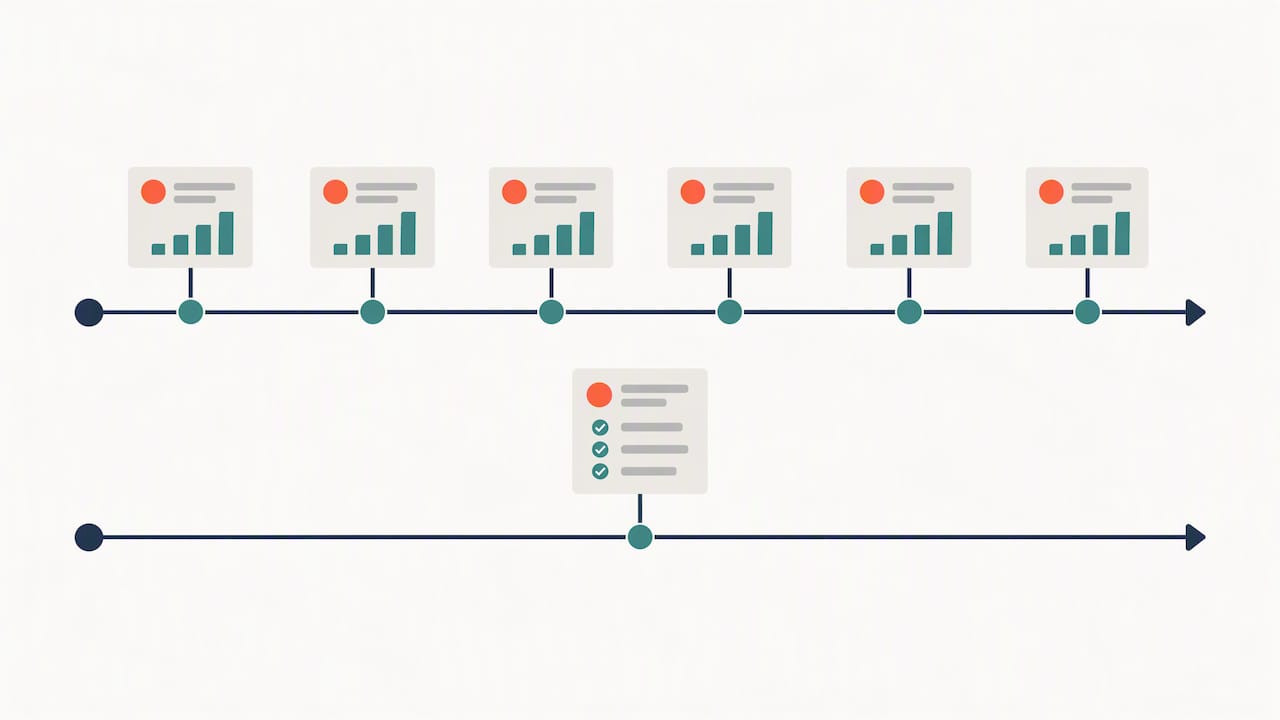
Here are three illustrative scenarios. The inputs are examples, not market data, and the arithmetic is simple so you can swap in your own numbers.
- Small budget: say you spend $2,000 per month on ads and pay a $500 flat fee. Add roughly $100 for a tracking tool. Total outlay: $2,600, so management and extras equal 30% of what you put into the auction.
- Mid-size budget with a percentage fee: say you spend $10,000 per month and the agency charges 10% of spend, which is $1,000. Add $300 for creative refreshes. Total outlay: $11,300.
- Hybrid pricing: say you spend $20,000 per month with a $1,500 base fee plus a 5% bonus on spend above $15,000, which is $250. Total fee: $1,750. Add $400 for tools and landing page tests. Total outlay: $22,150.
Notice how the flat fee dominates at low spend and fades at high spend. That is why a $500 retainer on a $2,000 budget deserves a hard look at expected return, while the same fee on a $20,000 budget is a rounding error.
There is also a practical threshold for in-house work. If your fee would eat a large share of your ad budget, and you have someone with time to learn the platform, managing it yourself can make sense. Once spend and complexity grow past what one part-time person can monitor, a managed team usually pays for itself.
How should you handle account access, billing and ownership?
Ownership is the part people skip until a relationship ends badly. A few habits protect you.
- Use a Manager (MCC) account. Google recommends creating a manager account and granting Standard or Admin access instead of handing over personal credentials. You keep ownership and can revoke access whenever you need to. Manager accounts also support consolidated reporting across accounts.
- Keep billing in your name unless you agree otherwise in writing, and document whether invoices flow through consolidated billing or direct agency invoicing. Google explains how to navigate billing from manager accounts.
- Check invoices against billing reports, including served versus billed cost, every month.
If an agency wants to run campaigns inside its own account and keep yours out of the loop, that is a red flag. Your campaign history, audiences and conversion data are assets, and they should stay with you.
What should you ask before hiring a Google Ads agency?
Treat the proposal like a product spec. Strong agencies welcome these questions, and weak ones start dodging.
- Which KPIs will you report on, and how do they tie to revenue rather than clicks?
- Who owns the ad account, and how do I get access to raw data?
- What does onboarding involve, and who does what in the first month?
- What are the cancellation terms and notice period?
- Can I see a sample report?
Transparency signals: itemized deliverables, sample reports, direct data access and plain language about what is out of scope. Red flags: guaranteed rankings or returns, refusal to grant account ownership, vague “optimization” with no cadence, and long lock-in contracts with no exit.
Pro Tip: Ask each finalist to explain how they would measure success during the initial engagement. Specific beats polished every time.
Where we land on pricing: show the work
Most pricing confusion comes from a simple habit: agencies sell the fee and hide the work. We think it should go the other way. Our approach at Latitude Park is AI-driven optimization, weekly touchpoints, and reporting tied to revenue and ROI instead of vanity metrics, so you can see what each dollar did.
At the start of the engagement, you should expect an account and tracking review, quick-win fixes, and a clear scope document that spells out what is included and what would be quoted separately. Come to early calls with your goals, your recent numbers and your budget range. A proposal should be easy to read and hard to misinterpret. If it takes a decoder ring to understand what you are paying for, the fee is the least of your problems.
— Rusty
Ready to compare a managed Google Ads partner?
If you want a clear picture of what managed Google Ads would cost for your account, we can start with a short consultation at Latitude Park. Before the call, gather:
- View access to your current ad account and conversion tracking setup
- Recent performance numbers, such as cost per lead or return on ad spend
- Your goals for the next quarter
- A realistic monthly budget range for ad spend and management
Our initial audit covers tracking health, quick wins, and how your budget lines up with your goals. If you are considering multiple platforms, our Google and YouTube ads page explains how we approach them. Book a consultation, bring your numbers, and we will give you a straight answer on scope and cost.

FAQ
Is $500 a month enough for Google Ads?
It can be, for a small local business with a narrow set of keywords. But $500 covers ad spend only, and a management fee comes on top, so the real outlay is higher. Start with tightly targeted campaigns and track every conversion.
Is $10 a day enough for Google Ads?
For low-competition local searches, $10 a day can generate steady clicks, but it limits testing speed. Keywords with expensive clicks will burn through it quickly. Focus on a few high-intent terms rather than spreading thin.
Why did Google Ads charge me more than my daily budget?
Google can overdeliver on a given day to balance out slower days, so your daily spend can exceed the daily budget while the monthly total stays within limits. Check Google’s billing guidance and compare served versus billed cost in your reports.
Are management fees included in what Google charges?
No. Agency fees are separate from the ad spend Google bills you. Budget for both, and confirm in writing how your agency invoices.
Sources
- Manage your spend in Google Ads – Google Ads Help
- PPC Management Pricing Guide: How Much Should You Charge in 2025? – AgencyAnalytics
- Ask A PPC: How Much Should PPC Management Cost?
- About access levels in your Google Ads account – Google Ads Help