Why Local SEO Makes or Breaks Franchise Growth
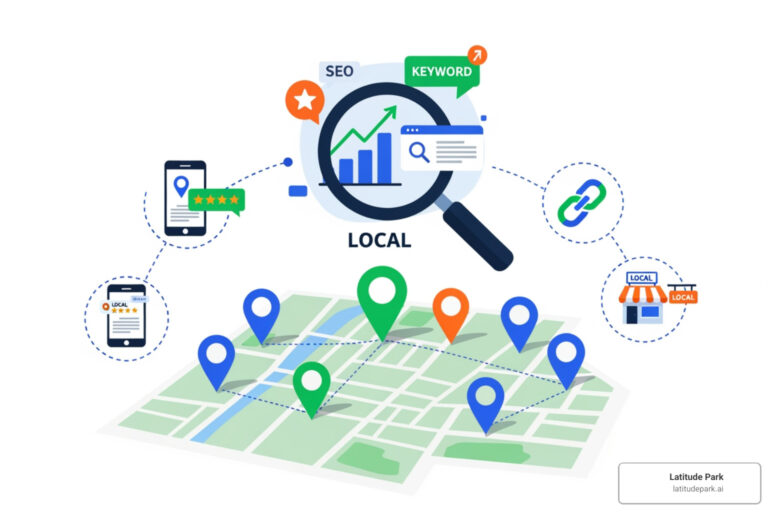
A local seo strategy for franchises optimizes each location’s online presence to rank in local search results, like Google’s Map Pack, when customers search for nearby services. Here’s what an effective strategy includes:
Core Elements of Franchise Local SEO:
- Google Business Profile optimization for every location
- Consistent NAP data (Name, Address, Phone) across all online platforms
- Unique location landing pages with local content and keywords
- Active review generation and management at each location
- Local citations in directories and industry-specific listings
- Location-specific schema markup to help search engines understand your business
- Community link building through local partnerships and sponsorships
- Centralized tracking to measure performance across all locations
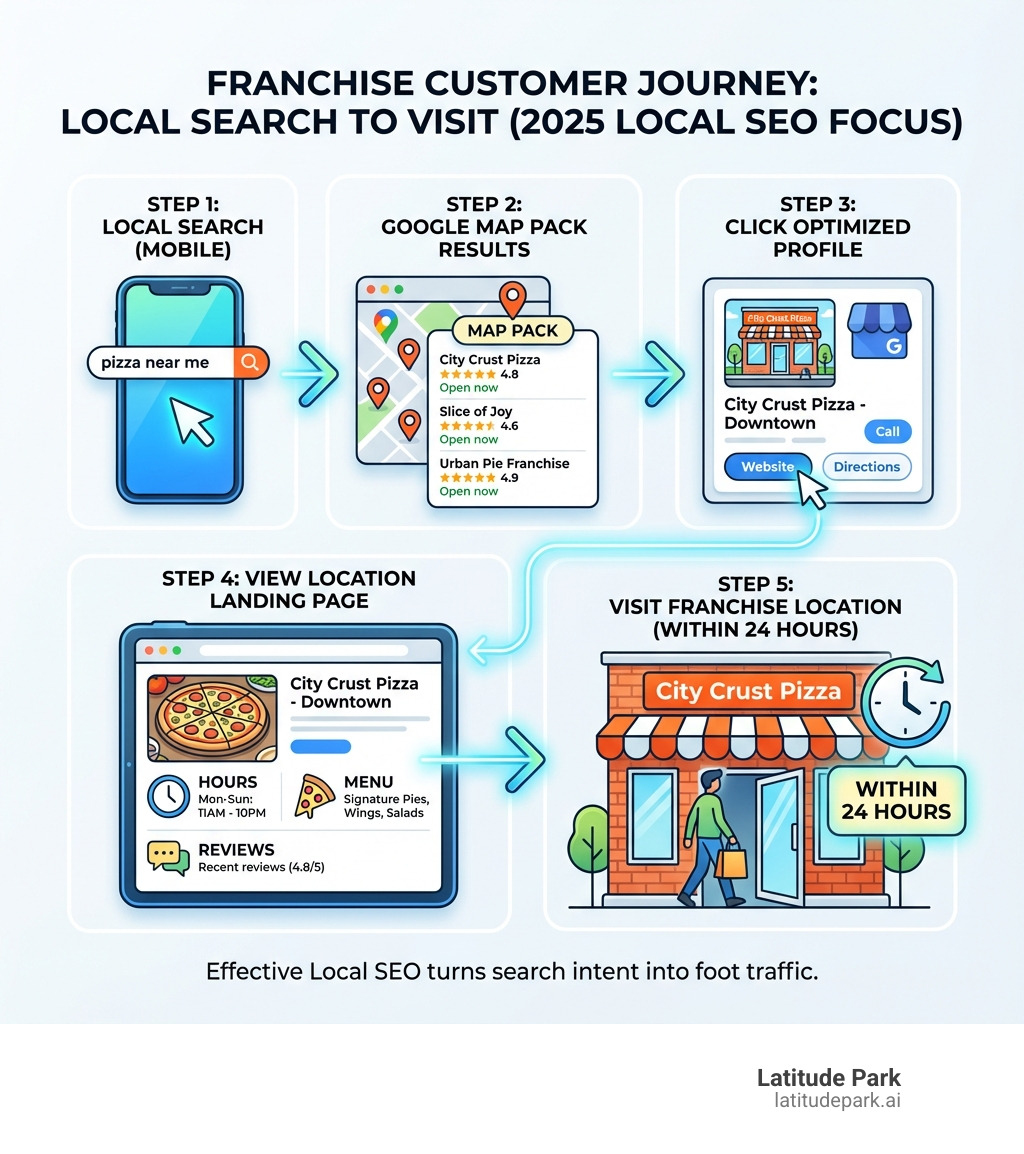
Consider this: 76% of mobile local searches result in a visit within a day. For franchises, this is a massive opportunity, but only if each location appears when customers search.
The challenge for franchises is balancing national branding with hyper-local ranking needs. Without a scalable framework, you risk duplicate content, inconsistent information, and locations becoming invisible to nearby customers.
Done right, local SEO turns “pizza near me” searches into customers, making the difference between a struggling franchisee and one with a steady stream of business.
I’m Rusty Rich, founder of Latitude Park. For over 15 years, I’ve helped franchises build cohesive local SEO strategies that drive growth. Our approach balances corporate oversight with local flexibility, ensuring every franchise benefits from brand authority and community relevance.
The Foundation: Building a Consistent and Scalable SEO Framework

Before tackling location-specific tactics, a strong, centralized foundation is essential. This section covers the core elements to standardize across your franchise network, forming the bedrock for local SEO success.
The Biggest Challenges in Franchise SEO
Franchise SEO is more complex than standard local SEO. Each location must rank locally while adhering to the national brand identity, which introduces several challenges:
- Duplicate Content Risk: Using templated content across location pages can confuse search engines, dilute ranking potential, and cause Google to ignore them.
- Inconsistent NAP Data: Minor variations in Name, Address, and Phone Number (NAP) across directories confuse search engines, erode trust, and harm rankings.
- Outdated Information: Managing accurate information across hundreds of profiles is a huge task. Outdated details lead to poor customer experiences and lost business.
- Balancing Corporate Control with Franchisee Flexibility: Striking the right balance between a unified brand voice and local franchisee autonomy is difficult. Too much control stifles local relevance; too little dilutes the brand.
- Scaling Efforts Across Many Locations: Managing GBP, citations, content, and reviews for hundreds of locations is overwhelming without a repeatable framework and the right tools.
Mastering NAP and Brand Consistency
The cornerstone of any successful local SEO strategy for franchises is unwavering consistency.
What is NAP (Name, Address, Phone)?
NAP refers to your business’s Name, Address, and Phone number. This fundamental information appears across your website, Google Business Profile, and various online directories.
Why 100% Consistency is Critical:
Search engines use consistent NAP data to verify your business’s location and legitimacy. Uniformity builds trust and directly impacts local pack rankings. For franchises, programmatic citation management is far more efficient than manual updates for ensuring this consistency.
Creating a Master Data Spreadsheet:
Maintain a master data spreadsheet for all locations. This central repository should hold the precise NAP, URL, hours, and other key details, serving as a single source of truth to prevent discrepancies when updating platforms.
The Role of a Brand Style Guide for a Unified Voice:
Brand consistency extends beyond NAP. A comprehensive brand style guide is vital for a unified voice and visual identity across all locations, dictating logo usage, colors, tone, and messaging. This ensures the core brand remains recognizable even with local customizations. As experts note, consistency is one of the most important elements of a successful branding campaign, and this is equally true for local SEO.
Structuring Your Franchise Website for Success
Your website’s architecture plays a crucial role in how search engines rank your franchise locations.
Subfolders vs. Subdomains (Subfolders Recommended):
We strongly recommend using subfolders (e.g., yourbrand.com/location-name/) on a single corporate domain. This structure centralizes SEO authority, leveraging the main domain’s power for all locations. Subdomains (e.g., location-name.yourbrand.com) can dilute authority, as search engines may treat them as separate sites.
Centralizing SEO Authority:
Consolidating location pages under one domain builds a powerful SEO asset. Links to the main site benefit all subfolder pages, boosting overall visibility and simplifying management.
Creating a Main Store Locator Page:
An intuitive store locator is essential. It should feature an interactive map and a list of all locations, with each linking to its dedicated page, providing a clear overview of your network.
Ensuring Mobile-Friendliness and Fast Load Times:
A responsive, fast-loading website is non-negotiable in a mobile-first world, where most local searches occur. Google recommends responsive web design and uses page experience, including Core Web Vitals like Largest Contentful Paint, First Input Delay, and Cumulative Layout Shift, as a ranking signal. Optimizing images, caching, and code improves these metrics, enhancing user experience and search rankings.
Your Essential Local SEO Strategy for Franchises

With a solid foundation, we can now focus on actionable strategies to help each franchise location dominate local search and connect with customers.
Dominating the Map Pack with Google Business Profile
Your Google Business Profile (GBP) is arguably the most critical component of your local SEO strategy, allowing your franchise to appear in Google Maps and the local 3-pack.
- The Role of GBP as the Cornerstone: Your GBP is the cornerstone of your local SEO strategy, controlling how your business appears in Google Search and Maps.
- Setting Up and Verifying Every Location: Each franchise must have its own verified GBP listing. This non-negotiable step for local visibility can be managed centrally via the Google Business Profile Manager.
- Optimizing Profiles: A complete GBP includes accurate primary and secondary categories, a full list of services/products, and all information fields filled out. For photos, aim high; listings with 100+ photos get significantly more calls, direction requests, and website clicks. Encourage franchisees to upload fresh images of their storefront, team, and products.
- Using GBP Posts: Regularly use GBP Posts to share location-specific updates, promotions, and events. This keeps your profile active and provides fresh content for customers.
- Managing the Q&A Section: Actively monitor and answer questions in the GBP Q&A section to show engagement and provide valuable information.
Building High-Converting Local Landing Pages
A dedicated, optimized landing page for each location is as vital as your GBP. It acts as a digital storefront, providing detailed information for users and search engines.
- Why Each Location Needs a Unique Page: To avoid duplicate content penalties and signal to Google that each location is a distinct entity, every franchise needs a unique landing page. Linking all GBPs to the corporate homepage is a major mistake. Use tools like Copyscape or Siteliner to ensure content is unique.
- Essential Elements for High-Converting Pages:
- Unique Local Content: Include a description highlighting local landmarks and unique aspects of that franchise.
- Local Keywords: Integrate terms customers in that specific city would use.
- Embedded Google Map: Make it easy for customers to get directions.
- Local Testimonials: Build trust with reviews from local customers.
- NAP and Hours: Clearly display consistent Name, Address, Phone number, and hours of operation.
- Clear CTAs: Guide visitors with buttons like “Call Now” or “Get Directions.”
- Local Photos and Bios: Add a personal touch with unique photos of the staff and storefront, and bios for the local owner or team.
- Example of a Well-Structured Location Page: Major brands like REI structure their locator page to lead to detailed individual store pages, which is a great model to follow.
Activating a Review and Reputation Flywheel
Online reviews are a colossal force in local SEO, influencing both rankings and customer decisions.
- The Power of Social Proof: Online reviews are powerful social proof. With 84% of people trusting them as much as personal recommendations, they directly influence customer choices.
- Strategies for Generating a Steady Stream of Reviews:
- Ask for Reviews: Train staff to politely request reviews from satisfied customers.
- Automate Requests: Use automated systems to send review requests via email or SMS after a purchase or service.
- Simplify the Process: Provide direct links or QR codes to your Google review page to make leaving feedback easy.
- Incentivize (Carefully): While you can’t incentivize positive reviews, you can offer a small incentive for leaving any feedback.
- The Importance of Responding to All Reviews: Responding to all reviews shows you value customer feedback. In fact, 88 percent of customers are more likely to use a business that responds to all reviews.
- For Positive Reviews: Thank the customer and invite them back.
- For Negative Reviews: Respond promptly and empathetically. Apologize if needed and offer to resolve the issue offline. A good response can turn a detractor into a loyal customer.
- Using Review Management Tools: For multi-location franchises, review management software is essential to centralize feedback, streamline responses, and ensure no review is missed. Aim for 10+ fresh, positive reviews per location, as these listings consistently outperform others.
Advanced Tactics to Outrank the Competition
With the basics covered, these advanced tactics build local authority and future-proof your franchise’s visibility.
Building Local Links and Community Authority
Local links are powerful signals that demonstrate your franchise locations are valued within their communities.
- Why Local Links are Powerful: Links from reputable local businesses, organizations, or news outlets signal to Google that your franchise is an important part of the community, boosting local authority and rankings.
- Local Link-Building Tactics:
- Sponsor Local Events: Partner with local sports teams, festivals, or charities to generate brand awareness and earn a link from the event’s website.
- Join the Local Chamber of Commerce: Membership often includes a valuable link from the Chamber’s authoritative local site.
- Partner with Local Businesses: Collaborate with complementary, non-competing businesses for reciprocal links and joint promotions.
- Issue Local Press Releases: Announce location-specific news (new hires, awards, community involvement) to local media to earn coverage and backlinks.
- Publish Local Data: Compile and publish unique data relevant to your industry to attract links from local news and blogs.
- Get Listed in Local Directories: Ensure you’re listed in relevant local and industry-specific online platforms.
Leveraging Structured Data (Schema Markup) for Visibility
Structured data, or schema markup, is code added to your website to help search engines better understand your content.
- What is Structured Data?: It’s code that helps search engines understand your content’s context. Google recommends the JSON-LD format.
- How it Helps Search Engines: It explicitly labels information like your address, phone number, or reviews, helping search engines process and display your content more accurately.
- Achieving Rich Results in Search: A key benefit is earning rich results—improved search listings with star ratings, FAQs, and other details. These make your listing stand out and can significantly increase click-through rates.
- Key Schema Types for Franchises: The most crucial is LocalBusiness, which marks up your NAP, hours, and more. Other useful types include Organization, FAQPage, Product, and AggregateRating.
- Validating Your Code: Always use Google’s Rich Results Test to validate your implementation. Google’s schema markup walkthrough also offers guidance.
Preparing Your local seo strategy for franchises for AI Search (GEO)
The search landscape is evolving with AI. Generative Engine Optimization (GEO) is about preparing your content for AI-powered search experiences.
- The Rise of Generative Engine Optimization (GEO): With AI’s integration into search, your content must be structured for easy digestion by AI systems that synthesize information to provide direct answers.
- Structuring Content for AI-Powered Answers:
- Question-Based Headings: Organize content with clear, question-based headings (H2s, H3s) that AI can easily parse for answers.
- Comprehensive FAQ Sections: Create dedicated FAQ sections with concise, accurate answers to common questions.
- Structured Content Formats: Use bullet points, numbered lists, and tables to present information clearly.
- E-E-A-T Signals: Demonstrating Experience, Expertise, Authoritativeness, and Trustworthiness is crucial. AI needs to see your franchise as a credible source. Showcase your team’s experience, earn local backlinks, and feature strong reviews. Including local employee profiles and information about the geographic area can also boost these signals.
Measuring Success and Choosing the Right Tools
You can’t improve what you don’t measure. Tracking performance across multiple franchise locations is complex but essential. This section covers the key metrics and tools to manage franchise SEO at scale efficiently.
Key Metrics for Your local seo strategy for franchises
Focus on “North Star metrics” that correlate directly with business growth, not vanity metrics.
- Local Pack Rankings: Track how individual locations rank for target local keywords (e.g., “service in [city]”). Use tools that can track rankings at the ZIP code level for granular insights.
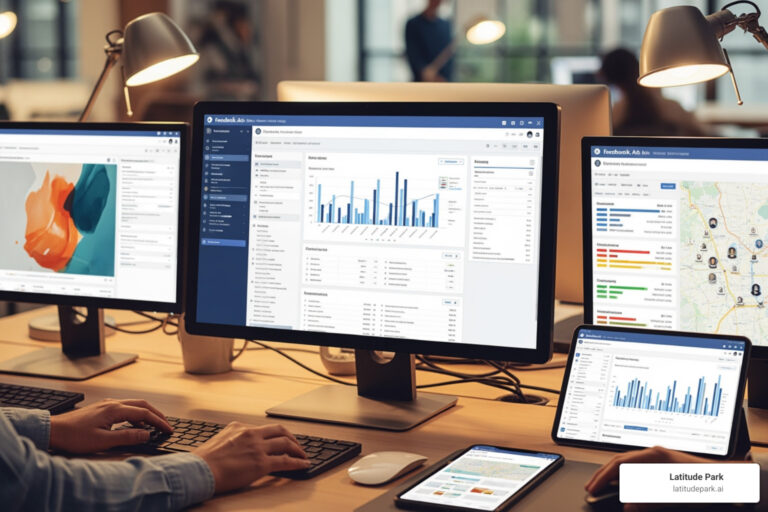
- Google Business Profile Insights: This is a goldmine of local performance data. Track metrics that directly reflect customer engagement: Views, Search Queries, Clicks to Call, Direction Requests, and Website Clicks.
- Organic Traffic and Conversions: Use analytics to track Organic Traffic to each location page and Conversions (e.g., form fills, bookings).
- Google Search Console and Google Analytics: These free tools are indispensable. Google Search Console provides data on impressions, clicks, and average position. Google Analytics helps track website traffic, user behavior, and conversions on your location pages.
The Best Tools for Managing Franchise SEO at Scale
Managing franchise SEO requires a robust tech stack. Here are the essential tool categories:
- Listing and Citation Management Platforms: These tools ensure NAP consistency across hundreds of online directories from a single dashboard, saving countless hours.
- Review Management Software: These platforms are invaluable for collecting, monitoring, and responding to reviews across all locations, helping maintain a strong online reputation.
- Local Rank Tracking Tools: Specialized tools track keyword rankings for each franchise location, often down to a specific ZIP code, to understand local performance.
- SEO Audit Tools like Ahrefs: Comprehensive SEO platforms like Ahrefs’ Site Explorer Tool and Keyword Explorer tool are essential for analyzing competitor websites, finding local keywords, and identifying technical SEO issues like duplicate content or slow page speed across your franchise network.
Frequently Asked Questions about Franchise Local SEO
Should each franchise have its own website or a page on the corporate site?
A dedicated page on the corporate site (e.g., brand.com/city) is the best approach. This subfolder structure consolidates SEO authority, simplifies management, and helps new locations rank faster by leveraging the main domain’s power. It’s superior to subdomains, which can dilute authority and require building SEO from scratch for each location.
How do you avoid duplicate content with hundreds of similar location pages?
Each location page must have unique content to avoid duplicate content issues. Include distinct local descriptions, staff bios, location-specific testimonials, and unique photos. Encourage franchisees to contribute this content. Tools like Copyscape and Siteliner can help identify duplication, as Google may ignore templated pages.
What’s the fastest way to improve a new franchise location’s local ranking?
The fastest way is to create and fully optimize its Google Business Profile. Ensure it’s verified with complete NAP data, correct categories, and high-quality photos. Concurrently, build foundational citations and encourage early customer reviews. Aiming for 10+ fresh, high-quality reviews per location can provide a significant ranking lift on Google Maps.
Conclusion: Turn Local Searches into Loyal Customers
A successful local SEO strategy for franchises hinges on a powerful combination of centralized brand consistency and deep, location-specific optimization. By building a solid foundation, mastering Google Business Profile, creating unique local content, and diligently tracking your performance, you can transform “near me” searches into measurable foot traffic and revenue for every single one of your franchisees. While the process requires dedication, the right framework makes it scalable and highly effective. At Latitude Park, we understand the unique challenges franchises face in the digital landscape. To see how a custom marketing strategy can accelerate your growth across all locations, explore our franchise SEO services.