Why Facebook Ad Campaign Optimization Is Your Competitive Edge
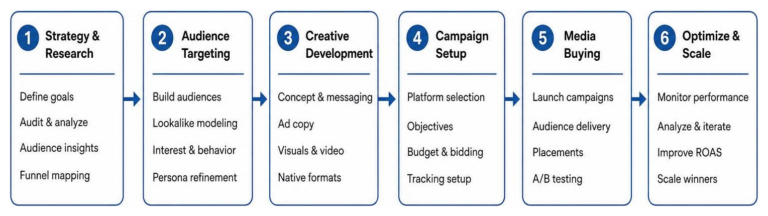
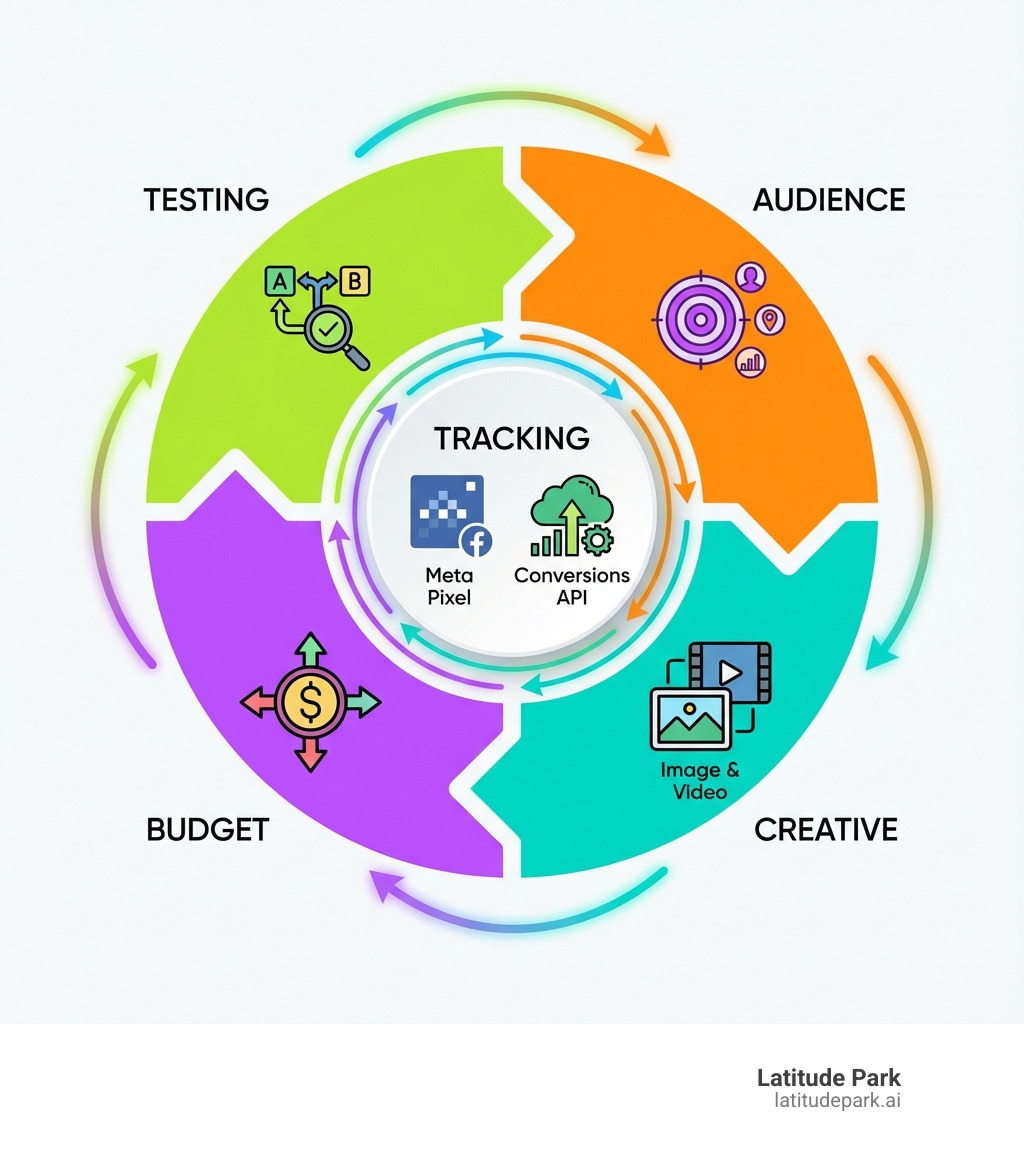
Facebook ad campaign optimization is the strategic process of improving your ad campaigns to achieve better results at lower costs. It involves a continuous cycle of refining your tracking, audiences, creative, budget, and bidding strategies to maximize performance.
With over 10 million advertisers on Facebook, simply boosting posts won’t cut it. The platform’s algorithm updates, privacy policy shifts, and savvy audiences mean that optimization is no longer optional—it’s essential for survival and growth.
The reality is that unmaintained campaigns see results decline rapidly. Social media advertising isn’t a “set it and forget it” game. Audiences experience ad fatigue, and their expectations shift. Without active management, your ads will be ignored.
But this is also your opportunity. Most advertisers settle for decent performance. To maximize your return on ad spend (ROAS), you must move beyond basic setup into strategic optimization. This means leveraging AI-driven automation and building campaigns that guide users from strangers to loyal customers.
I’m Rusty Rich, founder of Latitude Park, where I’ve spent over 15 years helping businesses and franchises build performance-focused digital advertising strategies. Through managing multi-channel campaigns and mastering Facebook ad campaign optimization for diverse clients, I’ve learned that the difference between mediocre and exceptional results often lies in the small, strategic details.
Related content about Facebook ad campaign optimization:
- ads for local
- google local services ads for home services
Laying the Foundation: Tracking, Objectives, and Funnel Strategy
This section covers the essential setup required before you can effectively optimize. It’s about telling Facebook what you want to achieve and giving it the data to do so.
The Unsung Heroes: Meta Pixel and Conversions API
Robust tracking is the foundation of any optimized campaign. The Meta Pixel (a code snippet on your website) and the Conversions API (a direct server-to-server connection) work together to give you a complete picture of ad performance. In an era of privacy changes like Apple’s iOS 14 updates, using both is a best practice. This dual approach ensures accurate event tracking, which is crucial for decreasing cost per result, improving ad targeting, and making profitable decisions.
Aligning Campaign Objectives with Business Goals
Once tracking is set, you must choose a campaign objective that aligns with your business goals. This tells Facebook’s algorithm what result to optimize for, directly influencing ad delivery and cost.
| Objective Category | Specific Objectives (Examples) | Primary Business Goal |
|---|---|---|
| Awareness | Brand Awareness, Reach | Build top-of-mind recall, maximize audience exposure |
| Consideration | Traffic, Engagement, Lead Generation, Video Views, App Installs, Messages | Drive interest and engagement, generate leads, get people to learn more |
| Conversions | Conversions, Catalog Sales, Store Traffic | Drive sales, sign-ups, specific actions on your website/app, physical store visits |
For example, a “Reach” objective is affordable for building brand awareness, while a “Conversions” objective is more expensive but targets users highly likely to make a purchase. Aligning your objective with your true business goal is paramount for effective Facebook ad campaign optimization.
Why You Must Optimize for Business Outcomes, Not Clicks
A common trap is optimizing for clicks. This tells Facebook to find “clicky users” who may browse but rarely convert. Instead, optimize for business outcomes. If you want sales, choose the “Conversions” objective and optimize for the purchase event. This ensures the algorithm finds people likely to take the action you truly value, leading to higher-quality traffic and a better return on ad spend.
Structuring for Success: The Full-Funnel Ad Strategy
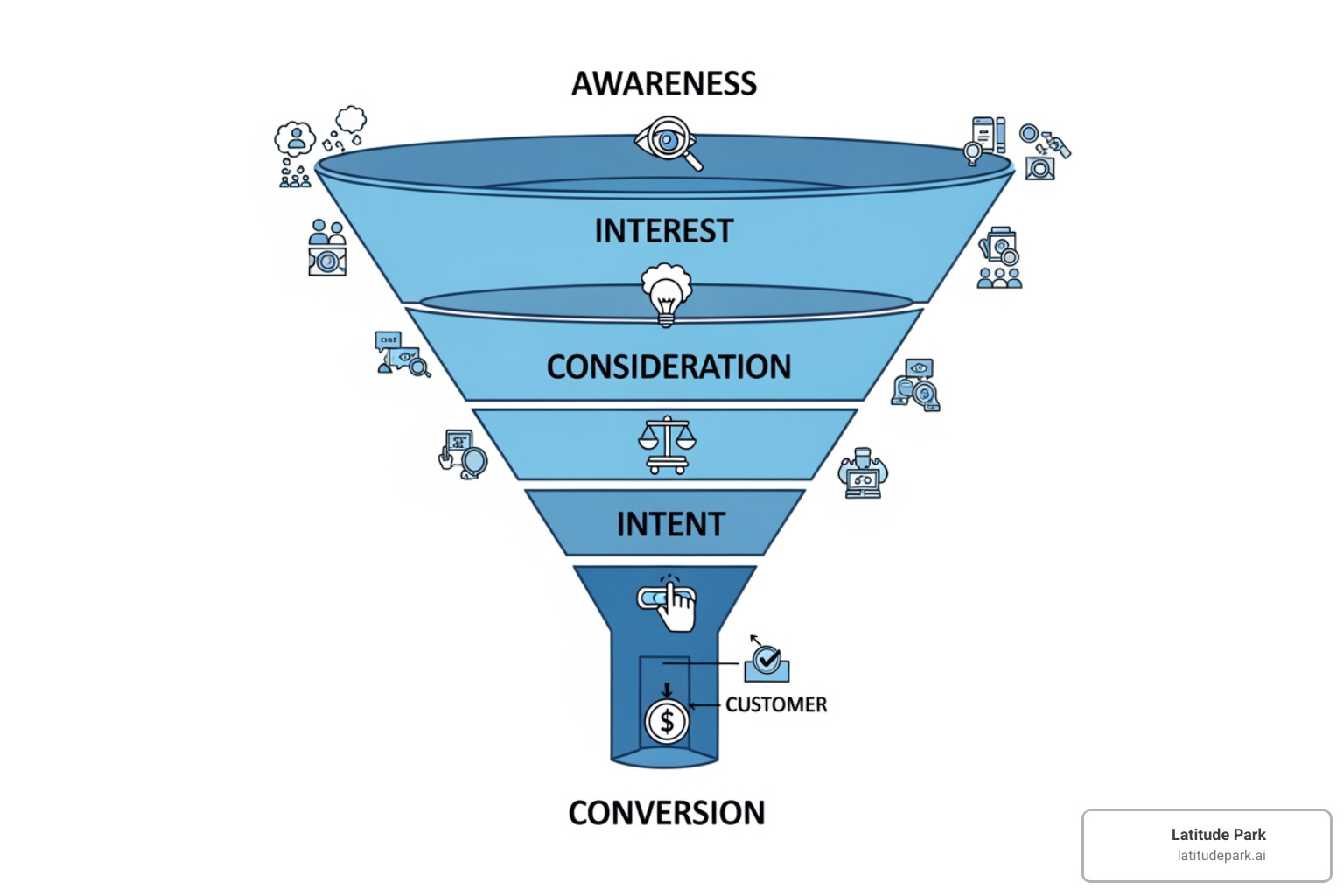
Most people won’t buy from a new brand immediately. A full-funnel strategy guides them through a journey from awareness to purchase.
- Acquisition Prospecting (Top-of-Funnel – TOFU): Introduce your brand to new audiences using broad targeting.
- Acquisition Re-Engagement (Middle-of-Funnel – MOFU): Nurture interest by driving engaged prospects to your website with more detailed content.
- Retargeting (Bottom-of-Funnel – BOFU): Convert warm prospects by targeting people who have already interacted with your business (e.g., website visitors).
- Retention: Build loyalty by encouraging repeat purchases and fostering long-term customer relationships.
This multi-stage approach ensures a steady flow of new customers and sustained campaign success.
Mastering Your Audience and Creative
This is where you define who sees your ads and what they see. Perfecting your audience and creative is crucial for resonance and engagement.
Defining and Refining Your Target Audience
A well-defined target audience ensures your message reaches the right people, increasing relevance and reducing wasted ad spend.
Here’s how we define and refine audiences:
- Detailed Targeting: Target users based on demographics, interests (e.g., “sustainability”), and behaviors that match your customer profile.
- Custom Audiences: Reach people who have already engaged with your business, created from website visitors, customer lists, or social media engagement.
- Audience Exclusions: Improve efficiency by excluding specific audiences, such as existing customers from a new-customer acquisition campaign.
Consolidating similar audiences can help campaigns exit the learning phase faster. However, avoid making audiences too narrow, as this can increase costs and cause creative fatigue.
Expanding Your Reach with Lookalike Audiences
Lookalike Audiences are a powerful tool for scaling. By providing a source (like your best customers), you can ask Facebook to find new people with similar characteristics. We typically test percentages from 1% (most similar) to 10% (broader reach). This is highly effective for finding qualified new customers in the prospecting and re-engagement stages of your funnel.
Choosing the Right Ad Formats
Selecting the right ad format helps your message land effectively. We experiment with different options to see what resonates.
- Image Ads: Simple and direct for showcasing products.
- Video Ads: Highly engaging for storytelling and product demos.
- Carousel Ads: Display up to 10 images or videos, perfect for multiple products or features.
- Collection Ads: A mobile-first, full-screen experience for browsing products directly in the ad.
Best Practices for Compelling Ad Creatives
Even with perfect targeting, a bad ad won’t perform. Creative quality is paramount.
- Use bold, high-quality visuals: Grab attention with vibrant colors, quality images, or motion (videos, GIFs).
- Craft a clear, compelling message: Highlight your unique value with benefit-driven copy.
- Include a strong Call-to-Action (CTA): Tell your audience exactly what to do next (e.g., “Shop Now,” “Learn More”).
- Repurpose high-performing organic content: Use posts with existing social proof (likes, comments) as ads for instant credibility.
- Respect the safe zone for Stories and Reels: Ensure key elements aren’t cut off in vertical formats.
- Use Meta’s creative tools: Features like dynamic creative automatically test combinations of images, headlines, and text to find the best-performing variations. For inspiration, check the Ads Library to see what competitors are running.
The Core Pillars of Facebook Ad Campaign Optimization
This section dives into the mechanics of how your budget is spent and how your ads compete in the auction, which are central to performance.
Budget Optimization: Advantage Campaign Budget (ACB)
Advantage Campaign Budget (ACB), formerly CBO, is a key feature for managing your ad spend. By setting a budget at the campaign level, you allow Facebook’s algorithm to automatically allocate funds to the best-performing ad sets. This takes the guesswork out of manual budget shifts and lets the system find the most cost-efficient opportunities, maximizing results across your entire campaign.
Leveraging Bid Strategies to Control Costs
Your bid strategy is crucial for competing effectively. While Facebook’s default “Highest Volume” strategy aims to get the most results for your budget, other options offer more control:
- Highest Value: Optimizes for the highest value conversions, not just the most conversions.
- Cost Cap: Sets an average cost per result you want to maintain.
- Bid Cap: Sets a maximum bid for any single auction.
- Minimum ROAS (Return on Ad Spend): Tells Facebook to aim for a minimum return on your ad spend, ideal for e-commerce.
Experimenting with bid strategies is key to finding what works best for your campaign goals and controlling costs.
Optimizing Ad Placements for Maximum Impact
Ad placements are where your ads appear across Meta’s apps (Facebook, Instagram, Messenger, Audience Network). For most campaigns, we recommend Automatic Placements. This allows the algorithm to deliver your ads where they are most likely to achieve your goals at the lowest cost. While Manual Placements can be used to target specific areas like Instagram Stories or Reels, giving the system more options usually leads to better overall performance.
The Importance of Landing Page Optimization
If a user clicks your ad and lands on a slow, confusing, or irrelevant page, you’ve wasted your money. A high number of clicks with few conversions often points to a landing page problem.
Landing page optimization is a critical, often overlooked, part of Facebook ad campaign optimization. Ensure your page:
- Is Consistent: Matches the branding, message, and offer in your ad.
- Has a Clear CTA: The primary call-to-action should be immediately visible.
- Loads Quickly: Slow pages kill conversions, especially on mobile.
- Is Mobile-Friendly: Most Facebook traffic is mobile, so a seamless experience is essential.
A poor landing page experience can also negatively impact your ad’s relevance score, increasing costs.
Testing, Analysis, and Scaling for Sustained Success
Optimization is not a one-time task. This section covers the ongoing process of testing, measuring, and scaling what works.
Advanced Facebook Ad Campaign Optimization with A/B Testing
A/B testing (or split testing) is how we systematically improve campaigns. By comparing different versions of an ad element, we can determine what performs best and continuously learn.
Common elements to test include:
- Audience: Demographics, interests, or different Custom/Lookalike Audiences.
- Creative: Images vs. videos, different headlines, or primary text.
- Placements: Automatic vs. specific placements like Instagram Stories.
- Call-to-Action (CTA): “Shop Now” vs. “Learn More.”
The key is to isolate one variable per test. Use the Facebook Experiments tool to set up clean tests and confidently identify a winner based on metrics like cost per result.
Preventing Ad Fatigue
Ad fatigue occurs when your audience sees your ads too frequently, causing performance to drop and costs to rise. It can set in quickly.
To prevent ad fatigue:
- Rotate Creatives Regularly: Swap in fresh images, videos, and messaging.
- Update Offers: Introduce new promotions or highlight different benefits.
- Expand Your Audience: A larger audience reduces ad frequency.
- Use Dynamic Creative: Facebook’s dynamic creative feature automatically mixes and matches ad components to keep things fresh.
- Monitor Frequency: If this metric climbs too high in Ads Manager, it’s time for a refresh.
Key Metrics to Monitor and Analyze
To optimize effectively, you must track the right data. Focus on the metrics that align with your business goals.
Key metrics to monitor:
- Results: The number of times your ad achieved its objective (e.g., sales, leads).
- Cost Per Result: The efficiency of your campaign in achieving its goal.
- Return on Ad Spend (ROAS): The revenue generated for every dollar spent on ads.
- CTR (Link Click-through rate): The percentage of people who clicked your ad after seeing it; indicates ad relevance.
- Frequency: The average number of times a person saw your ad; helps identify ad fatigue.
Use the reporting tools in Ads Manager to customize columns and break down performance by factors like placement, age, or gender to gain deeper insights.
Scaling with Automated Rules
Once you find a winning campaign, automated rules help you scale efficiently. These rules trigger actions based on conditions you set, saving time and protecting your budget.
Examples include:
- Automatically pausing ads if their Cost Per Result gets too high.
- Automatically increasing the budget for high-performing ad sets.
- Sending notifications for unexpected performance changes.
Automated rules help you scale winners and cut losers without constant manual oversight.
Frequently Asked Questions about Facebook Ad Optimization
How long does it take for Facebook ads to optimize?
Optimization is an ongoing process. New campaigns enter a “learning phase” that typically lasts until they achieve about 50 conversions within a 7-day period. However, optimization doesn’t stop there. Continuous monitoring and tweaking are necessary to adapt to audience behavior and prevent ad fatigue.
What is the Facebook “learning phase” and how do I manage it?
The learning phase is when Facebook’s system learns the best way to deliver your ads. Performance can be unstable during this time. To manage it, avoid making significant edits (to budget, targeting, or creative) that could reset the process. Also, consolidating your audiences can help you exit the learning phase faster by reaching the 50-event threshold more quickly.
What is ad fatigue and how can I prevent it?
Ad fatigue happens when your audience sees your ads too often, causing performance to decline. You can prevent it by regularly refreshing your ad creatives, testing new messaging, and monitoring your ad frequency metric.
Conclusion: Your Path to Peak Performance
Mastering Facebook ad campaign optimization is a continuous journey, not a destination. From laying a foundation with precise tracking to crafting compelling creatives, refining audiences, and constant A/B testing, every step contributes to maximizing your return on ad spend.
The digital advertising landscape is always changing. To stay ahead, we accept an iterative approach of testing, analyzing, and adapting. For franchise businesses facing the unique challenge of managing campaigns across multiple locations, a specialized approach is key. Latitude Park provides expert digital ads management custom to the complexities of franchise marketing, helping you scale effectively and achieve consistent results across your entire network. We’re here to help you turn your Facebook ad campaigns from zero to hero.