Why Multi-Location Marketing is the Key to Scaling Your Brand
What you need to know about multi-location marketing is this: it’s the strategic approach that allows businesses with multiple physical locations—whether franchises, retail chains, or service providers—to maintain a unified brand identity while tailoring marketing efforts to resonate with each local community. Unlike single-location marketing, which focuses on one audience in one place, multi-location marketing requires balancing corporate oversight with local relevance across dozens, hundreds, or even thousands of branches.
Here’s what matters most:
- Brand Consistency + Local Flexibility: You need the same logo, colors, and core messaging everywhere, but your Seattle store’s promotions should feel different from your Miami location
- Local SEO is Critical: Up to 99% of customers go online to find businesses locally, and 76% who conduct a local search visit a business within 24 hours
- Centralized Strategy, Localized Execution: Corporate sets the playbook, but local teams adapt campaigns to their community’s unique needs
- Technology Enables Scale: Without unified dashboards and automation, tracking performance across multiple locations becomes impossible
- Customer Trust Drives Revenue: Brand consistency can boost revenue by 23%, while just a 5% increase in customer retention can increase profits by 25%
When your business spans multiple locations, marketing isn’t just about reach—it’s about relevance. A campaign that works brilliantly in one city might fall flat in another due to differences in demographics, local competition, regional culture, or even weather patterns. The challenge lies in building a unified brand identity that customers recognize and trust, while simultaneously tailoring your messaging to connect with the specific audiences in each market you serve.
This is harder than it sounds. You’re managing different local managers with varying skill levels, tracking performance across fragmented data sources, allocating budgets fairly across high- and low-performing locations, and ensuring every branch adheres to brand standards while still feeling like part of the local community. Research shows that 94% of high-performing multi-location brands have a dedicated local marketing strategy, compared to just 60% of average performers—the difference between success and struggle often comes down to having the right approach.
As Rusty Rich, founder and President of Latitude Park, I’ve spent over 15 years helping franchises and multi-location businesses steer exactly these challenges, and what you need to know about multi-location marketing is that the right strategy turns geographic complexity into a competitive advantage. In this guide, I’ll walk you through everything you need to build a scalable, effective marketing system that drives growth across all your locations.
The Foundations: Why Multi-Location Marketing is Crucial for Growth
Operating a business with multiple locations offers tremendous opportunities for growth, but it also introduces a unique set of marketing complexities. At its core, multi-location marketing is about maximizing your brand’s presence and impact in every community you serve. A robust multi-location strategy isn’t just an option; it’s a necessity for sustained success.
A well-executed multi-location marketing strategy improves brand visibility and customer trust. When your brand appears consistently across local channels, it becomes more recognizable and top-of-mind, translating to stronger engagement and a competitive edge in local markets. These efforts also drive ROI: 98% of consumers used the internet to find local business information in 2022, and a 5% increase in customer retention can lead to a 25% profit increase. Tailoring campaigns to local needs while maintaining brand integrity boosts efficiency and conversion rates.
Understanding the Core Differences
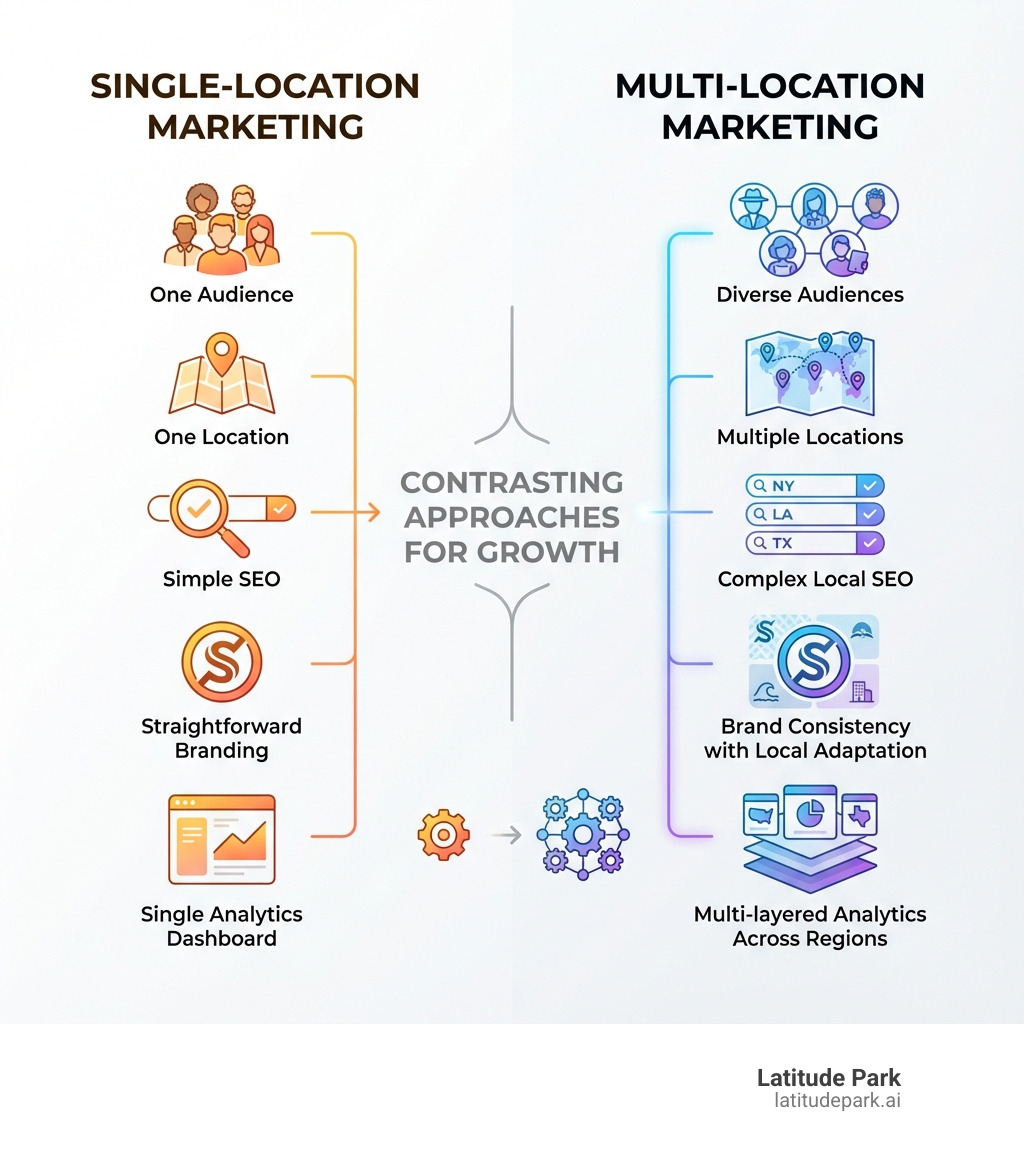
Single-location marketing focuses on one audience in one place. Multi-location marketing must balance a unified brand with local relevance across many micro-markets. Key differences:
- Audience: One local profile vs. diverse regional demographics and preferences
- SEO: Basic local SEO vs. complex, location-by-location optimization
- Branding: Simple consistency vs. consistency with local adaptation
- Analytics: Single dashboard vs. multi-layered reporting (store, regional, national)
The Foundations: Why Multi-Location Marketing is Crucial for Growth
Operating a business with multiple locations delivers scale but adds complexity. Multi-location marketing maximizes your brand’s presence in every community by pairing centralized strategy with local execution. Strong local visibility builds trust and conversions: 98% of consumers used the internet to find local business information in 2022, and a 5% increase in customer retention can lead to a 25% profit increase.
Understanding the Core Differences
Single-location brands optimize for one market; multi-location brands must adapt to many. That means managing brand standards while tailoring content, offers, and channels to local needs—and measuring performance across multiple levels.
- Brand Consistency: Ensuring every location adheres to brand guidelines while still allowing for local flavor.
- Budgeting and Resource Allocation: Fairly distributing marketing spend across locations with varying needs and performance.
- Data Fragmentation: Aggregating and analyzing performance data from countless local campaigns across different platforms.
- Communication Breakdowns: Keeping central marketing teams and local managers aligned and informed.
- Skillset Variances: Ensuring local teams have the marketing knowledge and tools to execute strategies effectively.
Challenge 1: Maintaining a Cohesive Brand Experience
Consistency in logos, colors, voice, and messaging protects brand equity. Customers buy from brands they recognize, and brand consistency can boost revenue by up to 23%. Create a clear brand guide, share templates, and audit local assets to deliver a predictable experience everywhere.
Challenge 2: Adapting to Local Market Nuances
Avoid one-size-fits-all campaigns. Demographics, competition, and culture vary by market. Research each region, tailor offers and creatives, and choose the right mix of channels (e.g., Instagram for younger audiences, mailers for homeowners) to maximize relevance and response.
Challenge 3: Measuring Performance and Proving ROI
Fragmented tools make it hard to see true performance by store, region, and nationally. Implement a unified reporting dashboard to monitor rankings, traffic, engagement, and conversions per location. This enables smarter budgeting and helps replicate wins across similar markets.
Essential Strategies for Multi-Location Success
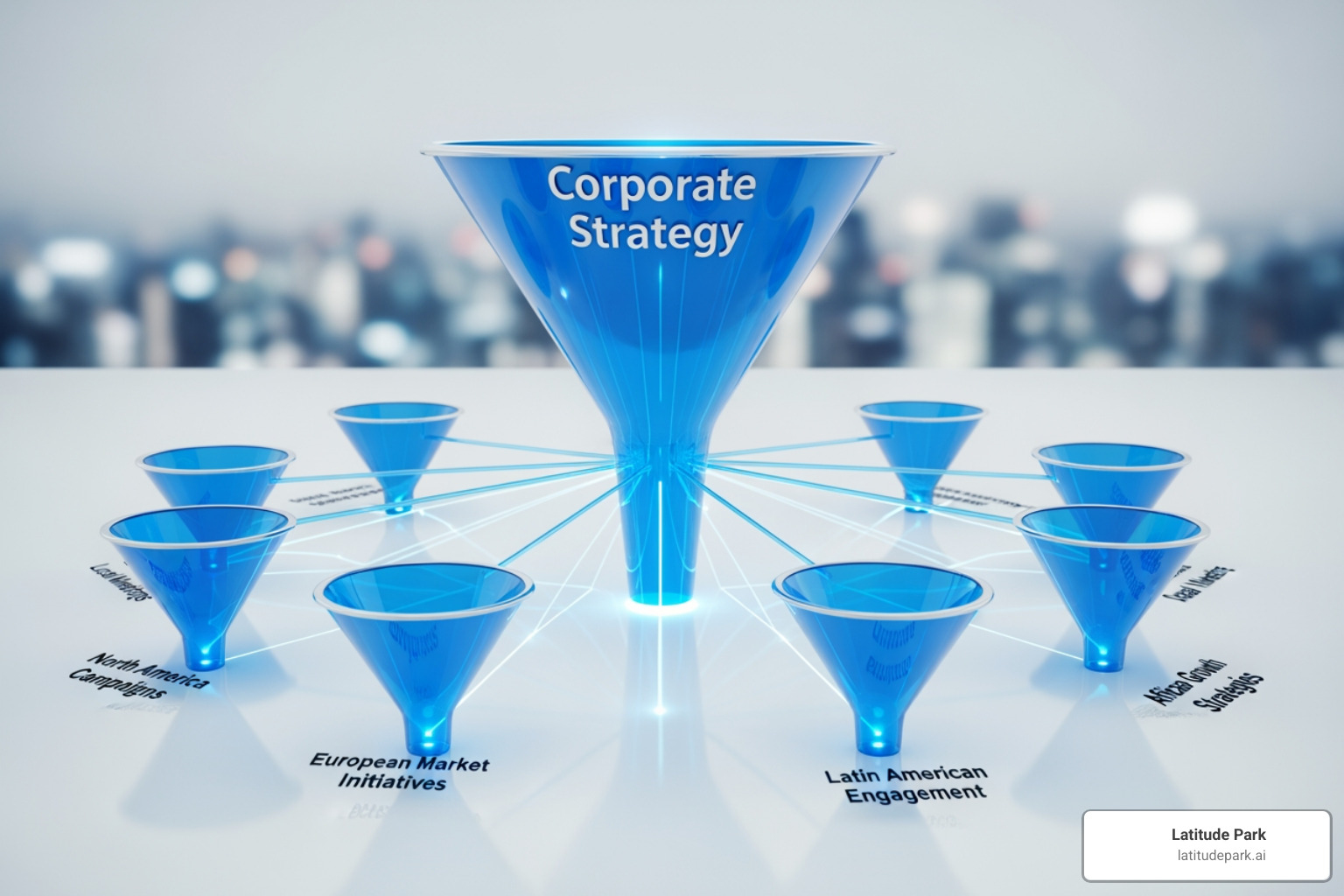
Overcoming these challenges requires a strategic approach that balances corporate guidance with local autonomy. What you need to know about multi-location marketing is that the most successful brands adopt a model of centralized strategy with localized execution. This means the core brand messaging and campaign frameworks are developed at a corporate level, but local teams are empowered to adapt and implement these campaigns in a way that resonates with their specific communities. Creating a comprehensive marketing playbook and leveraging technology are crucial for scaling these efforts effectively.
Dominate Local Search with Multi-Location SEO
The importance of being found locally cannot be overstated. Studies show that up to 99% of customers go online to find businesses locally, and up to 81% do their research on the internet before purchasing. More strikingly, 76% of people who conduct a local search on their smartphone visit a business within 24 hours. If we aren’t visible in local search, we’re simply missing out.
To dominate local search, we must:
- Optimize Google Business Profiles (GBPs): This is foundational. For every location, we need to claim and thoroughly optimize its GBP. This means accurate Name, Address, Phone (NAP) information, updated business hours, high-quality photos, and consistent information. A chain of pet stores increased calls from their Google listings by 13% after optimizing their GBPs.
- Build Location-Specific Landing Pages: Each location should have a unique, SEO-optimized page on our website. These pages should include the location name and address, contact information, location-specific metadata, and structured data. This helps search engines understand the relevance of each branch to local queries.
- Use Local Keywords and Structured Data: Incorporate location-specific keywords naturally into website content, GBPs, and meta descriptions. Implementing structured data helps search engines better understand the content on our pages, improving visibility.
- Manage Online Reviews: Online reviews are a huge trust factor. Research shows that 81% of consumers used Google to evaluate local businesses in 2023. We need a strategy for encouraging positive reviews and promptly responding to all feedback, positive or negative. Positive reviews improve local search results and build customer confidence.
Leverage Hyper-Targeted Paid Advertising
Generic national ads often fail to connect with local audiences. What you need to know about multi-location marketing is that hyper-targeted paid advertising allows us to reach the right people at the right time, in the right place.
- Using Geotargeting on Major Digital Ad Platforms: Platforms like Meta (Facebook and Instagram), Google Ads, and others allow us to target potential customers within specific geographic areas or radii around our locations. This ensures our ad spend is focused on those most likely to visit.
- Creating Location-Specific Ad Copy and Offers: Instead of a generic ad, we can create unique ad copy that highlights local features, promotions, or events relevant to that specific community. For example, a fitness studio might promote new classes with a search ad appearing when someone nearby types “yoga classes near me,” showing the address and phone number.
- Promoting Local Events or Store Openings: Paid ads are excellent for driving awareness and foot traffic for specific local happenings. Location-based ads can promote store openings, local events, or seasonal promotions.
- Using Audience Targeting to Find New Local Customers: Beyond geography, we can layer on demographic and interest-based targeting to find new customers who fit our ideal profile within each local market. Platforms like Meta even allow us to use lookalike audiences to target people with attributes similar to our current customers, increasing our chances of success.
Best Practices for Local Paid Ads:
- Start Small and Test: Begin with modest budgets and A/B test different ad creatives, messaging, and targeting parameters to see what performs best in each market.
- Highlight Local Details: Always include the store address, phone number, and clear directions.
- Lead to Local Landing Pages: Ensure ads direct users to the specific location page on our website for a seamless experience.
- Support with SMS or Email: Integrate paid ad campaigns with other local channels, like SMS or email marketing, to reinforce messaging and drive conversions.
Build Community Through Localized Social Media
Social media is a powerful tool for connecting with local audiences and fostering a sense of community. The challenge is balancing our overarching brand presence with the need for local relevance.
- Corporate vs. Location-Specific Social Media Accounts: We can use corporate accounts for brand-wide announcements and campaigns, while allowing individual locations to manage their own social media profiles (e.g., Facebook Pages, Instagram profiles). This empowers local teams to share local news, engage with local customers, and respond to community-specific inquiries.
- Creating Content That Resonates with Local Culture: Instead of generic posts, local accounts can share content that reflects the unique culture, events, and interests of their community. A gym franchise like SoulCycle, for example, could promote location-specific fitness challenges or events.
- Showcasing Local Staff and Customer Stories: Humanizing our brand at the local level builds stronger connections. Featuring local team members, celebrating local customer achievements, or sharing stories from community events helps foster loyalty.
- Running Location-Specific Contests and Promotions: Engaging local audiences with contests, giveaways, or special promotions tied to local holidays or events can drive significant interaction and foot traffic.
- Using Geotags and Local Hashtags to Increase Visibility: Encouraging our locations and customers to use geotags and relevant local hashtags helps increase visibility within their immediate community, making it easier for new customers to find us.
What You Need to Know About Multi-Location Marketing Tools and Analytics
Effective multi-location marketing isn’t just about strategy; it’s about having the right infrastructure to execute and measure those strategies at scale. What you need to know about multi-location marketing is that technology plays a pivotal role. The right marketing technology (Martech) stack allows us to centralize data for better decision-making, automate repetitive tasks, and track key performance indicators (KPIs) across all locations, providing a unified view of our brand’s performance.
Choosing the Right Technology Stack
To streamline multi-location marketing efforts, we need to invest in a suite of tools designed to handle the complexities of distributed operations. Essential tool categories include:
- Listing and Review Management Platforms: These tools help us claim, optimize, and consistently update our business listings across hundreds of directories (Google Business Profile, Yelp, etc.). They also centralize review monitoring and response, which is crucial as 81% of consumers use Google to evaluate local businesses.
- Social Media Scheduling and Engagement Tools: For managing multiple local social media accounts, these platforms allow us to schedule posts in bulk, monitor mentions, and engage with local communities efficiently, ensuring brand consistency while enabling local adaptation.
- Localized Advertising Platforms: While major ad platforms offer geotargeting, specialized tools can help manage complex multi-location ad campaigns, ensuring consistent branding, budget allocation, and performance tracking across all local ad sets.
- Analytics and Reporting Dashboards: These are critical for aggregating data from all marketing channels and locations into a single, unified view. Tools that help us keep that balance by unifying our brand while tracking performance at the store, branch, or regional level are invaluable. They allow us to track performance across all locations and identify trends and opportunities.
- Project Management Tools for Brand Guides and Campaign Management: Tools like Notion or ClickUp can be used to create a centralized digital brand guide that is easy to access and update for all locations. They also help coordinate campaign rollouts and ensure local teams have the resources they need.
What you need to know about multi-location marketing KPIs
Measuring success requires a clear understanding of what to track. For multi-location marketing, our KPIs must reflect both overall brand health and individual location performance.
- Tracking Local Search Rankings and Traffic: We monitor how well each location ranks for relevant local keywords and the organic traffic driven to their specific landing pages.
- Monitoring Google Business Profile Engagement: This includes clicks to our website, calls made directly from the GBP listing, and requests for directions. These are direct indicators of local interest and foot traffic.
- Analyzing Conversion Rates Per Location: Whether it’s online bookings, form submissions, or in-store purchases, we track the conversion rate for each location to understand campaign effectiveness.
- Measuring Customer Acquisition Cost (CAC) and ROI for Local Campaigns: We need to understand the cost-effectiveness of our localized paid ads and other marketing efforts, ensuring our spend is generating a positive return for each branch.
- Review Volume and Sentiment: Tracking the number of reviews and their average star rating provides insights into customer satisfaction and reputation management at the local level.
What you need to know about multi-location marketing pitfalls to avoid
Even with the best of intentions, multi-location marketing can stumble. Avoiding common pitfalls is as crucial as implementing best practices.
- Applying a Generic, One-Size-Fits-All Strategy: This is perhaps the biggest mistake. Ignoring local nuances leads to ineffective campaigns and wasted resources.
- Neglecting Online Reviews and Local Feedback: Failing to monitor and respond to reviews, or not engaging with local customer feedback, can severely damage a location’s reputation and the brand as a whole.
- Failing to Create Unique Location Pages on Your Website: Relying solely on a single corporate website without dedicated, optimized pages for each branch is an SEO missed opportunity and confuses customers.
- Poor Communication Between Central and Local Teams: A lack of clear communication can lead to inconsistent messaging, missed opportunities, and frustration. Establishing communication protocols is vital.
- Using Fragmented Tools That Don’t Provide a Unified View of Performance: When data is siloed, it’s impossible to get accurate insights, make informed decisions, or demonstrate ROI across all locations. This highlights the importance of a centralized marketing platform.
Frequently Asked Questions about Multi-Location Marketing
How do you ensure brand consistency while allowing for local customization?
The key is creating a comprehensive brand style guide that outlines non-negotiable elements (logo, core colors, brand voice, mission statement, boilerplate) while providing flexible templates and guidelines for local teams. Tools like a centralized digital brand guide make it easy to access and update these resources. This empowers local managers to create relevant content (like promoting a local event or highlighting a local team member) that still feels on-brand. We provide brand-approved assets and messaging, but trust our local teams to adapt them to neighborhood-specific campaigns that resonate with local preferences.
What is the first step in creating a multi-location marketing strategy?
The first step is to conduct a thorough audit of your current state. This includes claiming and optimizing the Google Business Profile for every single location, ensuring all NAP (Name, Address, Phone) information is accurate and consistent across all online directories. We also analyze the local competition for each branch and conduct research to understand the unique customer demographics, behaviors, and buying patterns in each market. This foundational work helps us identify strengths, weaknesses, and opportunities for each location.
How do you budget for multi-location marketing?
Budgeting should be data-driven and flexible. We start by allocating a baseline budget for each location, considering factors like market size, local competition, and historical performance. We then adjust this budget based on real-time performance data and strategic priorities. For example, we might allocate more resources to high-opportunity markets with strong growth potential, or to underperforming locations that need a targeted boost. A centralized reporting system is essential to track ROI for each location and justify spending decisions, allowing us to continuously optimize our budget allocation for maximum impact.
Conclusion: Unify Your Brand, Empower Your Locations
We’ve explored what you need to know about multi-location marketing, from its fundamental differences with single-location efforts to the intricate dance between maintaining brand consistency and embracing local relevance. We’ve seen how crucial it is to dominate local search through optimized Google Business Profiles and location-specific SEO, leverage hyper-targeted paid advertising to reach nearby customers, and build authentic community connections through localized social media.
The power of a unified strategy that leverages these tactics, supported by the right technology and keen analytics, is undeniable. It allows us to not only scale our operations efficiently but also to deepen customer loyalty and drive measurable growth across every single one of our locations. We recognize that navigating these complexities can be challenging. That’s why we at Latitude Park specialize in helping franchises and multi-location businesses steer these complexities. We craft custom digital marketing strategies, particularly through effective Meta (Facebook) advertising, to achieve scalable growth.
Take the next step to master your brand’s presence across all your locations. Let us help you open up the full potential of your multi-location enterprise.