Why Facebook is a Goldmine for Leads
Facebook lead generation strategies meet potential customers where they already spend their time. With 2.9 billion monthly active users, Facebook offers best reach for businesses.
Quick Answer: Top Facebook Lead Generation Strategies
- Use Facebook Lead Ads – Pre-filled forms let users submit information without leaving the app
- Target Precisely – Leverage Custom Audiences, Lookalike Audiences, and behavioral targeting
- Offer Value First – Provide lead magnets like ebooks, discounts, or webinars in exchange for contact info
- Optimize for Mobile – 66% of Facebook users access the platform from mobile devices
- Automate Lead Management – Connect your CRM to sync leads in real-time and speed up follow-up
- Test and Refine – Continuously A/B test ad creative, copy, audiences, and form fields
- Nurture with Retargeting – Re-engage users who showed interest but didn’t convert
Why This Matters for Your Business
Traditional lead generation sends users to a landing page, creating friction that costs conversions. Facebook Lead Ads solve this by letting users submit their information via pre-filled forms directly within the app.
This mobile-first experience is critical, as forms auto-populate with profile data, reducing user effort and improving submission rates. This streamlined approach helps both B2B and B2C businesses capture high-quality leads faster.
The real power lies in connecting precise targeting with a compelling offer. Facebook lets you reach specific demographics, interests, and behaviors. Build Custom Audiences from existing customers or create Lookalike Audiences to find similar prospects. This creates a complete lead generation system.
Capturing leads is only half the battle. Winning businesses automate lead management, respond quickly, and nurture prospects. CRM integration is key, ensuring leads flow directly into your sales pipeline without manual data entry.
I’m Rusty Rich, founder of Latitude Park. With over 15 years of experience, I’ve refined facebook lead generation strategies that turn ad spend into measurable growth, especially for multi-location businesses needing scalable results.
Building Your Campaign Foundation: Targeting and Ad Types
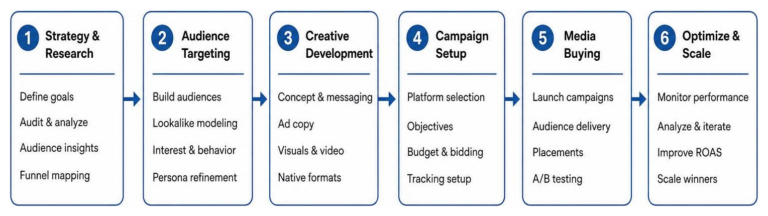
Effective Facebook lead generation strategies start with a solid foundation: knowing who to reach and how. This means precise audience targeting and choosing the right ad types.
The Core of Success: Effective Audience Targeting
Facebook’s robust targeting is a key strength. It turns generic advertising into personalized outreach by using its vast user data to pinpoint ideal customers.
Here’s how we approach audience targeting:
- Core Audiences: Built using demographics (age, location), interests (hobbies, followed brands), and behaviors (purchase history). For example, a payroll tool could target people interested in “QuickBooks.”
- Custom Audiences: This feature lets you upload customer lists or create audiences from people who’ve interacted with your website, app, or Facebook page. It’s ideal for retargeting warm leads.
- Lookalike Audiences: With a strong Custom Audience, you can create Lookalike Audiences. Facebook finds users similar to your best customers, expanding your reach to likely prospects. For best results, use a source list of 500–2,000 relevant contacts.
- Audience Segmentation: We segment audiences to tailor messaging. For instance, we might target “IT Directors in mid-sized SaaS companies.” Stacked targeting with ‘AND’ logic (e.g., ‘CRM software’ AND ‘Marketing Automation’) refines audiences further.
These targeting options ensure ads reach the right people, maximizing ad spend and lead quality. Learn more about our targeted campaigns for franchises. More info about Meta advertising services
Choosing the Right Ad Type for Your Goal
Facebook offers various ad formats for lead generation. The key is choosing the one that aligns with your objective and offers the smoothest user experience.
Here are the primary types of Facebook lead generation ads:
| Ad Type | How it Works | Best For | Key Benefit |
|---|---|---|---|
| Instant Forms | Users click the ad, and a pre-filled form appears directly within Facebook or Instagram. | Collecting contact information quickly for newsletters, content downloads, quotes, or sign-ups. | Reduces friction as users stay in-app. Auto-filled forms boost submission rates. Lead ads convert at 12.5%, 2.07% higher than landing pages. |
| Messenger Ads | Users click the ad and are directed to a chat with our business in Messenger or Instagram Direct. | Starting conversations, qualifying leads, scheduling appointments, and providing personalized info. | Offers real-time, personal engagement to build trust before asking for details. |
| Call Ads | Users click the ad, and their phone’s dialer opens with our business number pre-filled, prompting them to call immediately. | High-intent leads ready to speak with a sales rep for consultations, quotes, or immediate service inquiries. | Instantly connects with customers. Meta data shows a 21% lower cost per call and 25% higher conversion rates. Meta data shows call ads have a 25% higher conversion rate |
We also use Traffic or Conversion ads for landing pages with complex offers, and Engagement/Video ads to warm up audiences for retargeting. This creates a comprehensive facebook lead generation strategy for the entire buyer’s journey.
Crafting High-Converting Ads and Forms
After defining your audience and ad type, create compelling ad creative and optimize lead forms. This is where art meets science to convert interest into leads.
Best Practices for Compelling Ad Creative and Copy
Your ad creative and copy are your first impression. To stand out, grab attention and communicate value instantly.
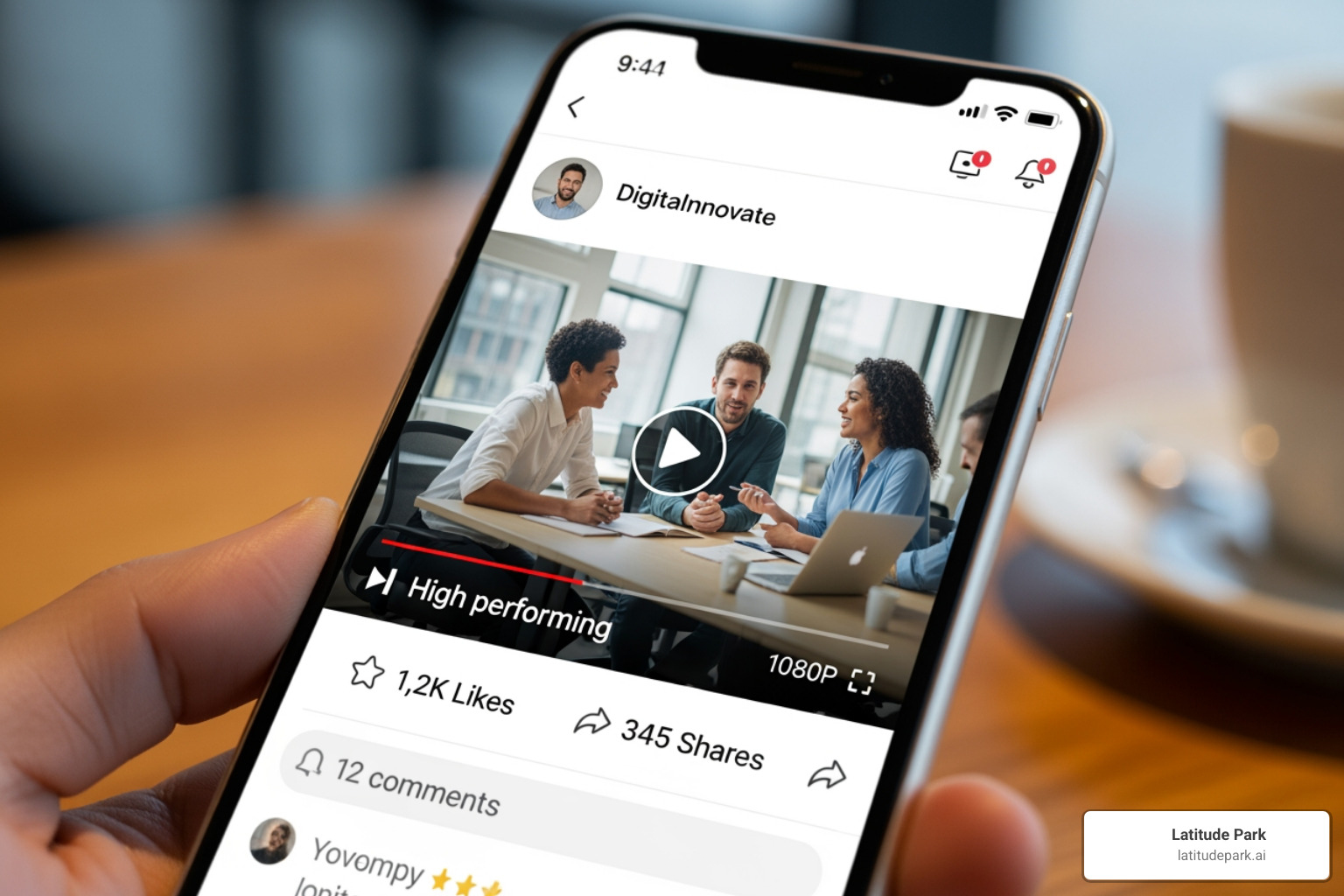
- Accept Video Content: Video is king on Facebook, favored by algorithms and consumers alike (54% want more video from marketers). The first 5-10 seconds of an auto-playing video are crucial to hook viewers and showcase your product in action.
- High-Quality Images: Captivating, high-quality images are essential. We leverage color psychology and visual contrast to make ads pop, as color influences 90% of snap judgments about products. The “Isolation Effect” suggests that items that stand out are more memorable.
- Show Faces and Application: Showing people using your product, especially smiling, is highly effective. This taps into our brain’s tendency to look for faces (“pareidolia”), making the ad more relatable.
- Clear Call-to-Action (CTA): Your CTA must be unambiguous and actionable. Whether it’s “Download Now,” “Get a Quote,” or “Sign Up,” make it clear what you want the user to do.
- Concise Copy: Keep ad text brief, benefit-oriented, and easy to digest. Simplicity in copy and design has a greater impact.
These best practices help create ads that attract attention and drive action, a critical part of any facebook lead generation strategy.
The Power of the Offer: Using Lead Magnets Effectively
A lead magnet is a free, valuable offer given in exchange for contact information. It’s a ‘give before you ask’ principle that incentivizes lead capture.
Effective lead magnets offer immediate, relevant value to the target audience’s pain points. Examples include:
- Ebooks or Guides
- Webinars
- Free Trials or Demos
- Discount Codes or Coupons
- Checklists or Templates
- Gated Content (exclusive articles, research, or case studies)
The lead magnet must be valuable enough to justify sharing personal information. This attracts qualified leads who are genuinely interested in your offer.
How to Optimize Lead Forms for Maximum Submissions
The lead form is the final hurdle. A poorly designed form causes high drop-off rates, so our goal is to make it as easy as possible for users to complete.
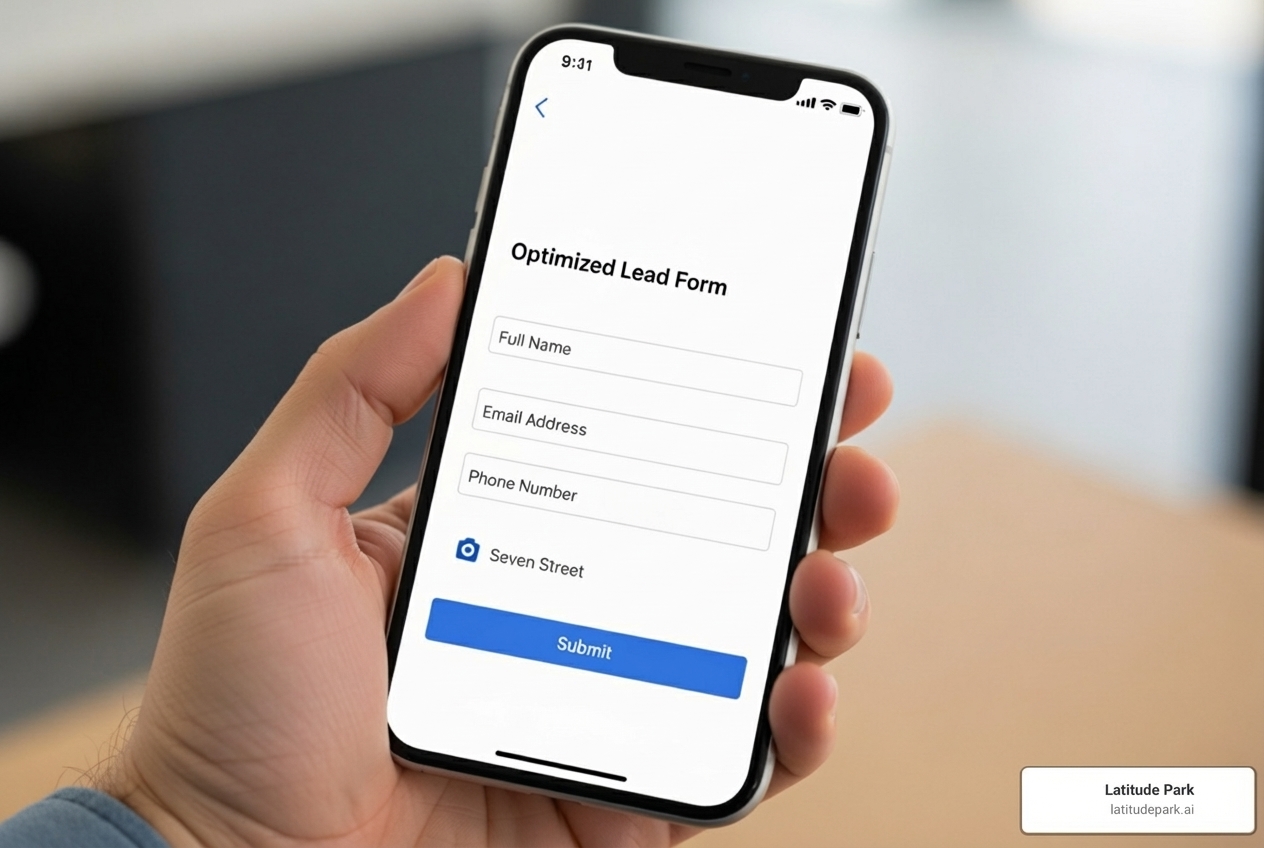
- Keep it Concise: Facebook Lead Ads auto-fill user information, so only ask for essential additional details. Every extra field increases friction and lowers completion rates.
- Custom Questions for Qualification: While keeping forms short, use custom questions (e.g., company size, job title) to qualify leads. This balances submission rates with lead quality. A high-friction offer like ‘Book a call’ yields fewer but higher-intent leads than a low-friction one like a report download.
- Use Context Cards: These optional introductory screens appear before the lead form. They provide more offer details and set expectations, helping convince users to submit the form.
- Privacy Policy Link: Including a clear link to your privacy policy is mandatory and builds trust.
- Mobile Responsiveness: Lead Ads are mobile-first, but ensure any custom elements are optimized for mobile, where 66% of daily users access Facebook.
Optimizing lead forms ensures your targeting and creative efforts are rewarded with high-quality leads.
Advanced Facebook Lead Generation Strategies
Advanced facebook lead generation strategies use additional tools and processes to maximize lead value and efficiency.
Beyond the Form: Integrating Landing Pages
While Lead Ads are great for quick capture, integrating landing pages is sometimes crucial.
- For Complex Offers: A dedicated landing page provides the space to thoroughly educate prospects about products requiring detailed explanations.
- Providing More Information: Landing pages can showcase testimonials, features, pricing, and FAQs—details often too extensive for a concise ad.
- Consistent Branding: A custom landing page offers full control over branding and user experience.
- A/B Testing Landing Pages: You can continuously test headlines, visuals, and CTAs on landing pages to optimize conversions.
- Conversion Tracking: Landing pages allow for more granular tracking of user behavior, providing deeper insights.
It’s not an either/or choice. We often use Lead Ads for initial capture (e.g., a download) and then nurture leads toward a landing page for a bigger commitment (e.g., a demo). For example, Jenny Eden Coaching saw a 34% conversion rate increase by using a targeted landing page over a static website page.
Nurturing and Retargeting: Maximizing Lead Value
Capturing a lead is just the start. The real value is in nurturing them into a customer. Since most leads aren’t ready to buy immediately, lead nurturing and retargeting are essential.
- Lead Nurturing: This means delivering on your promise (e.g., sending the ebook) and providing ongoing value through email sequences. This process builds trust and guides prospects through the buyer’s journey.
- Retargeting Campaigns: The ‘Advertising Rule of 7’ suggests a prospect needs about seven interactions before acting. Retargeting shows ads to people who’ve already engaged with your brand but haven’t converted, keeping you top-of-mind.
Common retargeting audiences we leverage include:
- Website visitors (who didn’t convert)
- People who engaged with your Facebook or Instagram page
- Users who watched a significant portion of your video ads
- Individuals who opened a lead form but didn’t submit it
- Customers from your CRM for cross-selling or upselling
Combining these strategies maximizes the value of your lead generation efforts.
Common Mistakes to Avoid in Your Facebook Lead Generation Strategies
Avoiding these common pitfalls is crucial for successful facebook lead generation strategies:
- Poor Targeting: Broad campaigns burn budget and yield low-quality leads. Be granular.
- Weak Offers: If your offer isn’t valuable, conversion rates will be low.
- Slow Lead Follow-Up: Leads cool quickly. If not contacted within minutes for high-intent inquiries, they move on. Automation is key.
- Ignoring Analytics: Forgetting campaigns wastes ad spend. Regularly review metrics to see what’s working.
- No A/B Testing: Never assume your first ad is the best. Continuously A/B test creative, copy, CTAs, and audiences for optimization.
- Non-Mobile-Optimized Experience: Most users are on mobile. A poor mobile experience leads to immediate drop-offs.
- Unclear Ad Copy: Ambiguous messaging or confusing CTAs deter leads. Be clear and simple.
- Focusing on Quantity over Quality: For B2B, a few qualified leads are better than hundreds of unqualified ones. Optimize for conversion leads to attract likely customers.
Avoiding these errors will significantly improve your campaign ROI.
Measuring, Automating, and Managing Your Campaign
Mastering facebook lead generation strategies requires systematically measuring performance, automating processes, and managing your budget and leads.
Key Metrics to Track for Campaign Success
Monitoring key metrics is essential for understanding performance, making adjustments, and optimizing results to maximize ad budget.
- Cost Per Lead (CPL): How much you’re paying for each lead. It’s a primary indicator of campaign efficiency.
- Conversion Rate: The percentage of people who completed your lead form. A high rate indicates effective creative and targeting.
- Lead Quality: Arguably the most important metric, especially for B2B. It assesses how likely a lead is to become a customer (e.g., lead-to-opportunity rate). Track this by integrating CRM data to optimize for ‘Conversion leads.’
- Click-Through Rate (CTR): The percentage of people who clicked your ad after seeing it. A high CTR suggests engaging creative.
- Return on Ad Spend (ROAS): The revenue generated for every dollar spent on ads. CRM integration helps connect leads to sales.
- Engagement Metrics: Look at reactions, shares, and comments. These indicate content resonance and can positively influence ad performance.
Analyzing these metrics helps identify top performers so you can reallocate your budget.
The Role of Automation in Lead Management
Efficient lead capture is only half the battle; effective management is crucial. Automation ensures timely, personalized follow-up so no lead is lost.
- CRM Integration: Connecting your CRM to Facebook Lead Ads is non-negotiable. It enables real-time data sync, so new leads flow instantly into your sales pipeline for effective tracking and nurturing.
- Real-time Data Sync: Tools like LeadsBridge or native integrations automate lead data transfer. This eliminates manual entry, saving time, reducing errors, and speeding up responses.
- Automated Follow-Up: Once leads are in your CRM, trigger automated follow-ups like welcome emails or sales call scheduling. Fast follow-up is crucial as lead interest fades quickly.
- Lead Scoring: For high lead volumes, use lead scoring in your CRM to prioritize. Points are assigned based on engagement and demographics, helping sales focus on the hottest prospects.
Automation turns Facebook into a scalable revenue channel by streamlining the lead lifecycle.
Understanding and Managing Campaign Costs
Facebook lead generation costs vary. Understanding the factors and managing your budget is key to maximizing ROI.
- Factors Affecting Cost:
- Audience Competition: Highly sought-after audiences are more expensive.
- Industry Benchmarks: B2C CPLs are typically $2–$14. B2B CPLs can be $20–$82+ due to smaller, competitive audiences and higher lead value.
- Seasonality: Costs fluctuate during peak advertising seasons.
- Bidding Strategies: Your chosen bidding strategy impacts how Facebook optimizes spend.
- Offer Quality & Creative: Weak ads and offers increase CPL. Engaging ads improve relevance and can lower costs.
- Budget Optimization: Continuously monitor performance in Meta Ads Manager. Pause or adjust underperforming ad sets and shift budget to top performers to maximize ROI.
- Campaign Scaling: When campaigns succeed, strategically increase budgets in phases to scale lead generation without spiking CPL. This can involve expanding Lookalike Audiences or testing new segments.
Managing these cost factors and optimizing your budget keeps your facebook lead generation strategies efficient and profitable.
Frequently Asked Questions about Facebook Lead Generation
Here are answers to common questions about Facebook lead generation:
What is a good cost per lead (CPL) on Facebook?
A ‘good’ CPL varies by industry, audience, and offer. However, here are some general benchmarks:
- B2C (Business-to-Consumer): CPLs typically range from $2 to $14 for general inquiries or newsletter sign-ups.
- B2B (Business-to-Business): CPLs are generally higher, often between $20 and $82+, because B2B audiences are smaller and the value of each lead is higher.
Factors like targeting, creative quality, and your offer all influence CPL. Lead quality and conversion to a customer matter more than the raw CPL.
How do I improve the quality of leads from my Facebook ads?
Improving lead quality is paramount for effective facebook lead generation strategies. Here’s how:
- Refine Your Targeting: Go beyond basic demographics. Use Custom and Lookalike Audiences, plus detailed interest and behavioral targeting. Use stacked targeting (e.g., “HR software” AND “People Management Magazine”) to narrow your audience to highly specific segments.
- Use Qualifying Questions in Lead Forms: Add 1-3 custom questions to your form to pre-qualify leads (e.g., company size, job role, budget). This filters out less serious prospects.
- Offer High-Value Lead Magnets: A strong, relevant lead magnet (like a detailed industry report) will attract people genuinely interested in your offerings.
- Optimize for “Conversion Leads”: Feed your CRM conversion data back to Facebook and use the ‘Conversion leads’ objective. This tells Facebook to find users likely to become paying customers, not just form-fillers.
- Clear Ad Copy and Creative: Ensure your ad clearly communicates who the offer is for and what problem it solves. Misleading ads attract unqualified leads.
Should I use Facebook Lead Ads or send traffic to my website?
The best answer is often a strategic combination of both.
Facebook Lead Ads are generally superior for:
- Reducing Friction: Users submit info without leaving the app, which is ideal for mobile. Pre-filled forms boost completion rates. A study found lead ads converted at 12.5%, outperforming landing pages by 2.07%.
- Simplicity and Speed: Ideal for simple offers like newsletter sign-ups or quick quotes.
- Mobile Experience: They are inherently mobile-friendly.
Sending Traffic to Your Website (Landing Page) is better for:
- Complex Offers: When you need to provide extensive information, visuals, or testimonials.
- Stronger Branding: You have full control over the user experience on your own landing page.
- Detailed Analytics: You can track user behavior more comprehensively on your website.
- A/B Testing: More flexibility for testing various page elements.
A great strategy is using Lead Ads for initial capture and then nurturing leads toward a landing page. This combines low-friction capture with in-depth engagement.
Conclusion: Turn Your Facebook Leads into Lifelong Customers
Mastering facebook lead generation strategies means building a sustainable system for high-quality prospects. This guide covered precise targeting, effective ad types, compelling creative, optimized forms, lead magnets, landing pages, and nurturing efforts.
The digital landscape evolves, so continuous testing, analysis, and automation are key. By avoiding common pitfalls and using Facebook’s tools, you can transform clicks into conversations and lifelong customers.
For multi-location businesses, especially franchises, these strategies are not just beneficial—they’re essential for scalable growth. We specialize in tailoring these advanced facebook lead generation strategies to the unique needs of franchises, ensuring consistent results across all locations.
Start growing your franchise with expert digital marketing services