Why Getting Facebook and Instagram Ad Image Sizes Right Matters
Best image size for facebook and instagram ads depends on where your ad appears, but here are the most important dimensions you need to know right now:
| Placement | Best Aspect Ratio | Recommended Dimensions |
|---|---|---|
| Feed Ads | 1:1 (Square) or 4:5 (Vertical) | 1080 x 1080 px or 1080 x 1350 px |
| Stories & Reels | 9:16 (Full-Screen Vertical) | 1080 x 1920 px |
| Carousel Ads | 1:1 (Square) | 1080 x 1080 px |
| Marketplace | 1:1 (Square) | 1080 x 1080 px |
If you’ve ever launched a Facebook or Instagram ad campaign only to see your carefully designed creative get awkwardly cropped, stretched, or cut off, you’re not alone. Meta’s advertising ecosystem includes dozens of placements—each with its own technical requirements.
The wrong image size doesn’t just look unprofessional. It directly impacts your ad performance. Images that don’t fit properly can get penalized by Meta’s algorithm, cost more per result, and drive lower engagement rates. For franchise marketing managers coordinating campaigns across multiple locations, this complexity multiplies fast.
The good news? Once you understand the core specifications, creating high-performing ad creatives becomes straightforward. Most placements use just three main aspect ratios: 1:1 (square), 4:5 (vertical), and 9:16 (full-screen vertical). Master these, and you’ll cover 90% of your advertising needs.
I’m Rusty Rich, founder of Latitude Park, and over the past 15 years I’ve helped hundreds of businesses optimize their digital ad campaigns. Getting the best image size for facebook and instagram ads right has been one of the simplest yet most impactful changes my clients make to improve their advertising ROI.
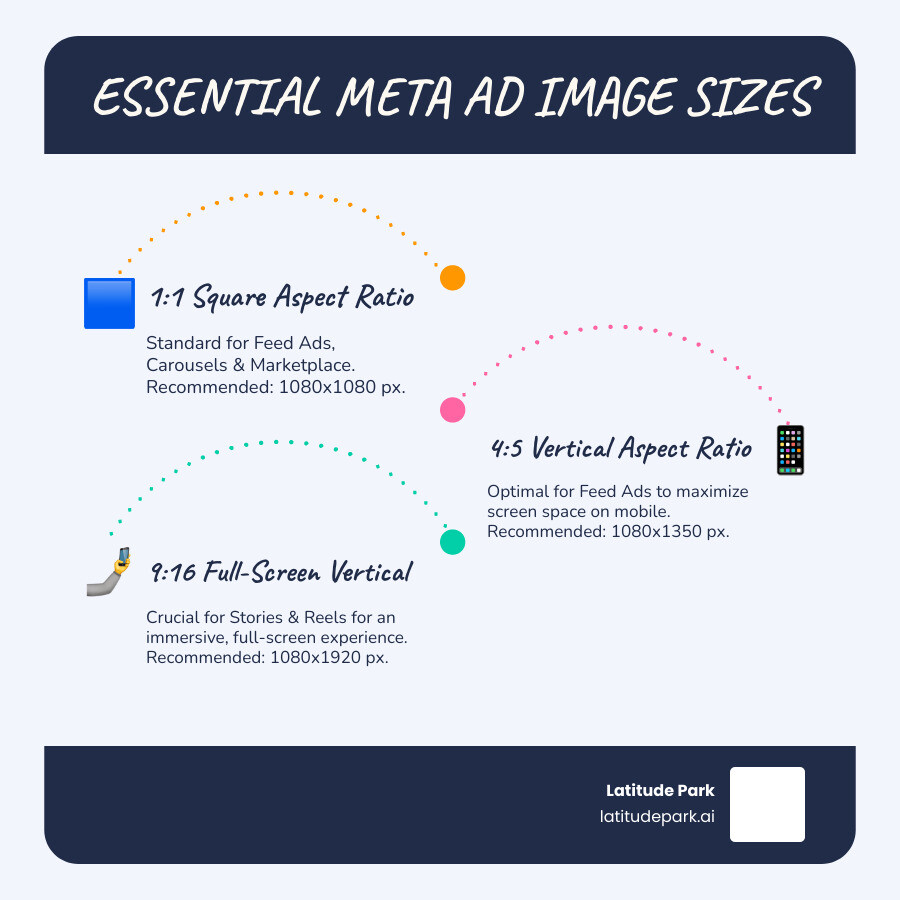
Best image size for facebook and instagram ads terms to remember:
Why the Right Image Size is Crucial for Ad Success
In digital advertising, short attention spans make your visuals your first—and often only—chance to make an impression. On Meta’s platforms, where great visuals tell your brand’s story, understanding the best image size for facebook and instagram ads is non-negotiable.
Imagine scrolling your feed and seeing an awkwardly cropped or pixelated ad. You’d likely scroll right past it. A poorly presented ad reflects negatively on your brand, making it seem less trustworthy. Conversely, a crisp, perfectly sized image instantly conveys professionalism and builds trust.
Beyond aesthetics, incorrect image sizes lead to wasted screen real estate. On mobile, where most users are, every pixel counts. An ad that fills the screen maximizes its visual impact and increases engagement.
More importantly, Meta’s algorithm prioritizes user experience. Images that don’t fit properly can be penalized with a lower ad quality score. This means your ad might be shown less frequently, or you’ll pay more for each impression or click, driving up costs and lowering click-through rates (CTR). For instance, while the Arts & Entertainment sector sees a 2.55% CTR on Meta image ads, industries like Dentist & Dental Services struggle with a 0.81% CTR. Optimizing image sizes is a simple way to boost performance across the board.
Getting the best image size for facebook and instagram ads right ensures your message is delivered clearly and professionally, helping you capture attention. For more on this, check out our insights on Digital Ads vs Attention Spans.
The Best Image Size for Facebook and Instagram Ads: A Placement-by-Placement Guide
Meta’s ad landscape is vast, with placements across Facebook, Instagram, Messenger, and its Audience Network. Each has unique specs, and ignoring them can hurt performance. To simplify things, we’ve compiled an overview of the top ad placements and their recommended image specifications.
| Placement | Recommended Aspect Ratio | Recommended Pixel Dimensions | Key Considerations |
|---|---|---|---|
| Facebook & Instagram Feed Ads | 1:1 (Square) or 4:5 (Vertical) | 1080 x 1080 px or 1080 x 1350 px | 4:5 takes up more mobile screen space; 1:1 is versatile. |
| Facebook & Instagram Stories & Reels Ads | 9:16 (Full-Screen Vertical) | 1080 x 1920 px | Immersive experience; design with safe zones for UI elements. |
| Carousel Ads | 1:1 (Square) | 1080 x 1080 px | Consistent look across multiple images/videos. |
| Facebook Marketplace Ads | 1:1 (Square) | 1080 x 1080 px | Clear presentation for users with purchase intent. |
While these are recommended dimensions, always upload the highest resolution image possible that maintains the correct aspect ratio.
Facebook & Instagram Feed Ads: Finding the Best Image Size
Feed ads are the bread and butter of many campaigns. You have two excellent options:
Square (1:1) Images: The classic 1080 x 1080 px image is a reliable workhorse. It’s universally supported and looks great on both desktop and mobile, ensuring a clean, professional look without awkward cropping.
Vertical (4:5) Images: For a mobile-first approach, the 1080 x 1350 px vertical image is often the winner. It takes up more screen space on mobile devices, capturing more attention as users scroll. This increased visual dominance can lead to higher engagement, especially on Instagram.
While older horizontal formats (1.91:1) are supported, we recommend sticking to square or vertical for feed ads to maximize impact. For advanced strategies, dive into our guide on High Performance Meta Ads.
Stories & Reels: The Best Image Size for Full-Screen Impact
For an immersive experience, Stories and Reels are best. The best image size for facebook and instagram ads here is a full-screen vertical (9:16) at 1080 x 1920 pixels. This format fills the entire mobile screen, drawing users directly into your content.
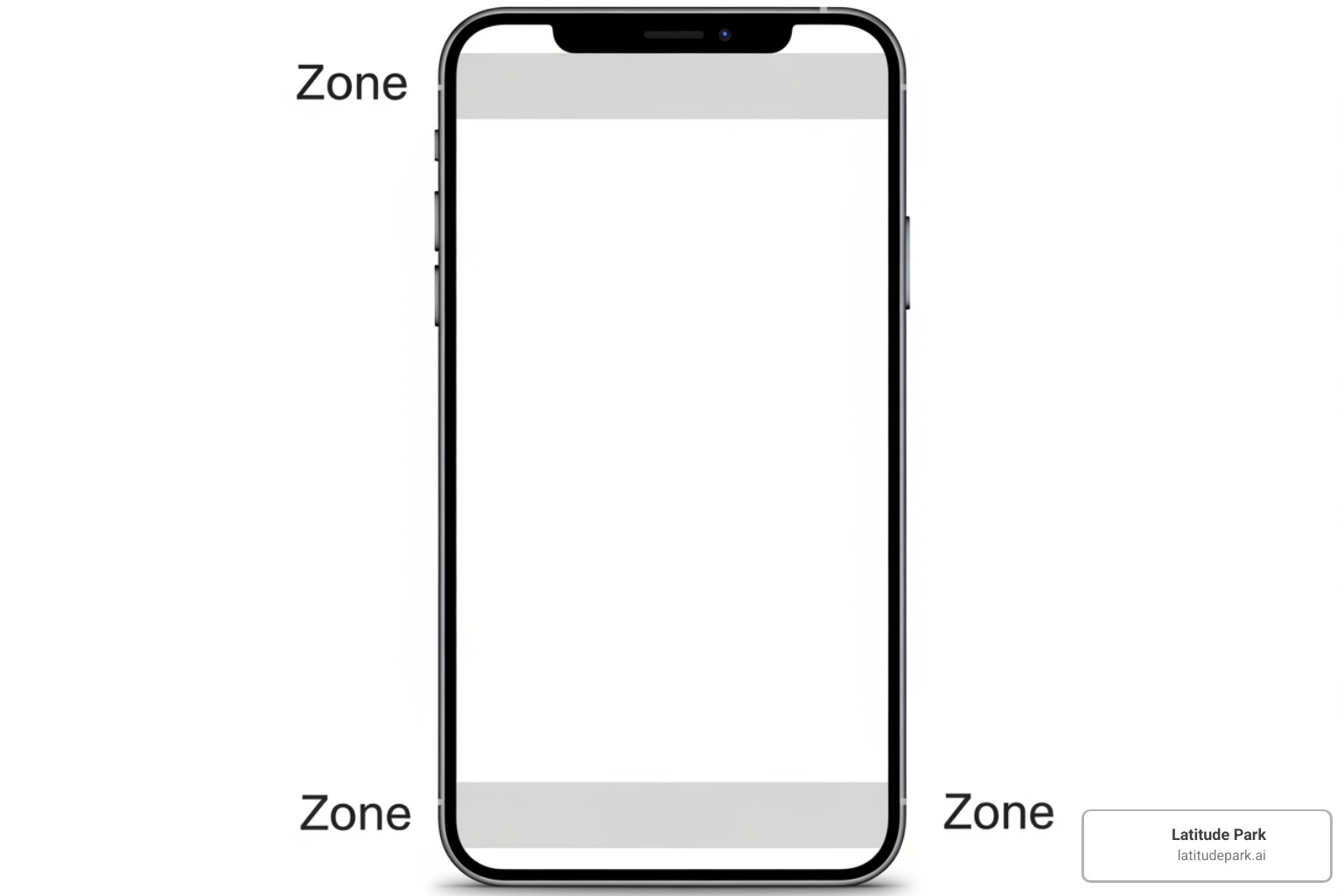
However, you must design with “safe zones” in mind. UI elements like your profile icon and call-to-action buttons will overlay your creative. To ensure your message isn’t obscured, keep key elements away from the edges.
Meta specifically recommends leaving roughly “14% (250 pixels) of the top and 20% (340 pixels) of the bottom of the image free from text, logos, or other key creative elements” to prevent them from being covered. For Reels, the bottom safe zone is even larger (35%). Concentrate your main visuals and text in the central area.
Other Key Ad Placements and Their Image Specs
While Feed, Stories, and Reels are major players, other placements require attention for a comprehensive strategy. Here’s a quick guide:
- Carousel Ads: Showcase up to 10 images or videos in one ad. Use a consistent 1:1 (square) ratio (1080 x 1080 px) for a uniform look.
- Collection Ads: Ideal for e-commerce, these feature a cover image and product grid. Use 1:1 (square) images (1080 x 1080 px).
- Facebook Marketplace Ads: Reach users with high purchase intent. A 1:1 (square) image (1080 x 1080 px) is best.
- Facebook Right Column Ads: These desktop-only ads are small. Use a 1:1 (square) image (1080 x 1080 px) and avoid text.
- Messenger Ads: Placements vary. Use 1:1 (square) for Inbox ads and 9:16 (vertical) for Messenger Stories.
- Audience Network Ads: To reach users on third-party apps, a 9:16 (vertical) ratio is versatile, though others are supported.
- Other Placements (Search, Instant Articles, etc.): Most other placements, like Facebook Search Results and Instant Articles, perform well with 1:1 (square) or 1.91:1 (horizontal) images. For Slideshow ads, maintain a consistent aspect ratio (1:1 or 16:9) across all images.
For a deeper dive into optimizing your advertising for specific local service needs, explore our Facebook Ads for Local Services Ultimate Guide.
Technical Requirements & Best Practices for Ad Creatives
Beyond dimensions, several technical requirements and best practices impact your ad’s performance and professionalism. The goal is to create sharp visuals that load fast and communicate clearly.
Recommended File Types and Sizes
Choosing the right file type and size is crucial for quality and loading speed.
- Image File Types: We recommend using JPG or PNG.
- JPG is ideal for photographs, offering good compression for smaller file sizes and faster loading.
- PNG is better for images with sharp lines, text, or transparent backgrounds, as it retains more detail but can result in larger files.
- Maximum File Size: The maximum file size for most images is 30MB (and 4GB for videos). However, always optimize images to be as small as possible without sacrificing quality. Faster loading times improve the user experience.
The goal is to balance high-quality visuals with quick loading. For more guidance, check out our Ad Creative Best Practices.
Best Practices for Using Text in Ad Images
For years, Facebook had a strict “20% text rule.” While that hard rule is gone, the principle remains: images with little or no text overlay tend to perform better.
Meta’s system now evaluates text based on performance, meaning ads with too much text can still be penalized with lower delivery or higher costs. Our advice is to keep text clear, concise, and minimal. Let your visuals do the talking.
If you’re ever in doubt, Meta provides an image text check tool to help you assess your creative before launch. Use it—it’s a lifesaver!
Mobile vs. Desktop: Designing for the Primary Audience
Your audience will overwhelmingly see your ads on mobile devices. A mobile-first design approach is a necessity.
- Accept Vertical: Vertical formats like 4:5 for feeds and 9:16 for Stories/Reels are king on mobile. They fill the screen and command attention.
- Desktop Considerations: Don’t forget desktop entirely, especially for placements like Facebook’s Right Column ads (1:1 square, no text). The News Feed adapts various sizes, but mobile should be your priority.
- Preview, Preview, Preview: The Meta Ads Manager has an excellent preview tool. Always use it to see how your ad will appear across different placements. It’s your final check against awkward cropping or other display issues.
For multi-location businesses, optimizing for mobile is key, as local engagement often happens on the go. Our insights on Multi-Location Localized Social Media Ads can provide further context.
Frequently Asked Questions about Ad Image Sizes
We know this can be a lot to digest, so let’s tackle some of the most common questions we hear about optimizing image sizes for Facebook and Instagram ads.
How do image sizes differ between Facebook and Instagram ads?
While they share many formats, there are key differences:
- Similarities: Core placements like Stories, Reels (9:16), and Feed (1:1 or 4:5) use the same specs on both platforms.
- Differences: Some placements are platform-specific, like Facebook’s desktop-only Right Column ads (1:1).
- Best Practice: For cross-platform campaigns using Advantage+ placements, Meta adapts your creative. However, for best results, provide custom assets for key placements (e.g., 9:16 for Stories, 4:5 for Feeds) to ensure optimal display everywhere.
How do image sizes impact ad performance on Facebook and Instagram?
Image size directly impacts performance in several ways:
- Ad Delivery & Cost: Meta’s algorithm favors ads that provide a good user experience. Correctly sized images get a higher quality ranking, leading to better delivery and lower costs. Poorly sized images can be penalized with reduced reach and higher costs per result.
- Engagement: Well-proportioned images, especially vertical ones on mobile, capture more attention, leading to higher click-through rates (CTR) and engagement. Awkwardly cropped or distorted images are easily ignored.
- Brand Perception: A polished, professional-looking ad builds trust and credibility. Sloppy visuals can make your brand seem unprofessional.
In short, getting the best image size for facebook and instagram ads right is a foundational step toward maximizing your ad spend.
Where can I find the most up-to-date information on ad image sizes?
The world of social media advertising is constantly evolving. For the most current information, turn to these sources:
- Meta’s Official Documentation: The absolute best source is Meta’s Facebook Ads Guide. It offers detailed technical requirements for every ad format and should be your first stop.
- Industry Blogs and Guides: Reputable digital marketing blogs (like ours!) publish guides that compile and simplify Meta’s documentation. We strive to keep our guides current with actionable advice.
- Ads Manager Previews: The preview tool in Meta Ads Manager is your practical check. It shows you exactly how your ad will appear in various placements, highlighting issues a spec sheet might miss.
Staying informed is key to ensuring your ad creatives always look their best and perform optimally.
Conclusion
Navigating the nuances of image sizes for Facebook and Instagram ads can feel like a complex puzzle, but with the right knowledge, it transforms into a clear strategy for success. We’ve seen that the best image size for facebook and instagram ads isn’t a one-size-fits-all answer, but rather a thoughtful consideration of placement, aspect ratio, and audience behavior.
The key takeaways are simple: prioritize the three core aspect ratios – 1:1 (square), 4:5 (vertical), and 9:16 (full-screen vertical). Design with a mobile-first mindset, always keeping those crucial safe zones in mind for Stories and Reels. Accept high-resolution images, optimize your file types, and remember that less text on your visuals often means more impact. And please, always use those Ads Manager preview tools!
The importance of testing cannot be overstated. What works brilliantly for one campaign or audience might fall flat for another. Continuously testing different creatives, aspect ratios, and messaging will help you refine your strategy and uncover what truly resonates with your target market.
For franchise marketing managers, especially those overseeing multiple locations, ensuring consistency and professionalism across all ad creatives is paramount. Adhering to these specifications not only improves your brand’s image but also significantly boosts the efficiency and effectiveness of your campaigns.
At Latitude Park, we specialize in helping franchises open up the full potential of their digital advertising. By carefully crafting professional ad creatives that adhere to these best practices, we drive real results, maximizing your ROI and helping your franchise grow. Ready to lift your ad game? Explore our Facebook_Instagram Ads services and let us help you achieve high-performance Meta campaigns.