The Power of a Unified Ad Strategy
Facebook & instagram ads offer unparalleled reach and efficiency when managed together through Meta’s integrated advertising platform. This unified approach provides:
- A combined reach of 4.9 billion monthly active users.
- Single campaign creation for both Facebook and Instagram.
- Unified reporting and optimization through Meta Ads Manager.
- Lower costs per result via automated placement optimization.
- Consistent brand messaging across multiple touchpoints.
Managing separate campaigns across different platforms is a common pain point, especially for multi-location businesses. Since Facebook and Instagram are both part of Meta’s ecosystem, they work together seamlessly. You can build one ad campaign that automatically delivers to the right people on both platforms, letting Meta’s algorithm find the most cost-effective placements for your budget.
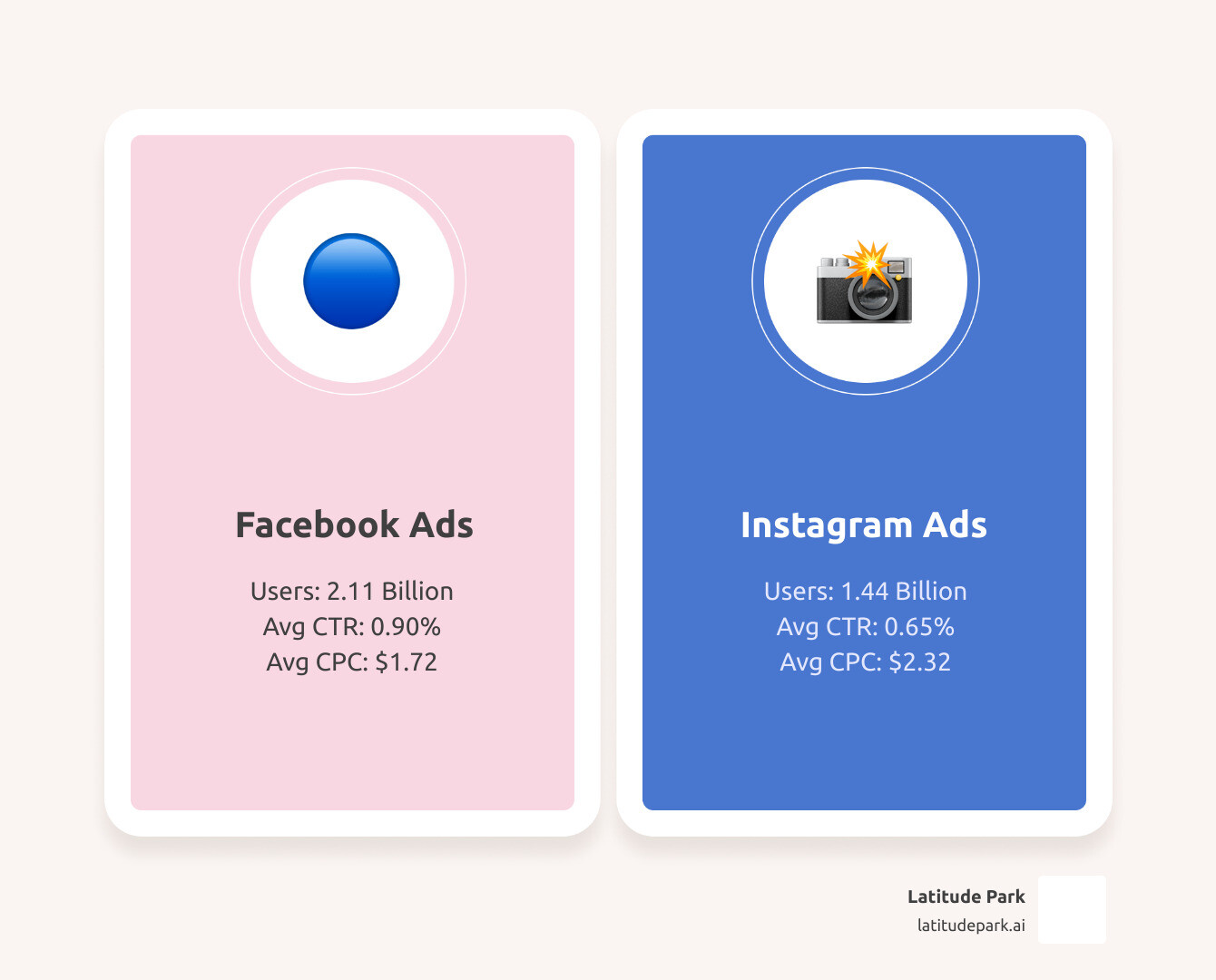
This is significant because Facebook reaches over 2.11 billion people with ads, while Instagram reaches over 1.44 billion. Advertising on both allows you to meet customers wherever they spend their time. The real power lies in Meta’s unified delivery system, which automatically shows your ads where they’ll perform best, shifting budget between platforms based on real-time data.
I’m Rusty Rich, founder and President of Latitude Park. Since 2009, I’ve helped businesses master facebook & instagram ads, specializing in scalable strategies for multi-location franchises. In this guide, I’ll show you how to create high-performing cross-platform campaigns that drive measurable growth.
Why You Should Run Ads on Both Facebook and Instagram
Many business owners think they need to pick either Facebook or Instagram. That’s like choosing to reach customers only in the morning or the afternoon—why not both? The truth is, facebook & instagram ads work best together.
Facebook reaches 2.11 billion people with ads, and Instagram reaches 1.44 billion. More importantly, these audiences behave differently. Your potential customers aren’t all in the same digital space. A person might check Facebook for news and updates in the morning, then browse Instagram for visual inspiration later. They’re the same person but in a different mindset on each platform.
That’s why your ads need to be on both. Facebook tends to attract an older audience, making it ideal for financial services, home improvement, or B2B solutions. Instagram skews younger and is highly visual, making it a powerhouse for fashion, restaurants, and lifestyle brands. By running campaigns across both, you cover different demographics, behaviors, and mindsets, meeting customers where they are most receptive.
Even better, Meta’s delivery system optimizes for you. With automatic placements enabled, the algorithm shifts your budget to wherever it gets the best results in real-time. You don’t need to guess which platform performs better at certain times; the system handles it automatically to secure the lowest cost per result.
While the average Facebook ad has a lower cost per click ($1.72 vs. Instagram’s $2.32), Instagram’s visual nature can drive different types of valuable engagement. The real win comes from letting both platforms work together, with Meta’s algorithm finding the sweet spot for your specific goals.
| Metric | Facebook Ads | Instagram Ads |
|---|---|---|
| Average CTR | 0.90% | 0.65% |
| Average CPC | $1.72 | $2.32 |
| Reach (billions) | 2.11 | 1.44 |
| MAU (billions) | 2.91 | 2 |
Finally, a unified approach builds brand recognition. When someone sees your ad on Facebook and then again on Instagram, that repetition builds familiarity and trust. Instead of managing fragmented data and duplicate efforts, you have one campaign, one message, and a clear picture of what’s working.
For more insights on building a comprehensive social media strategy, check out The Ultimate Guide to Social Media Marketing.
The bottom line is you’re not choosing between platforms. You’re choosing to show up wherever your customers are, all managed from one place.
Getting Started: Prerequisites for Cross-Platform Ads
Before launching your first campaign, you need to get a few things in order. Once set up, you’ll be ready to create facebook & instagram ads that reach millions.
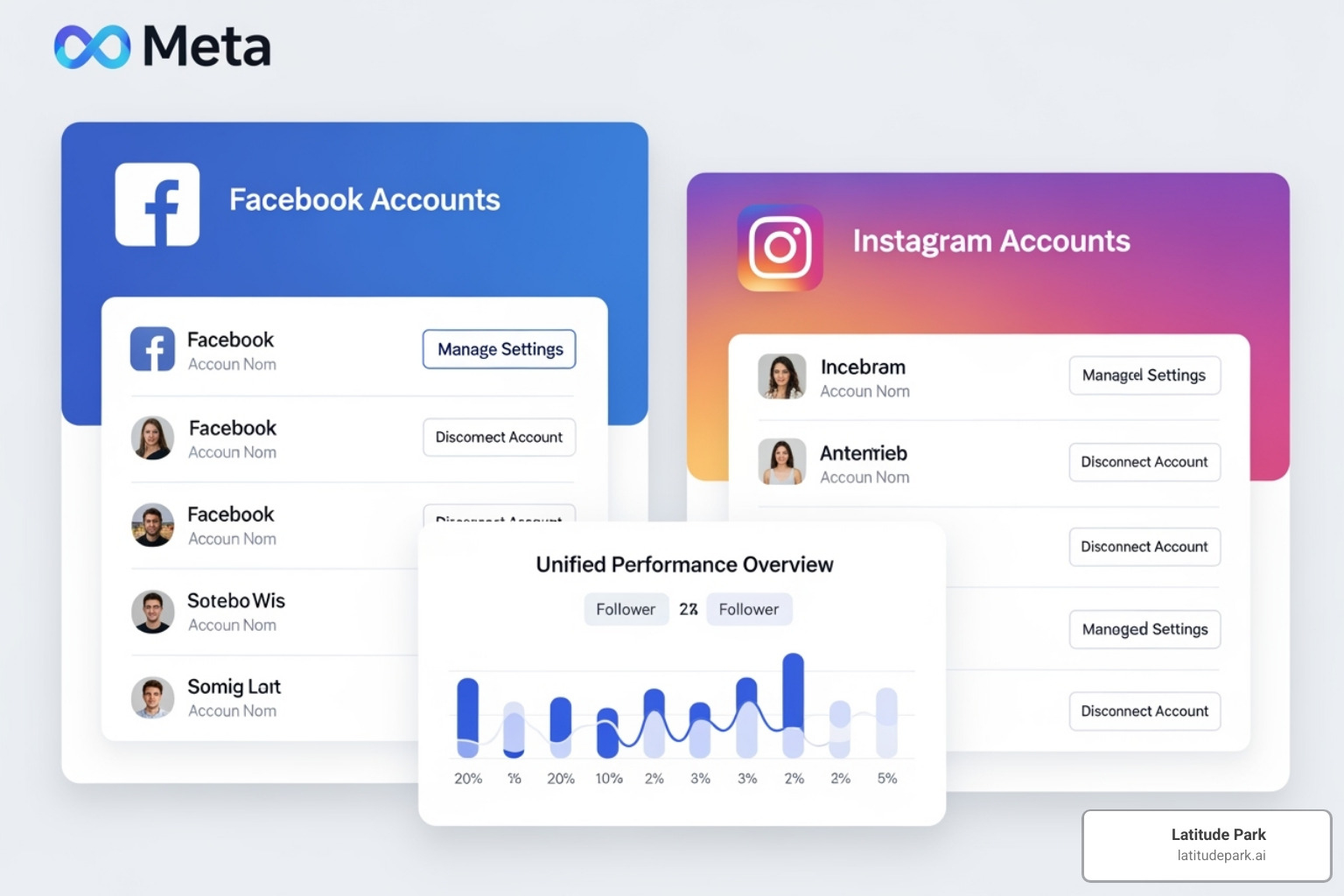
First, set up Meta Business Suite, the command center for managing your presence across both platforms. This free tool brings your pages, accounts, and advertising together in one place.
Next, you’ll need a Facebook Business Page. This serves as your brand’s official identity and is the foundation for all advertising. Ensure it’s complete with your business information, contact details, and professional photos.
On Instagram, convert your profile to an Instagram Business Account. This open ups advertising features, detailed audience insights, and the ability to add contact buttons.
Then, link your Facebook Page and Instagram Business Account within Meta Business Suite. This connection is what enables true cross-platform advertising, allowing you to manage both from a single dashboard. Meta’s help center provides instructions for managing your accounts.
Finally, set up the Meta Pixel on your website. This piece of code is crucial for long-term success. It tracks actions people take after clicking your ads, like making a purchase or filling out a form. This data helps your campaigns get smarter and allows you to build powerful retargeting audiences. Our guide to Facebook Ads for Small Business explains how to leverage it effectively.
How to Create High-Performing Facebook & Instagram Ads: A Step-by-Step Guide
With your accounts ready, it’s time to create ads in Meta Ads Manager, your command center for building, launching, and tracking campaigns. While it can seem complex, the workflow becomes second nature with practice.
Head over to Ads Manager to get started. For a deeper dive into ad effectiveness, see our guide on High Performance Meta Ads.
Step 1: Choosing the Right Campaign Objective
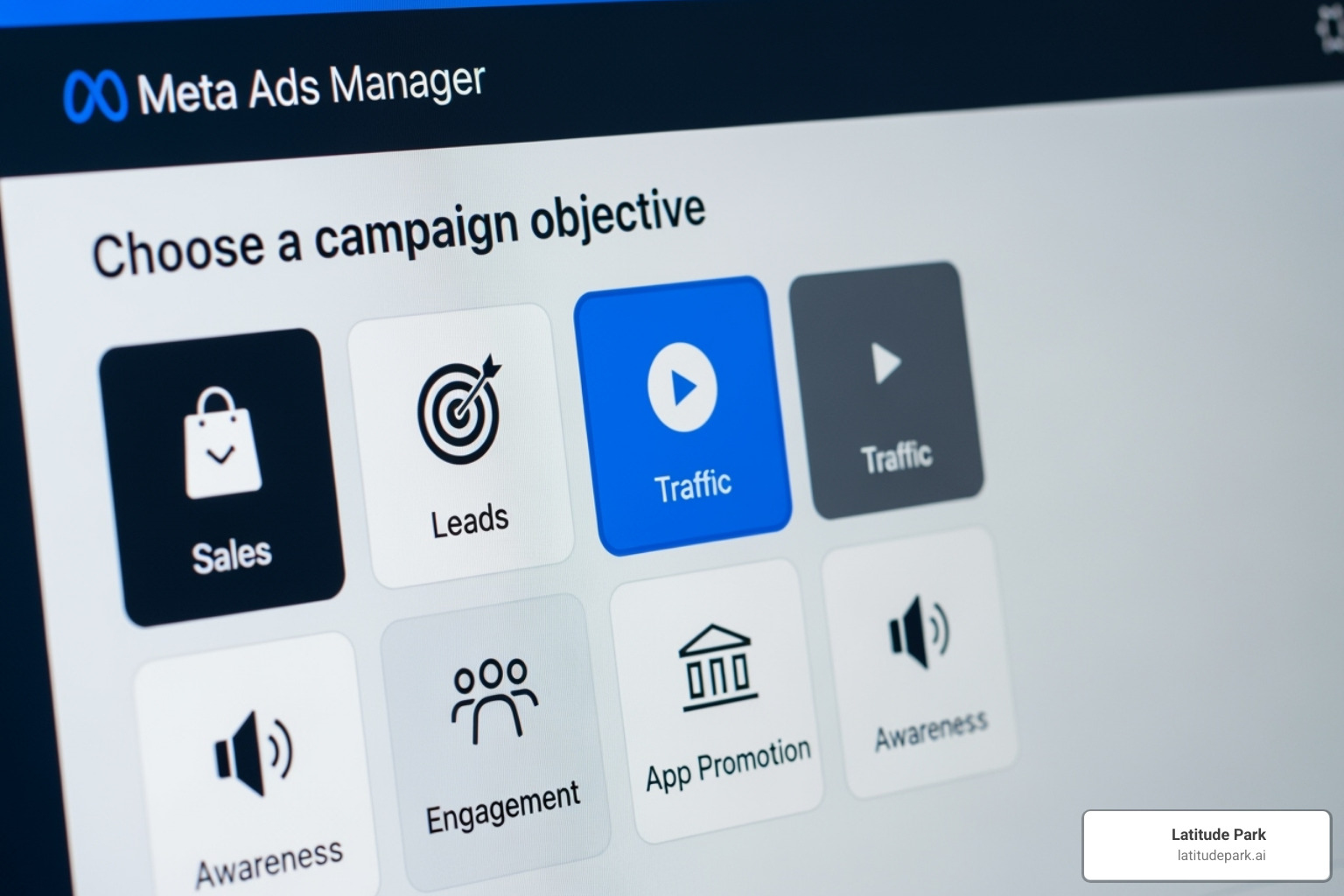
Your campaign objective tells Meta’s algorithm what success looks like, shaping how your facebook & instagram ads are delivered. Align this choice with your business goal.
- Awareness: Maximizes reach to put your brand in front of as many people as possible. Learn more about building brand awareness.
- Traffic: Drives people to your website or landing page.
- Engagement: Encourages likes, comments, shares, or event RSVPs.
- Leads: Collects contact information, perfect for service-based businesses. Meta offers guidance on generating leads.
- App Promotion: Drives app installations and usage.
- Sales: Optimizes for purchases, ideal for e-commerce.
Meta’s algorithm will optimize ruthlessly for your chosen objective, so pick wisely.
Step 2: Targeting Your Ideal Customer
This is where you define who sees your ads. Meta’s sophisticated targeting gives you multiple ways to reach the right people.
- Core Audiences: Target based on demographics (age, gender, location), interests, and behaviors. This is the baseline for most campaigns.
- Custom Audiences: Use your own data. Upload customer lists, target website visitors (via the Meta Pixel), or reach people who’ve engaged with your profiles. This is key for retargeting.
- Lookalike Audiences: Meta finds new people who share characteristics with your existing customers, expanding your reach with quality prospects.
- Advantage+ Audience: Meta’s AI-powered targeting finds the best audience for your ads, adapting based on real-time performance. Learn more in our article on Enhancing Precision Ad Targeting Meta Audience Plus.
For multi-location businesses, precise geographic targeting combined with relevant interests ensures each location reaches its local audience effectively.
Step 3: Mastering Ad Placements for Facebook & Instagram Ads
Placements determine where your ads appear. This is the secret to effective cross-platform advertising.
- Advantage+ Placements: Recommended for most advertisers. Meta’s algorithm automatically distributes your budget across all available placements (Feeds, Stories, Reels, etc.), shifting spend to what works best and costs less.
- Manual Placements: Gives you control to select or exclude specific placements. Be aware that this can limit the algorithm’s ability to optimize.
Key placements for facebook & instagram ads include Feeds, Stories and Reels (full-screen, short-form video), and In-Stream Video. Different placements require different creative formats (e.g., vertical video for Stories). Meta lets you customize assets for each placement to ensure your ad always looks its best. Check Meta’s ad specifications guide for technical requirements.
Step 4: Crafting Compelling Ad Creatives
Your creative is what stops the scroll and communicates your value.
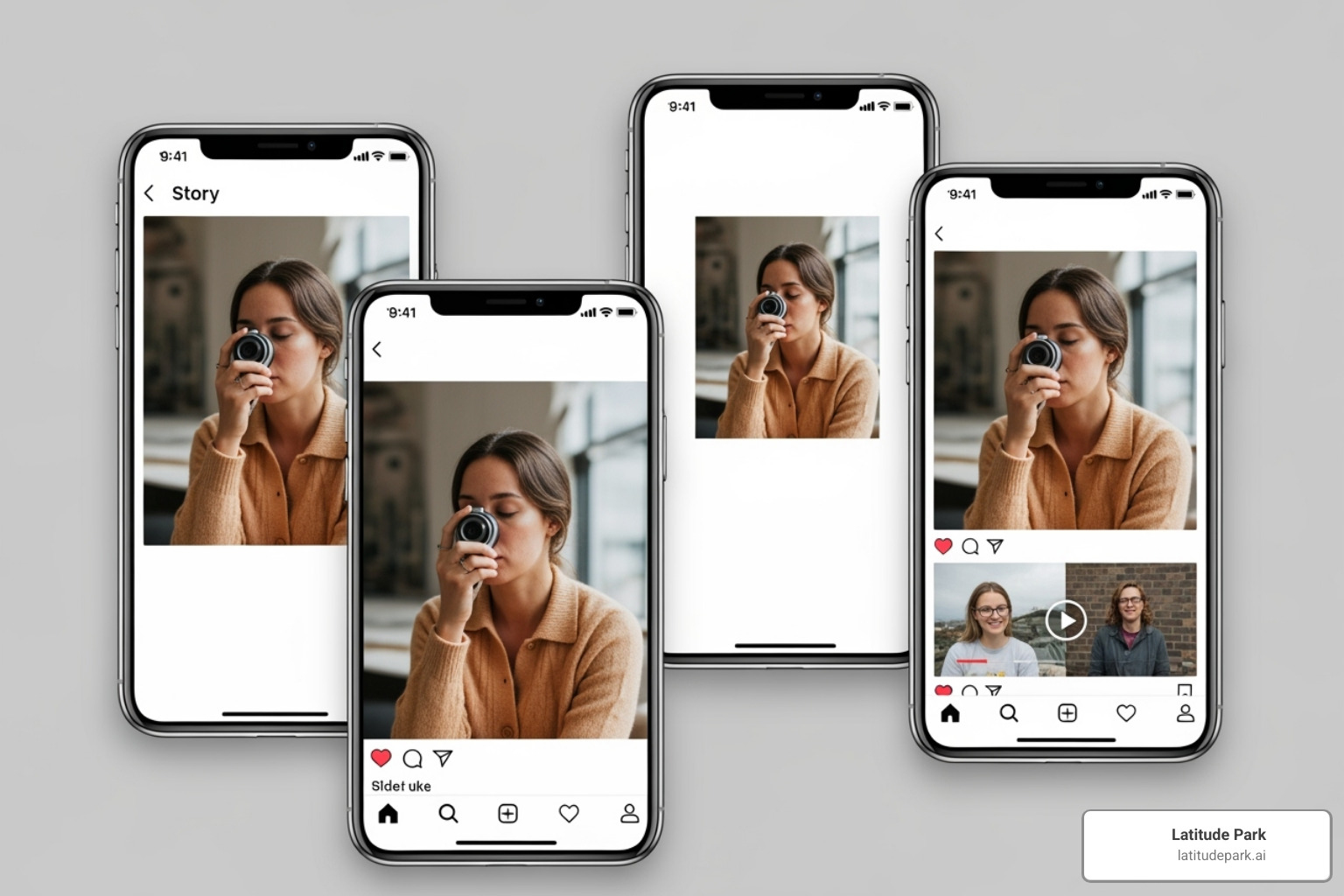
- Image ads: Simple and effective for testing messages.
- Video ads: Excellent for storytelling and engagement. Keep them short and punchy.
- Carousel ads: Showcase multiple images or videos in a single, swipeable ad.
- Collection ads: A mobile-only format that opens a full-screen browsing experience, perfect for e-commerce.
Your ad copy should be concise and benefit-driven. Use a strong call-to-action (CTA) like “Shop Now” or “Learn More” to tell people what to do next. High-quality visuals are non-negotiable; blurry or poorly lit creative will hurt performance. Stay current with the Latest Meta Advertising Features to keep your strategy fresh.
Measuring and Optimizing Your Cross-Platform Campaigns
Launching your facebook & instagram ads is just the beginning. The real work happens after they go live, as you analyze performance data to make smart adjustments.
Your Ads Manager is mission control, collecting data on how people interact with your ads. The metrics that matter most depend on your goals, but a few are universally important:
- CTR (Click-Through Rate): Shows if your creative and messaging are resonating. A low CTR suggests your ad isn’t connecting with your audience.
- CPC (Cost Per Click): Reveals how efficiently you’re spending. A low CPC is good, but it must be paired with conversions.
- CPA (Cost Per Acquisition): Shows what you’re paying to achieve your objective (a lead, a purchase, etc.). This is a critical measure of success.
- ROAS (Return On Ad Spend): The ultimate report card for e-commerce, showing how much revenue you generated for every dollar spent.
The Ads Manager reporting dashboard lets you customize your view and drill down to see how ads perform on Facebook versus Instagram, and even compare specific placements like Feed versus Stories. This placement-level analysis shows where your audience is most engaged.
While Meta provides comprehensive data, note that for some boosted posts, a granular breakdown of impressions by platform may not be available. However, key metrics like reach and conversions include data from both platforms.
A/B testing is essential. Instead of guessing, run controlled experiments to test different images, headlines, or audiences. Meta’s built-in tools make this straightforward. Budget optimization is also key. Consider increasing the budget for high-performing ad sets and pausing underperformers. Meta’s Advantage+ Budget feature can automate this, shifting spend to the best ad sets in real-time.
Successful advertisers treat optimization as a continuous process. Check your metrics regularly and be ready to adapt based on what the data tells you. For a comprehensive guide, see Meta’s resources on Measure and Optimize Ads. If costs are rising, understanding Why Meta Advertising Costs Are Increasing in 2025 can help you adjust your strategy.
Leveraging Meta’s Advanced Tools and Best Practices
Once you’ve mastered the basics of facebook & instagram ads, level up with Meta’s advanced tools. These features are designed to simplify your workflow and deliver better results.
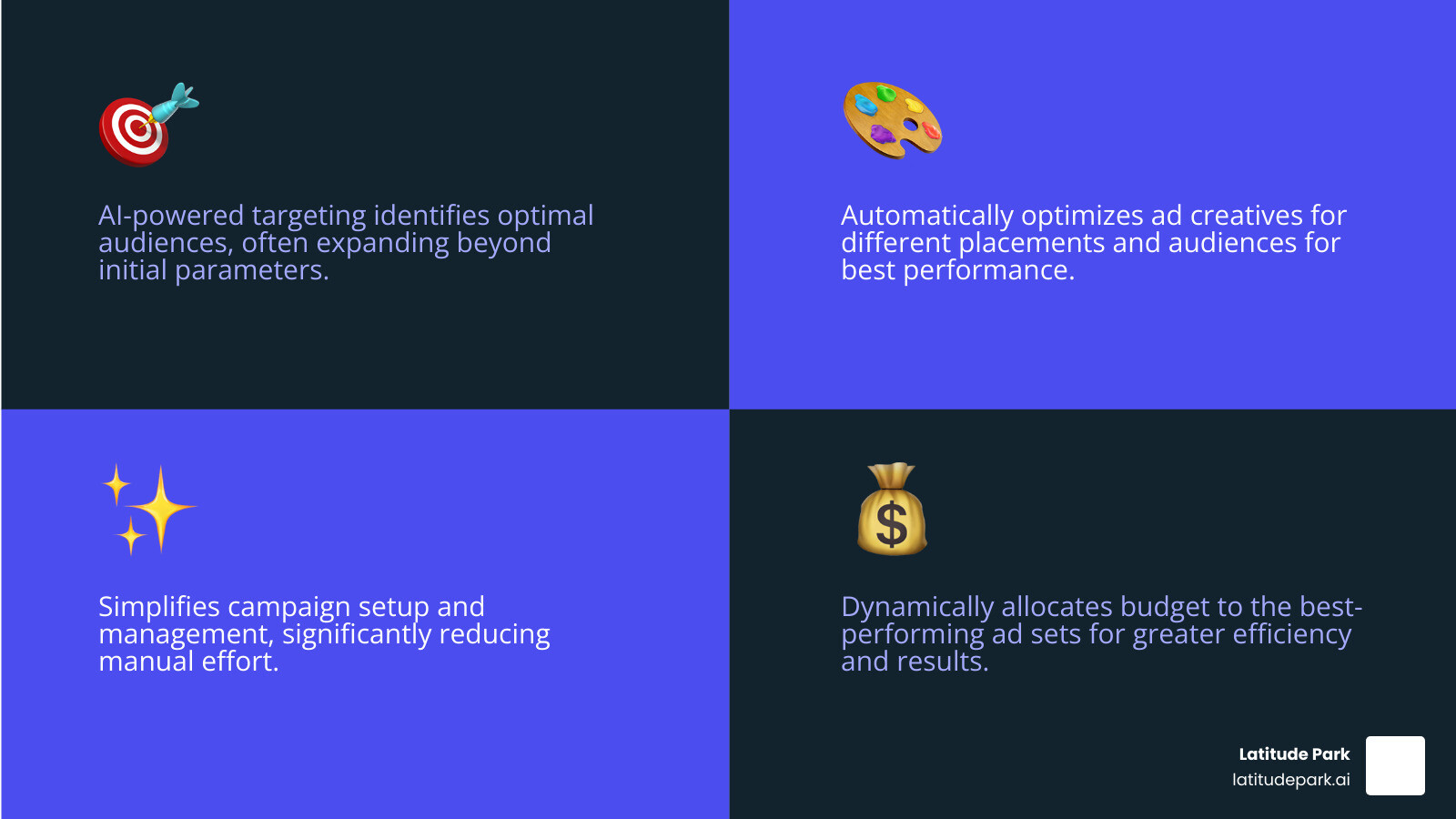
The Meta Advantage+ suite is where Meta’s AI shines, automating and optimizing your campaigns. Advantage+ Shopping Campaigns streamline setup for e-commerce, while Advantage+ Creative automatically tests and delivers the best-performing ad combinations.
Dynamic Creative Optimization takes this further. You provide multiple ad components (headlines, images, CTAs), and Meta’s system finds the best combination for each person, keeping your ads fresh and relevant without manual effort.
Retargeting is where the real magic happens. These campaigns target people who already know your brand and are more likely to convert. You can reach website visitors (via the Meta Pixel), people who engaged with your profiles, or video viewers. Meta’s guide on how to Retarget Existing Customers offers excellent strategies.
For multi-location businesses and franchises, these tools are invaluable. Meta Business Suite centralizes management, allowing you to maintain brand consistency while customizing ads for local markets. Dynamic ads can even show the nearest store location automatically. The key is balancing a centralized strategy with local relevance—a challenge we specialize in at Latitude Park. For more on this, explore our insights on Digital Advertising for Multi Location Businesses.
These advanced tools are essential for staying competitive. They handle the heavy lifting of optimization, freeing you to focus on strategy and growth.
Frequently Asked Questions
Here are answers to common questions about facebook & instagram ads.
Can I run ads on Instagram without an Instagram account?
Yes, you can technically run Instagram ads using your Facebook Page as the identity. However, we strongly recommend creating and linking an Instagram Business Account. When your ads come from a real Instagram profile, your brand appears more legitimate and established. It also allows users to tap through to your profile, follow you, and engage with your organic content, which builds trust and makes your paid ads more effective.
What’s a good starting budget for Facebook & Instagram ads?
There’s no single answer, as the ideal budget depends on your goals, industry, and audience size. Industries with more competition, like finance, often have higher costs. As a general guideline, start with a daily budget of $10-$20 ($300-$600 per month). This is enough to run tests for a few weeks, collect meaningful data, and learn what resonates with your audience. Think of your first month as an investment in learning. Once you identify winning campaigns, you can confidently scale your budget.
How long does it take for an ad to be approved?
Most ads are reviewed and approved within 24 hours, and often much faster. However, reviews can take longer for new accounts, during busy holiday seasons, or if your ad touches on sensitive topics. Meta’s review process uses both automated systems and human reviewers to check against their advertising policies. If an ad is rejected, Meta will provide a reason so you can make changes. To avoid delays, familiarize yourself with Meta’s ad policies and submit your ads a day or two before you need them to go live.
Conclusion: Unify Your Advertising for Maximum Growth
If there’s one takeaway from this guide to facebook & instagram ads, it’s this: running ads on both platforms isn’t twice the work—it’s less work with better results when done right.
You gain access to nearly 5 billion users through a single campaign. You let Meta’s algorithms automatically find the most cost-effective placements. And you build a consistent brand presence across the platforms your customers use daily. The unified ecosystem removes the guesswork. You create once, and Meta optimizes everywhere.
This approach is about building a sustainable growth engine. By combining the right objectives, targeting, creative, and optimization, you create a system that delivers measurable results. For multi-location businesses and franchises, a unified strategy is even more critical for scaling advertising without losing the local touch.
There is a learning curve, but the power of Meta’s platform is undeniable. If you’re ready to dive in, this guide has everything you need to start. Test what works, learn from the data, and scale your successes.
If you recognize the need for this strategy but lack the bandwidth to manage it—especially for a complex franchise system—that’s where we can help. At Latitude Park, we specialize in Meta advertising for multi-location businesses. Let our experts manage your Facebook & Instagram Ads so you can focus on running your business.
Your customers are on Meta’s platforms. It’s time to meet them with a unified strategy that drives real growth.