
Press Relation: Master Modern PR in 2025
Why Press Relations Is the Missing Piece in Your Brand’s Growth Strategy
Press relation is the strategic practice of building relationships between an organization and the media to shape public perception and build credibility. Unlike paid advertising, it focuses on earning trust through authentic storytelling and third-party validation from trusted news sources.
Quick Definition: Press Relations at a Glance
| What It Is | What It Does | Why It Matters |
|---|---|---|
| Strategic communication with media outlets and journalists | Secures unpaid media coverage and builds brand credibility | Creates trust that advertising cannot buy—only 20% of people trust paid communicators |
| Relationship-based, not transactional | Shapes public perception through third-party validation | Drives website traffic, leads, and long-term brand equity |
| Earned media, not paid advertising | Tells your story through trusted news sources | Cuts through consumer skepticism in an oversaturated market |
In today’s crowded marketplace, consumers are bombarded with marketing messages and trust in traditional advertising is low. A 2003 Edelman trust survey found only 20% of people believed paid communicators were credible. This is where press relations becomes invaluable.
While advertising tells people your brand is great, press relations shows them through independent validation. For franchise businesses, a coordinated press relations strategy builds local trust and amplifies digital advertising efforts across multiple markets.
The media landscape has transformed, and modern press relations requires understanding traditional media as well as online publications, podcasts, and influencers.
I’m Rusty Rich, founder and President of Latitude Park. For over 15 years, I’ve helped businesses—especially growing franchises—integrate digital advertising with strong press relations to drive measurable growth. I’ve seen how earned media coverage builds the local credibility that converts awareness into customers.
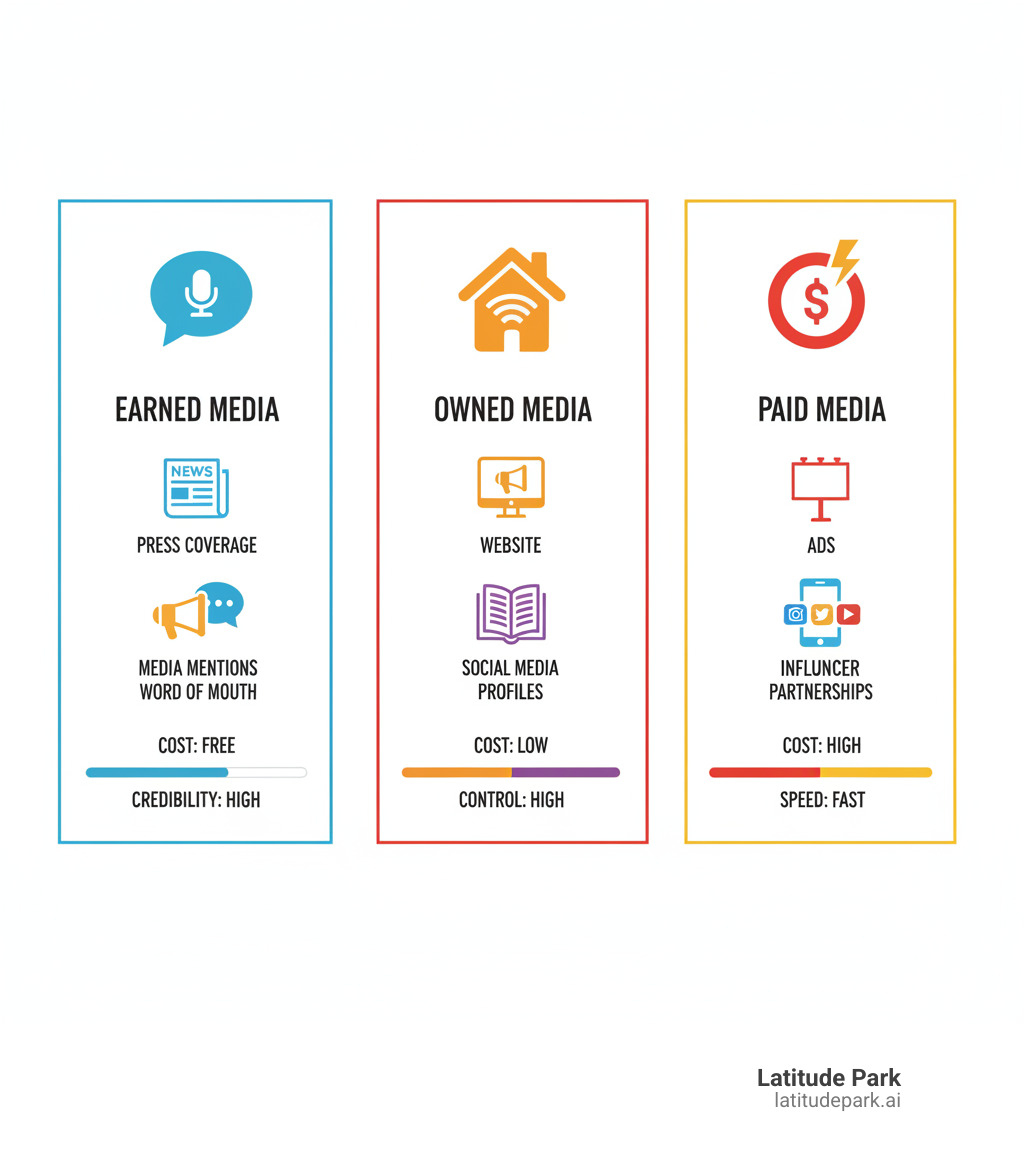
What Are Press Relations? The Foundation of Public Perception
At its heart, press relation is the strategic practice of managing how information about your organization flows to the media and, ultimately, to the public. It’s about earning credibility through authentic storytelling and third-party validation, rather than buying attention through paid placements.
When a respected news outlet covers your business, that coverage carries an implicit endorsement that no paid advertisement can replicate. This “earned media” builds trust in ways that traditional marketing simply cannot. While advertising tells people your brand is excellent, press relations shows them through the trusted voice of independent media.
The Core Definition and Purpose of Press Relations
Press relations is a specialized branch of public relations focused exclusively on an organization’s relationship with the news media. The Public Relations Society of America (PRSA) defines public relations as “a strategic communication process that builds mutually beneficial relationships between organizations and their publics.” For press relations, those “publics” are the journalists, editors, and media influencers who shape public discourse.
The purpose is to manage the flow of information to secure positive coverage from unpaid sources. This involves providing journalists with valuable, newsworthy content that serves their audience, and in return, your brand receives exposure and validation.
Why Press Relations Matter in Today’s Crowded Media Landscape
Consumer skepticism is at an all-time high. People have developed sophisticated filters for tuning out promotional noise, and traditional advertising often gets ignored. This is where press relations becomes a critical tool for building brand equity.
When a journalist from a publication your target audience trusts covers your story, it carries enormous weight. It’s not you claiming to be innovative—it’s an independent voice validating those claims. This visibility drives real business outcomes: increased website traffic, improved search engine rankings, higher-quality leads, and sales growth.
How Press Relations Differs from Other Communications
Understanding what makes press relation unique helps you use it effectively. It focuses on earning trust through relationships and storytelling, building long-term perception rather than driving immediate transactions.
The trade-off is control versus credibility. With advertising, you control the message completely. With press relations, a journalist decides the angle and content. You have low control but gain high credibility—and in today’s market, credibility is invaluable.
Think of it this way: advertising is you talking about yourself, marketing is the entire strategy for reaching customers, and press relations is getting respected third parties to talk about you. All three are important, but only press relations delivers that powerful combination of credibility and organic reach.
For a deeper exploration of how press relations fits within your broader communication strategy, check out our PR Services Complete Guide.
Building a Winning Press Relations Strategy
A successful press relations strategy is built on careful planning, authentic storytelling, and genuine relationship-building. It requires clear objectives and a deep understanding of your target audience. From there, you can build out a cohesive approach that positions your brand for consistent, positive media exposure.

This involves developing targeted media lists, creating content that tells a story, personalizing your outreach to reporters, and preparing your team for interviews. It’s a continuous cycle of planning, execution, and relationship nurturing.
The Essential Elements of a Successful Press Relation Strategy
An effective press relation strategy begins with clear, measurable goals. Are you trying to boost brand awareness, shift public perception, or position your CEO as a thought leader? Once objectives are set, the core elements include:
- Audience Identification: Know who you need to reach, what they care about, and where they get their news.
- Key Message Crafting: Develop concise, memorable statements that capture what makes your brand matter.
- Targeted Media Lists: Identify specific journalists who cover your industry, not just a generic list.
- Compelling Content: Create press releases, pitch emails, and background materials that give journalists everything they need. Our PR Press Release Complete Guide walks through this process.
- Smart Distribution: Ensure your content reaches the right people at the right time.
The Power of Storytelling in Gaining Media Attention
Facts inform, but stories move people. Journalists are hunting for stories that will make their readers feel something and remember what they read. Every brand has a narrative—the founder’s journey, a customer’s success story, or a team’s response to a crisis. These human-interest angles create emotional connections that statistics alone cannot.
Great press relation professionals find the compelling angle in any announcement, moving beyond the “what” to explore the “why.” By weaving your brand narrative throughout your communications, you create an authentic impression that generates meaningful coverage.
How to Build and Maintain Strong Media Relationships
Relationships are everything in press relations. Building them starts with research. Before contacting a journalist, understand their beat, recent articles, and audience. This allows for personalized pitches that show you’ve done your homework. According to one study, three out of four journalists will block someone who spams them with irrelevant pitches.
The goal is to become a reliable source. This means providing accurate information, respecting deadlines, and offering genuine value, such as exclusive data or expert access. These relationships develop over time through consistent, thoughtful interaction, eventually leading to journalists proactively seeking your input.
Essential Skills for a Successful Press Relation Professional
What makes a great press relation professional? It’s a combination of key skills:

- Exceptional Writing: The ability to craft clear, compelling narratives.
- Strong Communication: Confidence in presenting information and networking.
- Strategic Thinking: Connecting PR efforts to broader business objectives.
- Adaptability and Resilience: The ability to steer a changing media landscape and handle rejection.
- Crisis Management: The skill to respond effectively under pressure.
The U.S. Bureau of Labor Statistics notes the diverse responsibilities of PR specialists, and organizations value these skills accordingly. As of June 2024, the average total compensation for publicists in the U.S. was $76,000.
The Modern Playbook: Digital Impact and Measurement
The digital revolution has completely transformed press relations. What once involved faxing press releases now requires navigating a complex, always-on ecosystem of social media, influencers, and search engines.

This digital shift is an opportunity. Modern tools provide an unprecedented ability to reach audiences, measure impact, and amplify successes. Today’s professionals must think like digital marketers, understanding how SEO, content marketing, and social media can turn a single media mention into a global conversation. Online reputation management has become as fundamental as writing a good pitch.
How Digital Media Has Transformed Press Relations Practices
The 24/7 news cycle means stories break and trend in minutes, requiring PR professionals to be agile and responsive. Social media platforms are now legitimate news sources, where brands participate in conversations rather than just broadcasting messages, a reality predicted by “The Cluetrain Manifesto” back in 1999.
The definition of “media” has also expanded to include industry bloggers, YouTube creators, and podcast hosts. This democratization of publishing means media lists are more diverse and require a nuanced understanding of different platforms. Furthermore, online media coverage creates valuable backlinks that improve search rankings and drive organic traffic for years. Our guide on the 5 Golden Rules for Building PR Backlinks explores this benefit.
How to Leverage and Amplify Earned Media
Securing media coverage is only half the battle. Amplifying that coverage is what turns it into a long-lasting asset. Here’s how:
- Share on Social Media: Turn a single article into weeks of content by pulling quotes, creating graphics, and engaging with comments.
- Showcase on Your Website: Feature media logos in an “As Seen In” section to build instant credibility. Create a dedicated press page with links to articles and video clips.
- Inform Your Audience: Include positive press in newsletters to reinforce your authority.
- Enable Your Sales Team: Arm your sales staff with third-party validation from media mentions to use in prospect conversations.
- Create Case Studies: Repurpose feature articles and broadcast segments into structured marketing assets that demonstrate specific outcomes.
How to Measure the Effectiveness of Your Efforts
For years, measuring press relations was difficult. Old metrics like Advertising Value Equivalency (AVE) have been discredited by industry frameworks like the Barcelona Principles because they fail to capture the unique value of earned media.
Modern measurement focuses on tangible business outcomes:
- Media Mentions & Share of Voice: Track the volume of your coverage relative to competitors.
- Sentiment Analysis: Assess whether coverage is positive, negative, or neutral to identify reputation trends.
- Website Referral Traffic: See how many visitors click through from media coverage to your site.
- Lead Generation: Tie media placements to inquiries, demo requests, and sales opportunities.
- Key Message Penetration: Determine if journalists are including your core messages in their stories.
Only 22% of communications leaders feel confident in their ability to measure PR. By focusing on these metrics, you can demonstrate clear ROI and transform PR from a “nice to have” into a strategic growth driver.
Navigating Challenges: Crisis, Ethics, and Reputation
Even the best press relation strategy must account for challenges. A customer complaint can go viral, or a product recall can become necessary. These moments test an organization’s character, and preparation is the key to navigating them successfully.
Effective press relations isn’t just about sharing good news; it’s about being a trusted communicator in all circumstances. This requires proactive planning, ethical foundations, and an understanding that transparency is non-negotiable. Attempting to cover up problems with “reputation laundering” always backfires.
The Role of Press Relations in Crisis Management
In a crisis, your press relation capabilities are critical. A well-executed response can prevent permanent brand damage.

Key components of crisis management include:
- A Crisis Communication Plan: Have a plan in place before you need it, outlining scenarios, roles, and protocols.
- A Designated Spokesperson: A single, credible voice prevents confusion and builds trust.
- Holding Statements: Pre-approved messages allow you to respond immediately while you gather facts.
- Timely Updates: Regular communication demonstrates transparency and shows you are managing the situation.
- Rebuilding Trust: After the crisis, demonstrate accountability and show what you’ve learned through sustained action. The long-term efforts following events like the BP Initiates Response to Gulf of Mexico Oil Spill underscore this necessity.
Common Challenges and How to Overcome Them
- Securing Coverage: In a saturated media environment, overcome this by researching journalists and crafting personalized pitches that add value.
- Avoiding Irrelevant Pitches: Spamming reporters burns bridges. Treat every media relationship as a valuable asset.
- Lack of Resources: Small businesses can start by focusing on local media, which are often more accessible and interested in community stories.
- Negative Press: Address factual inaccuracies professionally. If criticism is valid, acknowledge it and explain your solution.
- Measuring ROI: Focus on concrete metrics like website traffic, lead generation, and sentiment analysis, as guided by frameworks like the Barcelona Principles.
What are the Ethical Considerations for Press Relations Professionals?
Without ethics, press relation becomes propaganda. Honesty and transparency are the foundation of the credibility you’re trying to build. The PRSA Code of Ethics provides a guide built on core values like Honesty, Advocacy, Expertise, Independence, Loyalty, and Fairness.
Ethical persuasion presents the strongest case for your position while remaining truthful. Avoid “spin” that twists facts or omits crucial context. A practical framework for this is the TARES Test, which evaluates if a communication strategy is:
- Truthful
- Authentic
- Respectful
- Equitable
- Socially Responsible
These ethical guardrails are not abstract debates; they are practical tools that protect your brand’s reputation and ensure the long-term success of your press relations efforts.
Frequently Asked Questions about Press Relations
What is the single most important activity in press relations?
Building genuine, mutually beneficial relationships with members of the media. While tactics like writing a great press release are important, a foundation of trust and rapport is what ensures your story gets heard. When a journalist knows and trusts you as a credible source, your message is far more likely to be considered.
Can a small business do its own press relations?
Yes. Effective press relations doesn’t require a massive budget. Small businesses can manage their own PR by focusing on local and community-level media. This requires dedication to building media lists, researching local journalists, crafting compelling community-focused stories, and being persistent. Local outlets are often accessible and eager to feature local businesses.
How long does it take to see results from press relations?
Press relations is a long-term strategy, not a quick fix. While a single release can sometimes generate immediate interest, the real, sustainable value comes from consistent effort over several months. This investment of time builds meaningful relationships with journalists and establishes your brand as a credible source, leading to a steady flow of media coverage that impacts your business goals.
Conclusion: Integrating Press Relations into Your Growth Strategy
This guide has covered the essential landscape of press relation, from its foundational role in building trust to navigating the modern digital media environment. Unlike paid advertising, press relations builds authentic credibility through third-party validation and earned media coverage.
The value of this discipline lies in its long-term impact. Consistent effort transforms your brand into a recognized, trusted voice in your industry, creating a reservoir of goodwill that supports growth and helps weather challenges. This sustained visibility drives tangible business outcomes, including improved search rankings, qualified website traffic, and lead generation.
For businesses like franchises managing multiple locations, a strong press relation strategy is especially critical. It builds community trust on a local level while national coverage lifts the entire brand. When combined with targeted digital advertising, this creates a powerful synergy: advertising drives awareness, and press relations builds the trust that converts prospects into loyal customers.
At Latitude Park, we’ve seen how this integration of paid and earned media creates exceptional results for our franchise clients. The fundamental principles of press relations—authentic storytelling, genuine relationships, and ethical communication—remain constant even as the media landscape evolves.
To effectively manage your brand’s public image and leverage the power of earned media, we invite you to explore how Latitude Park can help. Let’s work together to build the kind of brand credibility that turns customers into advocates.