Search engine ranking: Unlock 2025 Success
Showing Search Engine Ranking: Your Digital Roadmap
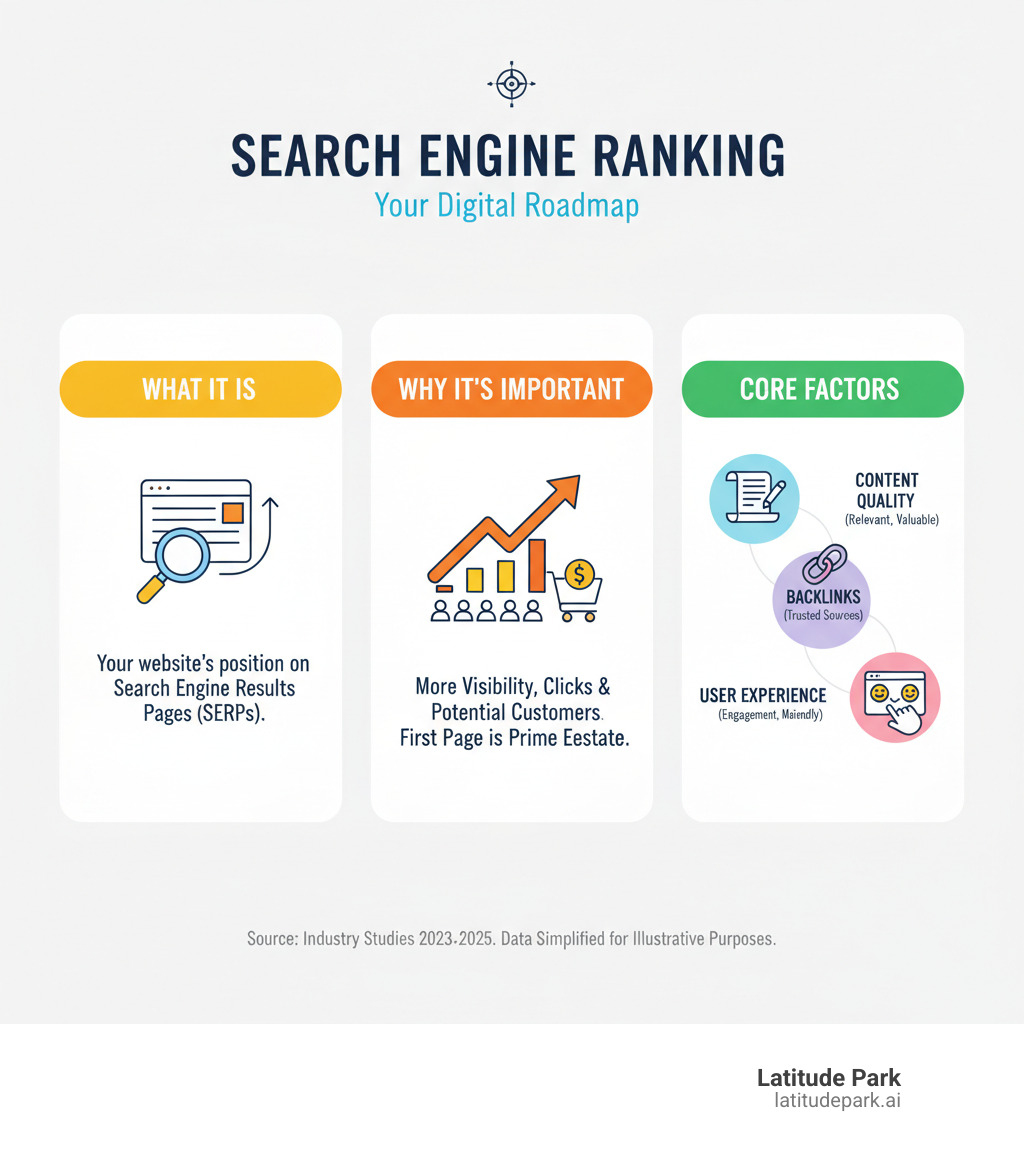
Search engine ranking is your website’s position on search engine results pages (SERPs). When someone searches online, search engines like Google display a list of results, and your ranking is where you appear on that list.
- What it is: Your website’s position on SERPs.
- Why it’s important: Higher ranks mean more visibility, clicks, and potential customers.
- Main Goal: To appear on the first page, ideally in the top few spots.
- Influencing Factors: Search engines consider many factors like content quality, links, and user interaction.
This matters because most people don’t look past the first page of results. A 2023 study showed that 75% of all clicks go to the top five results, while 97% of searchers never see the second page. Ranking well is crucial for visibility, ensuring customers find you instead of your competitors.
I’m Rusty Rich, President and founder of Latitude Park. My agency helps businesses, especially franchises, build strong online presences and drive measurable growth through expert digital advertising and search engine ranking strategies. I’m excited to share insights that can help your brand shine online.
What is Search Engine Ranking and Why Is It Crucial?
Your search engine ranking is vital for any business, especially for multi-location franchises looking to grow. Think of it like a busy marketplace. A prime spot on the main street gets all the attention, while a shop in a quiet alley remains hidden. Online, a high search engine ranking is your prime storefront.
If your website isn’t on the first page, you’re practically invisible to most potential customers. This isn’t just about vanity; a high ranking directly boosts website visibility, brings in more organic traffic, and fuels business growth. For us at Latitude Park, helping franchises succeed means building a strong online presence. A great search engine ranking leads to more leads, engagement, and customers. It’s the heartbeat of your digital media marketing. To learn more, explore The Importance of SEO in Digital Media Marketing.
How Search Engines Determine Rank
Search engines use advanced algorithms to rank websites in a three-step process: crawling, indexing, and ranking.
First, crawling is when automated programs called “spiders” explore the internet, following links to find new or updated pages and gather information.
Next, in indexing, this information is processed and stored in a massive database, like a giant digital library. Google’s index, for example, contains hundreds of billions of web pages.
Finally, ranking algorithms sift through the index to find the most relevant results for your search query. Google’s algorithm uses over 200 different factors to determine the best search engine ranking. These factors fall into several main categories:
- Understanding your query: Search engines use language tools to understand what you mean, correcting typos and recognizing synonyms.
- Relevance of content: The algorithm assesses how well a page’s content answers the user’s question, looking at the topic and context.
- Quality of content: Search engines favor content that shows expertise, authoritativeness, and trustworthiness (E-A-T), using signals like links from other well-known websites.
- Usability of content: Factors like being mobile-friendly and loading quickly are crucial. An easier-to-use page will often rank higher.
- Context and settings: Your location, search history, and settings can personalize results, making them more helpful.
Google constantly refines these systems to deliver the best results. You can learn more from How does Google determine ranking results – Google Search.
The Difference Between Organic and Paid Results
A search results page shows two types of listings: organic results and paid results (ads). They appear differently and have different implications for your search engine ranking.
| Feature | Organic Search (SEO) | Paid Search (PPC) |
|---|---|---|
| Placement | Appears naturally based on relevance and authority. | Paid ad space at the top or bottom, marked as an ad. |
| Cost | “Free,” but requires time, effort, and strategy. | Pay-per-click (PPC); you pay when someone clicks your ad. |
| Time to Results | A long-term game; results can take months to appear. | Instant visibility once campaigns are active. |
| Longevity | Lasting visibility with ongoing maintenance. | Visibility lasts only as long as you pay. |
| User Trust | Often seen as more credible and trustworthy by users. | Clearly ads, but effective for immediate attention. |
| Control | Influence over ranking, not direct control over the spot. | Full control over keywords, ad copy, budget, and targeting. |
Organic listings are earned through search engine optimization (SEO). These are the results search engines believe are most relevant. Paid search involves bidding on keywords to have your ads displayed prominently. While paid search offers immediate visibility, it doesn’t affect your organic search engine ranking. However, it’s a great tool for targeted traffic and works well alongside SEO. For more details, see What is the Difference Between SEM and SEO?.
The Core Factors Influencing Your Search Engine Ranking

Achieving a high search engine ranking is like building a house; you need a solid structure. In SEO, this structure rests on three pillars: On-Page SEO, Off-Page SEO, and Technical SEO. Google’s 200+ ranking signals all fit within this framework, helping organize your strategy to focus on what matters most.
On-Page SEO Factors
On-Page SEO includes everything you control directly on your web pages to communicate your content’s value to users and search engines.
Content quality is central. High-quality content provides genuine value, answers questions thoroughly, and offers unique insights. While most top-ranking pages have at least 300 words, depth and usefulness are more important than length.
Keyword optimization helps search engines understand your page’s topic. Keywords should appear naturally in your title tags (the clickable headline in search results) and meta descriptions (the summary below the title). While meta descriptions don’t directly affect rankings, a compelling one improves click-through rates, which is a positive signal.
Header tags (H1, H2, H3) structure your content, making it easier to read and helping search engines identify main topics. Internal linking connects pages on your site, guiding visitors and distributing authority. This improves navigation and helps search engines understand your site’s structure. For a deeper dive, see The Ultimate Guide to On-Page SEO.
Off-Page SEO Factors
Off-Page SEO involves actions taken outside your website to build its authority and trustworthiness, which in turn influences your search engine ranking.
Backlinks are the cornerstone. When another site links to yours, it acts as a vote of confidence. A single link from a respected, authoritative website carries more weight than many links from low-quality sites. This concept stems from PageRank, Google’s original algorithm that treated links as votes. While the public score is gone, the principle remains central to how link equity works. Learn more about PageRank.
Domain authority is a metric that reflects your site’s overall credibility and predicts its ranking potential based on your backlink profile. Social signals and brand mentions also play a role. A strong social presence can drive traffic and lead to natural backlinks, while mentions of your brand across the web contribute to your perceived authority. Focus on earning quality backlinks from reputable sources. Our guide on How to Get High DA Backlinks can help.
Technical SEO and User Experience
Technical SEO ensures search engines can crawl and index your site, while user experience focuses on making it enjoyable to visit. Both are critical for a strong search engine ranking.
Website speed is vital. Slow pages lose visitors and rank poorly. Mobile-friendliness is non-negotiable, as Google’s mobile-first indexing prioritizes your mobile site for ranking decisions. Learn more about What is Mobile-First Website Development?.
A logical site architecture with clear navigation helps users and crawlers find content easily. HTTPS security protects user data and provides a small ranking boost. Finally, Core Web Vitals measure page experience, including loading speed, interactivity, and visual stability. Google explicitly uses these page experience aspects as ranking signals. A better user experience can be the tiebreaker against a competitor.
How to Improve Your Search Engine Ranking with SEO
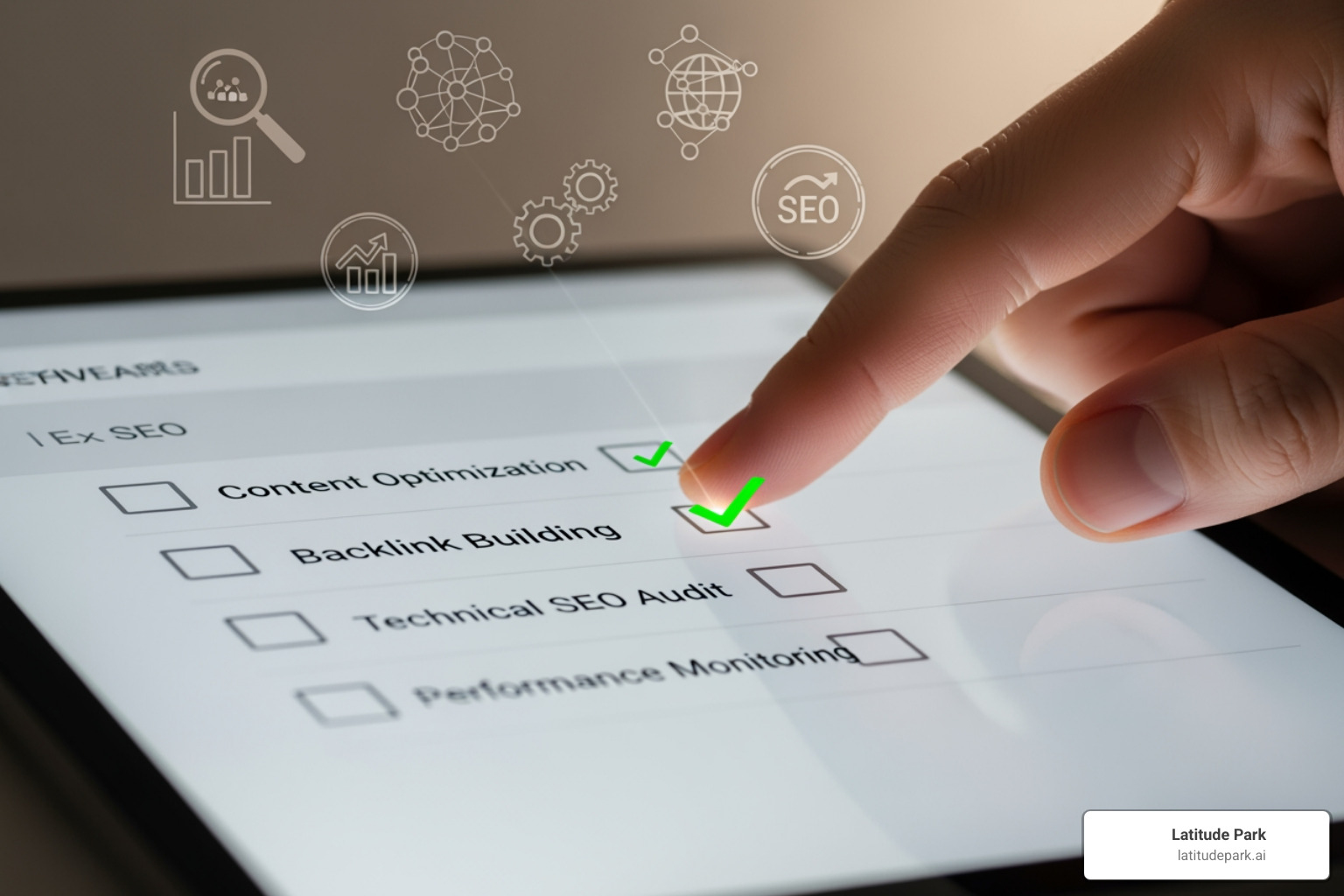
Now that you know what influences search engine ranking, let’s focus on improving it. Effective SEO is about building a solid foundation and consistently delivering value. For franchises, this means creating a cohesive strategy that works across all locations. For a full overview, see Effective SEO Techniques to Improve Your Website’s Search Ranking.
Master Keyword Research and Implementation
Keywords are the language your customers use to search online. To connect with them, you must understand not just the words they use, but also their search intent—the “why” behind their search. For example, “burger restaurants” is informational, while “best burger delivery near me” is transactional. Your content must match the user’s intent.
Long-tail keywords (longer, more specific phrases) are incredibly valuable. Targeting “affordable food franchise opportunities in Texas” instead of just “franchise opportunities” connects you with a more qualified audience. These keywords may have lower search volume, but they convert at a higher rate.
Use keyword tools to find these opportunities and analyze what your competitors are ranking for to find gaps in your own strategy. Effective research involves analyzing audience questions, finding high-volume terms with manageable competition, and regularly updating your strategy based on performance. For more tips, check out 10 Keyword Research Tips That’ll Help Rank Your Website.
Create High-Quality, Relevant Content
Even with perfect technical SEO, your search engine ranking will falter without high-quality content. Google’s E-E-A-T framework (Experience, Expertise, Authoritativeness, and Trust) evaluates whether your content deserves to rank. Trust is the most critical element, especially for “Your Money or Your Life” topics affecting a person’s health or finances.
- Experience: Show you’ve actually done what you’re talking about.
- Expertise: Demonstrate your knowledge through qualifications or credentials.
- Authoritativeness: Be recognized as a go-to source in your industry.
Content freshness is also important for timely topics, but it can’t save poorly written content. Your primary goal should be to help people by answering their questions and solving their problems.
Readability is crucial. Use clear language, short paragraphs, headings, and bullet points to make your content digestible. While aiming for at least 300 words helps ensure depth, quality always beats quantity. For new ideas, see our list of 11 SEO Content Ideas to Try in 2023.
Dominate Local Search with Local SEO
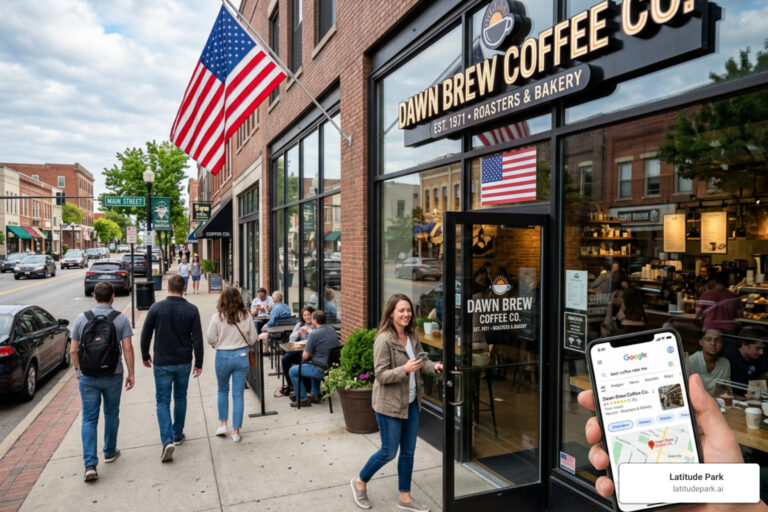
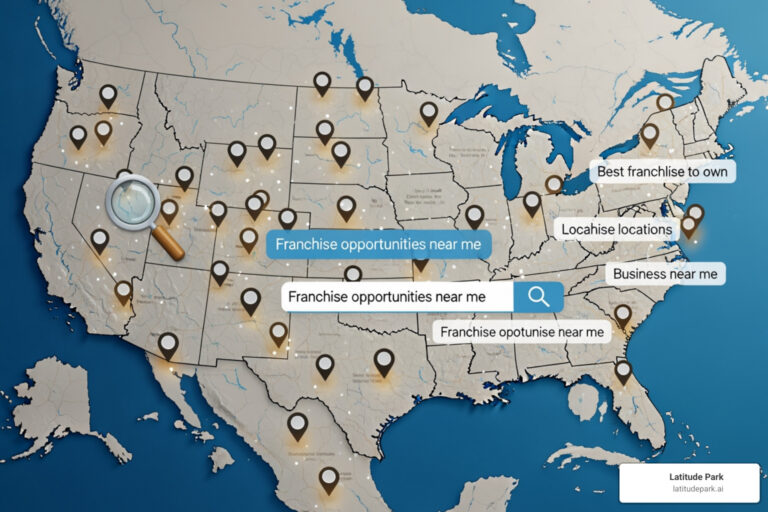
For any multi-location business, local search engine ranking is paramount. When someone searches “coffee shop near me,” you need to be at the top.
Your Google Business Profile is the cornerstone of local SEO. A fully optimized profile can land you in the Google Maps and local pack results. Fill out every field, add high-quality photos, keep hours updated, and respond to questions. Our Google Business Profile Optimization service can manage these details for you.
Local citations are mentions of your business’s Name, Address, and Phone number (NAP) online. NAP consistency is key; discrepancies can confuse search engines and hurt your rankings. Ensure your NAP is identical everywhere.
Use location-specific keywords (e.g., your city and region) in your website content and titles to signal your service area to search engines and customers.
Finally, customer reviews are gold. They provide social proof and are a significant local ranking factor. Encourage satisfied customers to leave reviews and respond to all of them to show you value feedback. For a complete guide, read Local SEO: Optimizing Your Website for Local Search Results.
The Future of Search: Trends Affecting Rankings

The digital world is constantly evolving, and what boosts your search engine ranking today might change tomorrow. Major shifts are being driven by artificial intelligence, new user behaviors, and the rise of alternative search platforms. Staying ahead of these trends is crucial.
The Rise of AI and Generative Search
Artificial intelligence (AI) is reshaping how people find information. Google, which holds around 90% of the global search market, is integrating AI into its core experience with AI Overviews. These AI-powered summaries, using models like Google Gemini, provide direct answers at the top of the page, potentially reducing clicks to traditional websites.
Beyond Google, conversational AI tools like ChatGPT and Perplexity are gaining traction as information-finding tools. This shift means SEO strategies must adapt. The goal is now to have your content cited within these AI answers. Optimizing only for Google’s organic results is no longer enough; businesses must consider how AI platforms interpret their content. This highlights the Importance of SEO in the Age of AI.
The Impact of Social and Alternative Search Engines
The search market is diversifying beyond traditional engines. People are looking for answers in more places than ever.
Microsoft Bing, holding around 3.95% of the global market share, is growing thanks to its integration of AI features like Copilot. The privacy-focused DuckDuckGo, which doesn’t track users, has captured up to 0.86% of the market.
Social media is also a major player. Recent HubSpot research shows that younger generations increasingly use platforms like TikTok and YouTube as search engines. A striking 41% of U.S. TikTok users now use the app for search.
Reddit has emerged as a trusted source for honest reviews, with one study finding 92% of users find its search results trustworthy. Its community-driven content often ranks well in Google’s own results. A modern search strategy must therefore be holistic, encompassing traditional search engines, AI platforms, and social media. Learn How to Combine SEO and Social Media for Your Marketing Strategy.
Frequently Asked Questions about Search Engine Ranking
We hear these questions all the time from business owners trying to understand search engine ranking. Here are some straightforward answers.
How long does it take to improve search engine ranking?
SEO is a long-term investment, not a quick fix. Promises of first-page rankings in a week are unrealistic.
Typically, you can expect to see initial results within 3-6 months of consistent effort. However, achieving significant, sustained improvements often takes 6-12 months or longer. The timeline depends on factors like your website’s age, industry competition, and the consistency of your SEO efforts. Building trust with search engines takes time. SEO is an ongoing process, not a one-time fix.
Can I pay Google to rank higher in organic results?
No. You cannot pay Google for a higher organic search ranking.
Google’s organic rankings are earned based on merit, relevance, and quality, as determined by its algorithms. You can pay for ads (PPC) that appear in “Sponsored” sections, but this is a separate system. Your ad spend has zero influence on your organic search engine ranking. This separation is fundamental to maintaining the integrity of Google’s search results.
What is the most important ranking factor?
There is no single “most important” ranking factor. Google uses over 200 signals that work together.
However, the foundation of all good SEO is high-quality, relevant content that satisfies user intent. Without valuable content, other optimizations will have little effect. Beyond content, you need strong on-page SEO, quality backlinks to build authority, solid technical SEO for crawlability, and an excellent user experience, especially on mobile.
A holistic approach is best. Like baking a cake, you need all the right ingredients in the right proportions. Focusing on just one area won’t produce the desired result. A comprehensive strategy is the key to success.
Conclusion
Your journey through search engine ranking has equipped you with the essential knowledge to compete and win in today’s digital marketplace. We’ve covered the fundamentals—what ranking truly means, why that coveted first-page position is make-or-break for your business, and the intricate ways search engines decide who deserves those top spots. You’ve learned about the three pillars of SEO success: on-page optimization that makes your content shine, off-page signals that build your authority, and technical excellence that ensures both search engines and users can access your site effortlessly.
The search landscape isn’t standing still. With AI-powered overviews changing how results appear, social platforms like TikTok becoming genuine search engines, and users increasingly seeking authentic community-driven answers on platforms like Reddit, your SEO strategy must evolve too. For businesses—particularly franchises managing multiple locations—mastering these shifting dynamics is what separates thriving brands from those left behind in the digital dust.
This is where we come in. At Latitude Park, we live and breathe these complexities every day. We don’t just understand search engine ranking theory; we’ve built our reputation on delivering real, measurable results for franchise businesses just like yours. Our comprehensive SEO strategies address every factor we’ve discussed, from local optimization for each of your locations to adapting for the AI-driven future of search.
Your competitors are already investing in their visibility. The question isn’t whether to optimize your search presence—it’s whether you’ll lead or follow. Boost your SEO Keyword Ranking with Latitude Park and transform your online visibility into the growth engine your franchise deserves. Let’s build your digital dominance together.