Why Your Website Traffic Is Untapped Revenue
Selling digital advertising space is the process of monetizing your website by offering ad placements to advertisers. If you have website traffic, you’re sitting on a potential revenue stream. Publishers generate consistent income by turning their digital real estate into advertising opportunities. Here’s how to get started:
Quick Answer: How to Sell Digital Advertising Space
- Prepare Your Site – Ensure quality traffic, fast load times, and clear audience data.
- Choose Your Method – Direct sales, programmatic, ad networks, or affiliate marketing.
- Set Your Pricing – Use CPM, CPC, or CPA models based on your audience.
- Create a Media Kit – Essential for attracting direct advertisers.
- Track and Optimize – Monitor performance and adjust for maximum revenue.
Most publishers find success by combining methods: selling premium inventory directly while filling remaining space through programmatic channels.
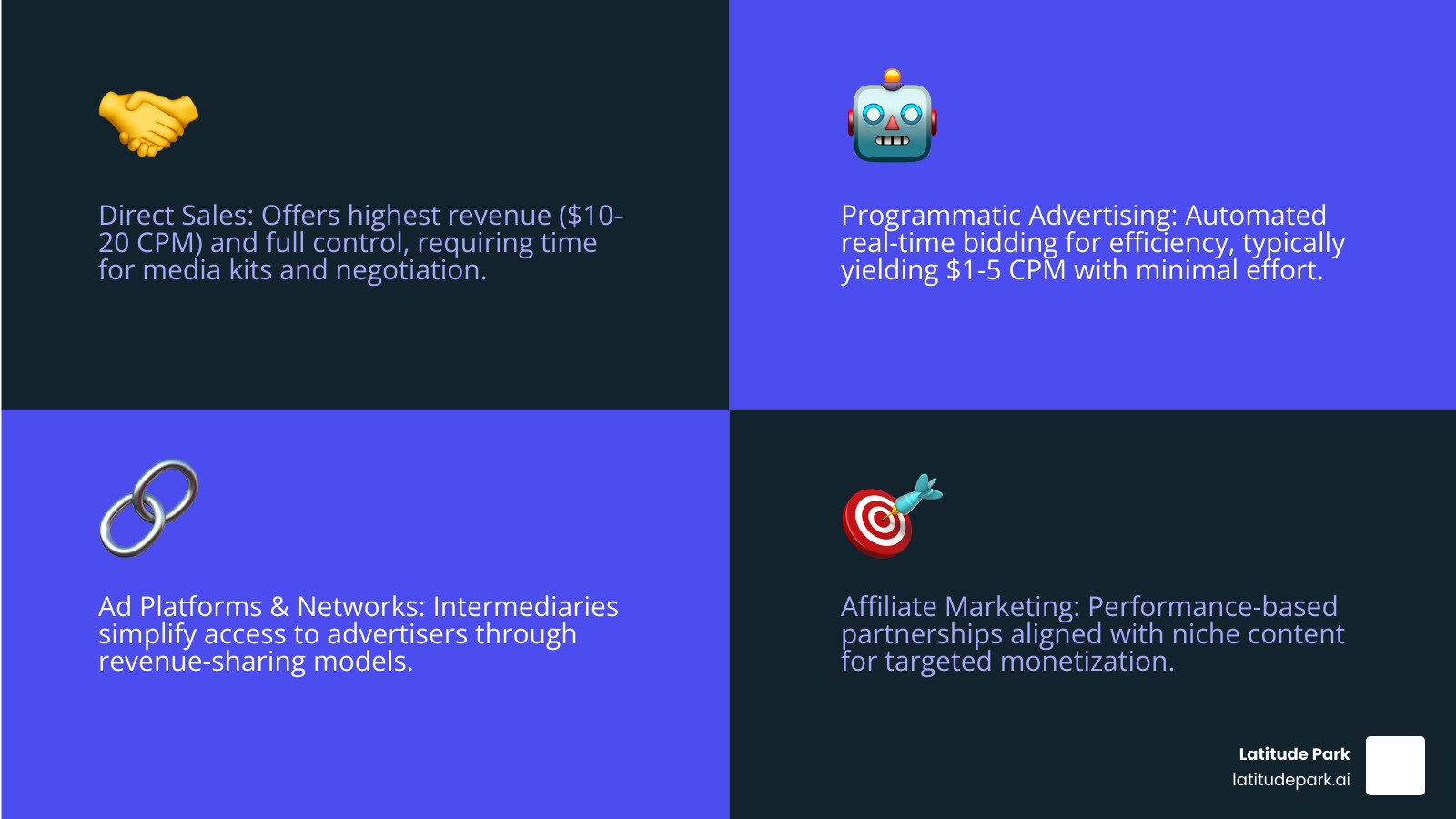
The digital advertising landscape offers multiple paths. Direct sales give you maximum control and higher CPMs (often $10-20) but require significant time. Programmatic platforms automate the process through real-time bidding, typically yielding $1-5 CPMs with minimal effort. Ad networks and affiliate marketing offer other accessible routes depending on your goals.
I’m Rusty Rich, founder of Latitude Park. Since 2009, I’ve helped countless businesses steer the complexities of selling digital advertising space to build sustainable revenue. My experience spans from direct negotiations to programmatic implementation, giving me a clear view of what works in today’s market.
Preparing Your Digital Property for Advertisers
Before selling digital advertising space, you must prepare your website. Advertisers want to see a digital property that’s polished, professional, and primed for performance.
The foundation is high-quality traffic. Advertisers care less about sheer quantity and more about who your visitors are and how they behave. A smaller, highly engaged audience that trusts your content is often more valuable than massive but disinterested traffic. Consistently publishing valuable content builds the loyal audience that advertisers crave.
A great user experience is critical. If your site is slow, confusing, or cluttered, visitors won’t stay—and neither will advertisers. Fast load times are essential, as every second of delay increases bounce rates. With most users on mobile, a mobile-first design is no longer optional. For more on this, see our guide on Website Design and Development.
Strong content also improves search visibility, demonstrating to advertisers that your site has staying power. Learn more about building this foundation through Creating SEO Friendly Content: Tips & Best Practices.
What Advertisers Look For: Key Metrics and Data
Advertisers rely on data to justify their spending. Understanding these key metrics will help you present your site effectively.
- Audience demographics: Advertisers need to know who they’re reaching—age, gender, location, and interests. The more detailed your data, the better.
- Traffic volume: Pageviews and unique visitors gauge your audience size. While premium exchanges like Google AdX may require 5 million monthly pageviews, many other methods work for smaller sites.
- Engagement metrics: Session duration and bounce rate prove your audience is interested. A bounce rate below 50% with longer session times is a strong signal of engagement.
- Viewability: This metric measures what percentage of ads are actually seen by users. High viewability shows your placements are effective.
Ad servers are invaluable for collecting this data and generating reports on traffic, behavior, and ad performance. Tools like News Consumer Insights can also provide data-driven recommendations.
Legal and Ethical Groundwork
Selling digital advertising space comes with responsibilities. Building a sustainable business means establishing trust through transparent and ethical practices.
- User Privacy: Regulations like GDPR and CCPA require explicit user consent for data tracking. Your privacy policy must be clear about what data you collect and how it’s used.
- Ad Quality: Adhering to guidelines like the Better Ads Standards ensures your ads improve, not disrupt, the user experience. Intrusive ads damage long-term trust.
- Transparency: An ads.txt file is a simple text file that lists who is authorized to sell your ad inventory. As The IAB recommends publishers host ads.txt, this practice combats ad fraud and builds advertiser confidence.
The Core Methods for Selling Digital Advertising Space
Now that your digital property is ready, let’s explore the methods for selling digital advertising space. The best strategy often involves a combination of approaches to maximize revenue, balancing control with automation. For a comprehensive overview, A Guide to Selling Ad Space on Your Website offers excellent insights.

Method 1: Direct Sales
Direct sales involves negotiating directly with advertisers. This method offers the highest revenue potential, with CPMs often reaching $10–20, because there are no middlemen. You get full control over which brands appear on your site and how ads are displayed, allowing you to maintain your site’s integrity. The core of direct sales is building relationships that can lead to long-term, predictable revenue.
The main trade-off is the time investment. It requires prospecting, pitching, negotiating, and managing campaigns. A professional media kit is essential, showcasing your audience demographics, traffic stats, ad placements, and rate card. This method works best for niche sites with well-defined audiences that are highly attractive to specific advertisers. For more guidance, Understand direct and programmatic ad revenue provides valuable context.
Method 2: Programmatic Advertising
Programmatic advertising uses automation to sell ad space through real-time bidding (RTB). When a user visits your site, an auction occurs in milliseconds, and the highest-bidding advertiser wins the impression. This is handled by ad exchanges and Supply-Side Platforms (SSPs).
Its primary benefit is efficiency—you can sell vast amounts of inventory with minimal effort. Programmatic also enables data-driven targeting, showing users more relevant ads. While it provides wider reach to global advertisers, it typically yields lower CPMs ($1–5) than direct sales, and you have less control over the specific ads shown. For high-traffic sites, programmatic is essential for monetizing remnant inventory. To learn more, explore our Programmatic Advertising Concept or research on How Digital Advertising Auctions Impact Product Prices.
Method 3: Ad Platforms and Monetization Partners
Ad platforms and networks act as intermediaries, connecting publishers with advertisers. They simplify selling digital advertising space by managing campaigns, targeting, and payments.
Their main advantage is providing access to advertisers through established networks. The setup is usually simple, making it an easy entry point into monetization, especially for smaller publishers who may not meet the traffic requirements for direct sales or premium exchanges. The downside is revenue sharing, as these platforms take a cut of your earnings, and you have less control over ad quality. However, for many, the convenience is worth the trade-off. Resources like Getting your ads online/12%3AEngage–Onlineadvertising/12.14%3AGettingyouradsonline) can guide you through the process.
Method 4: Affiliate Marketing
Affiliate marketing is a performance-based model where you earn commissions when your audience takes a specific action, like making a purchase (Pay-Per-Sale) or signing up for a service (Pay-Per-Lead).
You integrate affiliate links into your content, and when a user clicks and converts, you earn a commission. Its power lies in niche alignment—recommending products that genuinely benefit your audience feels like helpful advice, not an intrusive ad. For advertisers, it’s low risk since they only pay for results. The challenge for publishers is that revenue depends entirely on performance, which requires building trust with your readers. When done right, affiliate marketing is a natural extension of your Content Marketing strategy.
Pricing, Placement, and Long-Term Partnerships
After choosing your methods for selling digital advertising space, the next steps are pricing your inventory, optimizing placements, and nurturing advertiser relationships to ensure sustainable growth.
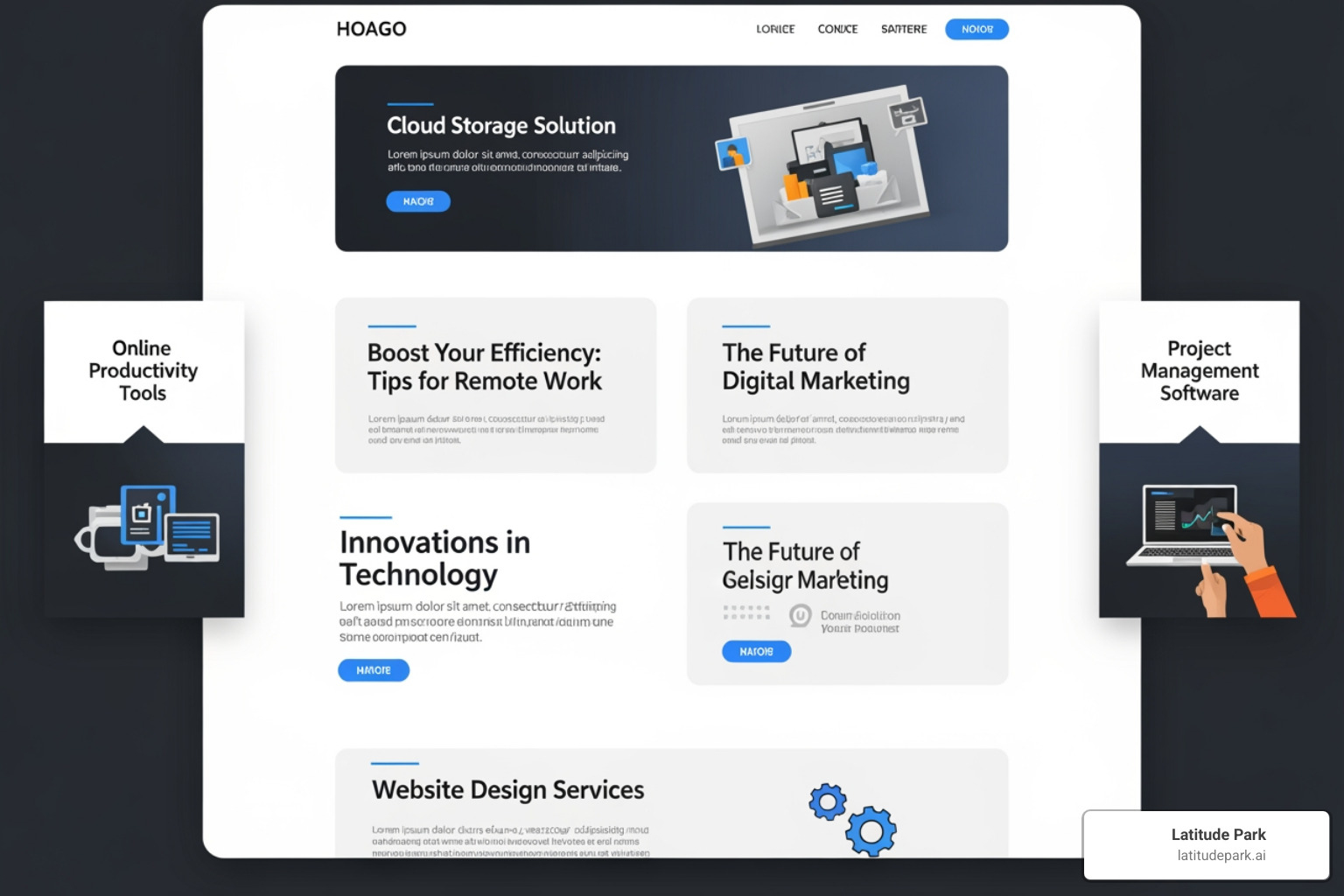
Ad placement is like digital real estate—location matters. A header banner is prime space, while sidebar ads work well on blogs. In-content placements are effective because they appear where readers are focused. Native ads, which match your site’s look and feel, are less intrusive and often perform better. Video ads offer dynamic engagement, but all formats must be balanced to avoid overwhelming visitors. For more on this, explore Ad Creative Best Practices.
How to Price Your Digital Ad Space
Pricing your ad space requires finding a sweet spot that offers value to advertisers while maximizing your revenue. Several established models can guide you.
- CPM (Cost Per Mille): You’re paid per 1,000 ad impressions. This is common for branding campaigns. Direct sales can command $10–20 CPMs, while programmatic advertising typically yields $1–5 CPMs.
- CPC (Cost Per Click): You earn revenue when a user clicks an ad. This model is ideal for advertisers focused on driving traffic.
- CPA (Cost Per Action): You’re paid only when a specific action occurs (e.g., a sale or signup). This is higher risk but can offer higher rewards.
- Flat-Rate Pricing: Charging a set fee for a specific period provides predictable revenue.
To set your prices, research competitor rates and consider your audience’s size and engagement. For programmatic, setting a target CPM can boost revenue. Platforms like Google Ad Manager offer unified pricing rules to manage pricing across demand sources, and AdSense uses dynamic allocation to ensure you get the highest price for each impression.
Building and Maintaining Advertiser Relationships
The most sustainable revenue comes from long-term partnerships, not one-off sales. Client retention is key to turning your publication into a stable business.
- Communicate Consistently: Be responsive and keep advertisers informed. They want to feel valued.
- Provide Performance Reports: Regularly share clear, honest data on impressions, clicks, and conversions. Use tools like Google Publisher Tag for accurate tracking.
- Deliver on Promises: Reliability is currency. If you promise certain placements or impression counts, deliver them.
- Be a Proactive Partner: Don’t wait for campaigns to end. Reach out with new ideas and insights. Use an inventory forecast feature to be ready with concrete data.
By positioning yourself as a partner invested in your advertisers’ success, you build the foundation for long-term growth in selling digital advertising space.
Emerging Trends in Selling Digital Advertising Space
The digital advertising world is constantly evolving. To remain competitive in selling digital advertising space, publishers must stay informed about emerging technologies and consumer behaviors. For a deeper look, check out The Future of Digital Marketing: Emerging Technologies and Trends to Embrace.
Leveraging AI and Audience Data
Artificial Intelligence is changing how we sell ad space. AI offers sophisticated insights that can dramatically improve revenue and efficiency.
- Predictive Analysis: AI can predict which ad placements will perform best, enabling data-driven decisions.
- Dynamic Pricing: AI-powered models can adjust ad prices in real-time based on market demand.
- Audience Segmentation: AI allows for incredibly precise targeting, which we explore in Enhancing Precision Ad Targeting: Meta Audience Plus.
- Fraud Detection: AI helps identify and block suspicious activity, protecting your revenue and your advertisers’ investments.
These AI applications are creating new opportunities and challenges, as covered in our article on AI Digital Marketing Opportunities & Challenges.
The Expansion into New Digital Frontiers
Selling digital advertising space is no longer limited to websites and apps. New frontiers are opening that blur the line between the digital and physical worlds.
Digital Out-of-Home (DOOH) advertising, like digital billboards, is now a major opportunity, with programmatic systems bringing real-time bidding to physical locations. Working with specialized ad networks can be a fruitful way to enter this space.
Retail media is another booming area. Retailers like Best Buy are turning their physical stores into ad platforms. As noted in Best Buy’s push for in-store ads, selling ads can be more profitable than selling products. This trend mirrors the work we do in Digital Advertising for Multi-Location Businesses, where physical presence meets digital strategy.
Even personal advertising is emerging, with platforms like Billboard4Me allowing individuals to buy billboard space for personal messages. Publishers who accept these new frontiers position themselves for diversified growth.
Frequently Asked Questions about Selling Ad Space
We know selling digital advertising space can seem complex. Here are answers to some of the most common questions we hear at Latitude Park.
What’s the best method for a small website to start selling digital advertising space?
For a smaller website, we recommend starting with ad platforms and affiliate marketing. Ad networks like Google AdSense are great entry points because they automate the process of finding advertisers and don’t have strict traffic minimums. This allows you to start monetizing early.
Affiliate marketing is also ideal, especially for niche content. Recommending products or services relevant to your audience feels authentic and can be very effective. Since it’s performance-based, your earnings are tied to the value you provide. The key is to first focus on creating quality content to attract an engaged audience.
How much traffic do I need to sell ad space?
There is no universal magic number for selling digital advertising space. Different methods have different thresholds.
- Ad Networks: Many are welcoming to smaller publishers with no strict minimums.
- Direct Sales: Here, quality trumps quantity. A small, highly engaged niche audience of 10,000 visitors can be more valuable to a specific advertiser than a generic site with 100,000 visitors.
- Premium Programmatic Exchanges: Platforms like Google AdX typically look for publishers with around 5 million monthly page views.
The takeaway is to start where you are. Build a quality audience, and monetization opportunities will grow with you.
How do I prevent ads from harming my user experience?
Protecting your user experience is crucial for long-term success. Publishers who respect their audience thrive.
- Use Strategic Placements: Place ads in headers, sidebars, or as native ads that blend with your content. Avoid disruptive formats.
- Control Ad Quality: Vet your advertisers and ensure their ads are relevant to your audience. Irrelevant ads erode trust.
- Prioritize Speed: Ads should not slow down your site. Use a reliable ad server to manage delivery efficiently.
- Avoid Clutter: Don’t plaster ads everywhere. Too many ads can drive readers away. Often, reducing ad density can increase engagement and overall revenue, as satisfied users are more likely to return.
Conclusion

You now have a roadmap for selling digital advertising space. Think of your website traffic as a valuable asset; with the right strategy, you can turn it into a consistent revenue stream.
We’ve covered preparing your digital property, understanding advertiser needs, and exploring the core monetization methods—from high-touch direct sales to the efficiency of programmatic advertising. The most successful publishers often use a hybrid approach: selling premium placements directly while letting programmatic systems fill the rest.
Success in selling digital advertising space requires continuous learning, testing, and refinement. Monitor your performance, adapt your strategy, and always prioritize the user experience—after all, an engaged audience is what makes your inventory valuable.
At Latitude Park, we specialize in helping businesses steer the complexities of digital advertising, particularly for multi-location operations. We understand that building a sustainable ad revenue strategy is a critical piece of the puzzle.
Ready to turn your digital real estate into a revenue-generating asset? Let’s talk about how we can help you Master your Digital Ads Management. Reach out through our Contact Us page, and let’s build your success story together.