So, what exactly is a small business advertising agency? Think of it as your on-demand, expert marketing department. It’s a specialized team that handles all the complex, time-consuming advertising work—from digital ads to search engine visibility—so you can get back to what you do best: running your business. They’re not just another expense; they’re a strategic partner dedicated to one thing—connecting your business with paying customers.
Why Smart Owners Partner with Advertising Agencies
Trying to manage your own marketing can feel like you’re suddenly expected to be a chef, a plumber, and an accountant all at once. As a small business owner, your real talent is in your craft, whether that's baking the best croissants in town or offering top-tier plumbing services. Adding the ever-changing rules of digital advertising to that mix is a surefire recipe for burnout and wasted cash.
This is where bringing on a small business advertising agency becomes a game-changing move. It’s not about giving up control; it’s about bringing in a specialist who lives and breathes this stuff every single day.

Translating Goals into Actionable Plans
One of an agency's most important jobs is to act as a translator. They take your business goals—the things you actually care about—and turn them into a concrete, measurable advertising plan. Your objective might sound simple, but the path to get there is often anything but.
For instance, your goals could be to:
- Boost foot traffic for your new downtown café.
- Generate more quote requests for your landscaping business.
- Increase online sales for your handmade jewelry store.
An agency takes these goals and builds a real strategy to make them a reality. For the café, that might mean running hyper-local social media ads targeting people within a five-mile radius with a "free coffee with pastry" offer. For the landscaper, it could be a Google Ads campaign that puts them right at the top when someone searches "lawn care near me," ensuring they capture homeowners who need help now. This process cuts out the guesswork and replaces it with proven tactics. You can explore more great small business digital marketing tips to see how these strategies come to life.
The Power of Specialized Expertise
Think of an agency as the master electrician for your business's growth. You wouldn’t try to rewire your entire building on your own, and the same logic applies to your marketing. A great agency gives you instant access to a whole team of people with different, specialized skills.
An agency partnership provides more than just execution; it delivers strategic oversight. They see the bigger picture, connecting data from different channels to make smarter decisions that drive real return on investment.
This team is made up of specialists who are experts in their own fields, ensuring every part of your campaign is in good hands:
- A PPC specialist who knows the ins and outs of optimizing Google Ads for maximum return.
- A social media manager who understands how to create content that actually engages people on platforms like Meta.
- An SEO expert who can get your website climbing the search rankings so customers can find you.
Trying to hire this level of talent in-house would cost a small fortune. Partnering with a small business advertising agency gives you all that collective brainpower for a fraction of the cost, making it an incredibly smart and scalable way to grow. They sweat the technical details so you can focus on what you do best.
Essential Services That Fuel Business Growth
A great small business advertising agency isn’t just running ads; they’re operating the engine room of your business’s growth. Instead of a confusing laundry list of services, a top-tier agency focuses on a powerful trio of core activities that deliver consistent, measurable results.
Let’s break down how these three pillars work together to build a smart, self-improving marketing system.
Capturing Attention with Meta Ads
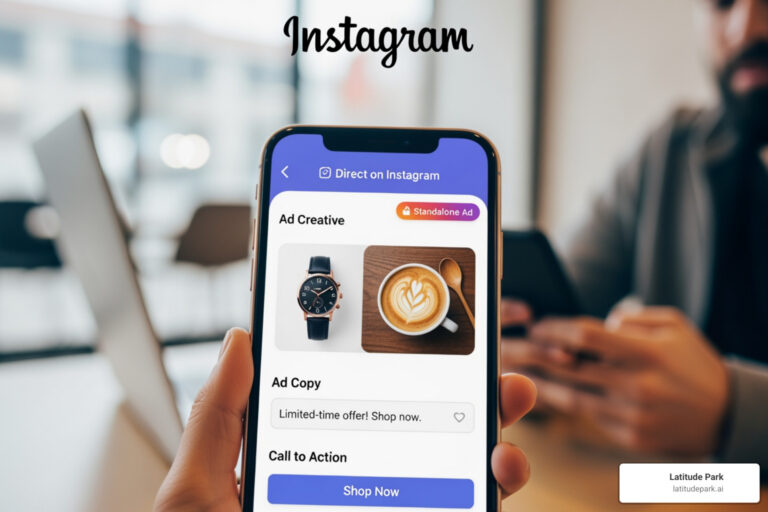
Think of Meta Ads (Facebook and Instagram) as your digital storefront window. It’s where you catch someone’s eye with a compelling story or a beautiful image, even if they weren’t actively looking for your product. This is all about creating demand.
Imagine a local artisan jeweler. She wants to reach newly engaged couples in her city. A skilled agency can craft beautiful carousel ads showcasing her unique engagement rings, targeting users whose recent online behavior—like following wedding planning accounts—signals they're in the market. The ads don't just show a product; they tell a story of romance and craftsmanship, perhaps with a video of her at the workbench. This approach builds her brand and drives traffic from people who feel an emotional connection to her work, not just someone searching for a generic item.
Answering Demand with Google Ads
While Meta creates awareness, Google Ads is all about capturing existing demand with surgical precision. It’s your tool for being the first answer when a potential customer has a problem they need to solve right now. This is about being there at the exact moment of intent.
Take an HVAC company, for example. Their most valuable leads come from homeowners in a panic. A small business advertising agency will build a Google Ads campaign targeting high-intent keywords like “emergency AC repair near me” or “furnace not working.” When someone's air conditioner dies on a sweltering summer day, they aren't casually browsing—they are desperately searching for a solution. By appearing at the very top of the search results with an ad that highlights "24/7 Service," the HVAC company grabs that urgent lead before a competitor even gets a chance. It’s direct, results-driven advertising at its finest.
Building Long-Term Value with SEO
Search Engine Optimization (SEO) is the long-game. It’s the investment that builds a sustainable foundation for growth. Unlike paid ads that vanish the moment you stop paying, SEO creates a valuable asset that generates organic traffic and credibility over time. It’s the difference between renting an audience and owning one.
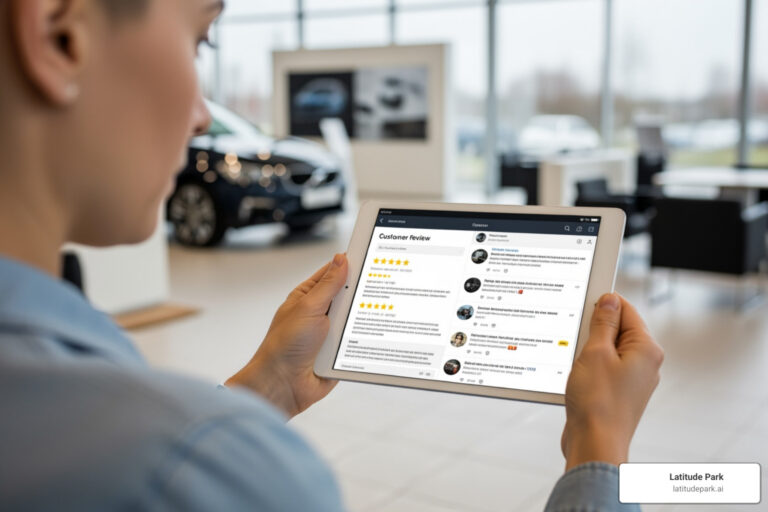
A family-owned bookstore, for instance, can use SEO to become a local institution. An agency would start by optimizing their website and, more importantly, their Google Business Profile. They’d focus on ranking for local search terms like “independent bookstore downtown” or “children's story time near me.” By gathering positive reviews, publishing blog posts about local authors, and ensuring their business info is accurate everywhere online, they slowly climb the rankings. Before long, they become the default choice for local book lovers, building a loyal community that drives steady foot traffic without paying for every single click. That organic visibility is a powerful competitive advantage.
The real magic happens when you connect the dots. The immediate data and quick feedback from paid ad campaigns can directly inform and accelerate your long-term SEO strategy, creating a powerful, self-improving marketing system.
For example, an agency might discover through a Google Ads campaign that a certain keyword converts exceptionally well. They can then prioritize ranking for that term organically through SEO and content marketing, knowing it’s a proven winner. This synergy turns your advertising into a cohesive and intelligent growth engine. To see how this plays out, you can learn more about how content marketing campaigns benefit your business and support these efforts.
This integrated approach is only getting smarter. Today, a defining trend is the integration of artificial intelligence into agency operations. In fact, 55% of small business owners are already using AI tools to personalize marketing, automate routine tasks, and generate content. This adoption allows agencies to target customers more efficiently and at a lower cost, leveling the playing field with larger competitors. By automating tasks like email campaigns and ad spend optimization, AI empowers a small business advertising agency to work smarter, leveraging data-driven insights to grow their clients' reach. Find out more by reading the latest research on small business marketing trends from Taboola.com.
What You Really Get When You Partner With an Agency
Alright, we've talked about what a small business advertising agency does. But let's get down to brass tacks: what's in it for you? Partnering with a pro team is about much more than just running a few ads. It’s about gaining a strategic edge that hits your bottom line and—maybe most importantly—gives you back your time.

An Instant Team of Experts on Your Side
Think about what it would take to hire a single, senior-level marketing manager. You’re easily looking at a six-figure investment once you factor in salary, benefits, and the expensive software they need to do their job. Even then, you’re banking on just one person’s expertise.
An agency partnership flips that script entirely. For a fraction of the cost, you get immediate access to a full roster of specialists.
This isn't just one person juggling everything. Your new team typically includes:
- A Paid Ads Specialist who lives and breathes campaign stats and optimization.
- An SEO Strategist who is obsessed with getting you to the top of Google for the long haul.
- A Copywriter who knows how to turn words into conversions.
- A Data Analyst who can dig through the numbers and find hidden gold.
You get the collective brainpower of an entire department, all focused on your growth, without the headaches and overhead of building it yourself.
True Scalability and Agility
Business isn't a straight line, so why should your marketing be? This is where an agency becomes your secret weapon. They can ramp up your advertising or dial it back with a speed that an in-house team simply can't match.
Imagine you own a local boutique gearing up for the holiday rush. An agency can triple your ad spend in November to catch every last shopper and then seamlessly pull back in January once things quiet down. Or, if a competitor suddenly closes down, an agency can rapidly launch a campaign to capture their former customers. This kind of agility means you can pounce on opportunities without being chained to a fixed payroll.
Avoiding Costly Mistakes with Data-Driven Decisions
Working with an experienced small business advertising agency is like having a seasoned guide lead you through a minefield. They’ve already made the expensive mistakes and learned the hard lessons—on someone else’s dime. Their decisions are rooted in hard data, not gut feelings, which can save you thousands in wasted ad spend.
An agency's real value isn't just in the campaigns they run, but in the ones they don't. They use data to quickly kill underperforming strategies, protecting your budget and pushing every dollar toward what actually works.
Let's say a local bakery assumes everyone in a 10-mile radius is a customer. An agency would dive into the data and discover their real money-makers are working professionals, aged 30-45, within a two-mile radius who are also into specialty coffee. By laser-focusing the ad budget on that small group with an offer for "morning coffee and a croissant," they eliminate waste and make the campaign dramatically more effective.
It's no wonder that 49% of owners say budget limits are a massive headache, while 47% struggle just to pick the right tactics. The data shows that businesses combining in-house efforts with agency support report 2.5 times greater marketing success. You can dig deeper into how small businesses are tackling these issues with the latest marketing statistics from Wix.com.
Uncovering Hidden Pockets of Growth
A great agency does more than just execute your current plan. They act as a growth partner, constantly hunting for new ways to expand your business. With their sophisticated tools and experience, they can spot patterns in customer behavior that are nearly invisible to the naked eye.
Picture a startup selling eco-friendly cleaning supplies directly to consumers. While analyzing their ad campaigns, their agency spots an interesting trend: a small but highly profitable group of customers are owners of independent bed-and-breakfasts. Boom. That one insight just opened up an entirely new B2B market the founder had never even considered, creating a valuable new revenue stream they can now target with specific messaging and offers.
At the end of the day, bringing on a small business advertising agency frees you up to do what you do best: lead. Instead of being buried in analytics dashboards and ad creatives, you can focus on steering the ship, innovating, and taking care of your customers. They handle the heavy lifting of finding new customers, so you can focus on delighting them.
How to Find the Right Agency for Your Business
Picking a small business advertising agency feels like a massive decision, and honestly, it is. But it doesn't have to be overwhelming. If you have a clear game plan, you can cut through the flashy sales pitches and figure out which team is actually capable of delivering.
Let's get one thing straight from the start: you're not hiring a vendor. You're looking for a partner. A true partner is just as invested in your business goals as you are. They'll be transparent, ask smart questions about how your business really works, and focus on results you can take to the bank—not just fluffy marketing metrics.
Look Beyond the Surface of Case Studies
Every agency is going to show you their greatest hits. Your job is to be the discerning critic who looks past the pretty portfolio to find the real proof of performance.
A slick-looking case study is nice, but it's the story behind the numbers that truly matters. When you're digging into their past work, ask yourself:
- Is it relevant? Have they worked with businesses like yours before? It's not a deal-breaker if they haven't, but experience in your industry—like another local service business or e-commerce shop—means they already get your customers and the unique challenges you face.
- Where's the data? Vague claims like "we boosted engagement" are giant red flags. You want to see hard numbers. Look for metrics that actually impact your bottom line, like Return on Ad Spend (ROAS), Cost Per Acquisition (CPA), or a specific jump in qualified leads.
- What was the "how" and "why"? A great case study doesn't just show the victory; it explains the strategy. It should break down the problem they spotted, the solution they built, and exactly why it worked.
Think about it this way: a case study for a local plumber that just shows off a new website is useless. A powerful one would show a 40% increase in emergency service calls and detail how they restructured a Google Ads campaign to nail high-intent keywords during peak hours. That's proof of strategy, not just design.
Critical Questions for Your First Call
That first call with a potential agency? That’s your interview. You're the one in charge, and your mission is to see past the pitch. Come armed with questions that get to the heart of how they operate.
Here are a few must-asks for your list:
- How will you measure success for a business like mine? Their answer needs to line up with your actual business goals—more revenue, more qualified leads—not just clicks and impressions. If you're a dentist, the only metric that matters is "booked appointments."
- Can you walk me through your reporting dashboard right now? This is a great way to test their transparency. If they show you exactly what data you'll get and how it's presented, that's a good sign. A confusing or overly simple dashboard is a major warning.
- Who will be my day-to-day point of contact? You need to know who you’ll be working with. Are you getting an experienced strategist or being handed off to a junior account manager? It makes a huge difference.
- What does your onboarding process look like? A well-defined, step-by-step process shows they're organized and ready to hit the ground running without causing chaos for your business.
Finding the right agency is all about building a solid foundation for a long-term relationship. For more on what makes a strong business partnership tick, you can explore the importance of franchise marketing agreements, as they are built on the same principles of trust and shared goals.
Red Flags to Watch Out For
Knowing what to look for is only half the battle; you also need to know what to run from. The marketing agency world is booming—the number of agencies in the U.S. alone shot up 17.4% in 2022. While this means more great options, it also means more players who might overpromise and underdeliver. You can dig into these trends and see some in-depth marketing agency statistics on mycodelesswebsite.com.
Beware of any agency that offers a 'one-size-fits-all' solution or makes guarantees. Effective advertising is a customized, iterative process. Guarantees of 'guaranteed #1 rankings' or 'doubling your sales overnight' are unrealistic and a sign of an inexperienced or dishonest agency.
This decision tree can help you start filtering your options based on your specific needs, budget, and industry.
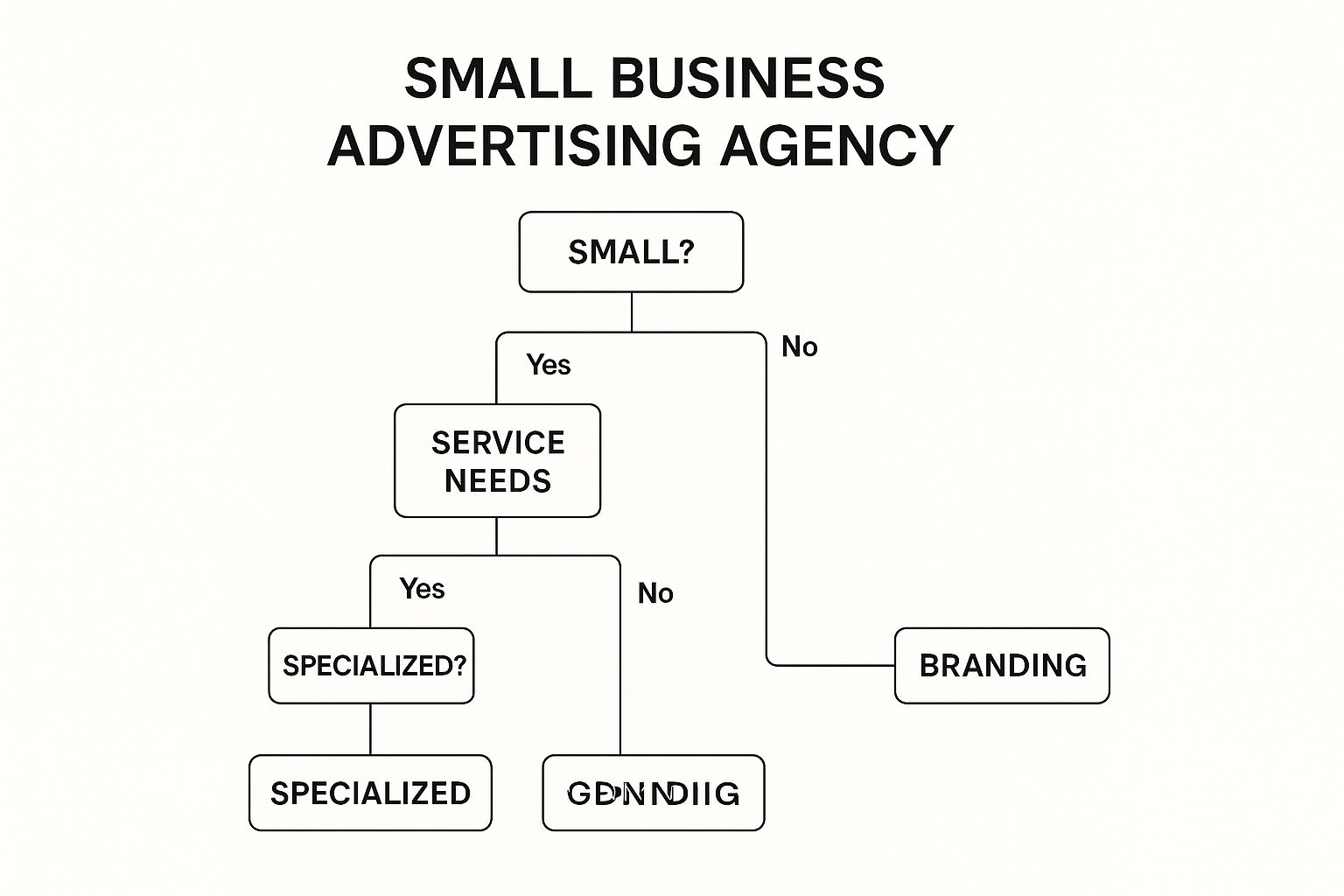
As the visual shows, your ideal partner really depends on your unique situation, guiding you toward a specialist or a generalist that fits your business profile.
Agency Evaluation Checklist
Choosing the right agency partner is a critical step. Use this checklist during your evaluation process to compare potential agencies and make sure they're the right fit for your specific needs.
| Evaluation Criteria | Questions to Ask | What to Look For (Green Flags) |
|---|---|---|
| Industry Experience | Have you worked with businesses in my niche before? Can you share those results? | They understand your audience's pain points and have a track record of success in your industry. |
| Performance Metrics | What KPIs do you focus on? How do you measure ROAS and CPA? | They focus on business-oriented metrics (revenue, leads) over vanity metrics (likes, impressions). |
| Communication & Reporting | Who will be my main contact? How often will we meet? Can I see a sample report? | Clear, frequent communication. A dedicated point of contact. Transparent and easy-to-understand reporting. |
| Strategic Approach | What's your process for developing a strategy for a new client? | They ask deep questions about your business and propose a custom strategy, not a cookie-cutter plan. |
| Transparency | How are your fees structured? Are there any hidden costs? Who owns the ad accounts? | A clear, straightforward pricing model. They are upfront about all costs. You retain ownership of your accounts. |
This checklist isn't just about getting answers; it's about seeing how they answer. A confident, transparent, and strategic partner will stand out, giving you the confidence you need to move forward.
Setting Your New Agency Partnership Up for Success
You’ve signed on the dotted line, and the excitement is running high. But what really happens next? Those first 90 days with a new small business advertising agency are absolutely critical. They set the tone for the entire partnership and can be the difference between hitting the ground running and getting stuck in frustrating delays.
A little prep work on your end can make a world of difference, helping your new partners start delivering results much, much faster.
Think of it like getting your house ready for a team of expert interior designers. If you’ve already cleared out the clutter and know the style you’re going for, they can get right to work creating something amazing. But if they have to spend the first week just sorting through boxes, progress is going to be painfully slow.

Doing Your Pre-Launch Homework
Before that official kickoff call, your agency is going to need a few key things from you. Getting these assets organized ahead of time is one of the single best things you can do to guarantee a smooth start. It helps them absorb your brand’s voice, visual identity, and past wins right from day one.
Start by pulling together a digital "brand kit" that includes:
- High-resolution logos in a few different formats (like a PNG with a transparent background).
- A brand style guide, if you have one, that details your official colors, fonts, and tone of voice.
- Access to high-quality photos of your products, services, or your team in action.
- Customer testimonials and reviews that show off your value from your clients' perspective.
This simple step prevents that all-too-common back-and-forth of emails hunting for basic files, letting your agency jump straight into the strategic work of building your campaigns.
Defining What Success Looks Like
Just as important is showing up to the first meeting with clearly defined business objectives. Your agency is full of pros at turning goals into campaigns, but they need to know what you're actually aiming for. Vague goals like "get more customers" just aren't actionable.
The most successful agency partnerships begin with crystal-clear, measurable goals. This alignment ensures both you and your agency are working toward the same finish line and defines the metrics that truly matter.
Instead, you need to get specific. Turn those broad goals into sharp, measurable objectives.
- Instead of "increase sales," try "Increase new client bookings by 15% this quarter."
- Instead of "grow our online presence," try "Achieve a 50% increase in qualified leads from our website within six months."
These specific targets give your agency a clear destination. From there, they can build a roadmap with precise milestones to get you there, making the entire process more transparent and focused on results.
Your First Month Checklist
The onboarding phase can feel like a bit of a whirlwind, but a good agency will have a structured process to guide you through it. Here’s a quick checklist of what you can generally expect during that critical first month.
- Kickoff Call: This is the big one. It's the foundational meeting where you’ll meet the team, lock in your goals, and establish how you'll communicate and when you'll meet.
- Account Audits: The agency team will take a deep dive into your existing ad accounts (like Google Ads and Meta Ads) and your website analytics. They're looking for quick wins and any foundational issues to fix.
- Initial Strategy Presentation: Based on their audit and your goals, they'll come back to you with their initial campaign strategy for your approval.
- Campaign Build & Launch: Once you give the green light on the strategy, their team gets to work. They’ll start building out the initial campaigns, writing ad copy, and setting up all the necessary tracking.
By being an active participant in this phase, you empower your small business advertising agency to become a true extension of your team right from the get-go.
Frequently Asked Questions
Thinking about bringing a small business advertising agency on board usually brings up a few big questions. Let's tackle the most common ones head-on, so you can feel confident about the path forward for your business.
How Much Does an Agency Cost?
There's no single price tag, because agency pricing is built to fit the job at hand. Most agencies use one of three common models, which helps you find a structure that aligns with your budget and what you're trying to accomplish.
Think of it this way—you're paying for expertise and execution. Here’s how that usually breaks down:
- Monthly Retainer: This is a set fee you pay each month for ongoing work, like SEO or managing your social media ads. A local restaurant might pay a monthly retainer of $1,500 for social media management and local SEO. It’s predictable, which is great for budgeting and long-term strategies.
- Project-Based Fee: Got a specific, one-time task? Maybe a website redesign or launching a new product campaign. You’ll pay a flat fee for that single project from start to finish. For instance, designing a new e-commerce website could be a one-time project fee of $5,000.
- Percentage of Ad Spend: This is the standard for managing paid ad campaigns. The agency's fee is a percentage of your monthly ad budget, usually between 10-20%. If your company spends $10,000 a month on Google Ads, a 15% fee would be $1,500. This model keeps everyone on the same team—the more effective they are with your money, the better your results.
How Long Until I See Results?
This is the big one, and the honest answer is: it depends entirely on the channel. Some marketing tactics are designed for quick wins, while others are more like a long-term investment that builds value over time. It's crucial to set the right expectations for each.
A well-built Google Ads campaign, for example, can start bringing in leads within a few days. You're essentially paying to show up in front of people who are already looking for what you offer. A plumber running a campaign for "emergency leak repair" can expect their phone to start ringing almost immediately after launch.
SEO, on the other hand, is like planting a tree. It requires consistent effort over 4-6 months to start seeing real traction in organic traffic. But the payoff is huge—those results are lasting and become a powerful asset for your business.
Think of it this way: Paid ads are like renting an audience for immediate traffic, while SEO is about buying the property and building an asset that generates value for years to come.
Can I Still Handle Some Marketing Myself?
Absolutely! In fact, the best agency partnerships are often a team effort. A good small business advertising agency won't try to take over everything. They’ll work with you to build a collaborative approach that plays to everyone's strengths.
This lets you stay hands-on where it matters most while they handle the technical heavy lifting.
Here’s what a great hybrid model often looks like for a local coffee shop:
- You Handle: Crafting authentic social media posts showing daily specials on Instagram, engaging with customer comments, and sharing your insider knowledge (like a "perfect pour-over" tutorial) for blog content. Nobody knows your business like you do.
- The Agency Handles: The complex world of technical SEO to rank for "best coffee near me," managing sophisticated ad campaigns for a new seasonal drink, digging into the data to find what's working, and steering the overall strategy.
This kind of teamwork ensures your brand’s authentic voice shines through, backed by expert execution. It’s your passion combined with their proficiency.
Ready to see how a dedicated advertising partner can fuel your growth? Latitude Park specializes in running high-performance Meta ads, Google ads, and SEO campaigns that deliver real results for small businesses and franchises. Visit us at https://latitudepark.com to get started.