Why Your Brand’s Online Reputation is Your Most Valuable Asset
Brand reputation management social media is the practice of monitoring, influencing, and maintaining how people perceive your business on social platforms. Here’s what you need to know:
- Monitor constantly: Track brand mentions, comments, and reviews.
- Respond quickly: 73% of users expect responses within 24 hours.
- Be proactive: Build positive sentiment through engaging content.
- Prepare for crises: Have a plan to address negative feedback before it escalates.
- Measure results: Track sentiment, response times, and share of voice to prove ROI.
Socrates said, “The way to gain a good reputation is to endeavor to be what you desire to appear.” This ancient wisdom is more relevant than ever. With over 5 billion social media users, your brand’s reputation is built in real-time conversations—whether you’re involved or not.
The stakes have never been higher. A single negative review convinces 94% of potential customers to shop elsewhere, and it takes roughly 40 positive experiences to undo that damage. Meanwhile, 63% of your company’s market value comes directly from its reputation.
Social media has changed how customers research and talk about brands. They trust online reviews as much as personal recommendations and expect quick, authentic responses. When something goes wrong, news travels fast.
The good news? You’re not powerless. Brand reputation management on social media isn’t about controlling the narrative; it’s about earning trust through consistent, authentic engagement. It involves listening, responding with empathy, and building a community that advocates for your brand.
This guide will show you how to protect and strengthen your brand’s reputation, spot crises, respond effectively, and leverage modern tools to scale your efforts and prove ROI.
I’m Rusty Rich, founder of Latitude Park. We’ve helped hundreds of businesses, especially franchises, master brand reputation management across multiple locations. With over 15 years in digital strategy, I’ve seen how a proactive approach transforms businesses into trusted industry leaders.
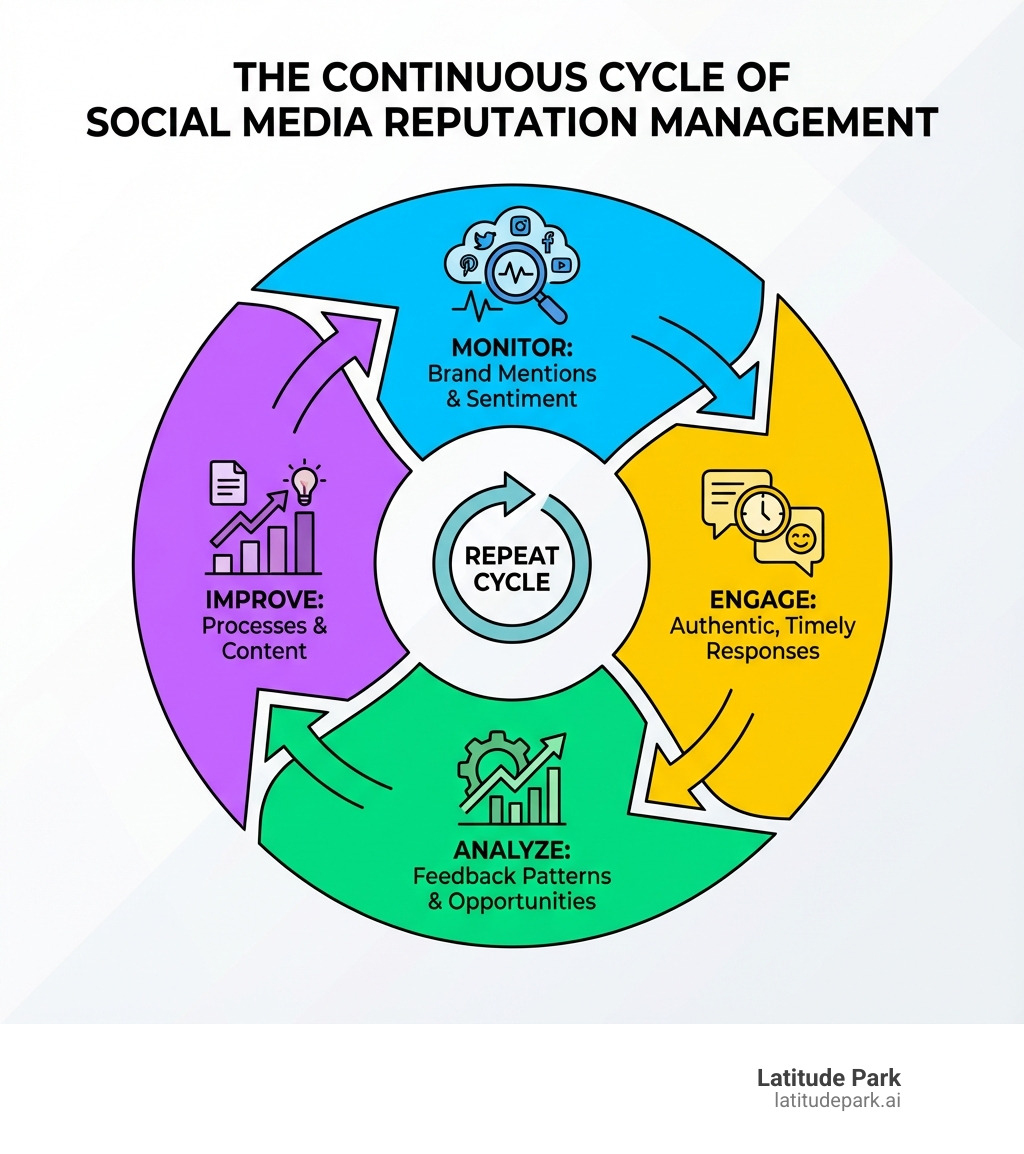
Key terms for brand reputation management social media:
The High Stakes of Social Media: Why Your Brand’s Reputation is on the Line
Social media can make or break a brand in an instant. A single post or unaddressed complaint can define public perception for years, impacting real business outcomes.
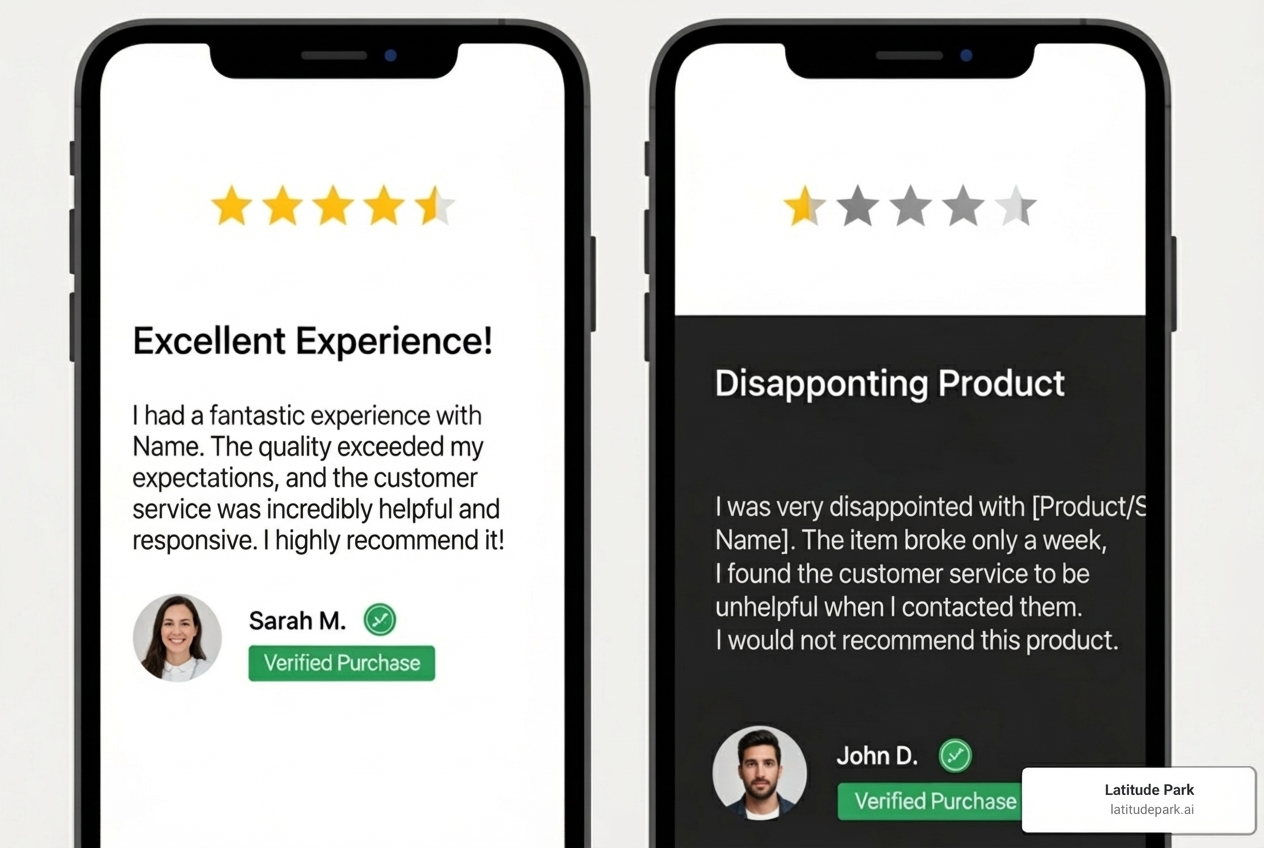
The impact of social media on your brand’s reputation touches every facet of your business:
- Customer Trust: 94% of customers have avoided a company due to negative reviews. A positive online reputation builds trust, leading to higher sales. Today, 79% of consumers trust online reviews as much as personal recommendations. When buyers feel connected to a brand, they are more willing to pay a premium.
- Revenue Impact: Negative reviews spread quickly, hurting revenue. Ironically, negative comments get 63% more clicks, and one bad review convinces 94% of potential customers to shop elsewhere. It takes about 40 positive experiences to counteract a single negative review. Conversely, businesses that actively manage their online presence see revenue increases.
- Talent Acquisition: Prospective employees research an employer’s online reputation. A positive reputation is a major advantage in recruiting, as 50% of candidates wouldn’t work at a company with a bad reputation—even for a pay raise.
- Digital Word-of-Mouth: Social media amplifies word-of-mouth marketing. Every share, like, and comment acts as a digital endorsement or warning, influencing purchasing decisions.
A company’s reputation is a tangible asset, accounting for 63% of its market value. For major corporations, this means billions are tied to public perception. Real-world examples like Balenciaga’s declining sales or United’s $1.4 billion stock drop after PR crises underscore that managing your brand reputation management social media is essential.
How Social Media Shapes Customer Perception
The customer journey has evolved. Social media is often the first stop for consumers researching products, with younger generations using platforms like TikTok and Instagram as search engines.
- Social Search: Unfiltered customer reviews and employee stories often appear before your official content on platforms like TikTok or LinkedIn. This directly influences first impressions. Your content must rank well in these “social search” environments. For more on this, see The Importance of SEO in Digital Media Marketing.
- Authenticity and Transparency: Consumers expect brands to be real, transparent, and responsive. Seeing a brand handle concerns well creates positive associations.
- User-Generated Content (UGC): Positive UGC is a powerful endorsement. Sharing customer experiences builds social proof, community, and loyalty.
- Building Brand Loyalty: Proactive interactions on social media make consumers feel heard and empowered, building deeper connections with your brand.
The Financial and Brand Cost of a Poor Reputation
Neglecting your brand reputation management social media has severe consequences.
- Stock Value Impact: As seen with United Airlines, major incidents can cause stock prices to plummet, turning PR nightmares into financial disasters.
- Damaged Brand Equity: Harvard Business Review notes that 70-80% of market value comes from intangible assets like brand equity. A crisis can damage your entire business, as Balenciaga’s controversy demonstrated.
- Attracting and Retaining Top Talent: A poor online reputation deters potential employees. In a competitive job market, a negative employer brand makes it difficult to attract and retain skilled individuals. For more insights, explore Small Business Online Reputation Management.
Developing Your Proactive Social Media Reputation Strategy
Effective brand reputation management social media is proactive, not reactive. It’s about building a robust strategy that nurtures a positive image and prepares for challenges.

- Proactive vs. Reactive Approach: A proactive approach shapes your brand’s narrative and mitigates risks before they escalate. A reactive approach is a damaging game of catch-up. The goal is to shift from firefighting to strategic brand building.
- Setting Goals and Objectives: Clear goals and metrics are essential to measure success. For example, if your goal is to increase sales by 20%, a reputation goal might be to boost positive reviews by 30%.
- Auditing Your Current Reputation: Know where you stand by analyzing social media sentiment, identifying themes in customer feedback, and understanding your brand’s overall perception. This helps focus improvement efforts.
- Creating a Feedback Loop: Use social media as a source of insights. Create a system to capture, analyze, and act on this feedback to inform business improvements. For more on building effective strategies, see Effective Strategies: Building & Managing Brand Online Reputation.
Key Components of a Brand Reputation Management Social Media Strategy
A comprehensive strategy blends best practices with avoiding common pitfalls.
Dos for Social Media Engagement:
- Monitor channels regularly for brand mentions.
- Respond promptly and empathetically to feedback.
- Create and share positive content to build a positive presence.
- Encourage and engage with positive customer reviews.
- Address negative feedback proactively and offer solutions.
- Stay current with social media trends and platforms.
- Continuously analyze and adjust your strategy.
- Have a crisis management plan ready.
Don’ts for Social Media Engagement:
- Don’t ignore negative feedback or complaints.
- Don’t argue, respond defensively, or overreact to negative feedback.
- Don’t buy fake followers, likes, or reviews.
- Don’t use automated or generic replies to customer feedback.
- Don’t post controversial or offensive content.
- Don’t rely solely on social media for customer service.
Monitoring Best Practices: Set up robust social listening to track brand terms, products, and hashtags. Use Boolean queries to filter noise and focus on meaningful conversations. For a deeper dive, explore Mastering Social Listening: Latitude Park.
Response Protocols: For positive mentions, a “thank you” or a reshare works well. For negative feedback, a prompt, personalized, and empathetic response is crucial. Acknowledge the issue, explain your actions, and move complex conversations to a private channel.
Proactive Content Creation: Actively publish content that reinforces your brand image, such as customer stories, educational videos, and user-generated content.
Employee Advocacy Policies: Your employees can be authentic brand ambassadors. Encourage them to share positive experiences with clear guidelines and support.
Preparing for the Worst: Your Social Media Crisis Management Plan
Even with a proactive strategy, crises can occur. It’s vital to have a plan.
- Identifying a Crisis vs. a Negative Comment: A single unhappy customer isn’t a crisis. A crisis involves a rapidly spreading negative narrative or widespread backlash.
- The “Pause, Assess, Respond, Monitor” Framework: This framework guides crisis response:
- Pause: Halt all scheduled social media content.
- Assess: Use social listening to understand the scope and sentiment of the conversation.
- Respond: Craft a unified, transparent message that acknowledges the issue, shows empathy, and outlines corrective actions.
- Monitor: Continuously track the conversation to gauge your response’s effectiveness.
- Assembling a Crisis Team: Define roles for a cross-functional team from social media, PR, legal, and customer service.
- Crafting Transparent Messaging: Be honest, clear, and consistent. Own mistakes openly.
- Taking Conversations Offline: Offer to move sensitive issues to a private channel (DM, email, phone) to prevent public escalation. As an Adweek article on crisis response notes, preparation makes all the difference.
The Modern Armory: Tools and Technology for Brand Reputation Management on Social Media
Managing brand reputation across multiple platforms is complex. Modern tools and technology are indispensable allies.
- Essential Tool Features: Look for tools with AI-powered sentiment analysis, automated feedback management, real-time alerts, a unified social inbox, competitor benchmarking, and robust analytics.
- Unified Social Inbox: Consolidating messages into a single inbox ensures quick responses to questions and concerns.
- Real-time Alerts: Customizable alerts for spikes in mentions or negative sentiment are crucial for early crisis detection.
- Competitor Benchmarking: Monitoring competitors helps you spot industry trends and identify opportunities.
- Analytics and Reporting: Robust analytics provide insights into engagement, share of voice, and sentiment to refine your strategy. For a deeper dive, explore our Customer Review Management Platform.
Leveraging AI to Improve Your Efforts
Artificial intelligence (AI) is rapidly changing brand reputation management social media, offering powerful new capabilities.
- AI-powered Sentiment Analysis: AI uses natural language processing to detect nuances and emotional tone, helping you understand the true sentiment behind customer comments.
- Predictive Insights: Advanced AI can analyze historical data to forecast brand perception trends, allowing for proactive strategy adjustments.
- AI-driven Content Recommendations: Some tools offer content recommendations based on sentiment trends to address concerns or highlight positive topics.
- Chatbots for Instant Responses: AI-powered chatbots can handle routine inquiries and provide instant responses, freeing up human teams for more complex issues.
- Identifying Key Influencers: AI simplifies finding and partnering with influencers whose values and audience align with your brand. For more on leveraging technology, check out The Ultimate Guide to Social Media Marketing.
Platform-Specific Nuances for Brand Reputation Management Social Media
Each social platform has its own culture. Your brand reputation management social media strategy must be custom accordingly.
- Facebook (Meta): With over 3 billion monthly active users, it’s the most-used marketing platform, excellent for building communities and sharing diverse content.
- Instagram: With over 2.4 billion users and higher engagement than Facebook, it’s ideal for visual storytelling and authentic, behind-the-scenes content via Stories.
- TikTok: As the fastest-growing platform with over 1.7 billion users, it’s a powerhouse for reaching younger audiences through trends and influencer partnerships.
- LinkedIn: The professional network for B2B businesses with over 1 billion members, it’s powerful for sharing industry insights and demonstrating thought leadership.
- Other Platforms: X (formerly Twitter) is excellent for real-time engagement, while YouTube offers immense opportunities to showcase products and expertise. Don’t forget review sites like Yelp. Understanding these nuances is key to choosing How to Find the Right Social Media Platform for Your Campaign.
Measuring Success and Mitigating Long-Term Risks
Mastering brand reputation management social media requires measuring efforts and mitigating risks. Without goals and metrics, you can’t measure success.
- Key Performance Indicators (KPIs):
- Sentiment Score: Measures the ratio of positive to negative brand mentions, revealing shifts in public perception.
- Response Rate and Time: Tracks how quickly you respond. 73% of users expect a response within 24 hours.
- Share of Voice (SOV): Shows your brand’s conversation volume compared to competitors.
- Review Ratings: Average star ratings on Google, Yelp, and Facebook are direct indicators of customer satisfaction.
- For a full breakdown of metrics, see our Online Review Management Complete Guide.
- Potential Risks and Challenges: External factors can always influence your reputation. A major service issue or PR misstep can escalate quickly online, requiring rapid, authentic engagement. 94% of consumers state they will boycott a business due to negative online reviews.
- Mitigating Fake Reviews and Misinformation: Be vigilant against fake reviews and misinformation. Respond quickly, be transparent, and report fraudulent content to platforms. A strong, positive presence helps dilute the impact of false claims.
The Power of People: Employee Advocacy and Customer Loyalty
Your employees and loyal customers are your most powerful assets in brand reputation management social media.
- Turning Employees into Brand Ambassadors: Employees who believe in the brand are effective advocates, adding authenticity that brand content often lacks. Empower them with clear guidelines and training.
- The Credibility of Employee Voices: People trust employee insights more than traditional advertising. Leveraging employee advocacy can significantly improve your brand’s reach and reputation.
- Using Positive Feedback to Build Loyalty: Actively engage with and amplify positive user-generated content. This rewards loyal customers and provides social proof that attracts new ones.
- Differentiating from Competitors: An outstanding reputation can set your brand apart. A positive reputation built on trust fosters deep brand loyalty. For more, see 6 Keys Positive Online Presence & Reputation.
Frequently Asked Questions about Social Media Reputation
Here are common questions about brand reputation management social media:
How quickly should I respond to comments on social media?
Promptness is key. 73% of users expect a response within 24 hours. For critical issues, aim for a few hours. A quick acknowledgment shows you care, but balance speed with a quality response. Use real-time alerts to stay on top of mentions.
Is it ever okay to delete a negative comment?
Generally, no. Deleting negative comments appears untransparent and can escalate the situation. Transparency is key. However, there are exceptions for comments that are:
- Spam or unrelated content: Clearly off-topic or violating community guidelines.
- Abusive or hateful language: Discriminatory, threatening, or hate speech.
- Disclosure of private information: Reveals personal or sensitive data.
- Misinformation or fake reviews: Maliciously false content that can be reported.
On platforms like Facebook, you can often “hide” comments instead of deleting them. This is a less confrontational approach for borderline cases.
How do I encourage more positive reviews without being pushy?
An exceptional customer experience is the best way to get positive reviews. You can also:
- Integrate requests into the customer journey: After a positive interaction or successful purchase, gently ask for a review via email or in-app prompts.
- Engage with existing positive mentions: Respond with gratitude to positive comments to encourage others.
- Share user-generated content: Feature and celebrate positive UGC to amplify good sentiment and inspire others.
- Make it easy: Provide direct links to your review profiles on Google, Facebook, and Yelp. The fewer steps, the better.
Master Your Reputation and Drive Growth
We’ve explored why brand reputation management social media is a fundamental pillar of business success. The message is clear: your brand’s reputation is your most valuable asset.
A proactive strategy—built on monitoring, engagement, and crisis preparedness—is essential. A strong reputation drives trust, revenue, and loyalty, while neglect leads to significant losses.
For multi-location businesses, especially franchises, managing local social media at scale presents unique challenges. Each location is a touchpoint, and every local conversation contributes to the overall brand narrative. This requires a specialized approach to ensure consistency and positive engagement across every community.
At Latitude Park, we specialize in helping franchises steer these complexities. We build a powerful, positive presence that resonates with local audiences while upholding the brand image, crafting custom strategies that drive measurable growth and protect your good name.
Don’t leave your brand’s reputation to chance. Take control of your brand’s story with our expert Review Management services and transform your social media presence into a powerhouse of trust and loyalty.