For a small business, digital transformation is about more than just launching a website or a Facebook page. It’s a fundamental shift in how you operate, integrating modern technology into every part of your business to work smarter, serve customers better, and open up new avenues for growth.
Think of it as a complete upgrade to your operational toolkit. For a local plumber, this means swapping out a paper-filled clipboard and a rolodex for a tablet that manages job schedules, routes, and customer payments all in one place. You're still fixing leaks, but you're doing it with far less friction and more efficiency.
What Is Digital Transformation For a Small Business?
At its heart, digital transformation means replacing outdated, time-consuming processes with technology-driven solutions. This isn't just about software; it's a change in mindset that touches every corner of your business, from how you find new customers to how you manage your day-to-day tasks.
Let's use a real-world example: a local auto repair shop. Traditionally, the owner might juggle a paper appointment book, write out invoices by hand, and rely solely on word-of-mouth to get new business. This leads to double-bookings, lost paperwork, and slow growth.
A digital transformation for that same shop would look very different. They might install an online booking system that syncs with their calendar, use accounting software to send invoices and track expenses automatically, and run targeted social media ads to reach car owners in their specific zip code. The shop still fixes cars, but its operations are now faster, far more organized, and can reach a much wider audience.
This kind of evolution is quickly moving from a "nice-to-have" to a "must-do." Projections show that by 2025, an incredible 70% of small and medium-sized businesses worldwide will have significantly overhauled their operations by adopting digital tools. This isn't a fad; it's a response to the clear need for better efficiency and the reality of competing in a connected world.
The Core Pillars of This Shift
To really grasp what digital transformation looks like in practice, it helps to break it down into its core pillars. Each one represents a key part of your business that can be revolutionized with the right technology.
We can see this shift more clearly when we compare the old way of doing things to the new, digitized approach.
Core Pillars of Small Business Digital Transformation
| Business Area | Traditional Method | Digital Approach | Key Benefit |
|---|---|---|---|
| Customer Engagement | Phone calls, in-person visits | CRM, email marketing, social media | Builds stronger, lasting relationships |
| Operations | Paper ledgers, manual schedules | Cloud software, automation tools | Saves time and reduces human error |
| Marketing | Flyers, local paper ads | SEO, social media ads, content | Reaches more qualified customers |
| Payments & Finance | Cash, paper checks, manual books | Digital payments, accounting software | Improves cash flow and accuracy |
As the table shows, this isn't about making small tweaks. It’s a complete reimagining of how your business runs, designed to make you more agile, efficient, and customer-focused.
More Than Just Technology
It's absolutely critical to view this as a strategic business evolution, not just an IT project. The goal isn't to "buy more software" for the sake of it. It's about using technology to solve specific, nagging problems and unlock real opportunities for growth.
The most successful digital transformations are driven by a clear business goal. Whether it's reducing customer wait times, automating tedious paperwork, or reaching a new market online, technology is the means to an end, not the end itself.
For example, a bakery owner might feel completely swamped managing custom cake orders through phone calls and a messy notebook. The core problem here isn't a lack of technology; it's disorganization and the high risk of making a costly mistake, like writing down the wrong date or misspelling a name on the cake.
A simple digital solution, like an online order form that integrates with a shared calendar, directly attacks that pain point. Suddenly, all order details are captured accurately, payment is taken upfront, and the owner's time is freed up. Mistakes are minimized, and the customer experience is smooth and professional.
To build a solid foundation for your own journey, digging into a complete guide to digital transformation for small businesses will give you the strategic framework you need to get started.
The Real-World Benefits of Going Digital

Investing in new tools can feel like a big leap, especially when you're focused on the day-to-day. But the rewards of a small business digital transformation aren't just abstract concepts—they directly solve the most common and frustrating headaches owners face.
Think of it less as an expense and more as a way to get time back, make more money, and build a base of happier, more loyal customers. Let's break down what this actually looks like in the real world.
Boost Your Operational Efficiency
So many small business owners are stuck in a cycle of manual, repetitive tasks that just eat up time and energy. One of the most immediate payoffs of going digital is reclaiming those lost hours through smart automation and better organization.
Take a local landscaping company, for example. The owner used to spend hours every week hunched over a map planning routes, calling clients with reminders, and then handwriting invoices. By switching to a simple scheduling software, that entire grind is automated. The software maps out the most efficient routes, pings clients with automatic reminders, and generates digital invoices with a single click.
That one change can easily free up 10-15 hours a week. That’s time the owner can now spend on client walkthroughs, training the crew on a new technique, or bidding on larger commercial jobs. This is what workflow automation is all about—streamlining the tedious stuff so you can focus on what really grows the business.
Create Better Customer Experiences
In today's crowded market, customer experience is your secret weapon. Digital tools help you move beyond generic, one-size-fits-all service and create personalized interactions that people remember. It’s what turns a casual shopper into a raving fan.
Imagine a small clothing boutique that, on paper, knew very little about its customers. By implementing a simple Customer Relationship Management (CRM) system, everything changes. Now, when a customer buys something, the system logs their preferences—sizes, favorite colors, or even the styles they gravitate towards.
Instead of blasting out a generic sale announcement to everyone, the boutique can now send targeted, relevant emails. A customer who loves vintage dresses gets a heads-up about a new '70s-inspired collection. Another who only buys men's accessories gets an alert when there's a sale on leather goods. This kind of personal touch makes customers feel seen and understood, which is key to building loyalty.
Make Smarter Data-Driven Decisions
Running a business on gut feelings alone is a recipe for wasted money and effort. Digital tools pull back the curtain and give you clear, undeniable data, so you can make decisions based on what’s actually happening, not just what you think is happening.
Let's look at a neighborhood cafe. The owner was constantly frustrated by having to throw away unsold pastries at closing time. After upgrading to a modern Point-of-Sale (POS) system, they could finally see the hard numbers.
The POS data clearly showed that croissants sold out by 10 AM every single morning, while blueberry muffins were almost never purchased after lunch. It also revealed that iced coffee sales shot up by 40% on days when the temperature climbed above 80 degrees.
Armed with this info, the owner adjusted the baking schedule to make way more croissants and fewer muffins, slashing food waste. They also started running a special on iced coffee during heatwaves, which gave revenue a nice bump. It's a perfect example of how simple data can lead to much more profitable choices.
Expand Your Market Reach
For most local businesses, your customer base is defined by your zip code. Digital transformation smashes those geographical walls, opening your business up to markets you never could have reached before.
A fantastic example is a local artist who painted beautiful landscapes but could only sell her work at small community fairs. By launching a simple e-commerce shop on a platform like Shopify or Etsy, her entire world changed.
Suddenly, her art was visible to a national—and even international—audience. She started getting orders from customers hundreds of miles away, something that was simply impossible before. When you pair an online store with smart digital marketing, the results can be powerful. If you want to dive deeper, check out these small business digital marketing tips to drive leads and sales. That leap from a local hobbyist to a national brand was only possible because of digital tools.
Your Step-By-Step Digital Transformation Roadmap
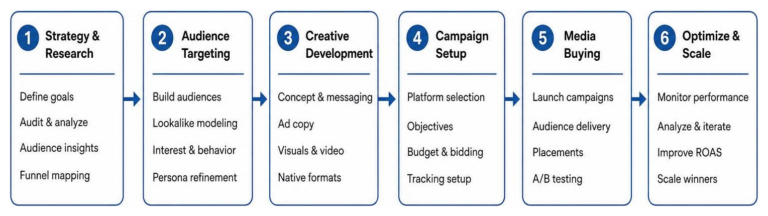
Let's be honest: a successful digital shift isn't about impulsively buying the latest, shiniest software. It’s about having a smart, structured plan. For busy owners, the very idea of a small business digital transformation can feel overwhelming, but breaking it down into a clear roadmap makes it entirely achievable. This process turns a vague goal into a series of concrete, manageable actions.
The journey starts not with technology, but with a hard look at your business right now. The goal is to move from guesswork to a clear, prioritized strategy that delivers real results—fast.
Step 1: Assess Your Current State
Before you can build a better future, you have to get brutally honest about your present. The first step is to do a quick audit of your daily operations. Where are the biggest bottlenecks? What tasks suck up the most time for the least reward?
Think about the most frustrating parts of your day.
- Manual Invoicing: Are you or your staff still spending hours creating, sending, and chasing down paper invoices? This is a classic area crying out for a digital fix. A practical insight: Track how long it takes for invoices to be paid. If it's over 30 days, that's a direct hit to your cash flow.
- Disorganized Customer Info: Is your customer data scattered across sticky notes, random spreadsheets, and your email inbox? That chaos makes follow-ups and personalized service nearly impossible.
- Scheduling Headaches: Do you still rely on endless phone tag and a paper calendar to book appointments, leading to double-bookings and constant interruptions? A key sign this is a problem is if your front-desk staff says their "biggest time-waster is playing phone tag."
Pinpointing these specific pain points is the most critical part of the whole process. It gives you a clear target for your first move, ensuring you solve a real problem from day one.
Step 2: Prioritize for Maximum Impact
You can't fix everything at once—and you shouldn't even try. The key to building momentum is to zero in on the one or two changes that will deliver the biggest, fastest win. This builds confidence and often frees up the resources (both time and money) to tackle the next challenge.
For example, a restaurant struggling with slow cash flow might realize that waiting for checks to clear is its biggest headache. In that case, adopting a digital payment system for instant card payments becomes the top priority. It directly solves a major financial bottleneck.
The goal here is a quick win. Focus on a high-impact, low-complexity change. Solving a major annoyance in the first month proves the value of the process to you and your team.
For another business, say a local consultancy, the biggest issue might be missed sales opportunities because follow-ups are inconsistent. Prioritizing a simple Customer Relationship Management (CRM) tool to track leads and automate follow-ups would be their most impactful first step.
Step 3: Choose the Right Tools
Once you know exactly what problem you're solving, you can find the right tool for the job. The market is flooded with affordable, user-friendly software designed specifically for small businesses. Your focus should be on simplicity, scalability, and support.
This infographic breaks down how to select the right digital tools to match your actual business needs.
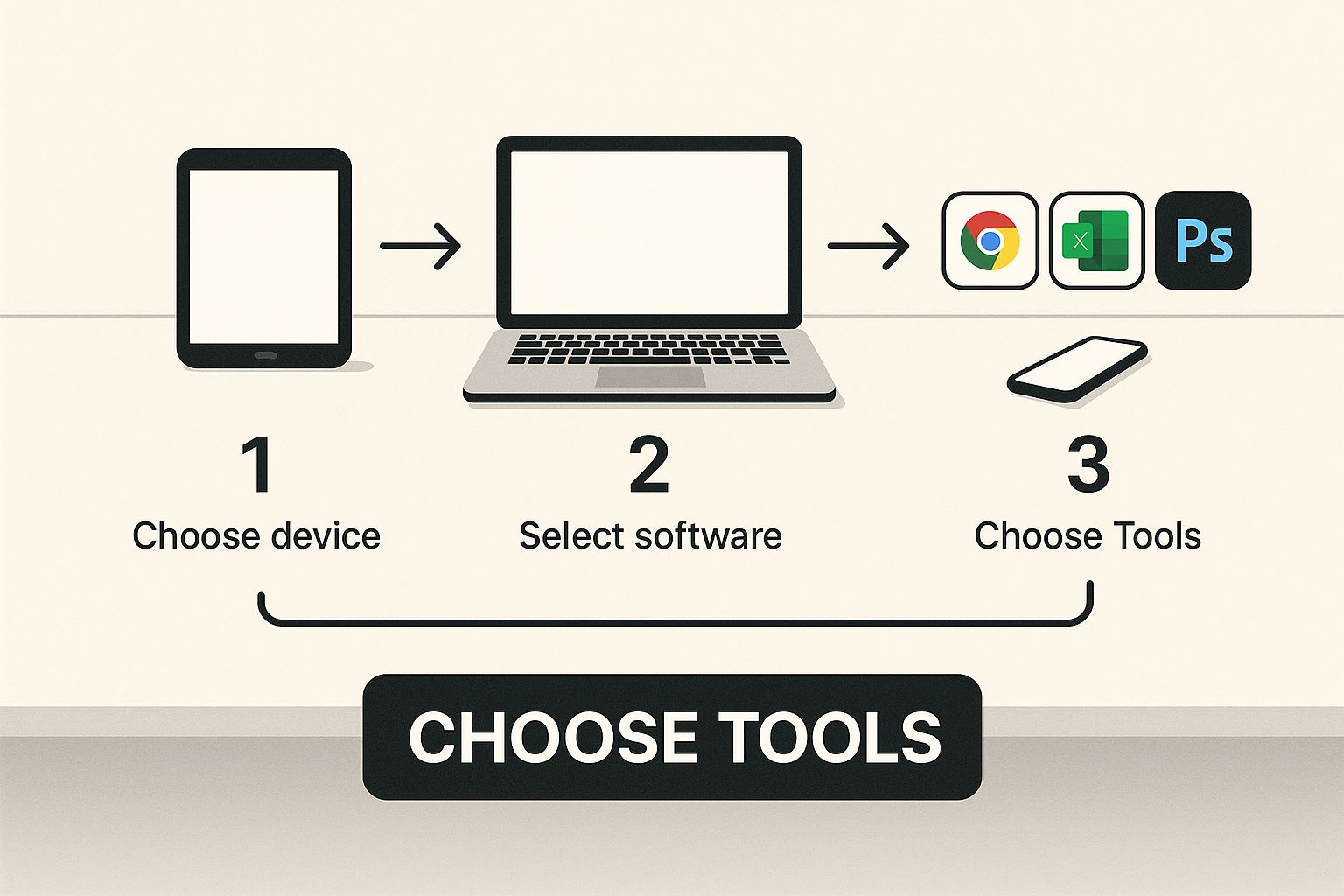
The image drives home the point that picking software and devices should be a deliberate choice based on your specific operational goals. A key insight here is to look for tools that can grow with you—start with a basic plan and add features as your business expands. A practical example: choose an accounting software that has a basic plan for sole proprietors but also offers payroll and inventory modules you can add later as you hire employees and grow.
Step 4: Implement and Train Your Team
The best software in the world is useless if no one knows how to use it. A smooth rollout is absolutely essential for success. Start by clearly communicating to your team why you're making a change. Frame it as a way to make their jobs easier, not just another task to learn. For example: "This new scheduling tool will eliminate phone tag and free you up to spend more time with clients."
Set aside dedicated time for training and be patient. Most modern software comes with excellent tutorials, but there's no substitute for hands-on practice. A great practical tip: run a "pilot" with one or two tech-savvy employees first. Let them become the in-house experts who can then help train the rest of the team. Involving your team in this way creates a sense of ownership, turning them into advocates for the new system rather than resistors.
Step 5: Measure and Refine
Your digital transformation roadmap isn't a "set it and forget it" plan. The final, ongoing step is to track your results and make smart adjustments. You don't need complex analytics; simple metrics will tell you what’s working.
- Time Saved: Did that new scheduling tool save you 5 hours a week?
- Improved Cash Flow: Did the digital payment system cut your average invoice payment time from 30 days to five?
- Increased Leads: Did your new CRM help you follow up and close 15% more deals this quarter?
Tracking these outcomes shows the tangible return on your investment. It also helps you identify what to improve next. For example, if you've streamlined your operations, your next focus might be on getting more customers through the door. Exploring a guide on local marketing for small business could be the logical next step in your growth journey. This continuous cycle of assessing, implementing, and refining is what drives a truly successful and sustainable small business digital transformation.
Essential Technologies That Power Small Businesses
Jumping into a small business digital transformation is really about arming yourself with the right tools. The best part? The most powerful technologies today are more accessible and affordable than ever. You don’t need a huge budget or a dedicated IT department to get them working for you.
The focus here isn't on flashy tech for its own sake, but on practical, user-friendly solutions that solve real-world problems. From running your operations on the go to forging stronger customer bonds, these tools are the true engines of growth. Let’s break down the essential technologies that can make a difference right away.
Cloud Computing: Your Business Hub
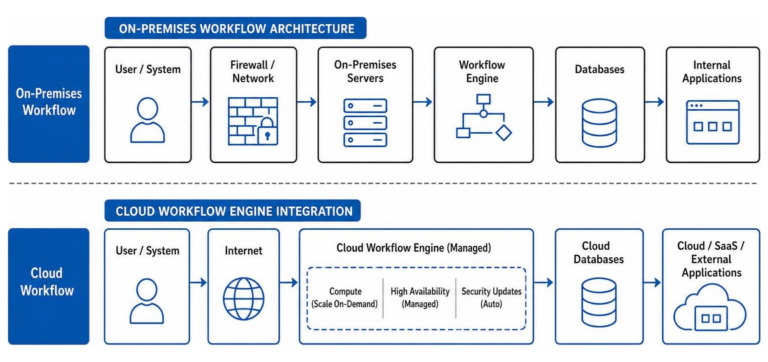
Think of cloud computing less as a single technology and more as the foundation that makes everything else possible. It’s like moving your business’s brain from a single, vulnerable computer in your office to a secure, accessible hub on the internet.
This simple shift gives you the freedom to run your business from literally anywhere. Tools like Google Workspace or Microsoft 365 are perfect examples. They bundle email, file storage, calendars, and document collaboration into one seamless package. A contractor can pull up blueprints on a tablet at a job site while the office manager updates the project schedule from home—all in real-time. This eliminates frantic calls like, "Can you email me the latest version of that proposal?"
It erases physical barriers, supercharges teamwork, and makes sure your critical data is backed up and protected, not just sitting on a single hard drive waiting for a coffee spill.
Customer Relationship Management (CRM)
A CRM is your digital command center for every customer interaction. It organizes contact info, tracks every conversation, and maps out the entire journey a customer takes with your business. It turns scattered sticky notes and fuzzy memories into a powerful, organized system for building real loyalty.
Imagine a small insurance agency. Without a CRM, an agent might forget a follow-up call or fail to recall a client's specific needs from months ago. With a simple CRM, they can set automatic reminders for policy renewals, log notes from every call ("Client's son starts college in the fall, might need renter's insurance"), and even group clients to send out targeted, helpful advice.
A CRM ensures that no customer ever falls through the cracks. It gives you the power to provide the kind of personalized, attentive service that big corporations struggle to match—a massive competitive advantage for any small business.
Artificial Intelligence (AI) for Everyday Tasks
AI is no longer science fiction; it’s a practical tool that can act as your tireless virtual assistant. It’s here to automate the repetitive stuff, help you brainstorm ideas, and provide instant support, freeing you up for the work that actually matters.
- Instant Customer Support: An AI-powered chatbot on your website can answer common questions 24/7, like "What are your hours?" or "Do you ship to my area?" This gives customers immediate help and cuts down on the simple inquiries you have to field personally.
- Content Creation: Stuck for words? AI tools can help you draft social media posts, brainstorm blog topics, or punch up email subject lines. For example, you can ask an AI, "Give me 5 social media post ideas for a bakery announcing a new line of gluten-free muffins," and get instant inspiration.
The adoption of this technology is happening fast. Recent data shows about 85% of small business owners are seeing positive results from using new tech, and 75% believe AI will be crucial for launching new businesses. The trend is undeniable: small businesses are actively using digital tools to win. You can find out more about how small businesses are adopting new tech at Bizplanr.ai.
E-commerce and Digital Payments
For any business selling physical products, an e-commerce platform is the fastest way to shatter geographical limits. Platforms like Shopify, BigCommerce, or even the storefront features built into social media make it incredibly simple to set up a professional online shop and sell to customers anywhere.
Hand-in-hand with e-commerce are digital payment systems like Stripe or Square. These tools make it dead simple for customers to pay securely with a credit card, both online and in person. This drastically improves your cash flow by getting rid of the wait for checks to clear and delivers the convenient, modern payment experience customers have come to expect.
With just these two technologies, a local artisan who makes custom leather wallets can go from selling at a weekend market to running a national business from their workshop.
How to Overcome Common Digital Transformation Hurdles

Jumping into a small business digital transformation promises huge rewards, but let's be honest—any big business change comes with its share of speed bumps. The secret isn't trying to magically avoid these challenges. It’s about seeing them coming and having a game plan.
When you know what the common hurdles are, you can build a strategy to clear them, making the whole process a lot smoother for you and your team.
Handling Budget Constraints
For many small businesses, the biggest hurdle is the fear of high costs. It’s a valid concern. But here’s the good news: you don't need a massive war chest to get started.
Many of the best business tools today use a "freemium" model, which means you get powerful core features without paying a cent. For instance, a marketing agency can use Mailchimp’s free plan for its first 500 subscribers, or a startup can manage its projects on Trello for free. The key is to be smart about where you spend. Pinpoint the one area where a paid tool would give you the biggest bang for your buck—like a CRM to help you close more deals—and let the new revenue from that win fund your next move.
Global spending on digital projects is expected to hit a staggering $2.5 trillion in 2024 and climb to nearly $3.9 trillion by 2027. But even with all that money flowing, many small businesses feel like they're falling behind. It just goes to show that smart, focused spending beats simply spending more. You can find more insights on how small businesses can keep up with digital advances on rbj.net.
Addressing Limited Tech Expertise
Another common worry is not having a tech genius on staff. But here’s the thing: most modern business software is built for everyday users, not code-slinging developers. The most successful software companies have built their empires on simplicity and amazing customer support.
When you’re picking out a new tool, gravitate toward vendors that offer tons of help—think online tutorials, live chat, and detailed help guides. Before you commit to anything, go watch a few "how-to" videos for that specific software on YouTube. It’ll give you a real feel for how user-friendly it actually is. If it takes a 45-minute video to explain a simple function, it's probably too complicated.
Your goal isn't to become a tech expert. It's to be a business owner who uses technology well. Pick tools that are known for their simplicity and let the provider handle the heavy lifting on the technical side.
Overcoming Employee Resistance
Change can be scary, especially for employees who are perfectly happy with the way things are. New technology can feel like a threat to comfortable routines. The secret to getting your team on board? Clear communication and getting them involved from the start.
Begin by explaining the "why" behind the change. Focus on how this new tool will make their jobs easier, not just different. For instance: "We're implementing this new inventory system so you won't have to spend Saturdays doing manual counts anymore." Show them how it can eliminate the repetitive or frustrating parts of their day.
Even better, bring your team into the decision-making process. Ask them what their biggest daily headaches are—they're the ones in the trenches and often have the best insights. When they have a say in choosing the solution, they feel a sense of ownership. From there, provide solid training and celebrate the small wins. You’ll be surprised how quickly skeptical employees can become your biggest advocates.
Tackling Data Security Fears
Moving your business operations online will naturally bring up questions about security. While cyber threats are very real, you don’t need to build a digital fortress to protect your business. It all starts with building simple, solid security habits.
Put these straightforward but powerful security practices in place:
- Strong Passwords: Make it a rule to use long, unique passwords for every single application. A password manager makes this surprisingly easy for everyone.
- Two-Factor Authentication (2FA): Turn on 2FA wherever it’s offered. It adds a crucial security layer that can stop a hacker even if they manage to steal a password.
- Regular Updates: Keep all of your software and apps up-to-date. This ensures you always have the latest security patches to protect against new threats.
Taking these basic steps protects your new digital setup and builds confidence across the team. As you grow, you might even explore the importance of SEO in the age of AI to make sure your new online presence is not only secure but also highly visible.
Frequently Asked Questions
Stepping into the world of small business digital transformation always brings up a few questions. That's perfectly normal. Getting straight answers is the best way to move forward with confidence and build a plan that actually works for you. Let's tackle the most common concerns we hear from business owners every day.
The goal here isn't to overwhelm you with jargon, but to clear up the confusion and turn any hesitation you might feel into real, actionable steps.
How Much Does Digital Transformation Cost For a Small Business?
This is the big one, and the answer is refreshing: it doesn't have to break the bank. In fact, you can get started for free. Many of the best tools out there have "freemium" plans that are surprisingly powerful. You can get a robust email marketing system from Mailchimp or a fantastic project management board from Trello without spending a dime.
A professional website might cost a few hundred dollars, but the real key is to sidestep the trap of feeling like you need to buy everything at once. Don't do it. Instead, zero in on your single biggest headache and find one affordable tool that solves just that.
For example, if you're drowning in back-and-forth emails to book appointments, an online system like Calendly can instantly solve that problem for as little as $10 a month. A smart way to think about this is to let each new tool pay for the next. Use the time or money you save from one solution to fund your next small step. This creates a self-funding cycle, turning your small business digital transformation into a series of manageable investments, not a giant upfront cost.
I Am Not Tech-Savvy. Can I Still Do This?
Absolutely. This is probably the biggest myth out there. Modern business software isn't built for programmers anymore; it’s built for busy owners like you. The best tools today feature clean, intuitive interfaces, often with simple drag-and-drop functionality and instructions that are easy to follow.
You don't need to learn a single line of code. Plus, these software companies know their business only succeeds if you succeed. That’s why they offer incredible support, from huge libraries of help articles and video tutorials to live chat with real humans.
Your strategy should be to pick tools famous for their simplicity and great customer support. Start with just one, get comfortable with it, and let that small win build your confidence to tackle the next. The goal isn't to become a tech wizard—it's to be a smart business owner who uses technology to work smarter.
Which Area of My Business Should I Digitize First?
Start where it hurts the most. The best starting point is always the task that's the most repetitive, time-consuming, or manual in your day-to-day operations. For most small businesses, this usually falls into one of a few common areas.
- Customer Communication: Are you losing track of leads or client messages? A simple Customer Relationship Management (CRM) tool can be a complete game-changer.
- Financial Organization: Sick of sorting through receipts and chasing down unpaid invoices? Accounting software like QuickBooks can automate a huge chunk of that work.
- Appointment Scheduling: Are phone calls to book appointments constantly interrupting your flow? A tool like Acuity Scheduling could give you back hours every single week.
Marketing is another high-impact area to consider. Setting up professional social media pages and a simple email newsletter can deliver immediate results for a relatively low amount of effort.
If you're still stuck, just ask yourself this one question: "What's the one task that, if I automated it, would give me the most time back to focus on my customers?" Your answer is your starting point.
How Do I Get My Employees to Adopt New Technology?
This is critical. A new tool is useless if nobody uses it. Getting your team on board starts with explaining the "why." You have to frame the new technology as something that will make their jobs easier and more enjoyable, not just another item on their to-do list.
Even better, bring your team into the decision-making process. Ask them what problems they face—they're on the front lines and often have the best insights. Giving them a voice creates a sense of ownership that's far more effective than just telling them what to do.
Once you’ve picked a tool, provide real, hands-on training and be patient. There will be a learning curve. Make sure to celebrate the small wins and point out specific ways the new tech is making work better. When your employees see it saving them from mind-numbing data entry or reducing customer complaints, they'll be much more likely to embrace it.
Ready to stop guessing and start growing? At Latitude Park, we specialize in taking the complexity out of digital marketing, helping small businesses and franchises achieve real results with targeted ads and expert SEO. Learn how we can build a custom marketing strategy for you at latitudepark.com.