Your First Impression is Digital
Business online reputation management companies help you monitor, protect, and strengthen what appears when someone searches for your brand online. Here’s what you need to know when choosing one:
Key Factors to Consider:
- Service Scope – Do they offer review management, content suppression, crisis response, and social listening?
- Industry Expertise – Do they understand your sector’s specific challenges (franchises, healthcare, retail)?
- Transparency – Can they show case studies, clear methodologies, and measurable results?
- Crisis Readiness – Do they have rapid response protocols and 24/7 availability?
- Technology – Do they use proprietary software, AI tools, and real-time analytics?
- Pricing Structure – Are contracts month-to-month or long-term? Custom quotes vs. fixed packages?
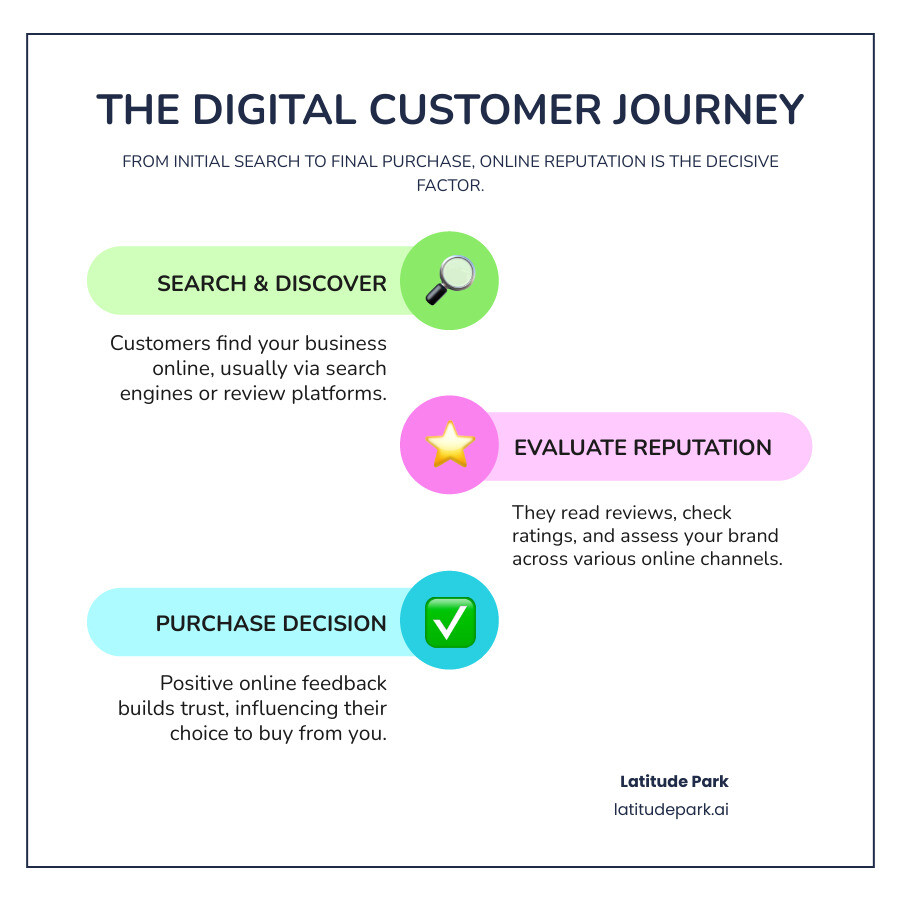
More than 90% of consumers read reviews before making a purchase decision. That means your business’s reputation is established online before a customer ever contacts you.
Every Google search is a first impression. Every review platform is a recommendation. Every social media mention shapes perception.
For multi-location businesses and growing franchises, this challenge multiplies. One negative review at a single location can impact brand perception everywhere. One viral complaint can undo years of trust-building. One outdated listing can send customers to competitors.
The stakes are high. A strong online reputation drives revenue, attracts talent, and builds customer trust. A damaged one drives them all away.
That’s where reputation management becomes essential. But not all solutions are equal. Software tools give you visibility. Full-service companies give you strategy, expertise, and execution. The right choice depends on your resources, complexity, and risk level.
I’m Rusty Rich, founder of Latitude Park, and I’ve spent over 15 years helping small businesses and franchises build strong online presences through strategic partnerships with business online reputation management companies and integrated digital marketing. I’ve seen how the right reputation partner transforms not just search results, but bottom-line growth.
Glossary for business online reputation management companies:
- how to manage online reviews
- review management
- how to manage google reviews
- For a neutral overview of the broader concept of ORM, see Online reputation management on Wikipedia
DIY vs. Done-For-You: Software vs. Hiring an ORM Company
When it comes to managing your business’s online reputation, you generally have two main paths: utilizing Online Reputation Management (ORM) software or engaging the services of specialized business online reputation management companies. Both offer distinct advantages and disadvantages, and the best choice often depends on your business’s specific needs, internal resources, and budget.

ORM software provides a suite of tools designed to help you monitor, track, and sometimes even automate aspects of your online presence. These platforms often include features like review monitoring, sentiment analysis, social listening, and business listing management. If you have an in-house marketing team with the expertise and time to dedicate to ORM, software can be a cost-effective solution. It gives you hands-on control, allowing your team to respond to reviews, manage listings across multiple sites (often 30+ listing sites), and implement proactive strategies. However, this approach requires significant time investment and a deep understanding of ORM best practices. While software can alert you to issues, it typically doesn’t offer the strategic guidance or crisis management expertise that a dedicated team provides.
On the other hand, hiring specialized business online reputation management companies offers a hands-off solution. These firms bring experienced professionals, advanced tools, and proven strategies to the table. They handle everything from comprehensive online audits to content creation, SEO optimization, and crisis communication. For businesses that lack the internal resources, time, or specialized knowledge, an ORM company can be invaluable. They can steer complex situations, such as suppressing negative search results or handling a viral crisis, with a level of expertise that most in-house teams cannot match. This option is generally more expensive but can save significant time and ensure that delicate situations are handled professionally. It’s an investment in peace of mind and strategic execution.
Here’s a quick comparison to help illustrate the differences:
| Feature | ORM Software | ORM Company |
|---|---|---|
| Cost | Generally lower, subscription-based | Higher, often project-based or monthly retainers |
| Expertise Required | High internal expertise needed | Provided by the company’s specialists |
| Time Commitment | Significant internal time investment | Minimal internal time, company handles execution |
| Crisis Handling | Alerts only, internal response required | Strategic planning, rapid response, expert communication |
| Custom Strategy | Tool-driven, requires internal strategy | Custom strategies, proactive and reactive |
The decision boils down to balancing budget, desired level of control, and the complexity of your reputation management needs. For simple monitoring and hands-on management, software might suffice. For strategic guidance, complex issue resolution, or a comprehensive, hands-off approach, partnering with an ORM company is often the superior choice.
How to Choose the Right Partner: A 7-Step Vetting Process
Choosing the right business online reputation management companies is a critical decision that can significantly impact your brand’s future. It’s not just about cleaning up messes; it’s about building a sustainable, defensible, and positive online presence. We’ve developed a 7-step vetting process to guide you.

Define Your Scope and Goals
Before you start looking, you need to understand what you want to achieve. Are you primarily concerned with local reviews for your multi-location franchise? Do you need extensive social media monitoring and engagement? Is there a specific crisis situation that requires immediate PR intervention? Perhaps you’re looking for proactive content suppression, long-term brand building, or even lead generation through improved online sentiment.
Defining your scope and goals clearly will help you identify companies that specialize in your particular needs. For instance, a small business might prioritize local review management, while a larger enterprise might require sophisticated crisis PR and content suppression capabilities. Consider what problems you’re trying to solve and what success looks like for your business.
Evaluate Their Expertise and Services
Once you know what you need, assess whether the business online reputation management companies you’re considering have the expertise to deliver. A robust ORM strategy often blends several disciplines:
- SEO (Search Engine Optimization): How will they ensure positive content ranks highly and negative content is pushed down? This involves off-page SEO tactics, influencing autocomplete, and optimizing for search engine results pages (SERPs).
- Public Relations (PR): Do they have relationships with media outlets to secure positive mentions and manage press during a crisis?
- Content Removal/Suppression: Can they effectively remove or suppress damaging content like news articles or negative reviews? Be wary of companies that “guarantee” removal for all content, as this is often difficult due to legal and platform restrictions.
- Review Generation and Management: How do they help you get more positive reviews, respond to existing ones, and improve your overall star ratings?
- Social Listening and Engagement: Do they monitor social media conversations about your brand and engage appropriately?
Look for examples of successful campaigns and measurable results. Some companies might showcase impressive growth in review volume (e.g., 6,000 new reviews, a 1,300% growth) or significant increases in average star ratings (e.g., from 2 to 4.6), demonstrating their impact.
Demand Transparency and Proof
This is where the rubber meets the road. Any reputable ORM company should be able to provide:
- Case Studies: Real-world examples of how they’ve helped businesses similar to yours. Look for detailed case studies on their website that showcase their process and results.
- Client Testimonials: Direct feedback from satisfied clients.
- Clear Methodologies: They should be able to explain their process, not just promise magic. Avoid companies that offer “guaranteed” fixes without explaining how, especially for content removal, which is often legally complex.
- Measurable Outcomes: How do they track success? Do they provide detailed reports on search ranking improvements, sentiment shifts, review growth, or traffic increases? We look for partners who can demonstrate a clear return on investment (ROI).
Assess Their Crisis Readiness
Reputation crises can strike swiftly and severely. Your chosen ORM partner must be equipped to handle these situations with speed and precision. Ask about:
- Rapid Response Protocols: How quickly can they mobilize? What’s their communication plan during an urgent situation?
- Risk Audits: Do they conduct proactive risk assessments to identify potential vulnerabilities before a crisis erupts?
- Escalation Processes: Who gets involved when a situation escalates, and how is it managed?
- Spokesperson Training: Do they offer guidance or training for your team members who might need to speak publicly?
- 24/7 Availability: Is there a team available around the clock for emergencies?
The ability to address negative comments or criticism in real-time is crucial, ensuring damaging content doesn’t linger online and influence public opinion.
Consider Their Approach to Technology
Modern ORM is heavily reliant on technology. Look for business online reputation management companies that leverage advanced tools, including:
- Proprietary Software: Do they have their own platforms for monitoring and management? In-house tools can offer a more seamless and integrated experience.
- AI-Powered Tools: Artificial intelligence is changing ORM, offering capabilities like advanced sentiment analysis, predictive analytics, and automated responses. AI is becoming a core component, not just an add-on.
- Analytics Suites: Comprehensive dashboards that provide insights into your online reputation, tracking mentions, sentiment, and search performance.
- Centralized Dashboards: A single place where you can view all your reputation data, from reviews to social mentions to search rankings.
- Real-time Alerts: Instant notifications about new reviews or mentions so you can respond promptly.
These technological capabilities enable more efficient monitoring, faster response times, and deeper insights into your brand’s online perception.
Understand Their Pricing and Contract Structure
Pricing for business online reputation management companies can vary widely based on the scope, complexity, and duration of services. Typical models include:
- Retainers: Monthly fees that cover ongoing services. These can range from under $1,000 to over $10,000+ per month, depending on the scale of work.
- Project-Based Fees: For specific, one-off issues like a content removal campaign or a short-term crisis management project.
- Month-to-Month Contracts: Some companies offer this flexibility, which can reduce upfront risk, especially if they operate on a pay-for-performance model.
- Custom Quotes: Most reputable firms will provide a custom quote after assessing your unique situation, as a one-size-fits-all approach is rarely effective.
When evaluating costs, consider the value proposition. A cheap ORM software solution might seem appealing, but without the expertise to wield it effectively, it could leave your brand exposed. Investing in comprehensive ORM is crucial because the costs of not managing your online reputation can be significant.
Choosing the Best Business Online Reputation Management Companies for Your Needs
The “best” ORM company isn’t a universal truth; it’s the one that best fits your specific requirements.
- Small Businesses: Often need cost-effective solutions focused on local review management, building a positive online presence, and basic brand monitoring. ORM helps them build credibility and attract local customers.
- Larger Enterprises: Require scalable solutions for multi-location management, complex crisis communication, in-depth sentiment analysis, and sophisticated content suppression.
- Multi-location Businesses (like franchises): Need custom campaign structures that can manage reviews and listings across numerous locations, ensuring brand consistency while addressing local nuances. This is an area we understand deeply at Latitude Park.
- B2B vs. B2C Focus: Some companies specialize in B2B reputation (e.g., thought leadership, industry influence), while others excel in B2C (e.g., consumer reviews, social media engagement).
Understanding these distinctions ensures you partner with a company whose expertise aligns with your business model and growth objectives.
Core Services: What to Expect from Business Online Reputation Management Companies
When you partner with professional business online reputation management companies, you’re investing in a comprehensive suite of services designed to protect, improve, and grow your brand’s digital footprint. These services go beyond simple monitoring; they involve proactive strategies and expert execution to control your narrative.
Improving Search Rankings and Suppressing Negative Content
One of the primary goals of ORM is to ensure that when someone searches for your business, they find positive, accurate, and relevant information. This involves a strategic blend of:
- Search Engine Optimization (SEO): ORM companies use advanced SEO techniques to boost the visibility of positive content. This means creating high-quality, keyword-rich articles, blog posts, and web pages that accurately represent your brand.
- Content Creation and Promotion: Generating and publishing fresh, positive content is key. This can include company news, customer success stories, expert articles, and social media updates. The more positive content there is, the more likely it is to dominate search results.
- SERP Control (Search Engine Results Page): The aim is to push negative content off the first few pages of search results, where most consumers stop looking. This is often referred to as “burying negative articles” or “suppression.”
- Off-Page SEO: This involves building strong backlinks from reputable websites to your positive content, signaling to search engines that your content is authoritative and trustworthy. Media coverage from outlets like Fortune or USA Today, for example, creates high-authority backlinks.
- Influencing Autocomplete: Some ORM efforts extend to influencing Google’s autocomplete suggestions and related searches, ensuring that positive or neutral terms are associated with your brand.
It’s a continuous process of creating, optimizing, and promoting content to control the narrative that appears in search engines.
Key Services Offered by Business Online Reputation Management Companies
Online reviews play an incredibly powerful role in a business’s reputation, with over 90% of consumers reading them before making a purchase. Business online reputation management companies offer crucial services to manage this vital aspect:
- Review Generation: Proactively encouraging satisfied customers to leave positive reviews. This can involve automated email or SMS requests, in-store prompts, or dedicated review platforms.
- Review Monitoring: Continuously tracking review platforms (like Google My Business, Yelp, Trustpilot, and industry-specific sites) for new reviews and mentions.
- Responding to Feedback: Crafting professional and empathetic responses to both positive and negative reviews. A thoughtful response to a negative review can often mitigate its impact and show potential customers that you care.
- Sentiment Analysis: Using advanced tools to understand the overall tone and sentiment of reviews, identifying recurring themes or areas for improvement.
- Improving Star Ratings: Implementing strategies to consistently raise your average star rating. We’ve seen companies achieve remarkable results, growing from a 2-star average to 4.6, alongside a 1,300% increase in new reviews, after partnering with an ORM provider.
- Testimonial Widgets: Integrating positive reviews directly onto your website using widgets to boost SEO and build immediate trust with site visitors.
Effective review management is about building lasting customer trust and standing out in a competitive market.
Crisis Communication and Damage Control
No business is immune to a potential crisis. Whether it’s a viral social media post, a negative news story, or an internal issue that goes public, business online reputation management companies are adept at crisis communication and damage control:
- Reputation Repair: Systematically addressing and mitigating the damage caused by negative events. This often involves creating and promoting counter-narratives and positive content.
- Handling Viral Posts: Rapidly responding to and managing the spread of damaging viral content on social media and other platforms.
- Stakeholder Communications: Crafting messages for various audiences, including customers, employees, investors, and the media, to ensure consistent and accurate information.
- Media Relations: Working with journalists and media outlets to provide official statements, correct misinformation, and secure balanced reporting.
- Real-time Response: The ability to address negative comments or criticism in real time is paramount. Not allowing damaging content to linger online unaddressed gives you peace of mind and prevents it from influencing others’ opinions.
A strong ORM partner will have a plan in place before a crisis hits, allowing for rapid deployment of strategies to protect your brand from significant reputational damage.
The Future of Reputation: AI and Emerging Trends
The digital landscape is constantly evolving, and with it, the field of online reputation management. One of the most significant emerging trends is the profound impact of Artificial Intelligence (AI) and new platforms.
AI is fundamentally changing the rules of findability, reputation, and trust. It’s no longer a “bolt-on” feature but a core component of effective ORM strategies. We are seeing a shift where AI is built into the very fabric of reputation management platforms, allowing businesses to stay ahead of change and competition.
Key trends include:
- AI-Driven Insights: AI can analyze vast amounts of data from reviews, social media, and news articles to provide deep insights into brand sentiment, identify emerging trends, and predict potential reputational risks. This allows for proactive rather than reactive management.
- Generative Engine Optimization (GEO): With the rise of AI-powered search engines and conversational AI models like ChatGPT and Gemini, businesses need to optimize their content for these new platforms. This involves ensuring your brand is accurately and positively represented when AI systems generate answers. The rapid growth of traffic from AI-driven sources highlights the urgency of this new form of optimization.
- Brand Monitoring on AI Platforms: ORM companies are now tracking how generative AI models describe a brand, including sentiment, sources, and accuracy. This helps businesses understand and influence their narrative in these critical new spaces.
- Automated Responses and Engagement: AI can assist in generating contextually appropriate responses to reviews and social media comments, ensuring timely engagement and consistent brand voice, though human oversight remains crucial.
- Predictive Analytics: AI can analyze past reputation trends and external factors to predict future reputational challenges, allowing businesses to prepare and mitigate risks before they escalate.
- Personalized Reputation Management: AI can help tailor ORM strategies to individual customers or segments, providing more effective and relevant interactions.
The integration of AI is making reputation management more dynamic, efficient, and predictive. It’s redefining online visibility and brand perception, making it essential for business online reputation management companies to accept these technological advancements to deliver meaningful outcomes.
Frequently Asked Questions about ORM Services
How long does it take to see results from online reputation management?
Results vary. Quick wins, like addressing negative reviews, can take days or weeks. However, long-term strategies, such as suppressing negative search results, often require several months to a year or more. The timeframe depends on the severity of the issue; a few negative reviews can be managed faster than a widespread crisis. ORM is an ongoing effort, and building a strong reputation is a marathon, not a sprint.
Can negative content be permanently deleted?
Permanent deletion is challenging and often not possible due to free speech laws and platform policies. While legal action can sometimes force removal in cases of defamation, it is a costly process. Be skeptical of companies that offer “guaranteed deletion.” A more common and effective strategy is suppression, which involves creating positive content to push negative results down in search rankings, making them less visible. A transparent ORM partner will explain the realistic outcomes of content removal versus suppression.
How much do business online reputation management companies cost?
The cost of engaging business online reputation management companies varies based on several factors:
- Scope and Complexity: A basic review management service for a small business costs less than a full-scale crisis campaign for a large enterprise.
- Pricing Models: Monthly retainers are common, ranging from under $1,000 to over $10,000 per month. Project-based fees and pay-for-performance models are also available.
- Services Included: The cost increases with the number of services required, such as SEO, PR, content creation, and advanced monitoring.
While ORM software can offer a cheaper entry point, it lacks the human expertise and strategic execution that a dedicated ORM company provides. The investment in a professional firm should be viewed in terms of the potential revenue protection and growth it offers.
Conclusion: Build a Reputation That Drives Growth
Your business’s online reputation is no longer a passive reflection; it’s an active asset that demands proactive management. In today’s digital-first world, where over 90% of consumers check reviews before making a purchase, your digital shield is as critical as your product or service.
Partnering with the right business online reputation management companies isn’t just about damage control; it’s about implementing a long-term strategy that builds brand trust, improves your digital resilience, and ultimately drives growth. Whether it’s improving search rankings, managing reviews, or navigating a crisis, a dedicated ORM partner provides the expertise, technology, and strategic vision you need.
For multi-location franchises, managing reviews across every storefront is key to building a trustworthy national brand. We at Latitude Park understand these complex needs and help franchises thrive through strategic digital marketing partnerships.
Ready to take control of your online narrative and turn your reputation into a powerful growth engine? Learn more about our Review Management services.