Why Online Review Authenticity Matters More Than Ever
Online retailer reviews have become the backbone of digital commerce, with shoppers increasingly relying on customer feedback to make purchasing decisions. However, the surge in fake reviews has created a trust crisis that affects both consumers and honest businesses.
Quick Guide to Trusted Online Store Reviews:
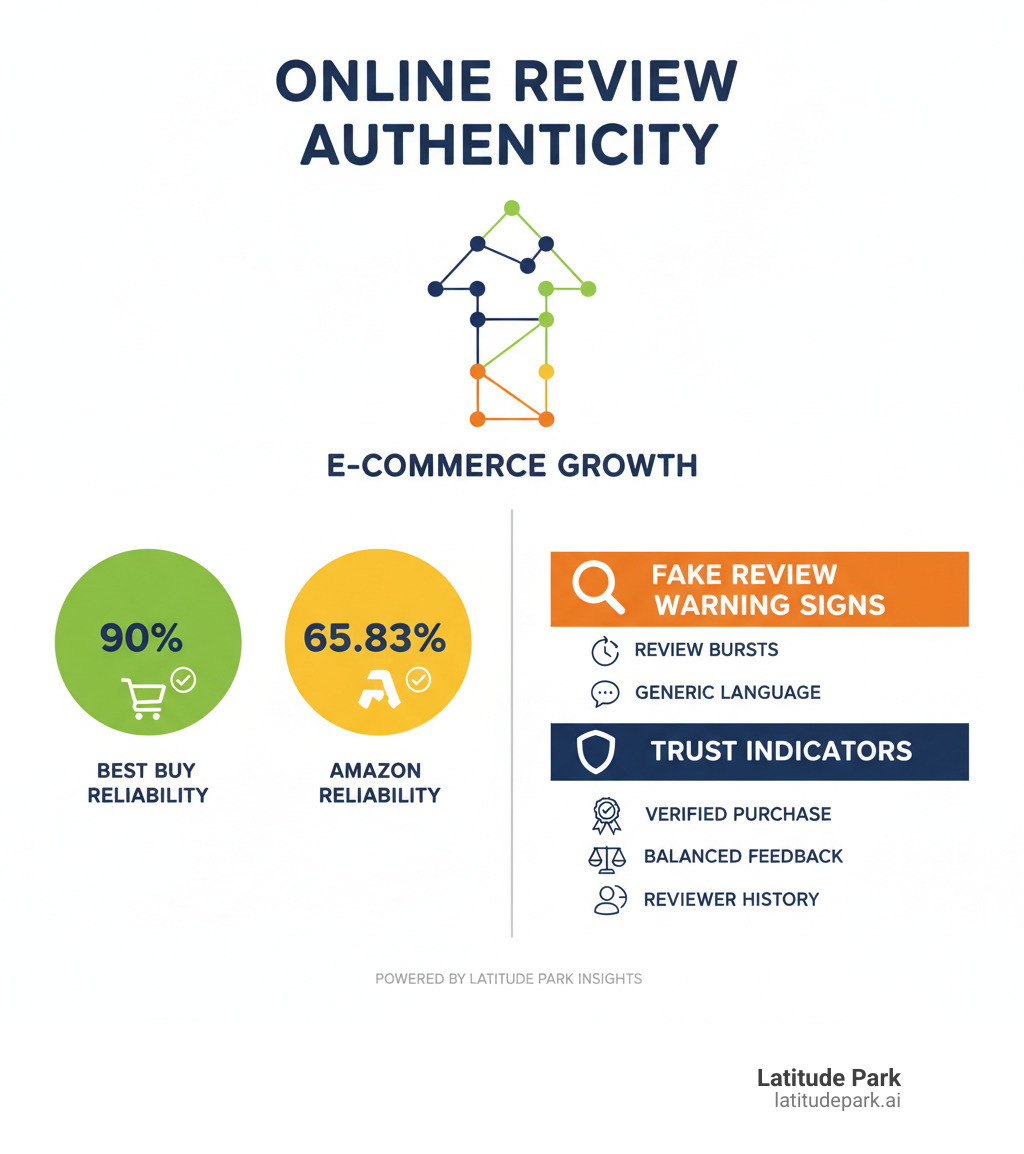
- Best Buy: 90%+ reliable reviews (Grade A)
- Walmart: 76% reliable reviews (Grade A/B)
- Amazon: 65.83% reliable reviews (Grade C)
- Sephora: 59.84% reliable reviews (Grade D)
- Key Warning Signs: Review bursts, generic praise, lack of specific details
- Trust Indicators: Verified purchases, balanced feedback, reviewer history
The numbers tell a stark story. Research shows that while Best Buy maintains over 90% reliable reviews, other major platforms struggle with authenticity. Amazon averages just 65.83% reliable reviews, while Sephora drops to 59.84% due to incentivized review programs.
This authenticity gap costs everyone. Consumers waste money on poor products, face safety risks, and lose trust in online shopping. Meanwhile, honest businesses fight an uphill battle against competitors gaming the system with fake feedback.
The stakes couldn’t be higher. Fake reviews don’t just mislead shoppers – they create unfair competition and environmental waste through increased returns. One study found that over 70% of reviews for certain Amazon products were flagged as having “high deception.”
As Rusty Rich, President of Latitude Park, I’ve spent over 15 years helping businesses build authentic online presences and steer the complex world of online retailer reviews. Through my work with franchises and multi-location businesses, I’ve seen how review authenticity impacts customer acquisition and brand trust.
Why Review Authenticity Is Crucial for Shoppers and Businesses
Picture this: you’re browsing online for that perfect kitchen gadget you saw in a cooking video. The product has hundreds of glowing reviews, but something feels off about the overly enthusiastic language. Your gut instinct might be trying to save you from a costly mistake.
Online retailer reviews have become our digital shopping companions, but their authenticity can make or break our purchasing decisions. For shoppers, authentic reviews serve as our personal shopping advisors, helping us avoid scams, ensure product quality, and ultimately save money. When we rely on genuine feedback, we can confidently choose products that truly meet our needs.
From a consumer perspective, authentic reviews protect us from more than just buyer’s remorse. They shield us from potentially unsafe products that haven’t been properly tested. Think about it – would you want to buy a phone charger based on fake reviews, only to find it poses a fire hazard?
For honest businesses, review authenticity is equally vital. Genuine feedback builds brand trust, attracts loyal customers, and provides valuable feedback for product improvements. As we’ve explored in Are Online Reviews Important? Yes, and Here’s Why, authentic reviews create a foundation for sustainable business growth.
The consequences of fake reviews ripple through our entire shopping ecosystem. Beyond individual disappointments, there’s a significant environmental impact from returns when products don’t match their glowing but false descriptions. Every returned item means additional packaging, shipping, and often, products ending up in landfills.
The High Cost of Deception
The price of fake online retailer reviews extends far beyond wasted money on poor products. When we base purchasing decisions on fabricated feedback, we face real safety risks from untested items. Imagine buying a car seat for your child based on fake safety reviews – the consequences could be devastating.
Wasted money on poor products is just the tip of the iceberg. Research shows that some Amazon products have over 70% of their reviews flagged as having “high deception.” This means thousands of shoppers are making decisions based on completely unreliable information.
Fake reviews create unfair competition that hurts everyone. Honest sellers who play by the rules find themselves competing against businesses that flood platforms with fabricated praise or attack competitors with false negative reviews. This damages the brand reputation of honest sellers who refuse to game the system.
The environmental cost is staggering too. When products don’t meet the expectations set by fake reviews, return rates skyrocket. Each return means additional carbon emissions from transportation, more packaging waste, and often products that can’t be resold ending up as waste.
The Value of Genuine Feedback
Authentic reviews transform online shopping from a guessing game into informed purchasing decisions. When real customers share honest experiences, complete with specific details about how products perform in daily life, we can set realistic expectations before clicking “buy.”
For businesses, genuine feedback is pure gold. It’s a direct line to understanding what customers truly want and need. Companies can use this insight for improving products and services, creating a positive cycle of improvement and customer satisfaction.
Smart businesses understand Why You Should Always Encourage User Reviews. When companies actively seek and respond to authentic feedback, they demonstrate genuine care for their customers’ experiences. This approach fosters customer loyalty that goes beyond single transactions.
The beauty of authentic reviews lies in their imperfection. Real customers mention both positives and negatives, share specific use cases, and provide the kind of detailed insights that help fellow shoppers make confident decisions. This honesty benefits everyone – shoppers get better products, and businesses get actionable feedback for continuous improvement.
Decoding Online Retailer Reviews: How to Spot the Fakes
Learning to spot fake online retailer reviews is like developing a superpower for smart shopping. It might seem overwhelming at first, but once you know what to look for, the red flags become surprisingly obvious.
The world of fake reviews is more creative than you might expect. Paid reviews are the most straightforward scam – businesses simply pay people to write glowing reviews or trash their competitors. But it gets more sophisticated from there.
AI-generated content is becoming increasingly common, churning out reviews that sound human but lack genuine experience. Then there’s competitor sabotage, where businesses deliberately post negative reviews about rivals to steal customers. The FTC has noted that fake reviews aren’t always positive – sometimes the goal is to destroy a competitor’s reputation.
One particularly sneaky tactic is review hijacking. This happens when sellers list new products under established listings with great reviews, essentially stealing someone else’s reputation. Meanwhile, incentivized reviews without proper disclosure can mislead shoppers who don’t realize the reviewer got the product for free.
The Federal Trade Commission offers excellent guidance on How To Evaluate Online Reviews, emphasizing that critical thinking is our best defense against deception.
Key Red Flags of a Fake Review
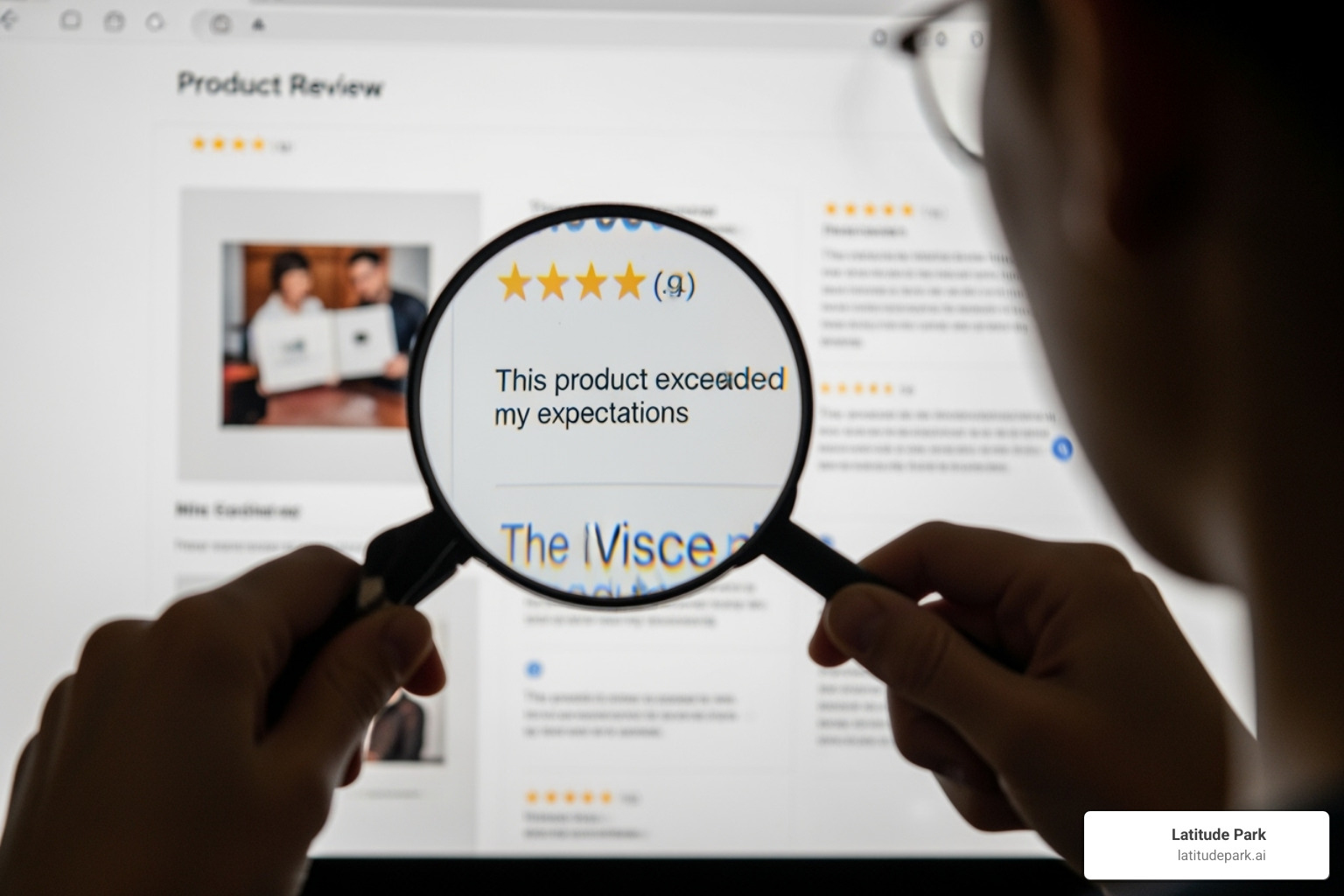
Spotting fake online retailer reviews becomes easier when you know the warning signs. Overly emotional language without substance is a classic giveaway. Reviews screaming “best product ever!” or “total garbage!” without explaining why should make you suspicious.
Watch for bursts of reviews appearing within days or weeks, especially on new products. Real customers don’t typically find and review products in perfect synchronization. Generic praise is another red flag – comments like “great quality, fast shipping” could apply to almost anything.
Similar wording across multiple reviews often reveals copy-paste jobs or template-generated content. If several reviews use identical phrases, that’s not a coincidence. Also be wary when a reviewer has only one review or multiple reviews all posted around the same time with no other account activity.
Here’s something clever that the FTC points out: fake positive reviews sometimes give 4 stars instead of 5 to appear more believable. Even scammers know that perfection looks suspicious.
Hallmarks of a Trustworthy Review
Genuine online retailer reviews have a completely different feel. They mention specific features – like “the battery life on this laptop lasted 8 hours during my work day” instead of just “great laptop.” Real reviewers share details that only come from actual use.
Photos and videos add tremendous credibility. When someone takes time to upload their own unboxing shots or show the product in action, they’re probably legitimate. Even pictures of flaws or problems suggest authentic experience.
Look for reviews that describe real-world use cases. “I used this tent during a rainy weekend camping trip, and it kept everything dry except for a small leak near the door zipper” tells a story that generic praise simply can’t match.
Balanced feedback is golden. Very few products are perfect, so reviews acknowledging both positives and negatives tend to be more trustworthy. When someone says “I love this vacuum for pet hair, but it’s quite heavy to carry upstairs,” you’re hearing genuine experience.
Finally, check if the reviewer has a credible profile. While not foolproof, accounts showing varied purchases and consistent writing styles over time are generally more reliable than brand-new profiles with suspicious activity patterns.
The Digital Watchdogs: Regulation and Tools for Verifying Reviews
In the sometimes chaotic world of online retailer reviews, it’s reassuring to know we’re not alone in the fight against deception. There are digital watchdogs and sophisticated tools working behind the scenes to help us separate fact from fiction.
The Federal Trade Commission (FTC) stands as our primary guardian in the United States, serving as the leading law enforcement agency globally when it comes to review fraud. Their mission goes beyond just catching the bad actors – they’re actively working to protect consumers and promote fair competition in the digital marketplace.
The FTC has brought numerous cases against companies that cross the line. Whether it’s businesses posting fake reviews of their own products, paying for positive feedback without disclosure, suppressing negative reviews, or creating fake negative reviews to harm competitors, the FTC doesn’t mess around. When they find violations, the consequences can be severe – significant fines and mandatory changes to business practices that can reshape how companies operate.
This enforcement action creates a ripple effect that benefits everyone. Honest businesses get a fair playing field, and we as consumers gain protection from fraudulent practices. For businesses looking to build authentic online retailer reviews, understanding these regulations is essential to How to Manage Online Reviews ethically and effectively.
Understanding ‘Verified Purchase’ and Other Trust Signals
As we browse through review sections, we encounter various labels and badges that act as trust indicators. Understanding what these mean can dramatically improve our ability to spot reliable feedback.
The ‘Verified Purchase’ label is perhaps the most important trust signal we’ll encounter. When you see this badge, it means the e-commerce platform has confirmed that the account writing the review actually purchased the item through their system. This significantly reduces the likelihood that we’re reading a review from a bot or competitor who never even touched the product.
While a verified purchase doesn’t guarantee the review is completely unbiased – the reviewer could still have received incentives – it’s a strong signal of genuine interaction with the product. It’s like having a receipt that proves someone actually bought what they’re reviewing.
Other trust signals worth recognizing include incentivized review disclosures. Reputable platforms require reviewers who received a product for free or at a discount to clearly state this fact. As Trustpilot emphasizes, Verification can help ensure real people are writing the reviews you read on Trustpilot. While incentivized reviews can introduce bias, they aren’t inherently deceptive when properly disclosed.
Platform-specific badges add another layer of credibility. Best Buy’s “Elite Member” reviewers, for example, are typically loyal, high-spending customers whose detailed insights carry extra weight due to their extensive product experience. Similarly, platforms like ResellerRatings and Trustpilot allow us to see a reviewer’s history and activity level, helping us distinguish between seasoned reviewers and suspicious new accounts.
How to use third-party tools for analyzing online retailer reviews
Beyond our own detective skills, several third-party tools can serve as our digital co-investigators in verifying online retailer reviews. These tools have become invaluable allies in the fight against fake feedback.
Fakespot and ReviewMeta are two popular options that make the verification process surprisingly simple. We can either install their browser extensions for real-time analysis or copy and paste product URLs directly into their websites. These tools use sophisticated algorithms to scan for red flags like sudden review spikes, repetitive language patterns, and suspicious reviewer profiles.
After analyzing a product’s reviews, these tools provide a reliability grade typically ranging from A to F, along with detailed explanations of any potential issues they’ve detected. A Fakespot “A” grade suggests highly reliable reviews, while a “D” or “F” indicates significant problems that should make us think twice before purchasing.
The tools also offer deception warnings that highlight specific concerns, such as whether reviews appear to be written by the same person or if there’s been unusual review activity. While these tools aren’t perfect – no algorithm can catch every sophisticated fake – they add a valuable layer of analysis that would take us hours to perform manually.
Understanding how to interpret these grades and warnings empowers us to make more informed decisions. When a tool flags potential issues, it doesn’t necessarily mean we should avoid the product entirely, but it does suggest we should dig deeper and rely more heavily on verified purchases and detailed, balanced reviews.
Major E-commerce Platforms: A Look at Review Reliability
When it comes to online retailer reviews, not all platforms are created equal. Think of it like shopping at different neighborhoods – some have stricter community standards, while others are a bit more chaotic. A comprehensive study using Fakespot to analyze review reliability across major e-commerce platforms reveals some eye-opening insights that might change how you shop online.
| Platform | Average Reliable Reviews | Common Fakespot Grade | Key Issues |
|---|---|---|---|
| Best Buy | Over 90% | A | N/A |
| Walmart | 76% | A or B | Some unreliable products |
| Amazon | 65.83% | C | Altered/removed reviews, high deception |
| Sephora | 59.84% | D | Incentivized reviews, beauty product returns |
The results might surprise you. Best Buy leads the pack with stellar review reliability, while Sephora – despite its passionate beauty community – struggles with authenticity issues. These differences aren’t random; they reflect each platform’s unique challenges and customer dynamics.
A deep dive into online retailer reviews on popular sites
Each platform has its own personality when it comes to online retailer reviews, shaped by everything from company policies to customer behavior.
Amazon Review Analysis:
Amazon’s massive scale is both its strength and its weakness. With only 65.83% of Amazon reviews being reliable on average, the platform earns a middling C grade from Fakespot. That means roughly one in three reviews might not tell the whole truth – a sobering thought when you’re about to click “add to cart.”
The challenges are real. The study found warnings about altered or removed reviews on half of the product pages tested. Garden hose we mentioned earlier? Over 70% of its reviews were flagged for “high deception.” Amazon’s sheer size makes it a magnet for review manipulation, despite their “Verified Purchase” labels and ongoing efforts to clean house.
Sephora’s Beauty Community:
Here’s where things get interesting. Sephora, beloved by beauty enthusiasts everywhere, actually scores lowest for review reliability at just 59.84%. But before you gasp in horror, understand that this isn’t necessarily about outright lies.
The real issue is incentivized reviews. Seven out of ten products showed high percentages of reviews from people who received free or discounted products. While these reviewers aren’t being dishonest, getting a $50 moisturizer for free might make you a bit more generous with those stars. For beauty products – where you often can’t return opened items – this bias becomes particularly important to consider.
Walmart’s Marketplace Reviews:
Walmart strikes a nice middle ground with 76% reliable reviews and mostly A or B grades. Their mix of online marketplace and physical stores seems to create a more balanced review environment. Customers who can touch and feel products in-store often write more grounded online reviews.
Even Walmart isn’t perfect though. The study’s least reliable product (a cookware set) still had over half its reviews flagged as questionable. This reminds us that even on more reliable platforms, individual products can still have review problems.
Best Buy’s Tech-Savvy Reviewers:
Best Buy absolutely crushes the competition with over 90% reliable reviews. Nine out of ten products earned an A grade, with just one B. What makes Best Buy special? Their customer base includes highly engaged “Best Buy Elite Members” who spend over $1,500 annually on electronics.
These tech enthusiasts don’t just buy and run – they write detailed, thoughtful reviews averaging 414 characters. When someone’s passionate about technology and has skin in the game as a loyal customer, their feedback tends to be both honest and incredibly helpful. It’s like getting advice from that friend who always knows which gadget to buy.
Frequently Asked Questions about Online Retailer Reviews
Let’s be honest – shopping online can feel like walking through a minefield sometimes. You’re trying to make smart choices, but online retailer reviews can be confusing, contradictory, or downright suspicious. We get it, and we’re here to clear up the most common questions that keep popping up.
How can I quickly tell if a review is fake?
The truth is, spotting fake reviews has become trickier as scammers get more sophisticated. But there are still some telltale signs that should make you pause and think twice.
Generic praise is your first red flag. If a review sounds like it could apply to absolutely any product – think “amazing quality, fast shipping, love it!” – without mentioning a single specific feature, that’s suspicious. Real customers tend to get into the nitty-gritty details about what they actually liked or disliked.
Watch out for sudden bursts of similar reviews appearing within days of each other. It’s one thing for a product to gradually gain popularity, but when 20 five-star reviews all show up in the same week using similar language, something’s not right.
Here’s something interesting: fake reviews sometimes give 4 stars instead of 5 to seem more believable. Sneaky, right? So even slightly lower ratings aren’t automatically trustworthy.
Check the reviewer’s profile – it takes just a few seconds and can save you from a bad purchase. If someone has only written one review ever, or if their review history shows nothing but glowing 5-star reviews for completely unrelated products (like praising both a garden hose and a smartphone with identical enthusiasm), trust your gut.
What does a ‘Verified Purchase’ label actually mean?
Think of “Verified Purchase” as a bouncer at a club – it’s checking IDs, but it’s not guaranteeing everyone inside will behave perfectly.
When you see this label, it means the platform has confirmed that the person writing the review actually bought the item through their website. This eliminates the most obvious fakes – reviews from competitors who never touched the product, or bot accounts created just to spam positive feedback.
But here’s the thing: verified purchase doesn’t mean the review is unbiased. The reviewer could still be incentivized, could be having a particularly good or bad day, or might have unrealistic expectations. It’s a good starting point for trust, but not the finish line.
Use verified purchase as one piece of the puzzle, not the whole picture. A verified purchase review that mentions specific features and provides balanced feedback is golden. A verified purchase review that just says “best product ever!!!” is still pretty useless.
Are incentivized reviews always bad or fake?
This is where things get nuanced, and we appreciate you asking because there’s a lot of confusion around this topic.
Incentivized reviews aren’t automatically fake or bad – they’re just reviews written by people who received the product for free or at a discount in exchange for their honest feedback. The key word here is “honest,” and reputable platforms require reviewers to disclose when they’ve received incentives.
The challenge is that getting something for free can unconsciously influence how you feel about it. It’s human nature – when someone gives you a gift, you might feel a little more generous in your assessment. This doesn’t mean the reviewer is lying, just that there might be some positive bias creeping in.
Smart shoppers learn to read incentivized reviews with a slightly more critical eye. Look for specific details, balanced feedback that mentions both pros and cons, and realistic expectations. If an incentivized reviewer says “I received this for free, but honestly, the battery life could be better and the instructions were confusing,” that’s actually pretty valuable feedback.
The bottom line? How much weight you give incentivized reviews is entirely up to you. Some people prefer to focus on verified purchase reviews from people who paid full price. Others find incentivized reviews helpful as long as they’re clearly disclosed and detailed. Both approaches are perfectly valid – it’s about what makes you feel confident in your purchasing decisions.
Conclusion: Shop Smarter and Build a Trustworthy Online Presence
The world of online retailer reviews has transformed how we make purchasing decisions, but it’s also taught us that not everything we read can be taken at face value. Think about it – we’ve found that while Best Buy maintains stellar review reliability at over 90%, other major platforms struggle with authenticity. Amazon hovers around 65% reliable reviews, and Sephora faces significant challenges with incentivized content affecting nearly 60% of their feedback.
Consumer empowerment starts with understanding that we have more control than we think. When we spot those telltale signs of fake reviews – the generic praise, suspicious review bursts, or profiles with only glowing feedback – we’re already ahead of the game. Critical thinking is key to making smart purchasing decisions in today’s digital marketplace.
The tools are right at our fingertips too. Browser extensions like Fakespot and ReviewMeta can analyze product pages in seconds, giving us reliability grades that help cut through the noise. Verified Purchase labels, while not foolproof, offer that extra layer of confidence we need when spending our hard-earned money.
For businesses, a strong online reputation is non-negotiable. The data we’ve explored shows just how much review authenticity impacts customer trust and purchasing decisions. When customers can distinguish between genuine feedback and manufactured praise, businesses that prioritize authentic reviews naturally rise to the top.
Proactively managing reviews builds trust and drives growth in ways that fake feedback simply cannot match. Real customer experiences create lasting relationships, provide valuable insights for improvement, and attract new customers who can sense authenticity from miles away.
At Latitude Park, we help franchises and multi-location businesses manage their complex online reputation to attract more customers. The franchise world presents unique challenges – multiple locations, varied customer experiences, and the need for consistent brand messaging across different markets. That’s where strategic reputation management becomes essential.
When you’re ready to build an online presence that truly reflects your business’s value, authentic review management should be at the heart of your strategy. Strengthen your business’s reputation with expert management services and find how genuine customer feedback can become your most powerful marketing tool.