Why Local Service Ads Matter for Growing Your Business
Local service ads are Google’s specialized advertising platform designed to connect local service providers—like plumbers, lawyers, HVAC technicians, and house cleaners—directly with customers in their area. Unlike traditional Google Ads where you pay for clicks, LSAs use a pay-per-lead model, meaning you only pay when a potential customer calls or messages you through your ad.
Quick Overview: What You Need to Know About Local Service Ads
- Placement: Appear at the very top of Google search results, above all other ads and organic listings
- Payment: Pay only for valid leads (calls, messages, bookings), not clicks
- Trust Signal: Businesses display a “Google Guaranteed” or “Google Screened” badge after verification
- Eligibility: Available for 100+ service categories including home, business, health, wellness, and professional services
- Requirements: Must pass Google’s screening process (license, insurance, background checks)
- Cost Control: Set your own weekly budget based on desired lead volume
If you run a local service business—or manage marketing for multiple franchise locations—you know the challenge: connecting with customers in your area at the exact moment they need you. Traditional advertising casts a wide net. Local Service Ads work differently. They place verified, trusted local providers front and center when high-intent customers are actively searching for help.
The stakes are high for local service businesses. A homeowner with a burst pipe isn’t browsing—they’re hiring. A family looking for a trusted lawyer needs confidence, not just options. Local Service Ads address both urgency and trust by combining prime placement with Google’s verification badge, creating a direct path from search to customer contact.
What makes LSAs particularly powerful is their simplicity. You don’t need a sophisticated website or complex funnel. Your ad profile, complete with your badge, reviews, and contact options, serves as your digital storefront. Customers can call or message you directly without ever leaving Google’s search results.
I’m Rusty Rich, President and founder of Latitude Park, a digital advertising agency in St. Petersburg, Florida. Over the past 15 years, I’ve helped hundreds of local service businesses and franchises build effective digital strategies, including implementing and optimizing local service ads campaigns that generate consistent, high-quality leads. This guide draws from that experience to give you a complete understanding of how to leverage this powerful platform.
Quick local service ads definitions:
The Mechanics of Local Service Ads: How They Work and Why They’re Different
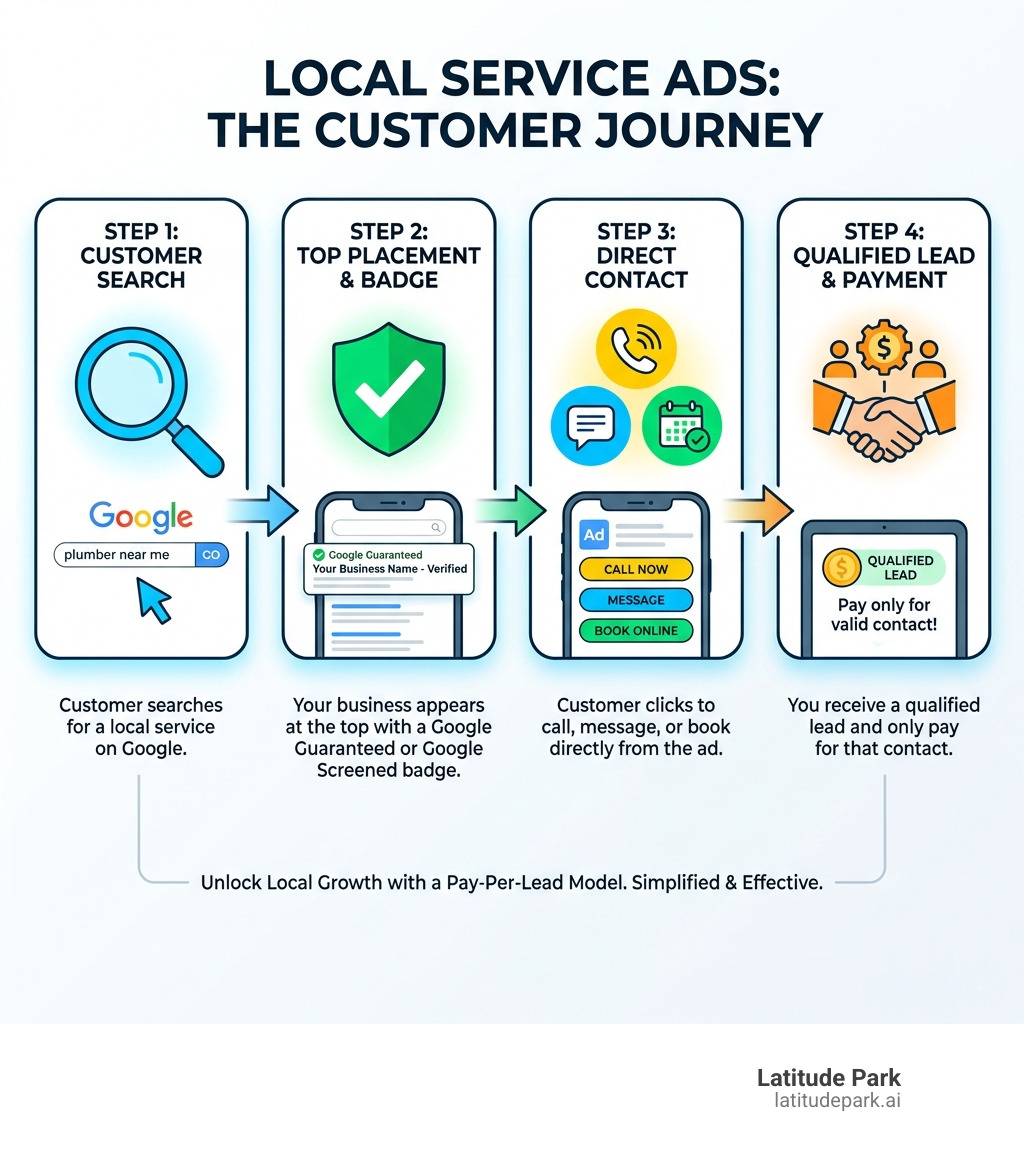
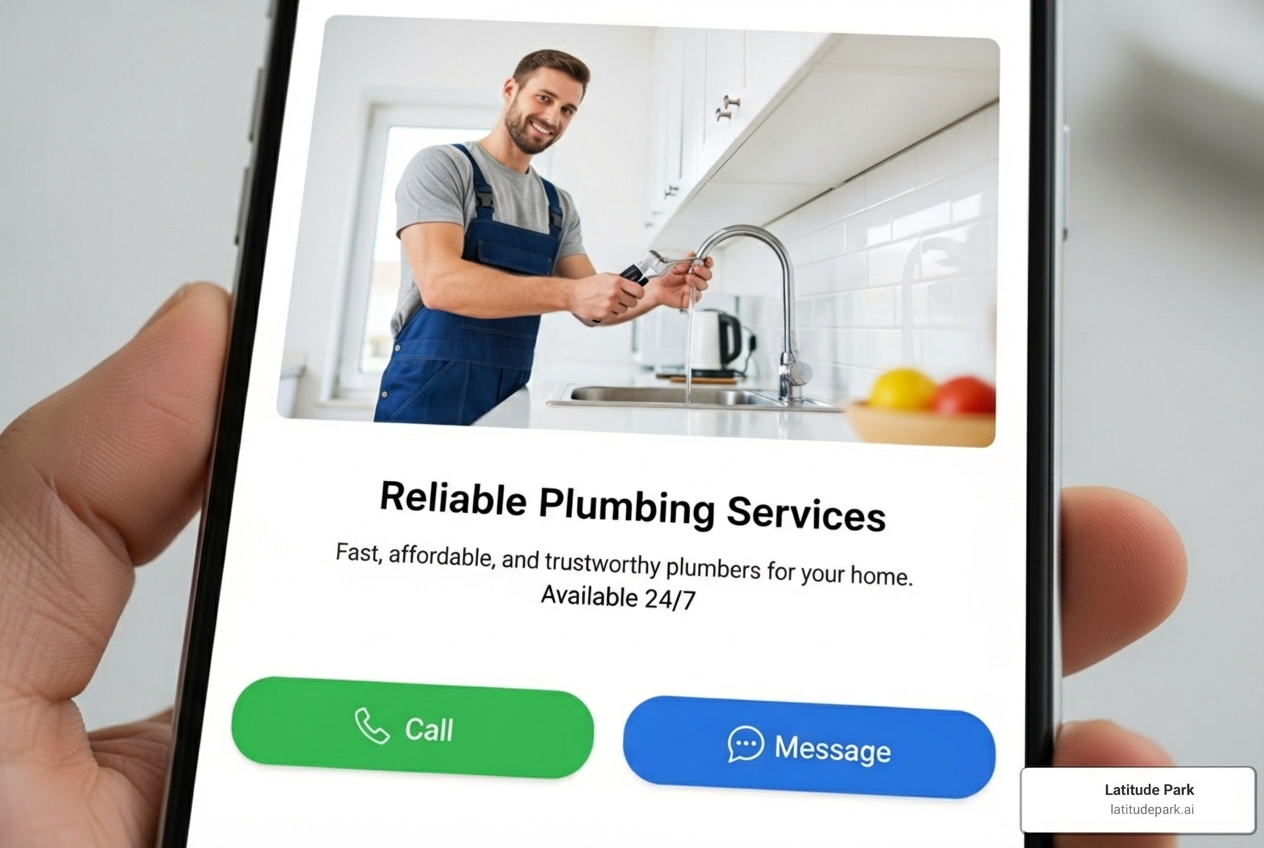
Local Service Ads are not just another ad format; they are a unique lead generation platform. They appear in a distinct block at the very top of Google’s search results, even above traditional pay-per-click (PPC) ads and organic listings, giving you unparalleled visibility. When a potential customer clicks on your ad, they don’t go to your website. Instead, they are presented with a simple profile that allows them to call you, send a message request, or in some cases, book an appointment directly. This removes friction and connects you with high-intent customers instantly.
Think of it this way: when a customer searches for “plumber near me,” Google understands they need a service now. Instead of sending them to a website where they have to sift through information, Local Service Ads provide a direct line to a verified professional. This focus on immediate connection and trust is what fundamentally differentiates LSAs from standard Google Ads. Standard Google Ads, while powerful, often aim to drive traffic to your website, where the conversion process then takes place. LSAs streamline this, focusing directly on the lead.
The distinction between Local Service Ads and standard Google Ads is crucial for understanding where each fits into your marketing strategy. While both leverage Google’s vast search audience, their mechanics, goals, and payment models are quite different.
| Feature | Local Service Ads | Standard Google Ads |
|---|---|---|
| Payment Model | Pay-per-lead (PPL) | Pay-per-click (PPC) |
| Ad Format | Profile-based with reviews & badge | Customizable text or image ads |
| Placement | Top of SERP (LSA pack) | Below LSA pack, above/below organic |
| Requirements | Strict verification process | Open to nearly all businesses |
| Main Goal | Direct lead generation (calls/messages) | Website traffic, conversions, brand awareness |
As you can see, LSAs are designed for direct, high-intent lead generation, specifically for local service providers. Standard Google Ads offer more customization and broader targeting options, suitable for a wider range of business objectives. For many local businesses, especially franchises, using both in a complementary fashion can maximize reach and lead volume.
The Core Benefits: Building Trust and Maximizing Your Budget
The power of Local Service Ads lies in a few key advantages that directly address the needs of local businesses. You get top-tier placement, connect only with customers actively seeking your services, and operate on a cost-effective model that prioritizes results over clicks. The most significant benefit, however, is the instant credibility you gain.
Imagine being the first option a customer sees when they’re in urgent need, with Google’s stamp of approval right next to your name. That’s the prime real estate LSAs offer. Instead of competing for clicks further down the page, you’re front and center, often above organic search results and even traditional paid ads. This prominent placement means higher visibility and a greater chance of being seen by those ready to convert.
Furthermore, because you only pay for leads that are relevant to your business and the services you offer, your budget is exceptionally efficient. We’re not just paying for eyeballs; we’re paying for actual customer inquiries. This makes it a highly attractive option for businesses looking for a direct return on their advertising spend.
The “Google Guaranteed” Badge: Your Ultimate Trust Signal
The “Google Guaranteed” or “Google Screened” badge is the cornerstone of the LSA program. It signals to customers that your business has passed Google’s extensive screening process, which can include background, license, and insurance checks. This badge isn’t just for show; it builds immediate consumer confidence and can be the deciding factor for a customer choosing you over a competitor. For home services, the Google Guarantee even includes a money-back guarantee for the customer if they aren’t satisfied with the work quality, further solidifying your trustworthiness.
This badge is Google essentially vouching for your business. In an age where online trust is paramount, having Google’s endorsement can significantly reduce customer hesitation. We’ve seen how this can impact conversion rates, as customers feel more secure reaching out to a business that has undergone this rigorous vetting process. It’s a powerful psychological advantage that sets LSAs apart.
Understanding the cost of local service ads
Unlike traditional ads where you pay for every click, Local Service Ads use a pay-per-lead model. You only pay when a potential customer initiates contact through your ad. This means you’re not charged for impressions or casual clicks that don’t result in an inquiry. The cost per lead varies significantly based on your industry, location, and competition, but you have full control. You set a weekly budget based on the number of leads you want, and Google helps you stay within it. This means your marketing dollars are spent directly on acquiring potential customers, not just on generating website traffic.
For instance, a lead for a specialized legal service might naturally cost more than a lead for routine house cleaning due to the difference in service value and market competition. Google’s platform allows you to estimate your ad budget by visiting their calculator tool, giving you transparency and control over your spending. You can adjust your monthly budget whenever you need to, pausing ads if you’re too busy or increasing spend during peak seasons. This flexibility ensures your advertising aligns with your business’s capacity and goals.
Your Step-by-Step Guide to Launching a Local Service Ads Campaign
Getting started with Local Service Ads is a straightforward process that focuses on verifying your business’s legitimacy and setting up your profile for success. While it requires attention to detail, the payoff in high-quality leads makes it well worth the effort.
Step 1: Confirm Your Eligibility
First, you need to ensure your business type and location are eligible for the program. LSAs are available for over 100 service categories across various sectors. These include a broad range of local service businesses that serve customers directly in their homes or at their business locations.
Common eligible service categories include:
- Home Services: Plumbers, HVAC technicians, Electricians, Roofers, Garage Door Services, Landscapers, House Cleaners, Carpenters, Pest Control, Appliance Repair, Moving Services, Window Services, and many more.
- Professional Services: Lawyers (e.g., personal injury, family law, real estate), Real Estate Agents, Financial Planners, Tax Services.
- Wellness & Beauty: Massage Therapists, Hair Salons, Personal Trainers.
- Care Services: Pet Grooming, Child Care.
- Automotive Services: Auto Repair Shops.
- Business Services: Accountants, IT Services.
- Health Services: Dentists, Optometrists.
You can easily check your business’s eligibility on Google’s site in just a few seconds. If your business isn’t on the list, don’t fret; Google Ads still offers robust options for reaching your audience.
Step 2: Create Your Profile and Set Your Budget
Once eligibility is confirmed, your next step is to build your LSA profile. This profile is essentially your digital storefront on Google, showcasing your business to potential customers. You’ll provide key business information, including your business name, service area, hours of operation, and the specific job types you offer. Be as detailed and accurate as possible here, as this information directly influences when and where your ad appears.
This is also where you’ll set your weekly budget and choose a bidding mode, such as “Maximize leads,” which allows Google to automatically set your bids to get you the most leads for your budget. We recommend starting with a realistic budget based on your desired lead volume and the estimated cost per lead for your industry and area. You can always adjust this later based on performance. The goal is to set a budget that allows you to capture a meaningful number of leads without overspending.
Step 3: Complete the Verification Process
This is the most critical step, and frankly, it’s where many businesses get stuck if they’re not prepared. To earn your “Google Guaranteed” or “Google Screened” badge, you and your business must undergo a thorough verification process. This typically involves submitting proof of your business license and insurance, and for many categories, the business owner and field employees will need to pass a background check.
While it takes time and can feel a bit like jumping through hoops, completing this process is what open ups the trust and visibility of the LSA platform. The badges are your golden ticket to customer confidence and prime placement. Google’s stringent requirements are designed to protect consumers, and by meeting them, you demonstrate your commitment to quality and professionalism. This due diligence is precisely why customers trust these ads more than others.
Managing and Optimizing for Peak Performance
Launching your campaign is just the beginning. To get the best return on your investment, you need to actively manage your leads and optimize your profile. This isn’t a “set it and forget it” solution; consistent engagement is key to long-term success with Local Service Ads.
Managing Your Leads and Jobs
All your leads will come through the Local Services Ads inbox, which you can access anytime online or via a dedicated mobile app. From here, you can reply to messages, call customers back, and track your jobs. This centralized inbox is designed to make lead management simple and efficient.
A crucial feature is the ability to mark leads as “booked” to track your return on investment or dispute invalid leads. What’s an invalid lead? It could be a sales call, a request for a service you don’t offer, or even a call from outside your service area. Google allows you to dispute these leads, and if approved, you won’t be charged for them, or you’ll receive a credit back. This ensures you only pay for legitimate opportunities. Promptly managing these leads, including disputing invalid ones, is essential for maintaining a healthy ROI and ensuring your ad ranking isn’t negatively impacted by unresponded leads.
Best practices for optimizing local service ads
Your ad’s ranking within the LSA pack isn’t random. It’s influenced by several factors you can control. To maximize your visibility and lead generation, we recommend focusing on these best practices:
- Responsiveness: This is paramount. Answer incoming calls and reply to messages as quickly as possible. Google tracks your response rate, and a high response rate can significantly boost your ad ranking. If you regularly fail to answer calls or respond to messages, your ad ranking may be affected.
- Reviews: Consistently ask satisfied customers for reviews. A high review score and a large number of reviews will boost your rank and inspire confidence in new customers. While LSA-specific reviews are valuable, standard Google reviews (which appear on your Google Business Profile and LSA page) often carry more weight and visibility.
- Profile Quality: Keep your profile up-to-date with accurate hours, service types, and high-quality photos of your work. A complete and compelling profile makes your business more attractive to potential customers.
- Budget: Ensure your budget is competitive for your market to avoid having your ads paused early in the week. If your budget runs out quickly, your ad will stop showing, potentially losing out on valuable leads. Google’s algorithm favors ads that can consistently show throughout the week.
- Proximity: While you can’t change your physical location, understanding that Google prioritizes businesses closer to the searcher is key. Ensure your service areas are accurately defined.
Troubleshooting Common Challenges
Even with a well-set-up campaign, many businesses experience low lead volume, especially when starting out. This is often due to factors beyond just budget. According to Google, your ad ranking is influenced by your proximity to the customer, your review score, and your responsiveness to customer inquiries and requests. If leads are slow, focus on improving these areas.
One common issue we’ve observed is that the lead estimates Google provides during setup are often just projections and not a guarantee. As one forum user noted, “the Google projected leads/week can’t be trusted at all.” Don’t be discouraged if your initial lead volume doesn’t match Google’s forecast. Instead, focus on the controllable factors:
- Improve your average review score: Actively solicit reviews from every satisfied customer.
- Increase your number of reviews: More reviews signal a more established and trusted business.
- Boost responsiveness: Answer every call, reply to every message. If you’re too busy, consider pausing your ads temporarily rather than letting leads go unanswered.
- Optimize your Google Business Profile: Ensure all information is current, and photos are appealing.
Sometimes, a lack of leads isn’t just about LSA performance but also about the “stickiness” of your overall online presence. While LSAs don’t directly send traffic to your website, customers might still do a quick search for your business after seeing your ad. Having a well-optimized Google Business Profile and a professional website that clearly showcases your services and reviews can indirectly support your LSA performance. For multi-location businesses, ensuring consistency across all locations’ profiles is vital.
Frequently Asked Questions about Local Service Ads
We often get asked similar questions about Local Service Ads. Here are some of the most common ones, answered directly.
How much do Local Service Ads really cost?
The cost of Local Service Ads is based on a pay-per-lead model, meaning you only pay for a valid customer contact (a phone call, message, or booking). You are never charged for simple clicks or ad impressions. The price per lead can vary significantly, ranging from as low as $6 to over $150, depending heavily on factors like your industry, geographic location, and local competition. For instance, a lead for a lawyer or a highly specialized trade will typically cost more than a lead for a general house cleaning service. You set a weekly budget, and Google works to get you leads within that budget, allowing you to control your overall spending.
Do I need a website to use Local Services Ads?
No, a dedicated website is not strictly required to run Local Service Ads. Your LSA profile, which includes your business details, services offered, reviews, and the crucial verification badge, acts as a self-contained landing page. Customers can gather all the necessary information and contact you directly from this profile. This makes LSAs an ideal advertising channel for legitimate local businesses, including many small businesses or franchises, that may not have a robust web presence but still want to generate high-quality leads.
What’s the difference between “Google Guaranteed” and “Google Screened”?
Both “Google Guaranteed” and “Google Screened” badges signify that a business has passed Google’s rigorous verification process, building trust with potential customers. The primary difference lies in the types of services they cover and the additional protections they offer:
- Google Guaranteed: This badge is primarily for home service providers, such as plumbers, electricians, HVAC technicians, and roofers. It includes a money-back guarantee for customers if they are not satisfied with the quality of the work performed, up to a certain limit. This guarantee provides an extra layer of confidence for customers hiring contractors for in-home services.
- Google Screened: This badge is typically for professional service providers, including lawyers, real estate agents, financial planners, and childcare providers. While it signifies that the business has passed extensive license, background, and identity checks, it does not include the money-back guarantee that comes with the Google Guaranteed badge. It still communicates a strong level of trust and vetting by Google.
Both badges are powerful trust signals, but “Google Guaranteed” offers an extra layer of financial protection for certain home services.
Conclusion
Local Service Ads offer a direct, powerful, and cost-effective way for service-based businesses to generate high-quality leads directly from Google. By placing you at the top of search results and backing your business with a badge of trust, the platform cuts through the noise and connects you with customers who are ready to hire. For complex multi-location businesses like franchises, integrating a direct-response channel like Local Service Ads into a broader digital strategy, which might also include targeted Meta advertising, can be particularly effective. Latitude Park specializes in creating such cohesive marketing plans for franchise growth. By focusing on responsiveness, reviews, and a well-managed profile, you can open up a steady stream of local jobs and grow your business.
Local Service Ads represent a significant opportunity for local businesses to gain visibility and build trust in their communities. Their pay-per-lead model ensures your advertising budget is spent efficiently, directly on customer contacts, rather than just clicks. By embracing the verification process and committing to excellent customer service, you can leverage Google’s powerful platform to become the go-to service provider in your area. We’ve seen countless businesses transform their lead generation by effectively implementing and optimizing their LSA campaigns. It’s an investment in visibility and credibility that truly pays off.
Ready to take your local advertising to the next level? Explore how to integrate paid search into your franchise’s growth strategy with our Google Ads management services.