Why Understanding Digital PR vs Press Release Matters for Modern Brands
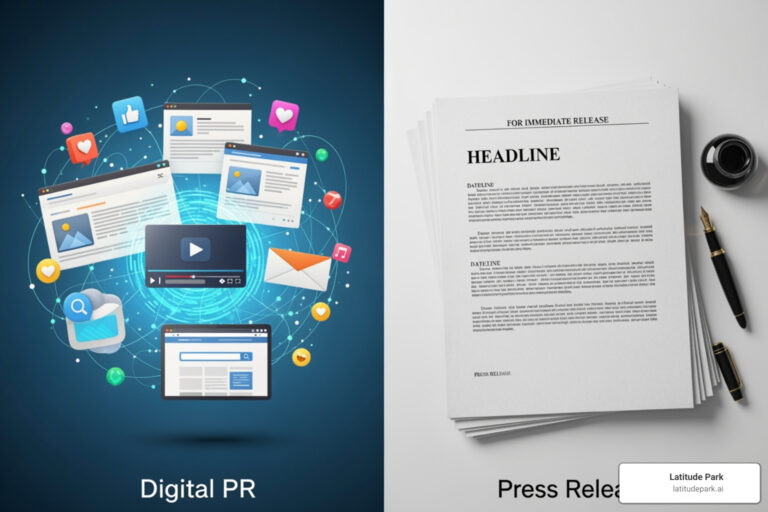
Digital PR vs press release is a critical distinction for any business serious about building brand authority and reaching the right audience online. While a press release is a formal, structured announcement distributed primarily to journalists and media outlets through wire services, Digital PR is a comprehensive online strategy that leverages content marketing, influencer partnerships, social media, and SEO to build relationships, earn backlinks, and engage directly with target audiences across digital channels.
Here’s the quick breakdown:
| Aspect | Press Release | Digital PR |
|---|---|---|
| Format | Formal, structured document | Diverse content (articles, videos, social posts) |
| Primary Goal | Announce news to media | Build awareness, authority, and SEO |
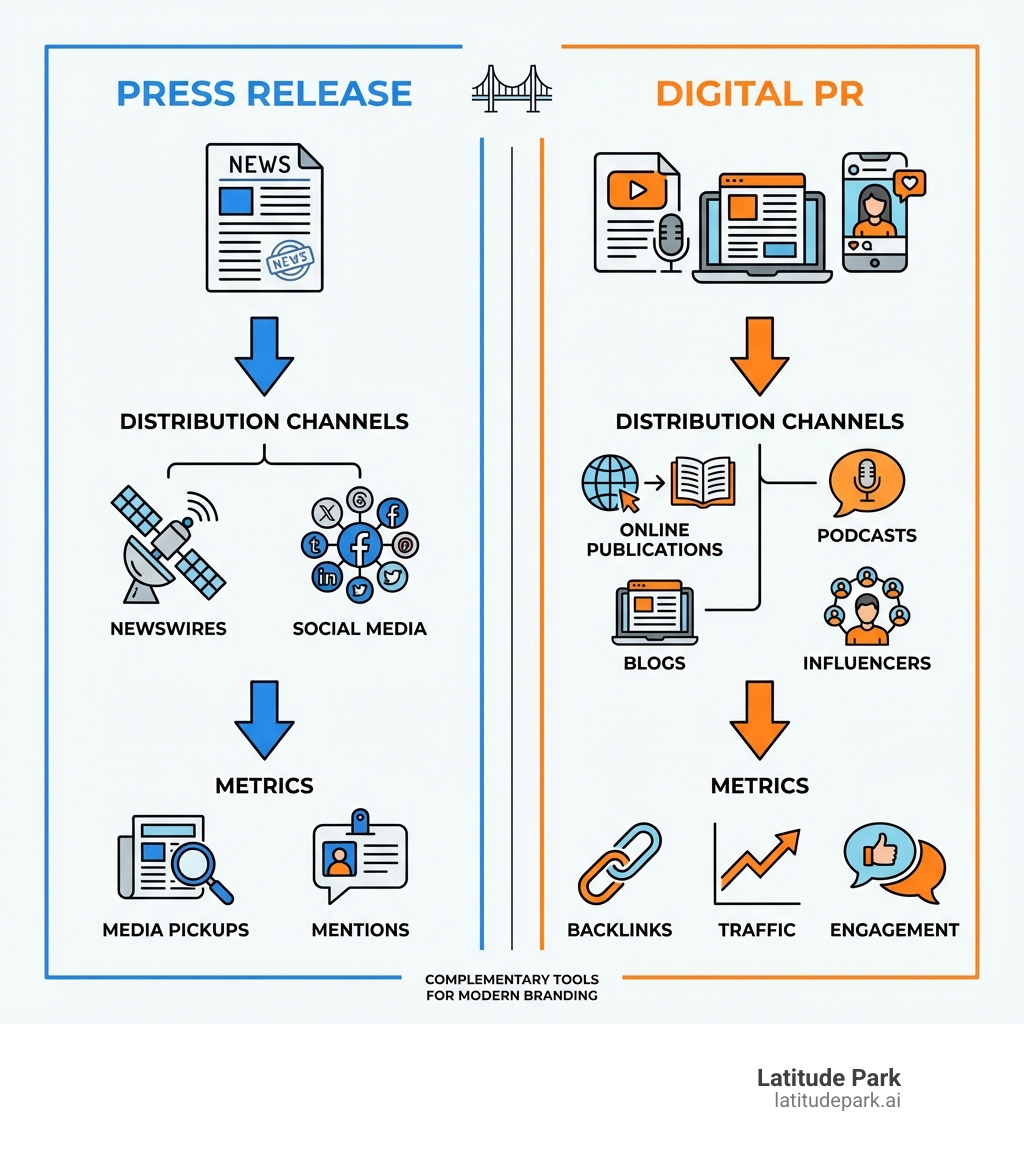
| Distribution | Wire services, media lists | Online publications, social media, influencers |
| Communication | One-way (brand to journalist) | Two-way dialogue (brand to audience) |
| Measurement | Media pickups, mentions | Backlinks, traffic, rankings, engagement |
| Timeline | Short-term coverage | Long-term brand building |
The truth is, most successful brands today use both—not as competing tactics, but as complementary tools in an integrated strategy.
Traditional press releases still command authority for major announcements and crisis management. But in a world where 68% of journalists rely on press releases for content ideas while consumers increasingly trust what they find through search and social media, Digital PR has become essential for controlling your brand narrative online. Digital PR drives the kind of authentic engagement and measurable SEO results that press releases alone simply can’t deliver.
I’m Rusty Rich, founder of Latitude Park, and over the past 15 years, I’ve helped hundreds of small businesses and franchises steer the evolving landscape of digital PR vs press release strategies to build stronger online presences and drive measurable growth. This guide will walk you through exactly when to use each approach, how to measure what’s working, and how to combine them for maximum impact.
Key terms for digital pr vs press release:
The Foundations: Defining Traditional Press Releases and Modern Digital PR
Before we dive into the nitty-gritty of digital PR vs press release, let’s establish a clear understanding of what each entails. Both are powerful tools in the public relations arsenal, but they operate with different mechanisms and achieve distinct objectives.
What is a Traditional Press Release?
A traditional press release is a formal, structured announcement designed to inform journalists and media outlets about a newsworthy event. Think of it as an official statement from your organization, typically 800 words or less, carrying the weight of official news.

The primary purpose is to convey major news, manage crisis communications, or fulfill regulatory compliance. For instance, a press release is the go-to tool for announcing a merger, a significant funding round, or a new executive hire. It ensures controlled messaging and presents your news exactly as you intend. This control, coupled with the authority that comes from being featured in established media, makes press releases invaluable.
Distribution channels include PR Wire Services or direct emails to media lists. However, traditional press releases are largely a one-way monologue from your brand to the media. This can limit immediate engagement, and the rigid format doesn’t always lend itself to dynamic storytelling. For a more in-depth understanding, explore our PR Press Release Complete Guide.
What is Digital PR?
Digital PR is a dynamic online strategy that builds your brand’s reputation and visibility across the digital landscape. It’s not just about getting media mentions; it’s about creating a comprehensive digital footprint that engages, informs, and influences your target audience directly.

As the modern evolution of public relations, Digital PR leverages online platforms like websites, podcasts, influencer partnerships, and social media. Tactics include content marketing (engaging blog posts, infographics, videos), strategic SEO, link building, and influencer collaborations to reach new audiences.
The purpose of Digital PR is multifaceted: building brand awareness, improving SEO by earning high-quality backlinks, and establishing your company as a thought leader. Unlike the one-way street of traditional press releases, Digital PR fosters a two-way dialogue with consumers, influencers, and journalists. This approach offers wider reach, delivers measurable results, and provides long-term value, as online content continues to generate traffic long after publication.
Digital PR vs. Press Release: A Head-to-Head Comparison
When evaluating digital PR vs press release, it’s helpful to lay out their characteristics side-by-side. While both aim to improve your brand’s public image, their methodologies, reach, and impact differ significantly.
Key Differences: Digital PR vs. Press Release
The fundamental distinction lies in their communication style, audience, content, channels, and goals.
-
Communication Style: Dialogue vs. Monologue
- Press Release: A one-way monologue where the brand speaks and the media listens. It’s a controlled message with minimal immediate feedback.
- Digital PR: A two-way dialogue that enables real-time interaction with consumers, influencers, and journalists, fostering authentic relationships.
-
Audience: Direct-to-Consumer vs. Media Gatekeepers
- Press Release: The primary audience is media gatekeepers—journalists and editors who decide if your news is worth sharing.
- Digital PR: Bypasses traditional gatekeepers to reach audiences directly through social media, blogs, and online communities.
-
Content: Storytelling & Creative Assets vs. Formal & Structured Text
- Press Release: Formal, structured documents focused on facts and official statements.
- Digital PR: Accepts creativity with compelling storytelling, infographics, and videos. Visual content can increase sharing potential by 40x, making messages more engaging.
-
Channels: Online Publications & Social Media vs. Newswires & Traditional Media
- Press Release: Distributed through newswire services and pitches to traditional media like newspapers, radio, and TV.
- Digital PR: Channels are vast, including online news sites, blogs, social media, podcasts, and influencer networks, allowing for instant distribution.
-
Primary Goal: Engagement & SEO vs. Announcement & Coverage
- Press Release: To announce newsworthy developments and secure media coverage.
- Digital PR: To drive website traffic, improve search rankings, increase brand awareness, and foster deep audience engagement.
The SEO Impact: Backlinks and Authority
One of the most significant differences in the digital PR vs press release debate is their impact on Search Engine Optimization (SEO). Digital PR is specifically engineered to boost online visibility.
-
Press Release SEO: Offers limited SEO benefits, mainly through brand mentions and potential referral traffic. Links in wire service releases are often “no-follow,” meaning they don’t pass SEO value, or they may link back to the release itself. While they can generate backlinks, Digital PR is far more strategic for this purpose.
-
Digital PR SEO: This is where Digital PR shines. Strategies are designed to earn high-quality backlinks from authoritative websites with high Domain Authority (Moz) and Domain Rating (Ahrefs) scores. These links signal to search engines that your site is a credible resource, which improves search rankings, organic traffic, and brand authority. Our 5 Golden Rules for Building PR Backlinks dig deeper into this.
Measuring Success: Digital PR vs. Press Release Metrics
How we measure success for digital PR vs press release differs significantly, reflecting their distinct objectives.
-
Press Release Metrics: We typically track:
- Media Pickups and Coverage Views: How many outlets published your news.
- Online Mentions: Tracking brand mentions across news sites.
- Website Traffic Spikes: A noticeable increase in traffic after an announcement.
-
Digital PR Metrics: Digital PR offers a broader suite of measurable outcomes to calculate ROI:
- Backlink Acquisition: The number and quality of new backlinks.
- Referral Traffic: Traffic driven from earned media placements.
- Keyword Ranking Changes: Improvements in search rankings for target keywords.
- Social Engagement: Likes, shares, comments, and overall reach.
- Leads and Conversions: Direct business outcomes from PR efforts.
We use tools like Google Analytics 4, Google Search Console, and Ahrefs to monitor these metrics, continually refining our strategies and proving their tangible impact.
Building an Integrated PR Strategy: When and How to Use Both
The question isn’t really which is “better” in the digital PR vs press release debate, but rather, how can we leverage both effectively for a comprehensive, impactful strategy. Each tool has its unique strengths, and the most successful brands understand when to deploy each, or better yet, how to make them work in harmony.
When a Traditional Press Release is Still Best
Despite the rise of digital media, the traditional press release is far from obsolete. It still serves as the gold standard for official, formal communications that require a stamp of authority.
Here are scenarios where a traditional press release remains the most effective communication tool:
- Major Corporate Announcements: For significant news such as company mergers, acquisitions, substantial funding rounds, or strategic partnerships, a formal press release ensures the information is disseminated accurately and officially.
- Crisis Management and Official Statements: When managing a crisis or issuing a definitive statement on a sensitive issue, the controlled messaging and structured nature of a press release are crucial. It provides a clear, authoritative source of truth that can prevent misinformation.
- Product Launches Requiring Formal Documentation: While Digital PR can generate buzz, a press release is still vital for formally announcing a new product, detailing its specifications, availability, and key features, especially for industries that require precise information.
- Regulatory or Legal Disclosures: In regulated industries, press releases are often a mandatory tool for public disclosure of financial results, legal actions, or other compliance-related information.
It’s worth remembering that 68% of journalists explicitly rely on press releases for content ideas, according to Cision’s 2024 State of the Media Report. This statistic underscores their continued relevance as a foundational element for media relations.
When to Prioritize a Digital PR Campaign
While press releases handle the formal announcements, Digital PR excels at building ongoing relationships, shaping perceptions, and driving measurable online actions.
Here are scenarios where prioritizing a Digital PR campaign is a more suitable and impactful approach for your brand:
- Building Long-Term Brand Awareness and Thought Leadership: Digital PR helps position your company as an industry expert through consistent online content, guest posts, and media mentions. We can use original research, for instance, to generate buzz and establish your authority.
- Driving Website Traffic and Improving SEO: If your goal is to increase organic search visibility, generate quality backlinks, and drive referral traffic to your website, Digital PR is your champion. It’s designed to earn mentions and links from high-authority online publications.
- Launching Creative, Story-Driven Campaigns: For campaigns that require emotional resonance, virality, or innovative storytelling, Digital PR offers the flexibility and channels needed. A fantastic example is the Spotify Wrapped campaign, which turns user data into personalized, shareable content, generating massive media coverage and social engagement every year.
- Engaging with a Community or Target Audience Directly: Digital PR facilitates two-way dialogue, allowing us to connect with your audience on social media, through comments sections, and via influencer collaborations. This direct engagement builds loyalty and trust.
- Influencer Marketing and Collaborations: To reach new, highly engaged audiences through trusted voices, partnering with influencers is a core Digital PR tactic. As 87% of customers report being swayed by influencers when purchasing new products, this is an undeniable advantage.
The Hybrid Approach: Making Them Work Together
The most effective strategy isn’t about choosing between digital PR vs press release; it’s about integrating both into a cohesive, powerful approach. Think of it as a symphony where each instrument plays a vital role.
Here’s how we can effectively integrate both press releases and Digital PR tactics for a comprehensive strategy:
- Core Message Creation: Every successful campaign starts with a consistent, compelling core message. This message should underpin both your formal press release and all subsequent Digital PR amplification efforts.
- Press Release as the “Source of Truth”: Issue your press release for major announcements, establishing it as the official, authoritative source of information. This document provides the factual foundation.
- Amplifying with Digital PR Tactics: Once the press release is out, we then amplify its reach and impact using Digital PR. This might involve:
- Crafting personalized media pitches to journalists, highlighting specific angles or data points from the press release that align with their beat, making their job easier (68% of journalists appreciate this!).
- Creating engaging social media posts, videos, and infographics based on the press release content to share across platforms. Including visual content increases sharing potential by 40x.
- Developing blog articles that expand on themes introduced in the press release, offering more context and value to your audience.
- Engaging influencers to share their perspectives on your news, lending credibility and reaching their dedicated followers.
- Securing guest posts on relevant industry blogs that subtly incorporate your news and link back to your site.
- Repurposing Press Release Content: Don’t let your press release live and die as a single document. We can repurpose its key information into various Digital PR assets:
- Turn statistics into engaging infographics.
- Expand quotes into thought leadership articles.
- Transform the core narrative into a short video for social media.
This hybrid approach ensures that your message is both officially sanctioned and broadly distributed, reaching traditional media, online publications, and directly engaging your target audience. It’s about maximizing every piece of valuable content. For guidance on structuring your overall media outreach, check out our Press Relation resources.
The Future of PR: Emerging Trends and Outlook
The landscape of public relations is constantly evolving, driven by technological advancements and shifting consumer behaviors. When we look at the future of digital PR vs press release, we see exciting trends that will continue to reshape how brands communicate.
- AI-driven Personalization and Content Creation: Artificial intelligence is changing PR. AI tools can help us track brand mentions, analyze vast amounts of data to identify trends, personalize outreach to journalists and influencers, and even assist in generating content ideas. Generative AI is streamlining campaigns, allowing for quicker content creation and more targeted messaging. We’ll increasingly see AI help us understand what content resonates and how to best deliver it.
- Rise of Micro-Influencers and Authenticity: While celebrity endorsements still exist, the future is bright for micro-influencers (5,000 – 30,000 followers) and nano-influencers (1,000 – 5,000 followers). These individuals often boast tighter-knit communities and higher engagement rates, providing more authentic and relatable connections with target audiences. Their credibility can amplify a brand’s message in a way traditional press releases never could.
- Interactive and Visual Content: The demand for engaging content is growing. Videos and infographics are already highly valuable, increasing sharing potential by 40x. We anticipate a surge in interactive content, augmented reality (AR), and virtual reality (VR) experiences in PR, offering immersive ways for audiences to connect with brands.
- Data Journalism and Original Research: In an era of abundant information and concerns about misinformation, data-backed claims are king. Brands that invest in original research and data journalism—backing up all claims with trusted statistics and figures—will gain significant credibility and earned media. Journalists increasingly want original research and reports from PR professionals (61% of them, in fact!).
- Integration with New Search Formats: The way people find information is changing, with the emergence of AI-powered search experiences like Google’s AI Overviews. Digital PR strategies will need to adapt to optimize for these new formats, ensuring brand visibility in AI-generated summaries and conversational search results.
- Evolving Social Platforms: Social media continues to innovate with short-form video and live streaming becoming dominant content formats. Brands will leverage these platforms for real-time engagement, behind-the-scenes content, and interactive Q&A sessions, creating dynamic and immediate connections with their audiences.
These trends highlight a future where PR is even more data-driven, personalized, and deeply integrated with the digital lives of consumers.
Frequently Asked Questions about Digital PR and Press Releases
We often get questions about the practical application and effectiveness of digital PR vs press release. Here are some common inquiries we address:
How do you measure the ROI of a digital PR campaign?
Measuring the Return on Investment (ROI) of a digital PR campaign goes beyond simple vanity metrics. We focus on tangible results that directly impact your business goals. Key indicators we track include:
- Referral Traffic: How much traffic is driven directly to your website from earned media placements and backlinks?
- Search Engine Rankings: Are your target keywords improving in organic search results?
- Backlink Acquisition: The number and quality of new backlinks secured from high-authority websites.
- Social Engagement: Growth in followers, likes, shares, and comments on social media platforms.
- Leads and Conversions: Direct inquiries, sign-ups, or sales that can be attributed to the campaign.
- Brand Sentiment: Monitoring online mentions to gauge positive, negative, or neutral perceptions of your brand.
We use tools like Google Analytics 4, Google Search Console, and Ahrefs to gather and analyze this data, allowing us to demonstrate the clear impact and value of your digital PR efforts. It typically takes approximately 3-6 months to start seeing a significant ROI from a digital PR campaign due to the complexities of search algorithms and digital ecosystem.
Are press releases still relevant in 2025?
Absolutely, press releases are still highly relevant in 2025, though their role has become more specialized. While they may not be the sole driver of your PR strategy, they remain indispensable for specific purposes:
- Official Announcements: For formal news such as mergers, acquisitions, significant product launches, or major corporate milestones, a press release provides the necessary official statement.
- Crisis Communications: In times of crisis, a well-crafted press release serves as a controlled, authoritative source of information, helping to manage the narrative and maintain public trust.
- Regulatory Compliance: For businesses in regulated industries, press releases are often a legal requirement for disclosing financial results or other critical information.
- Journalist Resource: As 68% of journalists still rely on press releases for content ideas, they remain a vital tool for informing media and sparking broader coverage.
Think of press releases as the strong foundation upon which a broader digital PR strategy can be built. They provide the “source of truth” that can then be amplified and repurposed across various digital channels.
Can a small business benefit from digital PR?
Yes, without a doubt! Digital PR is an incredibly powerful and often cost-effective strategy for small businesses to build brand awareness, establish credibility, and compete with larger enterprises. Here’s why:
- Level Playing Field: Digital platforms democratize media access. Small businesses can earn media coverage, backlinks, and social engagement without needing massive advertising budgets.
- Targeted Reach: We can target niche publications, local media outlets, and micro-influencers whose audiences align perfectly with your customer base. This focused approach generates highly qualified leads and traffic.
- Cost-Effectiveness: Compared to traditional advertising, Digital PR can offer a higher ROI. Tactics like creating infographics, newsjacking relevant stories, or distributing online press releases can be done even with a modest budget.
- Credibility Building: Getting mentioned in reputable online publications or having influencers endorse your brand builds trust and positions your small business as an authoritative voice in its industry.
- SEO Boost: The backlinks and brand mentions earned through Digital PR are invaluable for improving your website’s search engine rankings, helping potential customers find you more easily.
Whether you’re a local service provider or an e-commerce startup, Digital PR offers custom solutions to help your small business thrive in the digital age.
Conclusion: Choosing the Right Path for Your Brand
In the dynamic world of public relations, the debate of digital PR vs press release isn’t about choosing one over the other. Instead, it’s about understanding their unique strengths and strategically integrating them into a powerful, cohesive communication plan. There’s no single “best” approach; the optimal strategy always depends on your specific goals, target audience, and the nature of your news.
Traditional press releases remain indispensable for formal announcements, crisis management, and regulatory compliance, providing a controlled and authoritative voice. Digital PR, on the other hand, excels at building long-term brand awareness, driving measurable online traffic, fostering two-way dialogue, and leveraging the power of content and influencers across a vast digital landscape.
The true power lies in a hybrid approach. By using a press release as your official “source of truth” and then amplifying it through diverse Digital PR tactics—from social media campaigns and influencer collaborations to repurposed content and targeted pitches—you can maximize your reach, engagement, and ultimately, your business impact.
Modern PR is fundamentally about building valuable relationships, whether that’s with influential journalists or directly with your audience online. For businesses with unique structures, like franchises, a custom digital strategy is essential for managing reputation and driving growth across multiple locations. We understand the complex needs of multi-location franchise businesses and tailor our strategies to address them effectively.
Ready to build a powerful reputation management strategy that integrates the best of both worlds for your brand? Explore our PR Press Release Service to see how we can help you steer the modern media landscape and achieve your business objectives.