Ad Agency 2025: Ultimate Guide
Why Understanding Ad Agencies Matters for Your Business
An ad agency is a specialized business dedicated to creating, planning, and executing advertising and marketing campaigns on behalf of its clients. These agencies offer services ranging from creative development and media buying to digital strategy and brand building, acting as external partners that bring expertise, perspective, and resources that most businesses don’t have in-house.
Quick Definition:
- What it is: A service business that handles advertising and promotional activities for clients
- What it does: Strategy, creative development, media buying, digital marketing, analytics
- Why it matters: Provides specialized expertise and external perspective to help brands grow
- How it works: Typically operates on retainer, project, or commission-based fees
The first acknowledged advertising agency dates back to William Taylor in 1786, and the industry has evolved dramatically since then. What started as simple media space brokering has transformed into a global powerhouse—the six largest agency groups generated over $18 billion in quarterly revenue as of 2021. Today’s agencies blend traditional creative thinking with modern technology, data analytics, and digital-first strategies to help brands cut through marketplace noise and connect with consumers across countless touchpoints.
For franchise marketing managers coordinating campaigns across multiple locations, understanding what an ad agency really does—and how to partner with one effectively—can mean the difference between fragmented efforts and cohesive, scalable growth. The challenge isn’t just creating great advertising; it’s ensuring consistent brand messaging while allowing for local relevance, all while proving measurable ROI.
I’m Rusty Rich, founder and president of Latitude Park, a digital ad agency that’s helped businesses and franchises build strong online presences and achieve measurable growth since 2009. Over the past 15+ years, I’ve seen how the right agency partnership can transform a brand’s trajectory—and how the wrong one can waste precious resources.
What Exactly Is an Ad Agency and What Does It Do?

So, what exactly is an ad agency? Think of it as your business’s secret weapon, a team of outside experts dedicated to making your brand shine. At its heart, an advertising agency is a service business that offers a fresh, expert viewpoint on how to best promote your products or services. They’re like an outsourced marketing department, bringing specialized skills and creative energy that most businesses simply don’t have in-house.
We often picture them as the creative geniuses behind those catchy slogans and memorable commercials. And while that’s true, their role is much bigger! An ad agency handles everything from brainstorming the initial strategy to the final execution and tracking of your campaigns. This means you get to tap into a wealth of talent and resources, ensuring your brand message not only reaches the right people but also truly connects with them.
The Core Functions of a Modern Ad Agency
Today’s ad agencies are far from one-trick ponies. They’re multifaceted powerhouses, offering a huge variety of services that go way beyond just crafting a clever tagline. Let’s peel back the curtain and see what a modern ad agency typically does:
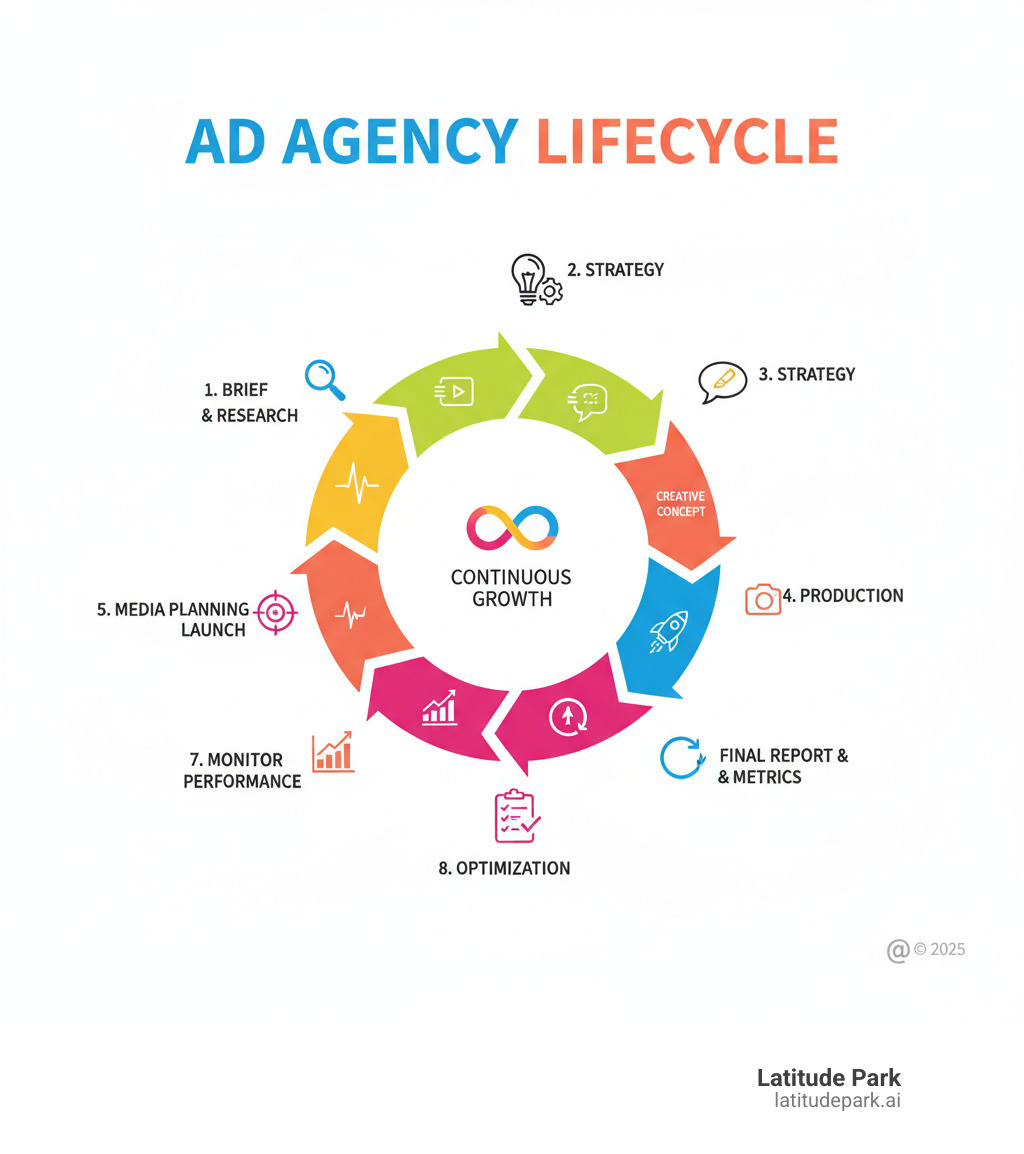
It all starts with a solid plan, which is why Strategy & Planning is so crucial. Agencies work closely with clients to truly understand their goals, who they’re trying to reach, and what the competition is up to. From there, they build a detailed marketing strategy, figuring out how advertising can help hit those targets. This includes deciding on key messages, where to place ads, and when.
To make those strategies truly effective, agencies dive deep into Market Research. This means looking at what consumers do, what’s trending, and what competitors are doing. The goal is to gather insights that shape campaigns. We know that understanding the audience is key, ensuring our ideas are grounded in real consumer behavior, not just guesswork.
Many agencies also play a big part in Brand Development. This means helping to craft your brand’s unique identity, its voice, and where it stands in the market. This can involve anything from designing a logo to creating the overarching story that truly resonates with customers. We believe in using creativity to build brands that influence culture and make a real impact.
Then comes the fun part: Creative & Content Creation. This is what most people picture! Agencies dream up and produce all the advertising materials. Think TV commercials, radio jingles, print ads, social media posts, or digital banners. The aim is to create content that people actually want to see, hear, or interact with, mixing classic ideas with modern, social-first storytelling. As many in the industry say, a great social post can sometimes be just as powerful as a Super Bowl commercial.
Once the creative is ready, it’s time for Media Buying & Placement. Agencies figure out the best places to put your ads to reach your target audience and then negotiate to buy that media space or time. This includes traditional spots like TV, radio, and print, as well as all the digital channels. Our expertise here ensures every dollar spent on media works as hard as possible to get your message out there.
In our digital world, Digital Marketing has become a cornerstone service. This includes SEO (Search Engine Optimization) to help your website appear higher in search results organically, PPC (Pay-Per-Click) campaigns for instant traffic, and comprehensive Social Media strategies to engage audiences right where they spend their time. For us, social media is at the heart of everything, recognizing its power to build relevance and grow brands.
Some agencies also handle Public Relations (PR), managing your public image and building good relationships with the media and other important groups. This can involve handling crises, writing press releases, and reaching out to journalists to build trust and credibility for your brand.
Finally, the work doesn’t stop once a campaign goes live. Performance Analytics is essential. Agencies constantly watch how campaigns are doing, dig into the data, and offer insights to make future efforts even better. We don’t just show dashboards; we decode cultural trends in real-time, turning raw data into understanding about how people feel and what they’re saying online. This helps brands stay relevant and truly drive business results, not just count how many eyes saw an ad.
How Agencies Measure Success and Client Impact
Measuring how well an advertising campaign performs is absolutely vital for both the ad agency and the client. It’s how we show the value we bring and make sure that marketing efforts are truly boosting the client’s business. While the specific things we track can change based on the campaign goals, here are some common ways agencies measure their success and impact:
We always start with Key Performance Indicators (KPIs). These are specific, measurable goals that match up with the client’s bigger business objectives. They might include how much website traffic increases, how many leads are generated, sales volume, or how much customers are engaging.
A really important financial measure is Return on Ad Spend (ROAS). This tells us how much revenue is generated for every dollar spent on advertising. It’s a direct way to see if a campaign is profitable.
For campaigns focused on getting your name out there, we look at Brand Awareness Lift. Agencies track things like how often your brand is mentioned on social media, how many people visit your website, press mentions, and surveys that show if people remember your brand.
Conversion Rates are key. This measures the percentage of people who complete a desired action, like buying something, filling out a form, or signing up for a newsletter. We’re all about turning attention into actual action.
Agencies also keep an eye on Customer Acquisition Cost (CAC). This tells us how much it costs to gain a new customer through advertising, and we always aim to lower that cost over time.
For businesses that rely on new contacts, Lead Generation is a huge indicator of success. We track both the number and quality of leads that come in through advertising efforts.
When it comes to social media and content, Engagement Metrics are crucial. Things like likes, shares, comments, and how long people spend on a page show how well the content is connecting with the audience.
A truly successful ad agency builds strong, lasting relationships with its clients. Client Satisfaction and Retention are huge measures for us, as we strive to be a trusted partner, not just a service provider.
As experts have explored in studies like “Agency Practitioner Theories of How Advertising Works,” agencies are always refining their understanding of what really makes advertising effective, blending solid data with creative intuition.
The Evolution of Advertising: From Print to Pixels

The ad agency of today is the result of centuries of evolution. It’s a fascinating journey that mirrors how we’ve bought, sold, and communicated since the dawn of modern commerce. What started as a simple transaction between a newspaper and a middleman has blossomed into a global industry worth billions, shaping the way we see the world and the brands within it.
From Media Brokers to Creative Shops
The story begins in 1786 with William Taylor in London, who is credited as the first acknowledged advertising agent. But don’t picture anything glamorous. These early agents weren’t creating campaigns or crafting slogans. They were essentially brokers, buying up chunks of newspaper space at a discount and flipping it to businesses at a markup. Their value was access and convenience, not creativity.
This model crossed the Atlantic when Volney B. Palmer opened his Philadelphia agency in 1850, becoming the first recognized ad agency in the United States. Palmer’s approach was similar—he acted as an agent for newspapers, earning commissions on the space he sold. It was a straightforward business transaction. No brainstorming sessions, no storyboards, just selling column inches. The “Emergence of Advertising in America: Timeline” offers a wonderful glimpse into this transformative period.
The real revolution came in 1869, when a young man named Francis Ayer, just 20 years old, founded N.W. Ayer & Son in Philadelphia. This agency changed everything. Rather than just selling space, Ayer’s firm actually planned, created, and executed entire campaigns for clients. They wrote the copy. They designed the ads. They thought about strategy. This was the birth of the full-service ad agency model we recognize today, where creativity and strategy became just as important as media access. It was the moment advertising evolved from a transaction into a craft.
The Age of Globalization and Consolidation
As the twentieth century unfolded, businesses weren’t content to stay local. They wanted to reach customers across oceans and continents. Naturally, ad agencies followed their clients abroad, opening international offices to serve clients across borders. This wasn’t just about growth—it was about helping brands maintain a consistent voice across vastly different markets and cultures.
This global expansion set the stage for something even bigger: consolidation. Large agency holding companies began to form, massive conglomerates that owned multiple individual agencies, each with its own specialty—creative, media buying, public relations, digital, and more. This structure allowed agencies to share resources, leverage economies of scale, and offer clients a one-stop shop for all their marketing needs. In recent years, even large consulting firms have entered the fray, leveraging data analytics and technology to compete in the advertising space.
Today, the industry is dominated by enormous global players. The largest agency groups generate billions in revenue each year. These aren’t just big businesses; they’re cultural institutions that employ thousands and influence how billions of people around the world see brands, products, and even ideas.
This globalization has fundamentally changed what it means to be an ad agency. We now need to understand cultural nuances across dozens of countries, adapt campaigns for vastly different audiences, and build networks that span time zones and languages. For franchise businesses especially, this evolution has created both opportunities and challenges—how do you maintain brand consistency across multiple locations while still allowing for local relevance? It’s a question that sits at the heart of modern franchise marketing, and it’s one we think about every day at Latitude Park.
The journey from William Taylor’s London office to today’s digital-first, data-driven agencies is a testament to how adaptable and resilient this industry has been. And the evolution is far from over.
Navigating the Agency Landscape: Types and Relationships
Not all ad agencies are created equal, and understanding the diverse landscape is crucial for any business seeking a partner. The right agency depends entirely on a business’s specific goals, budget, and needs. What works for a Fortune 500 company might not be ideal for a local franchise, and vice-versa. Understanding the different types and what makes a partnership successful is crucial for making an informed decision.
Choosing the Right Type of Ad Agency for Your Business
The advertising world is rich with various agency models, each with its own strengths. Here’s a breakdown of the common types we encounter:
- Full-Service Agencies: These agencies offer a comprehensive suite of services, handling everything from strategy and creative development to media planning and buying, digital marketing, and even public relations. They are designed to be a one-stop shop for all a client’s advertising needs. Large holding companies often house many full-service entities, making them a good fit for large corporations with diverse needs.
- Boutique/Specialized Agencies: Unlike full-service agencies, boutique agencies focus on a particular niche or service. This could be a creative agency specializing in unique brand narratives, a social media agency that puts social at the center of everything they do, or a media buying specialist. Their smaller size often allows for more personalized service and deep expertise in their chosen area.
- Digital-First Agencies: These agencies are built from the ground up for the digital age. They excel in online advertising, search engine marketing, content marketing, social media, and data analytics. Their strategies are often custom for digital platforms, making them ideal for businesses looking to dominate the online space.
- Media Buying Agencies: These agencies specialize exclusively in planning and purchasing media space across various channels. They leverage their buying power and industry relationships to secure optimal placements and rates for their clients.
- In-house Agencies: Some large corporations establish their own internal advertising departments, functioning as an ad agency solely for their brand. While offering complete control and deep brand understanding, they may lack the external perspective and diverse experience that an outside agency provides.
The Blueprint for a Successful Client-Agency Relationship
The most successful advertising campaigns are built on a strong partnership between the client and the ad agency. It’s more than a transactional relationship; it’s a collaboration that thrives on mutual respect and shared goals. Here’s what we’ve learned makes for a truly effective client-agency relationship:
- Shared Purpose & Objectives: Both parties must have a clear understanding of the campaign’s goals and how they align with the client’s broader business objectives. This shared sense of purpose ensures everyone is working towards the same outcome.
- Collaboration & Trust: Successful relationships are founded on trust. Clients must trust the agencies to do their jobs correctly, and agencies must trust clients to provide honest feedback and necessary resources. Collaboration, rather than a top-down approach, leads to better results. We see ourselves as collaborators, co-conspirators, and co-authors of our clients’ brand futures.
- Clear and Consistent Communication: Regular, transparent, and honest communication is non-negotiable. This includes setting expectations, providing constructive feedback, and promptly addressing any issues. We strive to be an extension of our clients’ teams.
- Personal Chemistry: Beyond professional competence, a good personal rapport between client and agency teams can significantly improve collaboration. Shared interests, viewpoints, and a general ease of working together can foster a more productive and enjoyable partnership.
- A Well-Defined Scope of Work: Clearly outlining responsibilities, deliverables, timelines, and budget from the outset prevents misunderstandings and ensures accountability on both sides.
The Future of the Ad Agency: Trends and Challenges
The advertising industry is in a constant state of flux, driven by relentless technological advancements and rapidly shifting consumer behavior. Today’s ad agencies face an exhilarating mix of new challenges and unprecedented opportunities that are fundamentally reshaping their very structure and function. We are moving faster than ever before, and staying ahead means constant adaptation and innovation.
Key Trends Shaping the Industry
The digital age has brought forth a wave of changes, pushing agencies to evolve or risk becoming obsolete. Here are some of the most significant trends we’re observing:
- Digital Change: The pervasive nature of the internet and mobile devices means that nearly all advertising has a digital component. From social media feeds to streaming services, digital platforms are where consumers spend their time. This necessitates agencies to be experts in all facets of digital marketing, including advanced analytics and programmatic buying.
- Data-Driven Strategy: Data is the new oil. Agencies are increasingly leveraging vast amounts of consumer data to inform strategies, personalize messages, and optimize campaign performance. This allows for hyper-targeted advertising and a deeper understanding of consumer journeys. Management consulting firms, with their strong data analytics capabilities, are even competing with traditional ad agencies in this space, highlighting its importance.
- The Growing Influence of Technology Partners in the Ad Space: The lines between tech companies and ad agencies are blurring. Platforms like Google, Meta, and Amazon are not just media channels but also offer sophisticated advertising tools and data insights. Agencies must master these platforms and integrate them seamlessly into client strategies.
- The Creator Economy and Influencer Marketing: The rise of content creators and social media influencers has opened new avenues for brands to connect with audiences authentically. Agencies are now specializing in identifying, vetting, and collaborating with influencers to tap into their loyal followings, leveraging opportunities to capture “under-priced attention.”
- A Focus on Shoppable Ecosystems and Integrated Commerce: Consumers are increasingly expecting seamless shopping experiences directly within the content they consume. Agencies are adapting to this by designing campaigns that integrate commerce at every touchpoint, from social media shops to interactive video ads. This has led to strategic mergers and acquisitions within the industry as agencies look to build out their commerce capabilities.
Challenges and Future Prospects
While the future is bright with innovation, it’s not without its problems. Ad agencies must steer a complex landscape to remain relevant and effective:
- Navigating Data Privacy Regulations: With increasing consumer awareness and stricter regulations (like GDPR and CCPA), agencies must ensure their data practices are compliant and ethical. This requires sophisticated data management and transparent communication with consumers.
- The Role of Artificial Intelligence in Creative and Media Buying: AI is rapidly changing how agencies operate, from automating routine tasks in media buying to assisting with creative generation and predictive analytics. Many agencies are already using AI tools to solve the needs of brands, but integrating AI effectively while preserving human creativity is a delicate balance.
- Proving Value Beyond Traditional Metrics: In a world saturated with data, clients demand clear evidence of ROI. Agencies must move beyond vanity metrics to demonstrate tangible business outcomes, focusing on attention, relevance, and business results, not just potential reach.
- The Need for Hyper-Specialization: As the marketing landscape becomes more fragmented, agencies are finding success by hyper-specializing in particular channels, industries, or services. This allows them to offer unparalleled expertise in a specific area.
- The Rise of Social-First and Digital-First Agency Models: Agencies that prioritize social and digital channels in their strategy are gaining prominence. A “social at the center of everything” philosophy is becoming more common, recognizing that younger generations are increasingly shopping on social media, especially through live shopping events.
The role of creativity remains central to the success of an ad agency. In a noisy world, creativity is what captures audience attention and makes the message more likely to get through. The best use of creativity is when agencies make consumers think about the product or brand, breaking through the clutter with distinctive communication. Agencies that accept “disruptive creativity” and aim to “say something” and “make a dent in the world” will continue to thrive. We believe creativity is what solves the world’s problems, not just marketing ones.
Conclusion: Finding Your Strategic Partner
The ad agency has come a long way from its humble beginnings as a newspaper space broker in 1786. Today, these creative powerhouses are essential strategic partners that help businesses cut through the noise and connect with customers in meaningful ways. They’ve transformed into sophisticated organizations that blend creativity with data, traditional thinking with digital innovation, and brand vision with measurable business results.
Throughout this guide, we’ve explored how modern agencies handle everything from initial strategy and market research to creative development, media buying, and performance analytics. We’ve seen how they adapt to constant change—embracing AI, navigating privacy regulations, and mastering new platforms as they emerge. The best ad agency partners don’t just execute campaigns; they become collaborators in your brand’s story, bringing an external perspective that challenges assumptions and uncovers opportunities you might miss from the inside.
Choosing the right agency partner comes down to alignment. You need a team that understands your goals, speaks your language, and has the specific expertise your business requires. A global full-service agency might be perfect for a Fortune 500 company launching a national brand campaign, while a specialized boutique could be ideal for a business targeting a specific niche. The size of the agency matters less than the quality of the partnership and their ability to deliver results that matter to your bottom line.
For franchise businesses, the challenge is even more nuanced. You need an ad agency that truly understands the delicate balance between maintaining consistent brand messaging across all locations while still allowing for the local relevance that drives foot traffic and conversions. Cookie-cutter approaches rarely work when you’re managing multiple locations with different local markets, competitive landscapes, and customer demographics.
At Latitude Park, we’ve built our entire business around solving this specific challenge for franchises. We understand that franchise marketing isn’t just about running ads—it’s about creating campaign structures that scale across locations while giving each franchise the flexibility to connect with their local community. Our custom approach to Meta advertising helps franchises grow by addressing these complex, multi-location needs head-on.
The advertising landscape will continue to evolve, bringing new platforms, technologies, and consumer behaviors. But the fundamental role of a great ad agency remains the same: to be a strategic partner that helps your brand not just survive, but truly thrive. By understanding what agencies do, how they work, and what makes a partnership successful, you’re better equipped to find the right fit for your business.
Ready to explore how a specialized approach to franchise marketing can drive growth across all your locations? Learn more about our franchise digital marketing services.