The Digital Marketing Franchise Opportunity You Should Know About in 2026
A digital marketing company franchise lets you own and operate a professional marketing agency under an established brand — without building everything from scratch.
Here’s what that means at a glance:
| Factor | What to Expect |
|---|---|
| What it is | A licensed agency business using a proven brand, systems, and fulfillment model |
| Who it’s for | Sales leaders, executives, and career changers seeking scalable business ownership |
| Typical investment | $50,000 – $200,000+ depending on brand and territory |
| Core services sold | SEO, PPC, social media ads, web design, lead nurture |
| Revenue model | Monthly retainers + project fees + performance-based pricing |
| Key advantage | Centralized fulfillment — you sell, the franchisor’s team delivers |
| Market size | Global digital ad industry projected to reach $786 billion by 2026 |
The advertising landscape has fundamentally shifted. Businesses of every size are moving their budgets online — and they need trusted, professional help managing that spend. The challenge? Building a credible agency from zero takes years. A franchise collapses that timeline dramatically.
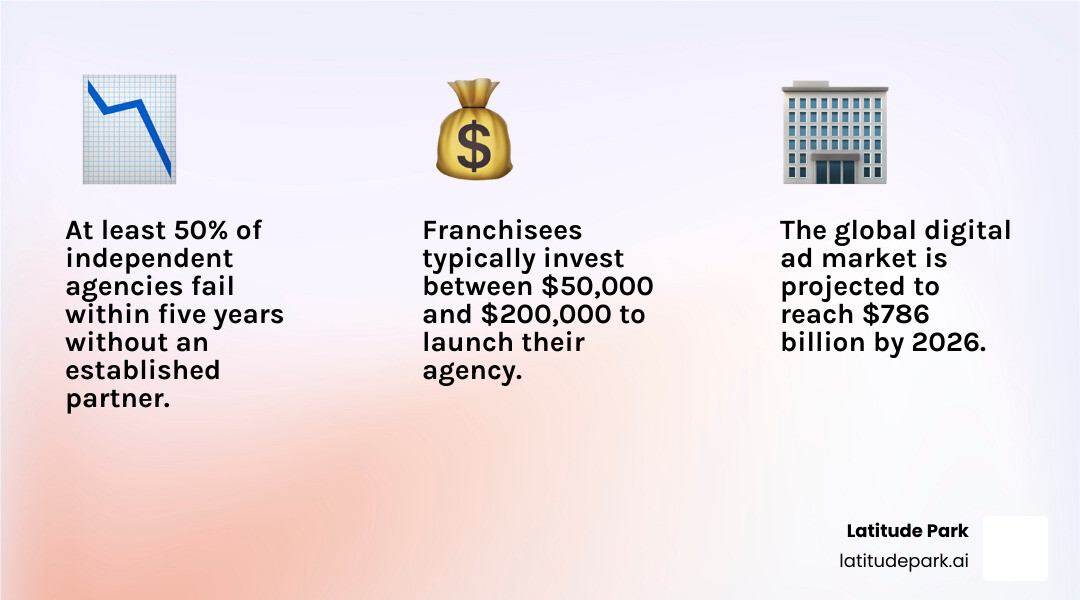
At least half of all independent agencies launched without an established partner fail within five years. The franchise model exists precisely to solve that problem — combining the growth of a booming digital market with the stability of a proven system.
I’m Rusty Rich, President and founder of Latitude Park, a full-service digital advertising agency I’ve built since 2009 — and over that time I’ve worked directly with franchises navigating exactly the challenges a digital marketing company franchise is designed to solve. That experience shapes everything in this guide.
Digital marketing company franchise terms to remember:
What a Digital marketing company franchise really is
A digital marketing company franchise is a business model in which we license an established brand, operating system, and service framework rather than inventing every moving part ourselves. In plain English: instead of spending years building an agency name, hiring specialists, creating reporting systems, and figuring out pricing through trial and error, we buy into a model that already works.
That is the core appeal. A franchise is not just a logo and a website. A strong one includes sales processes, onboarding systems, fulfillment support, software access, training, performance dashboards, and operating playbooks.
For readers comparing options, our Digital Marketing Agency Franchises Guide goes deeper into how this model works in practice.
How a Digital marketing company franchise differs from going independent
Starting an independent agency sounds exciting until the spreadsheet starts talking back.
When we go independent, we usually need to handle all of this ourselves:
- Brand positioning
- Website and lead generation
- Hiring and managing technical staff
- Building SOPs
- Creating proposals and pricing models
- Choosing and integrating software
- Delivering client work
- Reporting results
- Handling churn and account management
With a franchise, much of that infrastructure is already built. That does not remove effort, but it does remove a lot of guesswork.
The biggest practical difference is fulfillment. In many franchise models, franchisees focus on sales, strategy, and relationships while a centralized team handles campaign execution. That can include SEO work, paid media management, website builds, reporting, and automation. For owners who are great at business development but do not want to personally run every ad account or fix every tracking pixel at 10:47 p.m., this matters a lot.
This is also why franchising is often considered a lower-risk route than starting from zero. The research shows that at least half of independent businesses without established support fail within five years. While no business is risk-free, a proven operating model can significantly improve the odds.
Who this business model is best suited for
A digital marketing company franchise is usually a strong fit for people who are commercially minded, not necessarily technically obsessed.
Good franchisee profiles often include:
- Sales leaders who know how to build trust and close deals
- Corporate executives who want business ownership with systems
- B2B networkers with strong local relationships
- Career changers who want a service business with recurring revenue
- Owners interested in semi-absentee or scalable operations
- Operators who prefer managing growth over doing hands-on production
You do not need to be an SEO wizard or a Meta ads technician to succeed. What helps more is the ability to explain value clearly, lead conversations confidently, and stay financially disciplined.
Services and revenue models inside a Digital marketing company franchise
The best franchise models are not one-trick ponies. They offer a service stack that meets clients where they are, whether they need more leads, better conversion, stronger visibility, or cleaner reporting.
If you want a broader look at the service mix, see more info about franchise digital marketing services.
Core services franchisees typically sell
Most digital marketing franchises sell services that businesses already understand they need, even if they do not fully understand how they work.
Typical offerings include:
- SEO for organic visibility and local search growth
- PPC management for Google Ads and other paid search channels
- Social media advertising, especially Meta and LinkedIn
- Website design and development
- Conversion tracking and analytics
- CRM and lead nurture systems
- Reputation management
- Email and marketing automation
- Content and landing page creation
At Latitude Park, we know how important tailored campaign structures are for multi-location franchise businesses in particular. One local business may need simple lead generation. A multi-unit franchise system may need coordinated Meta campaigns, brand consistency, local targeting, and location-level reporting all at once. That is a different level of complexity, and it is exactly why specialized systems matter.

How franchisees make money from clients
Most franchisees generate revenue through a blend of recurring and one-time income.
The common models are:
- Monthly retainers for ongoing campaign management
- One-time setup fees for onboarding, tracking, or ad account builds
- Project fees for web design, branding, or landing pages
- Performance-based pricing tied to agreed outcomes
- Consulting fees for audits or strategic planning
Retainers are the foundation because they make revenue more predictable. Predictability is a beautiful thing in business. It is much easier to hire, budget, and sleep when revenue is not reinventing itself every month.
Some franchise systems also help franchisees package services into tiered offers, which makes sales conversations easier and gives clients clear upgrade paths.
What ROI and margins usually depend on
ROI in a digital marketing franchise is not driven by magic. It usually comes down to a few practical factors:
- How quickly we acquire clients
- The average monthly retainer
- Client retention length
- Delivery efficiency
- Local operating overhead
- Royalty and platform costs
- Sales follow-up discipline
Agencies with strong retention tend to outperform agencies with flashy closes and weak service. A client that stays for 18 months is usually worth far more than three clients who leave after 90 days.
Margins are often stronger when fulfillment is centralized because local franchisees do not need to hire a full technical team right away. That can keep payroll lean while allowing the owner to focus on business development.
For more context on how services are packaged and delivered, read Top Services to Expect from a Franchise Digital Advertising Agency.
Market size, growth, and trends shaping the opportunity in 2026
This opportunity exists because the underlying market is huge and still expanding.
Digital marketing is no longer the “new” option. For many businesses, it is the main event.
Why demand is rising for franchise-backed marketing providers
Businesses want results, but they are overwhelmed by complexity.
Today, owners must think about:
- Search visibility
- Paid advertising costs
- Social platform changes
- Attribution and reporting
- AI tools
- Data privacy expectations
- CRM integration
- Local versus national messaging
That is a lot for one business owner to juggle between payroll, hiring, customer service, and maybe unclogging the office sink.
As complexity rises, many SMBs and franchise brands prefer working with providers that combine local support with proven systems. A franchise-backed agency can offer the personal relationship of a local operator and the infrastructure of a larger organization. That combination is attractive.
For a related perspective, Unlocking Franchise Growth with the Right Marketing Agency explains why franchise businesses often need more than generic marketing support.
The numbers that matter in 2025-2026
The market data is hard to ignore:
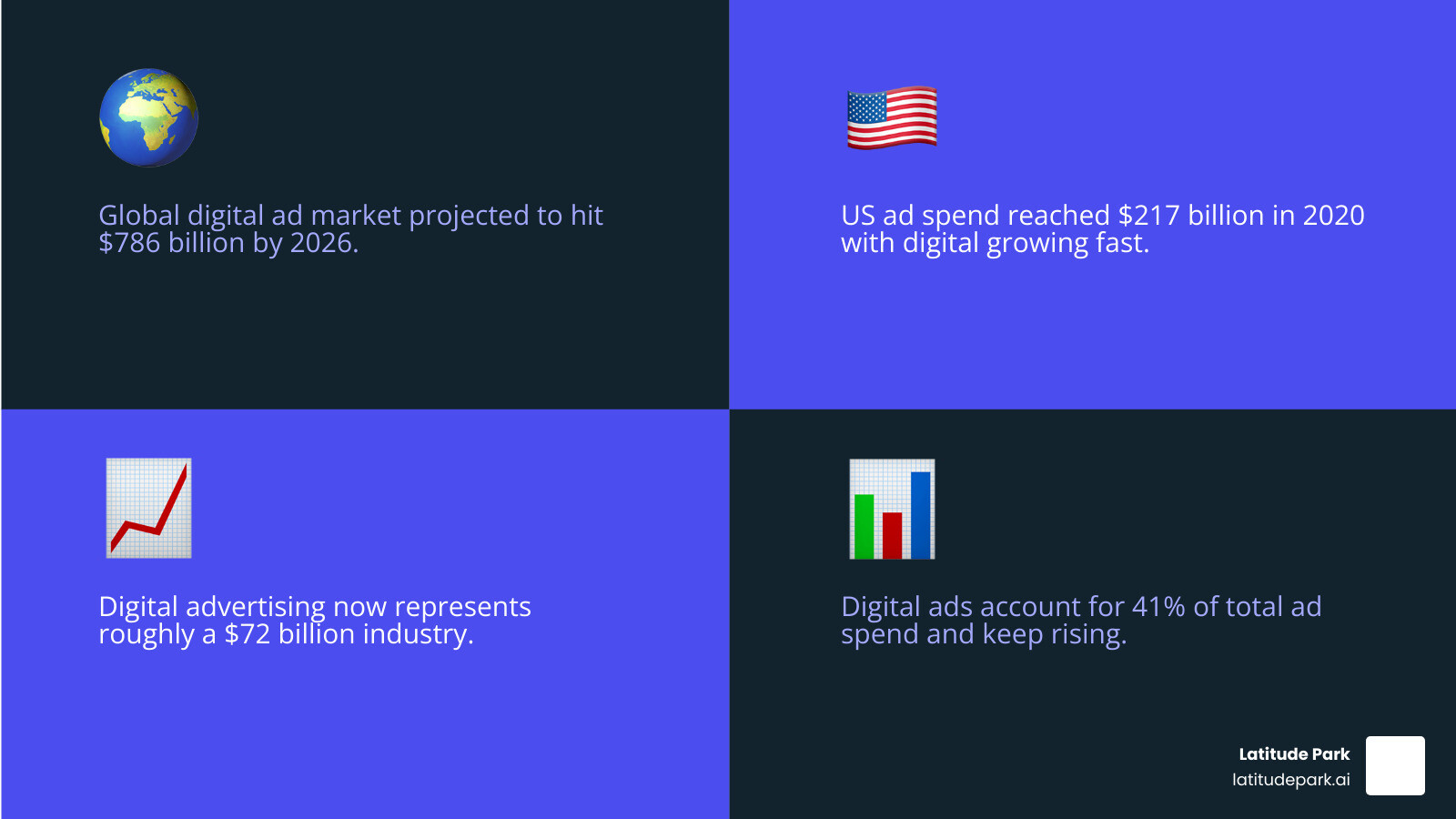
- The global digital marketing industry is projected to reach $786 billion by 2026
- The US advertising and marketing sector spent about $217 billion on marketing products in 2020
- Digital advertising alone represents a roughly $72 billion industry
- Digital ads account for about 41% of total ad spend and continue to grow
Those numbers matter because they show two things at once: demand is large, and digital has become central, not optional.
If you are evaluating the franchise side of the opportunity, legal diligence matters too. The FTC provides scientific research on franchise disclosure basics to help us understand how franchise disclosure works and what to review before signing.
Trends future-proofing digital marketing franchises
The strongest digital marketing franchises are adapting to several major shifts:
- AI and automation for reporting, optimization, and lead handling
- First-party data strategies as privacy rules evolve
- Niche specialization in verticals like healthcare, legal, and home services
- Omnichannel campaign planning across search, social, email, and web
- Better CRM integration and lead response workflows
- More demand for measurable ROI and transparent attribution
AI is changing agency operations fast, but it is not replacing the need for strategy. It is making execution faster and forcing agencies to get smarter. A good franchise model helps owners benefit from these tools without having to build the entire tech stack on their own.
If you want to see how these capabilities fit into a broader agency structure, check out Franchise Digital Advertising Services for Brands That Want to Rule the Web.
Costs, support, and operational resources to evaluate before you invest
Before we get excited about recurring revenue and growth charts, we need to talk about money, support, and what we are actually buying.
Typical startup costs and ongoing fees
Based on the research, many digital marketing franchise opportunities fall roughly between $50,000 and $200,000+, though some are below or above that range depending on model and scope.
That startup total may include:
- Initial franchise fee
- Business setup costs
- CRM or software access
- Laptop and office equipment
- Initial training
- Working capital
- Sales and local marketing budget
Ongoing fees often include:
- Royalty fees, usually a percentage of gross revenue
- Brand or marketing fund contributions
- Software or platform fees
- Local advertising spend
- Staffing or admin costs if we grow a team
Some systems use lower upfront fees but higher ongoing costs. Others charge more upfront and provide more fulfillment. Neither is automatically better. The key question is whether the economics match the support.
What franchisors usually provide to franchisees
A solid franchisor should provide much more than a welcome packet and a pat on the back.
We should expect support such as:
- Initial onboarding and business training
- Sales scripts and proposal templates
- CRM and pipeline systems
- Fulfillment workflows
- Campaign reporting tools
- Brand standards and messaging guides
- Ongoing coaching and account support
- Vendor or production partnerships
- SOPs for onboarding, retention, and upselling
At Latitude Park, this kind of support matters because franchise marketing is rarely simple. Multi-location businesses need campaign structures that balance local flexibility with brand consistency, especially on Meta where audience segmentation, creative variation, and reporting can get complicated quickly.
For more on how this ecosystem fits together, visit our Franchise Digital Marketing Agency Guide.
Red flags to catch before signing
Not every franchise opportunity deserves our signature.
Watch for these red flags:
- Vague or overly aggressive earnings claims
- Weak or outdated technology
- Limited clarity on fulfillment responsibilities
- High fees without clear support
- Restrictive terms with little territory protection
- Poor transparency around training and onboarding
- Little evidence of innovation in AI, privacy, or reporting
- Litigation history or troubling franchisee feedback in the FDD
The Franchise Disclosure Document is essential. Review it carefully and, ideally, with a franchise attorney. Pay close attention to fees, obligations, renewal terms, transfer rights, and territory language.
How to choose the right digital marketing company franchise and scale it
A franchise can give us a head start, but choosing the right one still requires judgment. Good systems help. Good decisions still matter.
Skills and background that improve franchisee success
The most successful owners are often strong in areas like:
- Consultative selling
- Relationship building
- Local networking
- Team leadership
- Financial management
- Discipline around follow-up and pipeline tracking
Technical knowledge helps, but it is not the deciding factor. In many cases, the winner is the person who can turn “our click-through rate improved” into “your phone is going to ring more often.” Clients buy outcomes, not acronyms.
Questions to ask before buying a Digital marketing company franchise
Before buying, we should ask direct, practical questions:
- What is the exact territory exclusivity?
- How are leads generated for franchisees?
- What portion of fulfillment is centralized?
- What must I personally hire versus what is provided?
- What does the first 90 days look like?
- How long does ramp-up typically take?
- What are the royalty and software costs?
- How is client reporting handled?
- What AI, automation, and compliance tools are included?
- What does renewal look like after the initial term?
Those questions can save us from expensive surprises later.
Smart ways to grow after launch
Once the first office or territory is stable, growth usually comes from focus, not chaos.
Smart expansion paths include:
- Multi-unit ownership
- Hiring sales reps before building a large admin team
- Specializing in verticals like home services, healthcare, or legal
- Building recurring revenue before taking on too much project work
- Using vertical-specific offers and case-study style sales tools
- Expanding local reputation and referral partnerships
Franchisees who specialize often gain an advantage because they understand the language, compliance expectations, and lead economics of a niche. That tends to improve retention and pricing power.
For a broader roadmap, explore this franchise digital advertising agency guide.
Frequently Asked Questions about Digital marketing company franchise opportunities
Is a digital marketing franchise safer than starting an agency from scratch?
Usually, yes. A franchise does not eliminate risk, but it can reduce several major startup risks by providing an established brand, processes, support, and delivery systems. Research also suggests that at least half of independent businesses without established backing fail within five years, which helps explain why many entrepreneurs prefer a franchise model.
Do I need marketing experience to own a Digital marketing company franchise?
No. Many strong franchisees come from sales, consulting, operations, or executive backgrounds rather than hands-on marketing roles. What matters most is whether we can build trust, communicate value, and manage growth. Technical execution is often handled through the franchisor’s support structure.
How long does it take to become profitable?
It depends on the brand, territory, pricing, and how effectively we sell. That said, digital marketing franchises often have a faster path to profitability than brick-and-mortar concepts because they typically have lower physical overhead and can build recurring revenue through retainers. The right question is not just “how fast” but “under what conditions.”
Conclusion
The opportunity to own a digital marketing company franchise has never looked more compelling. The market is growing, client demand is real, and businesses increasingly need expert support to manage digital complexity.
For the right owner, this model offers a practical middle path between building an agency from scratch and buying into a high-overhead traditional franchise. We get systems, support, fulfillment, and a faster route to credibility, while still building a valuable local business.
If you are exploring next steps, start with From Dream to Digital Empire: Exploring Marketing Agency Franchise Opportunities. You can also learn more about the Latitude Park franchise model and visit our core page on franchise digital marketing agency.
In short: if starting alone sounds risky, and buying a proven system sounds smarter, you are probably asking the right question already.