Why Your Business Needs a Strategic Approach to Advertising
Advertise company solutions have evolved dramatically over the past decade, and the path to growth is no longer one-size-fits-all. Here’s what you need to know to get started:
Quick Answer: How to Advertise Your Company Effectively
- Search Engine Advertising – Reach customers actively searching for your products (Google Ads, Performance Max campaigns)
- Social Media Advertising – Connect with targeted audiences on platforms like Facebook, Instagram, and LinkedIn
- Digital Product Advertising – Promote products directly to shoppers through sponsored ads and brand stores
- Local and Niche Directories – Reach specific audiences and local customers through strategic directory placements
- Measure and Optimize – Track ROAS, CPA, and conversion rates to continuously improve performance
The advertising landscape has fundamentally changed. Traditional print directories and radio spots have given way to precision-targeted digital campaigns that reach customers exactly when and where they’re most likely to buy.
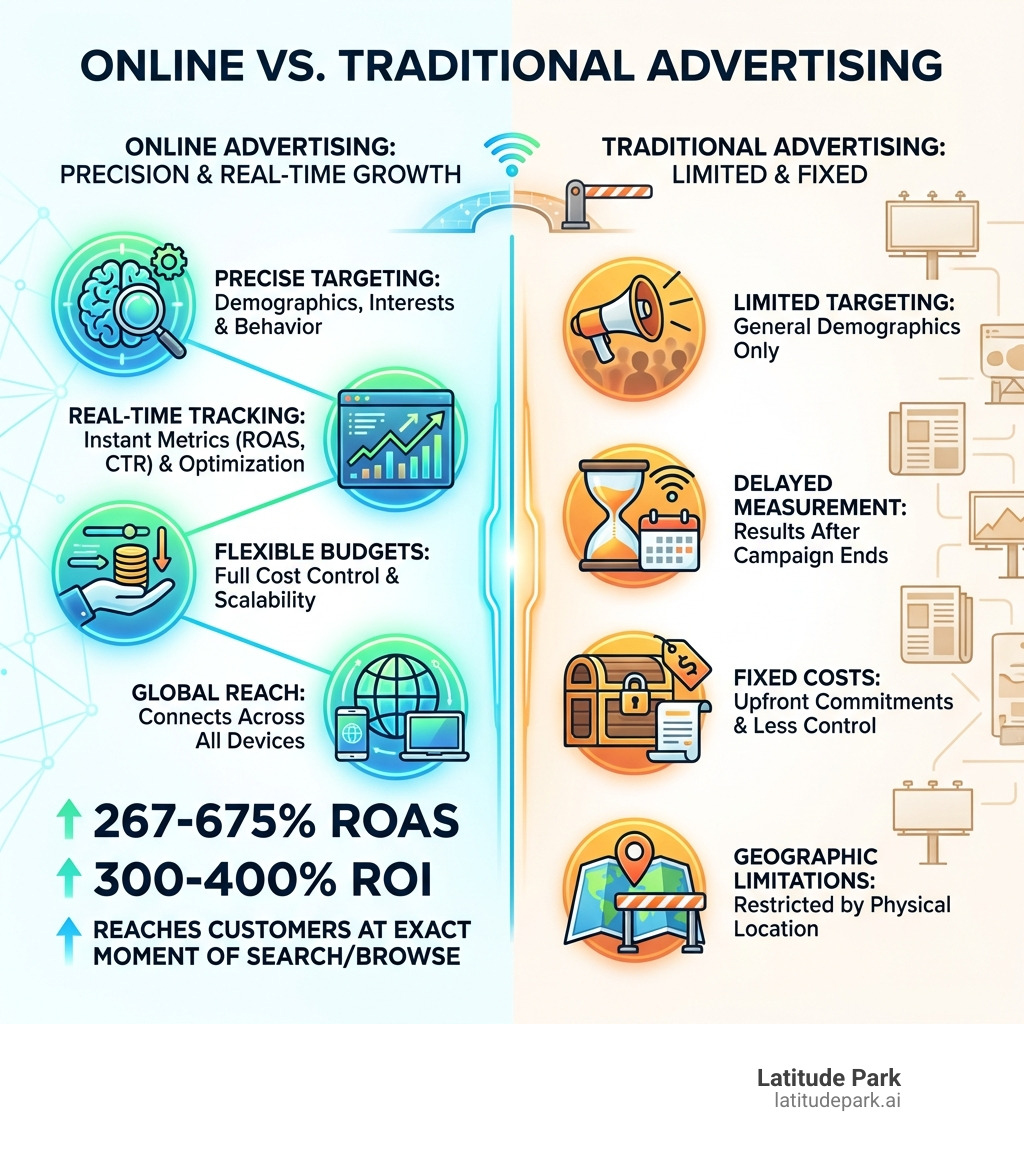
The numbers tell the story. Businesses using modern advertising solutions are seeing 675% returns on ad spend, 300% ROI growth, and 267% increases in ROAS. These aren’t anomalies—they’re the result of smart strategy, the right platforms, and data-driven optimization.
But here’s the challenge: more options doesn’t mean easier decisions. With search ads, social media campaigns, shopping ads, and countless other channels available, how do you know where to invest your advertising budget? How do you ensure consistent messaging across multiple locations? And how do you measure what’s actually working?
That’s what this guide is about.
You’ll learn how to choose the right advertising channels for your business goals, build campaigns that deliver measurable results, and use data to continuously improve your performance. Whether you’re managing a single location or coordinating campaigns across dozens of franchises, this blueprint will help you cut through the noise and focus on what drives growth.
I’m Rusty Rich, President and founder of Latitude Park, a full-service digital advertising agency that’s helped businesses advertise their company successfully since 2009. I’ve guided everyone from small businesses to growing franchises through the complexities of multi-channel advertising, from Google Ads and social media to e-commerce and traditional media. This guide distills what I’ve learned into a practical framework you can use immediately.
Key terms for advertise company:
Understanding the Modern Advertising Landscape
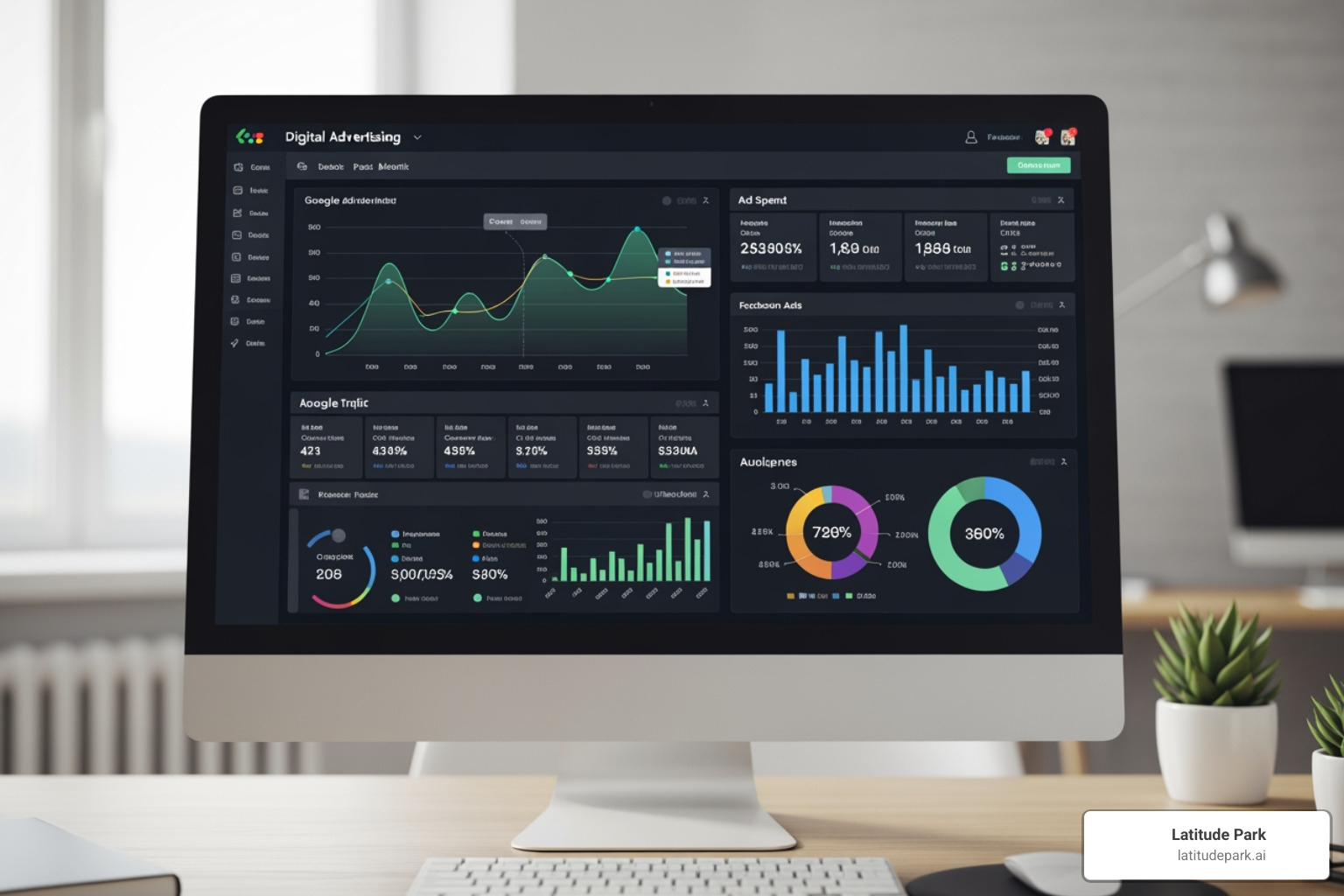
The journey from shouting your message from the rooftops (traditional advertising) to whispering it directly into the ear of a receptive customer (online advertising) has been nothing short of revolutionary. We’ve witnessed a profound shift, moving away from broad, often untargeted methods to highly precise, data-driven strategies.
Online advertising allows us to target the people most likely to be interested in our products and services. We’re no longer guessing; we’re using sophisticated tools to reach specific demographics, interests, and even individuals who have previously interacted with our brand. This precision means less wasted budget and more impactful campaigns.
Another game-changer is the rise of self-service advertising solutions. Platforms like Google Ads, Instagram, and Amazon Ads empower businesses of all sizes, including small businesses, to launch and manage their own campaigns. This accessibility means that you don’t need a huge marketing department to get started. You can control your ad spend, set flexible budgets, and adjust campaigns in real-time based on performance. The ability to track who is engaging with our ads and measure success almost instantly is a huge advantage over traditional methods. Online advertising allows us to show our ads to the right people at the right time, no matter where or how they’re browsing—be it on a desktop, laptop, or mobile device. For a deeper dive into these advantages, we often refer our clients to resources like The advantages of advertising online.
Key Channels to Advertise Your Company
This section explores the most effective digital channels to advertise your company, helping you reach customers wherever they are online.
Using Search Intent with Digital Advertising
When someone types a query into a search engine, they’re expressing intent. They’re looking for something specific, and if your business offers it, you want to be there. This is where search engine marketing shines. Platforms like Google Ads offer powerful solutions to help us reach our audience exactly when they’re actively searching for products or services like ours.
Google Ads, for example, provides various campaign types custom to different business goals. We can run Search ads that appear directly on search results pages, reaching high-intent audiences at a critical moment. For broader reach and visual engagement, Display ads can showcase our brand across a vast network of websites and apps. Beyond these, Google Ads offers a suite of solutions including Performance Max Campaigns, Demand Gen campaigns, Shopping ads, Video ads, and App ads. Each of these can be aligned with objectives like increasing sales, driving website traffic, generating leads, or boosting brand awareness. The objective we select should always align with the main thing we want to achieve with our campaign.
A key benefit of digital advertising solutions like Google Ads is the control it gives us over our investment. We decide how much to spend on our campaigns, with many ways to get the most from our budget and control advertising costs. This flexibility allows businesses to scale their advertising efforts up or down as needed, ensuring every dollar works hard.
The results speak for themselves. We’ve seen businesses achieve incredible returns, like a 267% increase in Return on Ad Spend (ROAS) for companies effectively using Shopping ads. Another success story highlights a massive 675% ROAS, demonstrating the power of these platforms when managed strategically. These success stories underscore the importance of setting clear objectives, controlling our ad spend, and diligently tracking results for maximum impact. To explore more about these solutions and how they can benefit your business, you can explore digital advertising solutions.
Engaging Audiences on Social Media
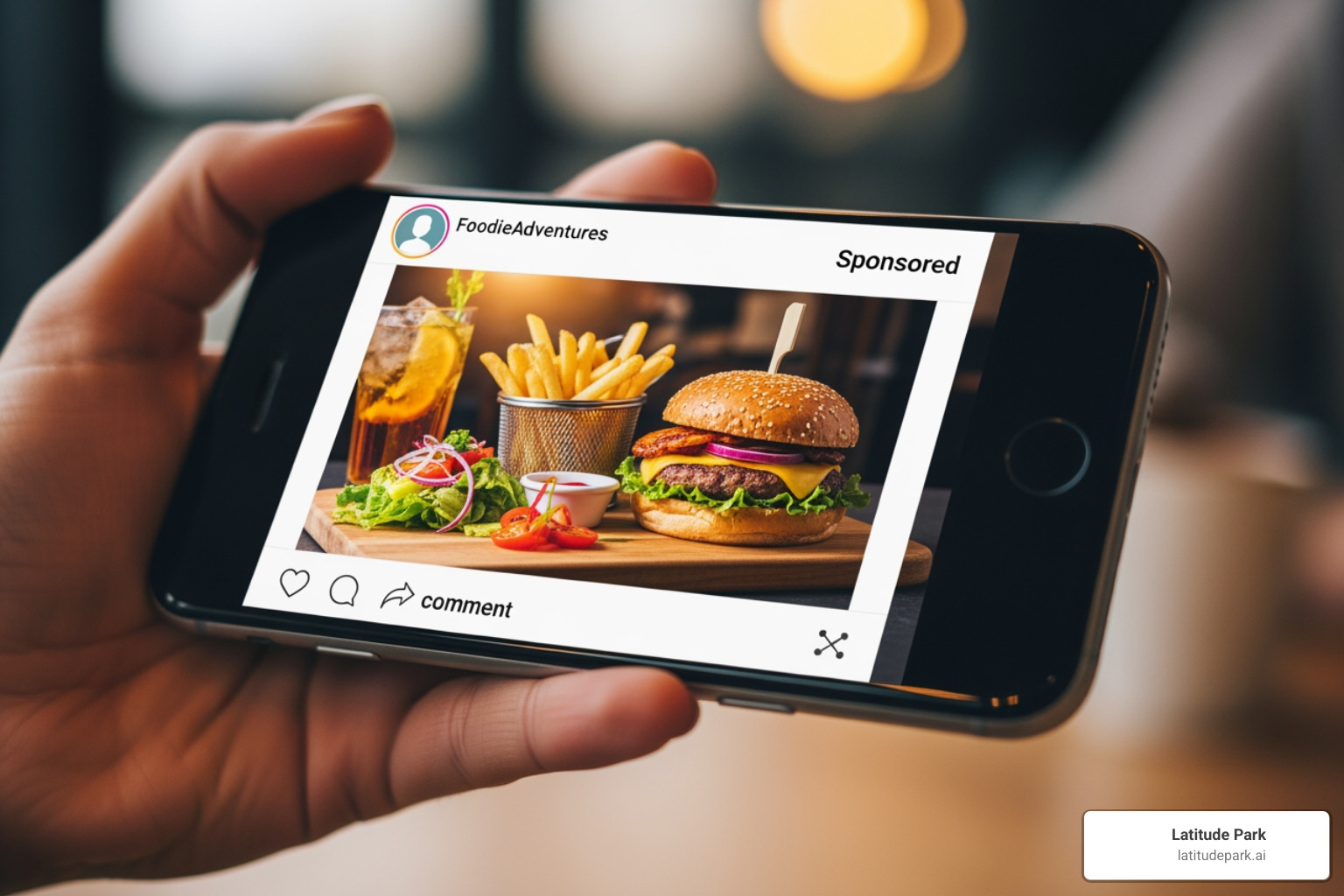
Social media platforms are no longer just for personal connections; they’ve become powerful advertising ecosystems. To advertise company services or products effectively, we leverage platforms like Facebook, Instagram, and LinkedIn to connect with our target audience. These platforms allow us to engage with users where they spend a significant portion of their online time, fostering brand awareness and driving action.
Instagram, now integrated under Meta for Business, offers a rich environment for visual storytelling and direct engagement. We can use various ad formats, including engaging visuals in the Instagram Feed, immersive content in Instagram Stories and Reels, and even direct messaging through Instagram Direct. For businesses looking to sell products, setting up an Instagram Shop and optimizing it is crucial. Instagram also supports branded content collaborations and video advertising solutions, providing ample opportunities to boost posts and reach a wider audience. These solutions are designed to cater to businesses of all sizes, allowing even small businesses to create compelling campaigns. Our approach involves developing the right Instagram strategy, which includes understanding how to effectively use their ad solutions and creative tools. You can learn more about getting started with Instagram ads through their resources like CREATE AN AD and Meta for Business.
LinkedIn, while often seen as a professional networking site, is an invaluable platform for B2B advertising. Its robust targeting capabilities allow us to reach specific industries, job titles, company sizes, and professional interests. We’ve found that leveraging LinkedIn insights can be incredibly effective for refining advertising strategies, even with a modest budget. The ability to precisely target business owners, executives, and managers means our message reaches the decision-makers directly.
For comprehensive social media advertising strategies, including how to maximize your presence and engagement across these diverse platforms, we recommend exploring further resources. You can learn about social media advertising services.
Reaching Shoppers with Digital Product Advertising
For businesses with physical products, digital product advertising is a direct route to customers at their point of purchase. This is about putting your products in front of shoppers who are actively looking to buy, whether they’re browsing a marketplace or searching for specific items.
Platforms like Amazon Ads are prime examples of this. They offer easy-to-use, self-service advertising solutions designed for businesses of all sizes, including small businesses and authors. Key offerings include Sponsored Ads, which ensure your products appear prominently in search results, and Brand Stores, which provide a dedicated digital storefront for your brand within the Amazon ecosystem. These tools are crucial for increasing product visibility and driving sales by reaching a vast customer base. Flexible budgets mean you can start small and scale as you see results.
Beyond dedicated marketplaces, Google’s Shopping ads are another powerful tool. These ads display product images, prices, and store names directly in search results, making it incredibly easy for potential customers to compare and purchase. We’ve seen how effective Shopping ads can be, with one company reporting a 267% increase in ROAS, noting that their strong branding combined with Shopping ads helped differentiate them from competitors. This highlights how digital product advertising doesn’t just drive sales; it also reinforces brand identity in a competitive landscape.
Leveraging Local and Niche Directories
While digital giants dominate much of the advertising conversation, local and niche directories still hold significant value, especially when integrated into a broader online marketing strategy. These platforms are designed to connect specific audiences with businesses that cater to their unique needs.
For local businesses, being listed and optimized in online directories like Yelp, Google Business Profile, and industry-specific listings is crucial. These directories help customers find local services and products, often when they have immediate intent to purchase. A strong presence here complements broader digital campaigns by ensuring that when potential customers search locally, your business is visible and accessible.
Niche directories, on the other hand, cater to very specific industries or interests. This could be anything from a directory for eco-friendly businesses to one for specialized B2B services. Advertising in these directories allows us to reach a highly qualified audience that is already pre-disposed to our offerings. The key is to identify where your ideal customers are looking for solutions within their specific communities or professional fields and ensure your presence is strong and compelling.
Building Your Advertising Strategy
Developing an effective advertising strategy isn’t about throwing money at every platform; it’s about making informed choices that align with your business objectives. It’s like building a house – you need a blueprint before you start laying bricks.
How to Choose the Right Channel to Advertise Your Company
Choosing the right advertising channels begins with a clear understanding of your business goals. Are you aiming for increased sales, generating leads, driving website traffic, or building brand awareness? Each goal might lead you to different platforms and campaign types.
Next, we need to identify your target audience persona. Who are you trying to reach? What are their demographics, interests, online behaviors, and pain points? For example, if your target audience consists of professionals, LinkedIn might be a highly effective channel. If you’re selling visually appealing products to a younger demographic, Instagram could be your go-to.
Aligning your budget with channel costs is also critical. Some platforms might require a larger investment for meaningful impact, while others offer more accessible entry points. Google Ads, for instance, allows you to decide how much you spend, offering flexibility for various budgets. Finally, match your product or service to the channel’s user base. A highly visual product will thrive on platforms designed for imagery and video, while a complex service might benefit from detailed search ads or professional networking platforms.
| Channel Type | Primary Audience | Best For | Typical Cost Model |
|---|---|---|---|
| Search Engine Ads | Users with high intent, actively searching | Driving leads, sales, website traffic, immediate conversions | Pay-Per-Click (PPC) |
| Social Media Ads | Targeted demographics, interests, behaviors | Brand awareness, engagement, community building, lead generation | CPM, CPC, CPE |
| Digital Product Ads | Active shoppers, browsing for products | Product sales, visibility, inventory promotion | Pay-Per-Click (PPC), % of Sale |
| Directory Listings | Local customers, niche industry professionals | Local visibility, specific industry leads, trust building | Subscription, Pay-Per-Lead |
The Role of Data in Refining Your Advertising Strategy
In today’s digital advertising landscape, data is our compass. We move beyond guesswork by diligently utilizing platform-provided insights. Every click, impression, and conversion tells a story, and it’s our job to listen.
This involves conducting rigorous A/B testing on ad copy, headlines, and creative assets. By testing different versions of our ads, we can identify what resonates most with our audience, leading to improved performance. We constantly monitor key metrics like click-through rates, conversion rates, and cost-per-acquisition. These numbers are not just statistics; they are actionable signals that guide our decisions.
Making data-driven decisions for campaign optimization is a continuous process. If an ad isn’t performing well, the data will tell us. We can then adjust our targeting, refine our messaging, or reallocate our budget to more successful elements. This iterative improvement is the secret sauce to long-term success in advertising. As we’ve learned from successfully leveraging LinkedIn insights to refine strategies with even modest budgets, platform-specific data provides unique angles for growth.
Measuring Success and Maximizing ROI
What’s the point of investing in advertising if we don’t know if it’s working? Understanding what success looks like for your campaigns is paramount. By tracking performance, we can justify our ad spend, demonstrate value, and use analytics to continuously improve future campaigns, turning insights into tangible growth.
Key Metrics for Your Advertising Campaigns
When we advertise company products or services, we need to speak the language of numbers to truly understand our impact. Here are the key metrics we closely monitor:
- Return on Ad Spend (ROAS): This tells us how much revenue we generate for every dollar spent on advertising. A high ROAS, like the 675% achieved by some Google Ads users or the 267% increase seen with effective Shopping ads, is a clear indicator of highly efficient campaigns.
- Cost Per Acquisition (CPA): This measures how much it costs us to acquire one customer or lead through our advertising efforts. Lower CPA means more efficient spending.
- Click-Through Rate (CTR): This is the percentage of people who click on our ad after seeing it. A higher CTR often indicates that our ad creative and messaging are compelling and relevant to our target audience.
- Conversion Rate: This metric shows the percentage of people who complete a desired action (like making a purchase or filling out a form) after clicking on our ad. It’s a direct measure of our campaign’s effectiveness in driving business outcomes.
- Customer Lifetime Value (CLV): While not a direct advertising metric, CLV is crucial for understanding the long-term profitability of the customers we acquire through advertising. It helps us evaluate if our CPA is sustainable in the grand scheme of things.
By keeping a close eye on these metrics, we can not only identify what’s working but also pinpoint areas for improvement, ensuring our advertising investments yield the best possible returns.
How to Optimize Campaigns to Advertise Your Company Effectively
Optimization is the heartbeat of successful advertising. It’s the continuous process of refining our campaigns to achieve better results over time. Here’s how we approach it:
- Analyze Campaign Performance Data: We dive deep into the data, looking for patterns, trends, and anomalies. Which ads are performing best? Which keywords are driving the most conversions? What demographics are most responsive?
- Adjust Bids and Budgets Strategically: Based on our analysis, we make informed decisions about where to allocate our budget. We might increase bids on high-performing keywords or audiences and reduce spend on underperforming ones. Google Ads offers various ways to manage budgets and control costs effectively, allowing us to get the most from our investment.
- Refine Ad Creative Based on Results: Our ads are never “set it and forget it.” We continuously test new headlines, ad copy, images, and video to see what resonates most with our audience. If a particular creative is driving a higher CTR or conversion rate, we lean into it.
- Improve Landing Page Experiences for Higher Conversions: The ad is only half the battle. Once a user clicks, their experience on the landing page is critical. We ensure that landing pages are relevant, user-friendly, fast-loading, and clearly guide the user towards the desired action. A seamless user journey from ad click to conversion is key.
- Use A/B Testing for Headlines and Calls-to-Action: Small changes can make a big difference. A/B testing different headlines, calls-to-action (CTAs), and even button colors can significantly impact conversion rates. This systematic approach allows us to make incremental improvements that add up to substantial gains.
Conclusion: Your Next Step in Business Growth
As we’ve explored, advertising is the engine of business growth, constantly evolving and demanding a strategic approach. The key to successfully advertise your company is to choose the right channels that align with your specific goals, rigorously measure what matters, and continuously optimize your campaigns based on data and insights. This journey is dynamic, requiring adaptability and a keen eye for detail.
For complex organizations, particularly multi-location franchises, navigating this intricate landscape can be daunting. Ensuring consistent branding, localized messaging, and optimized performance across numerous locations requires specialized expertise. This is where partnering with an expert agency like Latitude Park can streamline the process, provide custom campaign structures, and accelerate your growth. Our deep understanding of digital marketing, from Google Ads to Meta (Facebook) advertising strategies, allows us to address the unique and complex needs of multi-location franchise businesses.
Don’t let the complexity of modern advertising hold your business back. Take the next step in your company’s growth by building a powerful advertising plan today. To learn how we can help you open up your full advertising potential, explore our digital ads management services.