
What is Search Engine Optimization and Why Does It Matter?
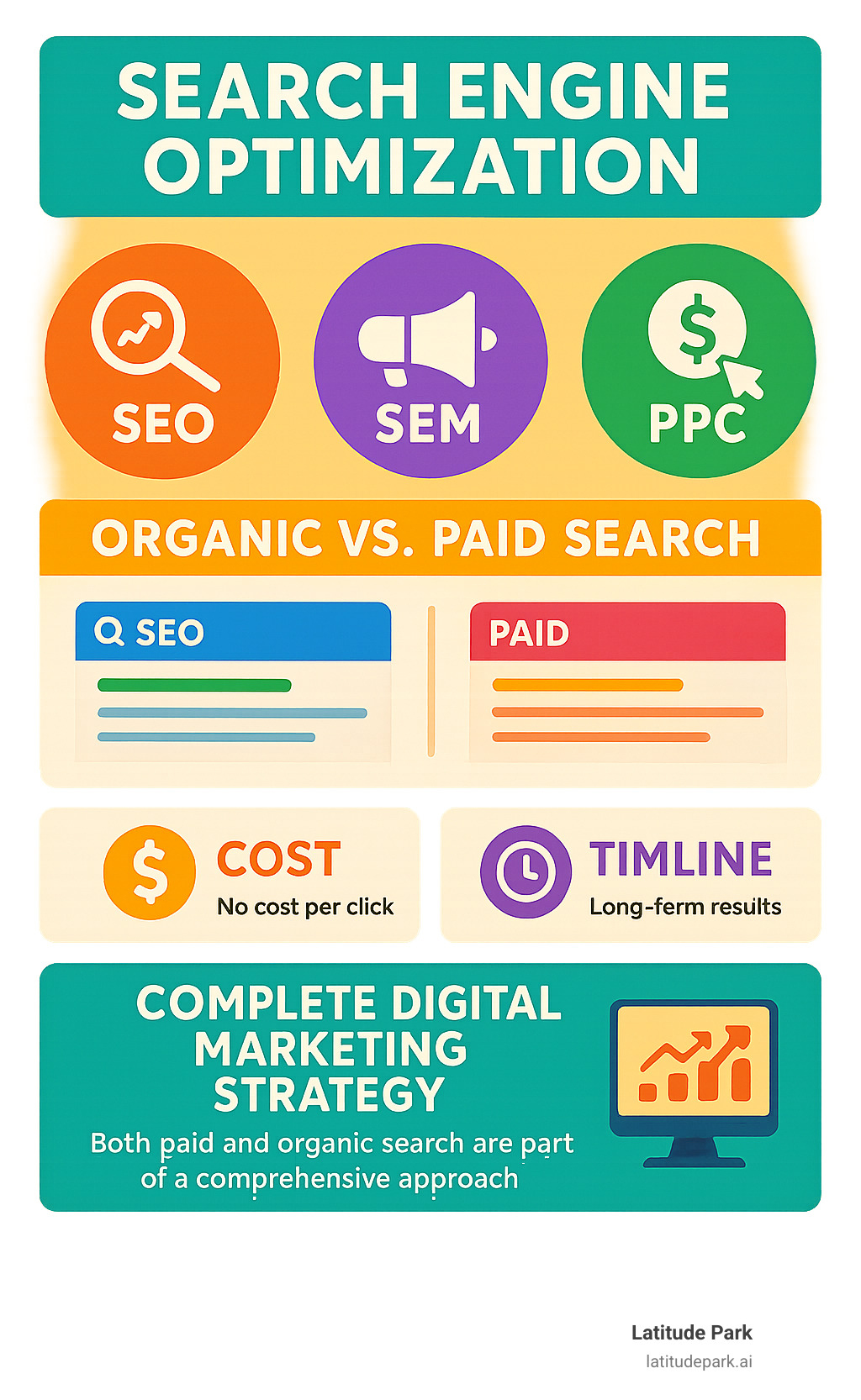
Search engine optimization is the practice of improving your website’s visibility in organic (non-paid) search results on engines like Google and Bing. It involves optimizing your content, technical setup, and online reputation to rank higher for relevant searches.
Quick SEO Overview:
- Definition: Improving website visibility in organic search results.
- Goal: Increase qualified traffic without paying for ads.
- Key Components: Technical SEO, content creation, and building authority.
- Timeline: Results typically appear within 3-6 months.
- Cost: Free to implement but requires time and expertise.
- ROI: High long-term return compared to paid advertising.
SEO matters because organic search delivers 53% of all website traffic, making it the largest source of visitors for most websites. With over 8.5 billion searches happening daily on Google alone, your potential customers are actively looking for businesses like yours.
Unlike paid advertising, which stops when you stop paying, SEO builds lasting value. It focuses on earning visibility through relevance and authority, establishing credibility, and driving consistent traffic. For franchise businesses, SEO provides a scalable way to reach customers in each market without the ongoing costs of pay-per-click ads, providing the foundation for long-term growth.
I’m Rusty Rich, founder of Latitude Park. Since 2009, I’ve helped businesses, from small companies to growing franchises, build strong online presences. I’ve seen how a smart search engine optimization strategy can transform a company’s digital growth.
How Search Engines Work: From Crawling to Ranking
Ever wonder how Google finds your website among billions of pages? Understanding this process is crucial for effective search engine optimization. You can’t optimize what you don’t understand.
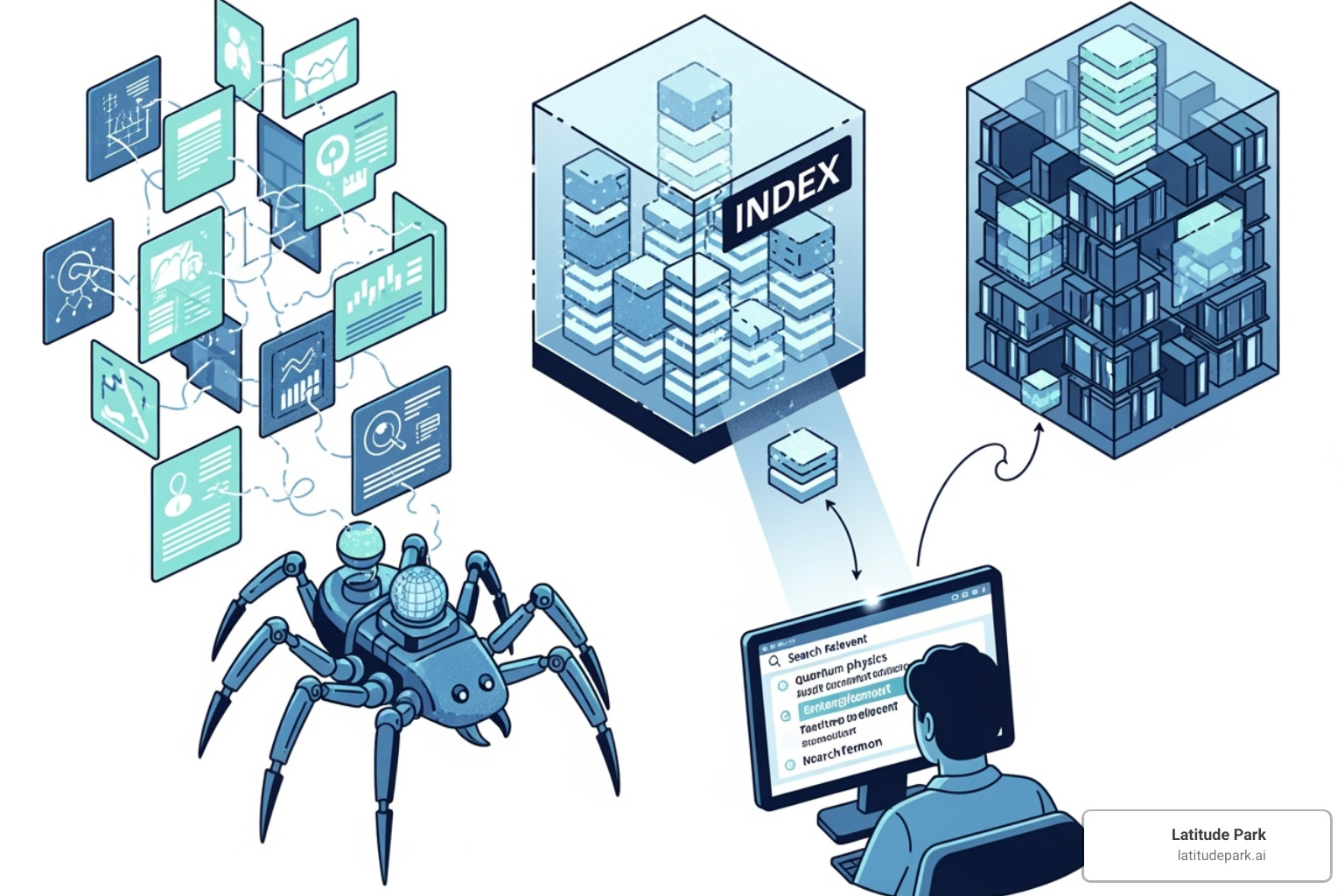
The journey from your website to search results happens in three main stages: crawling, indexing, and ranking.
Crawling: Finding Your Content
Search engines use automated programs called search engine bots or spiders (like Googlebot) to explore the web. They follow links from page to page to find new and updated content. You can guide this process with two key files:
- Sitemaps: An XML file that lists all your important pages, acting as a roadmap for crawlers.
- Robots.txt: A text file that tells bots which parts of your site to crawl or ignore.
You can check if your site is indexed by searching “site:yourwebsite.com” in Google. This shows which of your pages Google has found.
Indexing: Organizing the Information
After crawling, search engines analyze and store the content they’ve found in a massive digital library called an index. They process your text, images, and code to understand what each page is about. Being crawled doesn’t guarantee indexing; search engines only store pages they deem accessible, valuable, and technically sound. Thin or duplicate content may be left out.
Ranking: Delivering the Best Results
When you perform a search, the engine doesn’t scan the live web. It searches its organized index and uses complex search algorithms to find the most relevant and authoritative answers. Google’s original PageRank algorithm measured a page’s importance by the links pointing to it. Today, hundreds of factors are considered, including user intent, content quality, page speed, and mobile-friendliness.
For franchise businesses, this means each location can rank for local searches when content is optimized correctly. This is how you can grow your business with SEO—by connecting with customers at the exact moment they’re searching. Understanding this process demystifies search engine optimization and helps you create content that works with search engines, not against them.
The Core Components of a Winning SEO Strategy
A successful search engine optimization strategy rests on three pillars: technical SEO (the foundation), on-page SEO (the content), and off-page SEO (the reputation). When these elements work together, your website becomes a powerhouse that search engines and users love.
Technical SEO: Building a Solid Foundation
Technical SEO ensures search engines can easily find, crawl, and understand your website. It’s the invisible foundation for all other SEO efforts. Key elements include:
- Site Architecture: A logical, hierarchical structure that’s intuitive for users and crawlers.
- Crawlability & Indexability: Using tools like robots.txt and XML sitemaps to guide search engines to your important content. We use Google’s URL Inspection Tool to check how Google sees a page.
- Site Speed & Core Web Vitals: Optimizing for fast loading times and a stable, responsive user experience, which are critical ranking factors.
- Mobile-Friendliness: Ensuring your site works perfectly on all devices, as Google uses mobile-first indexing.
- HTTPS Security: Using HTTPS to protect visitor data, build trust, and support rankings.
- URL Structure & Internal Linking: Creating clean, descriptive URLs and linking between related pages to help users and search engines steer your site.
Getting these technical elements right is a crucial first step. We often address these fundamentals when helping businesses implement strategies to How to Rank Higher on Google: 10 Effective Strategies.
On-Page SEO: Optimizing Your Content for search engine optimization
On-page SEO involves creating and optimizing content that helps your audience while signaling relevance to search engines.
- Keyword Research & Search Intent: We find the terms people use and, more importantly, understand what they want to accomplish. Matching content to intent is key.
- Content Quality & E-E-A-T: We create comprehensive, well-researched content that provides genuine value. Google’s E-E-A-T (Experience, Expertise, Authoritativeness, Trustworthiness) guidelines are our standard.
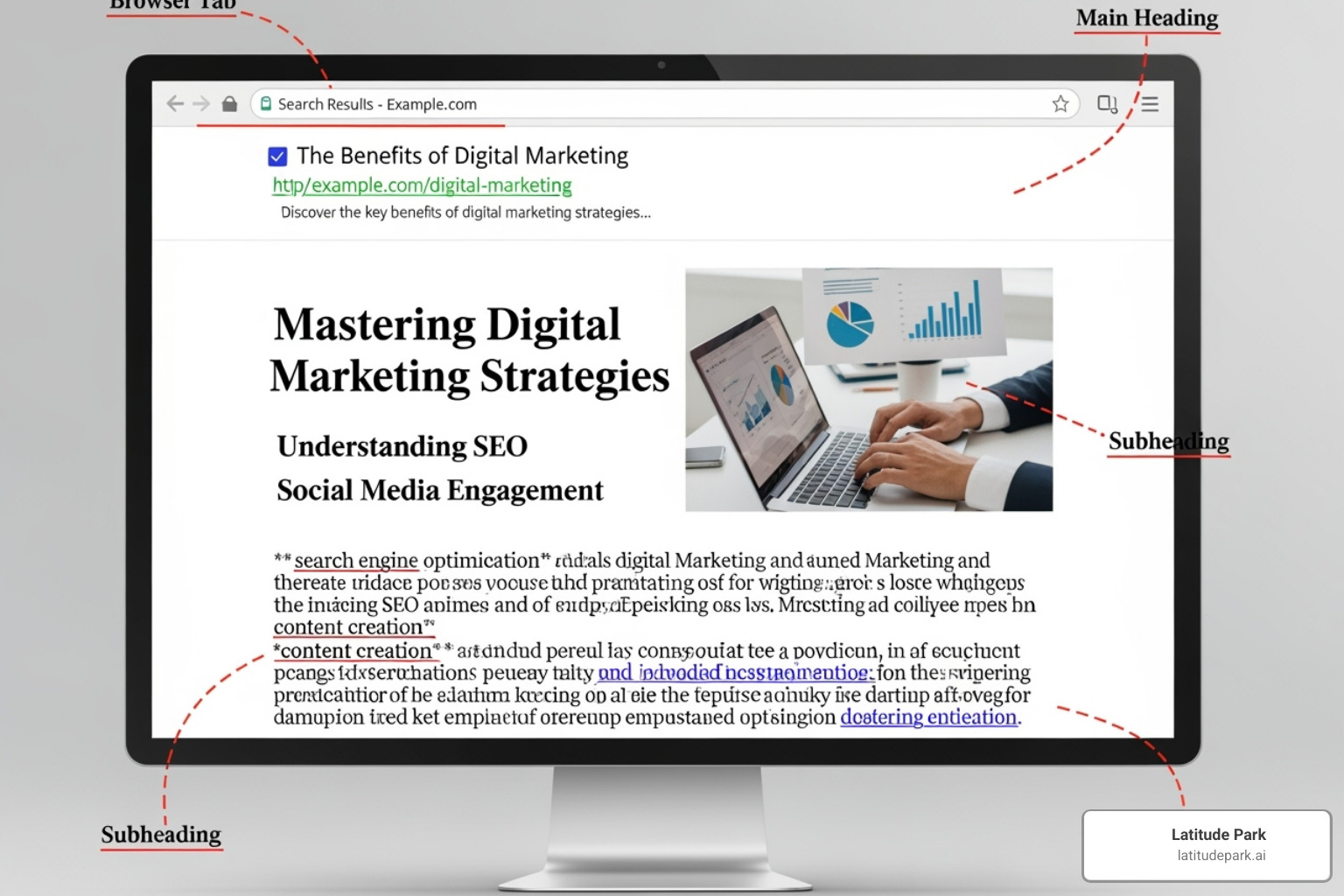
- Title Links & Meta Descriptions: We craft compelling titles (under 60 characters) and meta descriptions (150-160 characters) that improve click-through rates from search results.
- Header Tags (H1, H2, H3): These organize content into a logical hierarchy, making it easier for users and search engines to read and understand.
- Image & Video Optimization: We use compressed images, descriptive file names, and helpful alt text to improve user experience and create more ranking opportunities.
This detailed approach to on-page optimization is covered in our The Ultimate Guide to On-Page SEO and is especially valuable for SEO for Small Businesses.
Off-Page SEO: Building Your Website’s Reputation
Off-page SEO builds your site’s authority and reputation across the web. It’s about earning trust from other respected sources.
- Backlinks: Links from other websites act as votes of confidence. We focus on earning high-quality backlinks from relevant, authoritative sites by creating content worth referencing.
- Brand Authority & Mentions: Even unlinked mentions of your brand across the web help establish your authority and signal relevance to search engines.
- Social Media Signals: While not a direct ranking factor, social media amplifies your content’s reach, drives traffic, and can lead to natural backlinks. It’s a key part of Word of mouth marketing.
- Digital PR: This involves earning mentions and links from news outlets and industry blogs to build brand awareness and acquire powerful backlinks.
The key to off-page search engine optimization is authenticity. We focus on building genuine relationships and creating valuable content, as detailed in our guides on How to Get High DA Backlinks and How to Combine SEO and Social Media for Your Marketing Strategy.
Navigating the Evolving World of Search Engine Optimization
The world of search engine optimization is constantly changing. Strategies that worked yesterday may be obsolete today. This evolution reflects search engines’ goal to better understand user intent. To succeed, you must avoid outdated practices and accept new trends.
Common SEO Myths and Outdated Practices
Manipulative tricks no longer work and can harm your site. Avoid these common myths:
- Keyword Stuffing: Repeating keywords unnaturally is ineffective and penalized. Modern search engines understand context and synonyms.
- Hidden Text and Cloaking: Hiding text or showing different content to search engines than to users is a deceptive practice that violates guidelines.
- Buying Links: Purchasing links from low-quality link farms is easily detected by search engines and can lead to severe penalties.
- Comment Spam: Leaving irrelevant, self-promotional comments on blogs is a spammy tactic that provides no value. Avoid links from sites like comment spam.
Google’s Helpful Content system now rewards content created for people first, not search engines. If you’ve been affected by past mistakes, recovery is possible, as outlined in our guide on How to Recover From a Google Penguin Penalty.
The Future is Now: AI, Mobile, and Changing User Behavior
The future of search is already here, driven by AI, mobile devices, and new user habits.
- AI in Search: AI Overviews and generative search results synthesize information directly on the results page. Your content must be thorough, accurate, and well-structured to be featured.
- Mobile-First Indexing: Google primarily uses your mobile site for ranking. A fast, easy-to-use mobile experience is non-negotiable for modern search engine optimization.
- Voice and Visual Search: Conversational queries from smart speakers and image-based searches are growing, requiring a content strategy that addresses longer, more natural questions and includes well-optimized images.
- Shifting User Behavior: Younger users often start searches on platforms like TikTok and Amazon. While Google remains dominant, a smart SEO strategy considers how your audience finds content across different platforms.
Finding Your Niche: Types of search engine optimization
SEO isn’t one-size-fits-all. The right strategy depends on your business model.
- Local SEO: Crucial for businesses serving specific geographic areas, like franchises. It involves optimizing Google Business Profiles and local listings. Learn more about Local SEO: Optimizing Website for Local Search Results.
- E-commerce SEO: Focuses on optimizing product and category pages to drive online sales.
- International SEO: Targets customers in different countries or languages, requiring technical setups like hreflang tags and content localization.
- Technical SEO: The foundational layer of site speed, crawlability, and mobile-friendliness that all other SEO types depend on.
- Content SEO: Centers on creating and optimizing valuable content that matches user search intent.
- Franchise SEO: Our specialty at Latitude Park. Franchise SEO combines local, technical, and content SEO at scale, balancing corporate branding with the needs of individual locations. We have deep experience in Franchise SEO for Multiple Locations.
Measuring SEO Performance and Essential Resources
How do you know if your search engine optimization strategy is working? Without measurement, you’re flying blind. Tracking the right metrics and using the right tools allows you to see what’s working and where to focus your efforts.
Key Metrics to Track Your SEO Success
Monitor these vital signs to gauge the health of your SEO efforts:
- Organic Traffic: The number of visitors finding your site through non-paid search results. A steady increase is a primary indicator of success.
- Keyword Rankings: Your website’s position in search results for target keywords. Higher rankings mean greater visibility.
- Click-Through Rate (CTR): The percentage of people who click your link after seeing it in search results. A high CTR indicates compelling titles and descriptions.
- Conversion Rate: The percentage of visitors who complete a desired action (e.g., fill out a form, make a purchase). This metric connects SEO directly to business goals, as shown in our SEO Case Studies.
- Bounce Rate: The percentage of visitors who leave after viewing only one page. A high bounce rate can indicate a mismatch between user intent and your content.
- Backlink Profile: The quantity and quality of sites linking to you. A strong profile builds authority.
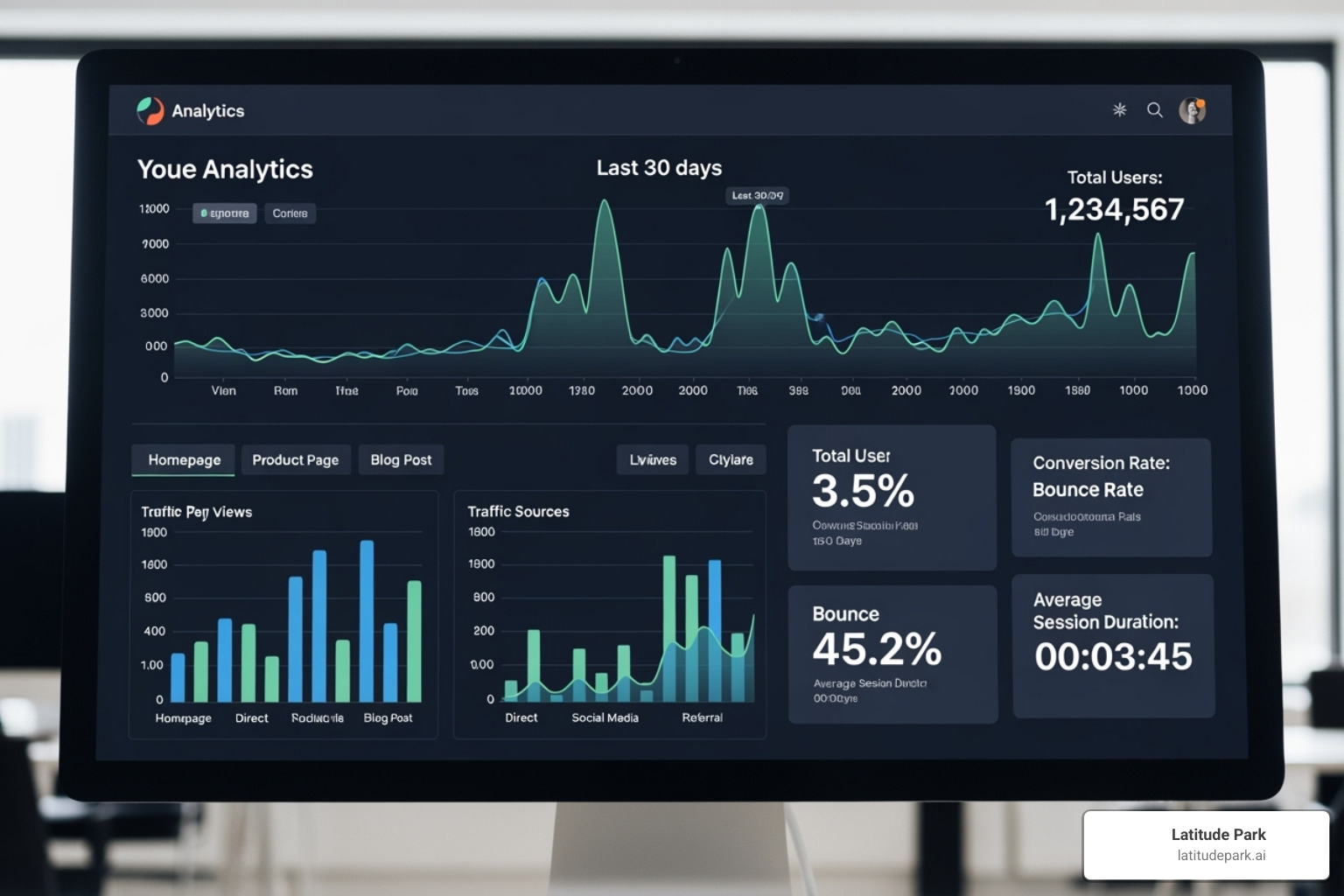
By monitoring these metrics, you can make data-driven decisions to continuously improve your SEO strategy.
Must-Have Tools and Learning Resources
You don’t need expensive tools to start with search engine optimization. Some of the best resources are free.
Essential Tools:
- Google Analytics: Provides detailed data on your website traffic: where visitors come from, what pages they view, and how they behave.
- Google Search Console: Your direct line to Google. It shows you which queries bring users to your site and alerts you to technical issues.
- Keyword Research Tools: Google’s Keyword Planner is a solid free option for finding search terms and volume.
- Backlink Analysis Tools: Help you analyze your backlink profile and see who is linking to your competitors.
Essential Learning Resources:
- Google Search Essentials: Outlines exactly what Google looks for in high-quality websites.
- Google’s SEO starter guide: A comprehensive, easy-to-understand introduction to SEO fundamentals.
- Search Quality Evaluator Guidelines: A deep dive into how Google’s human raters assess content quality.
For budget-conscious businesses, we’ve also compiled a list of effective Small Business SEO Tools.
Frequently Asked Questions about SEO
After helping hundreds of businesses with search engine optimization, we’ve found that the same questions often arise. Here are answers to the most common ones.
How long does it take to see results from SEO?
The honest answer: most businesses start seeing meaningful results within 3-6 months. SEO is a long-term strategy that builds momentum over time. In the first few months, we focus on foundational work. By months four to six, you should see significant improvements in rankings and organic traffic. The results compound over time, making it a powerful and sustainable investment. For new websites or highly competitive industries, it may take longer.
Can I do SEO myself, or should I hire an expert?
Yes, you can do SEO yourself. With many free resources available, it’s possible to learn the fundamentals. DIY SEO works best if you have the time to learn and your business is not in a highly competitive market.
However, hiring an expert makes sense when you want to focus on running your business, you’re in a competitive space, or you need results faster. An agency brings expertise and dedicated resources to accelerate your growth. The decision often comes down to a time vs. cost calculation. If you’re unsure, consider these Top 10 Signs You Need to Hire an SEO Agency.
Is SEO a one-time project?
No, SEO is absolutely not a one-time project. It’s an ongoing process that requires consistent attention for several key reasons:
- Search engines constantly evolve their algorithms.
- Your competitors are always working to improve their rankings.
- Your business changes with new products, services, or locations.
- User behavior shifts with new technology and trends.
Treating search engine optimization as a continuous process of improvement is the only way to achieve and maintain long-term success. Unlike paid ads, the value you build with SEO is lasting.
Conclusion: Start Your SEO Journey Today
You now have a solid foundation in search engine optimization. The key to modern SEO is simple: focus on providing genuine value to your users. A helpful, fast, and secure website that builds authentic relationships online is exactly what search engines want to reward. It’s not about gaming the system; it’s about being the best answer to your customers’ questions.
Think of search engine optimization as a long-term investment in your digital future. The visibility you build through SEO compounds over time, driving customers to your business for years to come. For franchise businesses, this provides a scalable and cost-effective way to capture local search traffic for every location.
At Latitude Park, we understand that SEO is the backbone of a comprehensive digital strategy. While known for our Meta advertising expertise, we create custom marketing plans that address the unique challenges of multi-location businesses. We ensure each franchise can thrive in its local market while building overall brand authority.
The best time to start your SEO journey was yesterday. The second best time is today. Your future customers are searching for you right now—make sure they can find you.
Ready to take your franchise’s digital presence to the next level? Learn more about our expert SEO services and find how we can help you build lasting online success.