
The Secret Sauce for Marketing Your Franchise Opportunity to Investors
Why Marketing a Franchise Opportunity Is Nothing Like Marketing to Customers
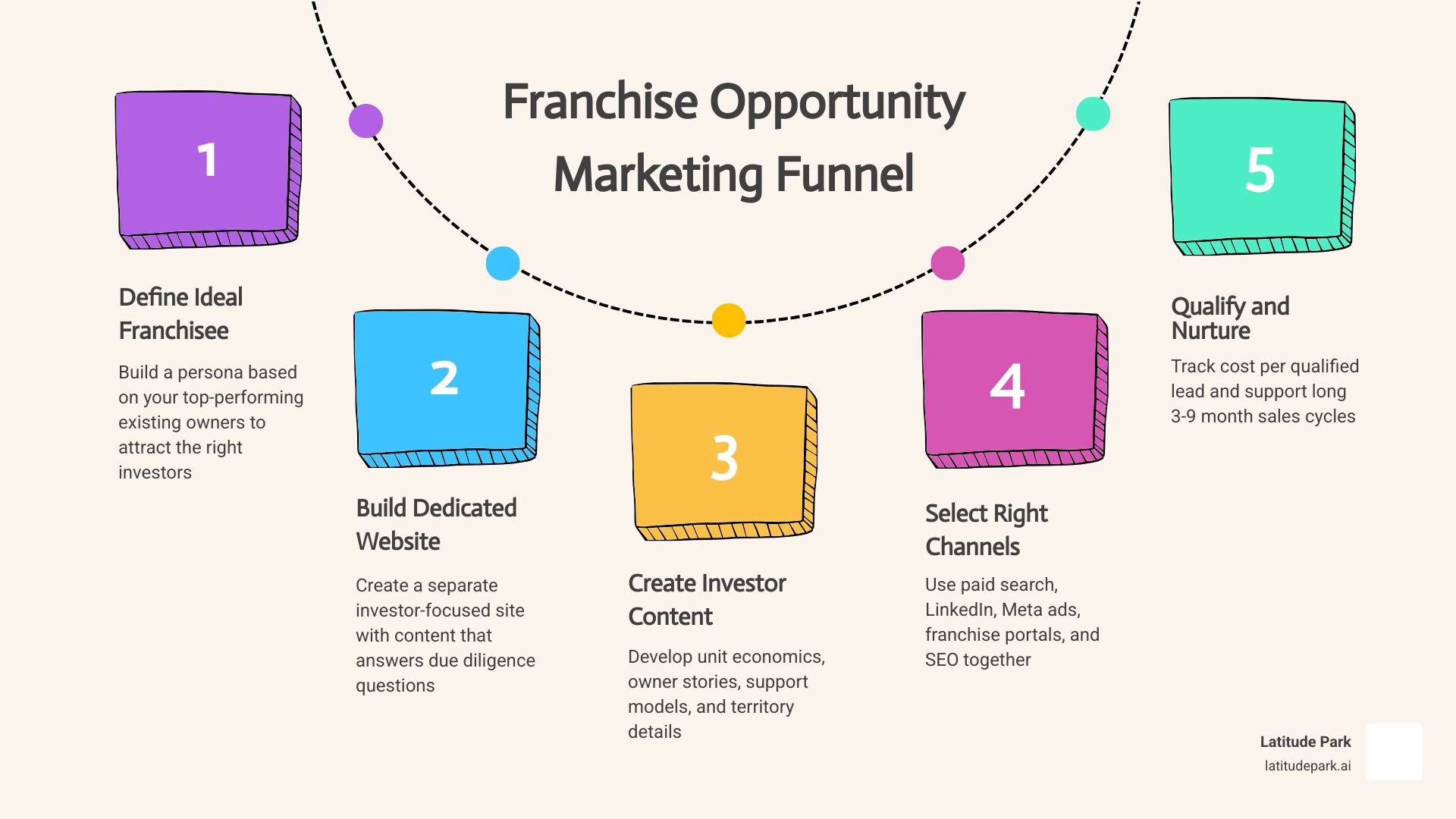
If you want to know how to market a franchise opportunity, here is the short answer:
- Define your ideal franchisee — build a persona based on your top-performing existing owners
- Build a dedicated franchise development website — separate from your consumer site, built to convert investors
- Create content that answers investor questions — unit economics, support model, territory details, owner stories
- Choose the right channels — paid search, LinkedIn, Meta ads, franchise portals, and SEO working together
- Qualify leads, don’t just collect them — track cost per qualified lead, not just cost per click
- Nurture long sales cycles — most franchise deals take 3 to 9 months from first inquiry to signed agreement
- Measure what matters — cost per application, discovery call rate, and franchise acquisition cost
More than 800,000 franchise locations now operate across the United States. Hundreds of new concepts enter the market every year. The competition for qualified investors is fierce.
Yet most franchisors are still marketing their opportunity the same way they market to customers — broad messaging, high volume, low qualification. It doesn’t work. The prospects who actually sign agreements are not impulse buyers. They are executives, operators, and investors running a months-long due diligence process. They need a completely different strategy.
Getting this wrong is expensive. Not just in wasted ad spend, but in lost time chasing leads who were never going to convert.
I’m Rusty Rich, President and founder of Latitude Park, a full-service digital advertising agency, and I’ve spent years helping franchisors build smarter, more scalable strategies for how to market a franchise opportunity — from campaign architecture to lead qualification systems. This guide gives you the same framework we use with growing franchise brands.
Discover more about how to market a franchise opportunity:
What Franchise Marketing Really Means for Investors
Franchise marketing has two jobs at once:
- Bring in customers for franchise locations
- Recruit the right people to buy the franchise opportunity
That second job is what many brands underestimate. Investor recruitment is not consumer promotion with a different headline slapped on top. It is closer to B2B marketing mixed with a consultative sales process.
A customer may decide in minutes. A franchise buyer may spend months comparing models, reviewing the FDD, speaking with existing owners, checking financial fit, and discussing the decision with family or business partners. That means your marketing needs to create trust, answer hard questions, and support a longer decision cycle.
How to Market a Franchise Opportunity Without Confusing Buyers and Customers
One of the fastest ways to tank conversions is mixing consumer messaging with investor messaging.
If your site says “Book your service today” on every page, but you also want someone to invest six figures, you are forcing two very different audiences into one hallway. It gets crowded. It gets awkward. Nobody knows which door to open.
A better approach is a separate franchise development experience:
- A dedicated franchise microsite or section
- Messaging aimed at ownership, not purchase
- Lead forms built for candidate qualification
- Content focused on investment, support, territory, and operations
This is why a separate franchise website usually outperforms a general consumer site for lead capture. Different audience, different objections, different CTA.
Why Franchise Marketing Differs From Traditional Consumer Marketing
Traditional marketing usually targets one buyer group. Franchise marketing has more moving parts:
- Corporate stakeholders
- Existing franchisees
- Prospective franchisees
- Local market realities
- Brand standards and compliance requirements
It also lives in a legal context. Serious candidates expect transparency around training, support, fees, and the broader franchise model. The FTC disclosure process matters. So does the ability to qualify candidates before your sales team spends hours on the wrong people.
In short, franchise opportunity marketing is not just lead generation. It is lead generation plus qualification, education, and sales enablement.
Define the Ideal Franchisee Before You Spend a Dollar
Before you launch ads, write copy, or sponsor a webinar, define who you actually want to recruit.
That means more than age and income. You need to understand:
- Operator vs semi-absentee investor
- Single-unit vs multi-unit potential
- Liquidity and net worth requirements
- Leadership style
- Industry background
- Territory fit
- Motivation for ownership

Build Personas From Your Best Existing Franchisees
Your best franchisee personas should come from evidence, not wishful thinking.
Look at your top-performing owners and ask:
- What careers did they come from?
- What made them choose franchising?
- Were they first-time owners or experienced operators?
- What traits helped them ramp faster?
- Who expanded into multiple units?
Use CRM data, interviews, validation calls, and performance trends to identify common patterns. Sometimes the best candidate is not the person who loves your product most. It is the person with the strongest operational discipline, team-building ability, and financial runway.
Qualify for Fit, Not Just Volume
A pile of leads is not a strategy. It is a spreadsheet with trust issues.
The better goal is qualified leads. That means using filters, forms, and lead scoring to sort serious candidates from casual browsers. Track:
- Cost per qualified lead
- Cost per application
- Discovery call rate
- Lead-to-application rate
- Franchise acquisition cost
Also define disqualification criteria early:
- No financial fit
- Wrong market expectations
- Poor timeline alignment
- Weak operator profile
- No territory availability
This is why we recommend building nurture flows for early-stage prospects instead of forcing every lead into an immediate sales conversation. For a smart deep dive on this quality-over-volume approach, read Franchise Lead Generation: Attract Better Candidates.
Build a Franchise Opportunity Funnel That Converts
A strong franchise funnel should guide a prospect from “interesting idea” to “I want a discovery call” without making them dig for basic answers.
That funnel usually includes:
- Search or social entry point
- Dedicated landing page
- Qualification form
- Email nurture sequence
- Webinar or video content
- Discovery call booking
- Ongoing follow-up
The Website Pages Every Franchise Opportunity Needs
Your franchise development site should answer investor questions quickly and clearly. At minimum, include:
- Investment overview
- Brand story and positioning
- Training and support details
- Territory model
- Ideal candidate profile
- Franchise process and timeline
- FAQs
- Inquiry or application CTA
- Separate lead forms from your consumer site
Here is a simple comparison:
| Consumer Website | Franchise Development Website |
|---|---|
| Targets buyers of the product or service | Targets buyers of the business opportunity |
| Focuses on offers, locations, bookings | Focuses on investment, support, and fit |
| CTA: buy, book, call, order | CTA: inquire, qualify, apply, schedule discovery |
| Short decision cycle | Long decision cycle |
| Product proof | Business proof |
Content That Answers Investor Questions Before the Discovery Call
Great franchise content reduces friction before your sales team gets involved.
Useful content includes:
- Owner stories and interviews
- Timeline from inquiry to opening
- Day-in-the-life content
- Training and onboarding breakdowns
- Market and territory explanations
- Support model details
- Due diligence checklists
- High-level unit economics where appropriate and compliant
SEO matters here too. Long-tail pages targeting questions like “how to choose the right franchise model” or “what support should a franchisor provide” can bring in highly relevant traffic over time.
For a broader framework, see our Franchise Marketing Ultimate Guide.
Trust and Credibility Signals That Reduce Buyer Risk
Prospective franchisees are not just buying upside. They are trying to reduce downside.
Your marketing should include trust signals like:
- Transparent explanation of the process
- Clear support and training details
- Leadership visibility
- Franchisee validation opportunities
- Media mentions or industry recognition
- Professional creative and site design
- Consistent brand presentation
Buyers also notice what is missing. If your opportunity pages are vague, outdated, or impossible to navigate, they assume your operations may be too.
Use the Right Channels to Generate Qualified Franchise Leads
No single channel wins by itself. The best results usually come from a channel mix built around intent.

How to Market a Franchise Opportunity With SEO and Content Marketing
SEO helps you capture demand from prospects already researching ownership. Content marketing helps you create demand by answering the exact questions serious candidates ask.
Focus on:
- Long-tail SEO clusters around franchise ownership questions
- Educational blog content
- Franchise-specific landing pages
- Comparison and due diligence content
- FAQ schema and structured answers for AI search visibility
This is one of the most durable ways to grow qualified pipeline because content compounds over time. Paid campaigns stop when spend stops. Strong content keeps working.
For more practical ideas, read 10 Proven Ways to Market Your Franchise Like a Pro.
How to Market a Franchise Opportunity With Paid Social and Search
Paid search is excellent for high-intent demand capture. If someone is searching terms related to franchise investment, they are raising their hand.
Paid social, especially Meta, works differently. It helps you reach qualified audiences before they actively search, which is powerful for emerging brands or categories that need awareness and education.
At Latitude Park, this is where we spend a lot of our time: building Meta campaign structures that fit the complexity of multi-location franchise businesses. That includes:
- Geo-targeting by territory
- Creative variations by audience segment
- Separate campaigns for awareness, retargeting, and conversion
- Clean lead routing and tracking
- Protection against territory overlap
Google Ads and Meta work best together:
- Google captures intent
- Meta creates and nurtures it
- Retargeting reconnects with interested prospects
If you want to explore this channel mix further, see our Franchise Digital Advertising Services for Brands That Want to Rule the Web.
Which Channels Work Best for High-Intent vs Early-Stage Prospects
Different channels serve different jobs:
High-intent channels:
- Google Search
- Branded search campaigns
- Retargeting
- Direct referral traffic
- Email sequences to active leads
Early-stage or discovery channels:
- Meta ads
- LinkedIn targeting
- Educational webinars
- Franchise portals
- PR and business media placements
- Industry newsletters
Franchise portals can still play a role, but often as an awareness layer rather than your best-closing lead source. Webinars and nurture campaigns are especially useful because many buyers need time. According to research cited in franchise lead generation guides, many franchise deals take 3 to 9 months from inquiry to signature.
For another take on blending corporate lead funnels and franchise growth tactics, read Mastering Franchise Growth Through Savvy Marketing.
Balance National Brand Marketing With Local Franchisee Marketing
This is one of the biggest franchise marketing challenges: how do you maintain a consistent brand while letting local markets feel local?
The answer is structure.
A good rule of thumb is the 70/30 model:
- 70% standardized brand assets and messaging
- 30% localized execution and community relevance
What Corporate Should Control and What Franchisees Should Customize
Corporate should control:
- Brand voice
- Design standards
- Core messaging
- Approved claims
- Campaign templates
- Compliance guardrails
- Reporting standards
Franchisees should customize:
- Local community content
- Market-specific promotions where allowed
- Local partnerships
- Event participation
- Regional creative variations within brand rules
This helps avoid chaos without making every location sound like a robot with a logo. For more on local execution, read our Franchise Local Marketing Guide 2026.
Budgeting and Campaign Structure for Multi-Location Franchise Growth
Most franchise systems split spending between national and local marketing. Research commonly places:
- National marketing funds around 2% to 4% of gross revenue
- Local marketing requirements around 1% to 3% of gross revenue
The exact split depends on growth stage, territory goals, and brand maturity. But the important part is this: budget should match objectives.
If you want franchise recruitment growth, dedicate budget to:
- Development website improvements
- Paid search and social
- Content creation
- CRM and nurture automation
- Reporting and attribution
If you want stronger local demand generation too, map budgets separately so franchise development and consumer campaigns do not cannibalize each other.
For more practical planning help, visit Franchise Marketing Budget Tips.
Multi-Location Meta Campaign Structures That Scale Cleanly
Multi-location franchise advertising gets messy fast without a clean campaign hierarchy.
We recommend structuring Meta campaigns around:
- Objective by funnel stage
- Geography by territory or market cluster
- Audience by candidate type
- Creative templates for consistent testing
- Separate remarketing pools
- Clear lead routing rules
This protects territory integrity, improves reporting, and makes scaling far easier. It is also one of the biggest reasons franchise brands need more than generic social ad management. Multi-location systems have layers that single-location businesses simply do not.
Measure ROI and Choose the Right Franchise Marketing Partner
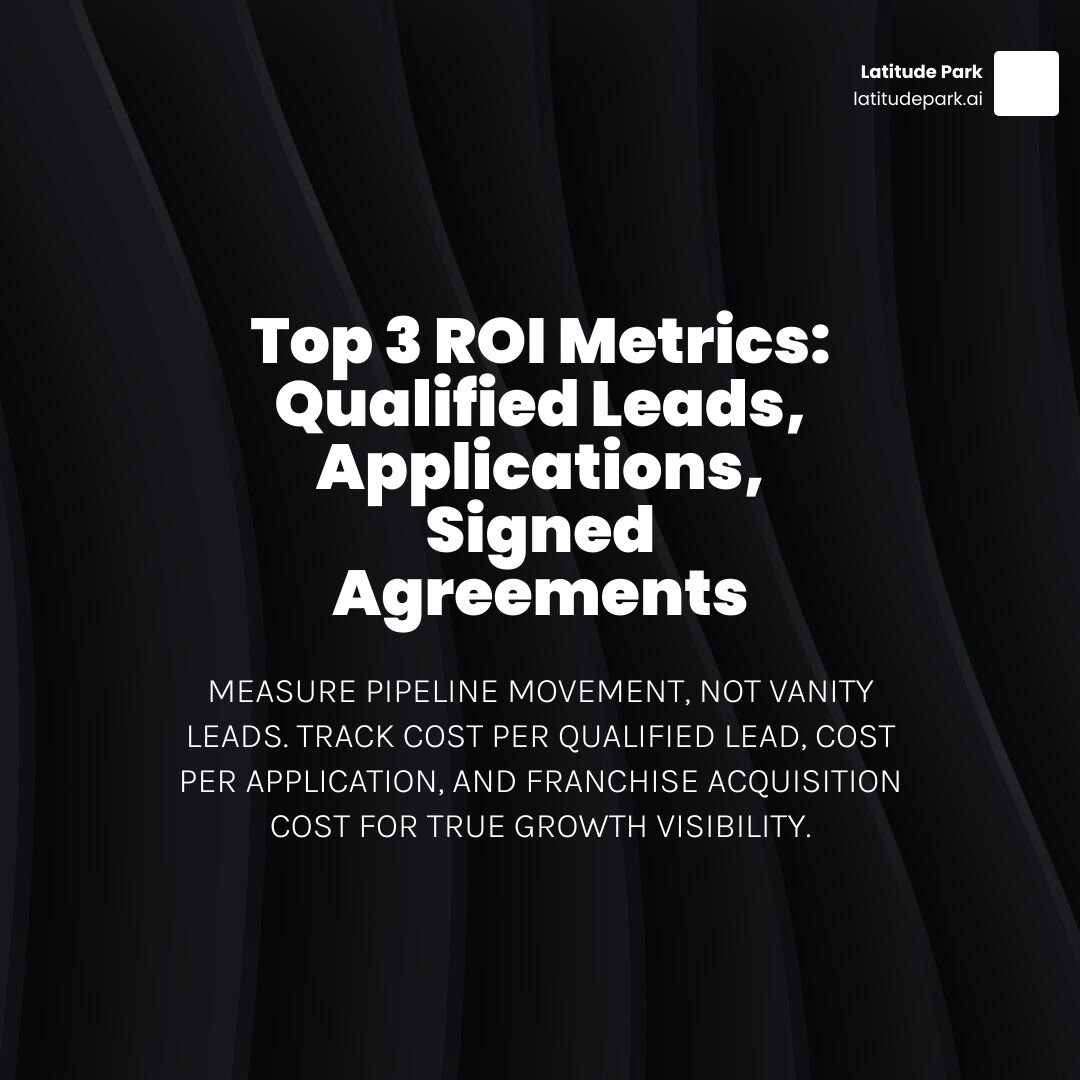
If you only measure leads, you will optimize for cheap names instead of real buyers.
The better question is: which channels produce qualified candidates who move through the pipeline and sign agreements?
The Metrics That Actually Matter in Franchise Opportunity Marketing
Track these metrics closely:
- Cost per qualified lead
- Cost per application
- Discovery call booking rate
- Application-to-award rate
- Franchise acquisition cost
- Sales cycle length
- Payback period on marketing spend
We also recommend reviewing attribution with some humility. Last-click data rarely tells the full story. A prospect may first discover you through Meta, return through organic search, attend a webinar, and convert through a branded search ad.
Best Practices for Hiring a Franchise Marketing Agency or Building In-House
Whether you hire an agency or build internally, use these vetting criteria:
- Experience with franchise systems, not just general small business marketing
- Ability to separate franchise development from consumer marketing
- Strong paid media and SEO capability
- CRM integration and lead routing knowledge
- Reporting cadence and dashboard clarity
- Creative testing process
- Understanding of compliance and approval workflows
- Experience with multi-location campaign structure
If you are comparing support options, our Franchise Digital Marketing Services page explains how we approach strategy, execution, and measurement for franchise brands.
Frequently Asked Questions About How to Market a Franchise Opportunity
What is the biggest mistake franchisors make when marketing a franchise opportunity?
The biggest mistake is chasing lead volume instead of lead quality.
That usually shows up as:
- Generic “be your own boss” messaging
- One-size-fits-all landing pages
- No qualification filters
- Blended consumer and investor campaigns
- Reporting based only on CPL
The result is a full pipeline that does not close.
How long does it take to generate qualified franchise leads?
Qualified leads can start coming in quickly, but signed agreements usually take longer. A common franchise recruitment cycle is 3 to 9 months from first inquiry to signature, depending on investment level and buyer readiness.
That is why speed to lead, follow-up quality, and nurture sequences matter so much.
Should a franchise opportunity have its own website?
Yes, in most cases it should.
A dedicated franchise development site or microsite gives you:
- Separate messaging
- Better qualification forms
- Investor-focused content
- Cleaner analytics
- Higher conversion potential
It is one of the clearest upgrades a franchisor can make when learning how to market a franchise opportunity effectively.
Conclusion
Marketing a franchise opportunity well is not about shouting louder. It is about building a smarter system.
When we help brands improve how to market a franchise opportunity, we focus on the basics that actually move the needle:
- Clear franchisee personas
- Investor-ready messaging
- A dedicated conversion funnel
- Multichannel lead generation
- Strong qualification
- Clean reporting tied to revenue outcomes
The franchise industry is big business. The global franchise market was valued at $497.6 billion in 2020 and was projected to reach $581.7 billion by 2025. At the same time, digital advertising has become a massive category of spend, with businesses investing heavily online to compete for attention. In 2026, that means your strategy needs to be both precise and scalable.
If you want help building a franchise marketing system that attracts better candidates instead of just more clicks, explore our latest resources in the franchise marketing category.