
Why You Need to Manage Online Reviews (And Which Tools Do It Best)
Manage online reviews effectively by using the right combination of platforms, response strategies, and software. Here’s a quick overview of the top solutions:
| Solution Type | Best For | Key Benefit |
|---|---|---|
| Google Business Profile | All business types | Free, high-visibility reviews |
| Birdeye | Multi-location businesses | Aggregates 150+ review sites |
| Podium | Local & franchise businesses | SMS-based review requests |
| ReviewTrackers | Enterprise & franchises | Centralized analytics & alerts |
| Yotpo | eCommerce brands | Purchase-triggered review automation |
| Trustpilot | B2C & retail brands | High consumer trust signals |
Think about the last time you chose a restaurant, hired a contractor, or bought something online. Chances are, you checked the reviews first.
Your customers do the same — and so do theirs.
The numbers tell the full story: 93% of consumers say online reviews directly influence their purchasing decisions. And 85% treat those reviews with the same trust they’d give a recommendation from a close friend or family member.
For franchise marketing managers, this creates both a challenge and an opportunity. You’re not managing one reputation — you’re managing many. Inconsistent responses, ignored complaints, or a string of unanswered one-star ratings at even a single location can drag down the brand as a whole.
The good news? The right tools and strategies make it possible to stay on top of reviews at scale — without it becoming a full-time job.
I’m Rusty Rich, President of Latitude Park, a full-service digital advertising agency, and I’ve spent years helping franchises and growing businesses build stronger online reputations by learning how to manage online reviews strategically across multiple locations. In this guide, I’ll walk you through the best solutions available so you can find the right fit for your brand.
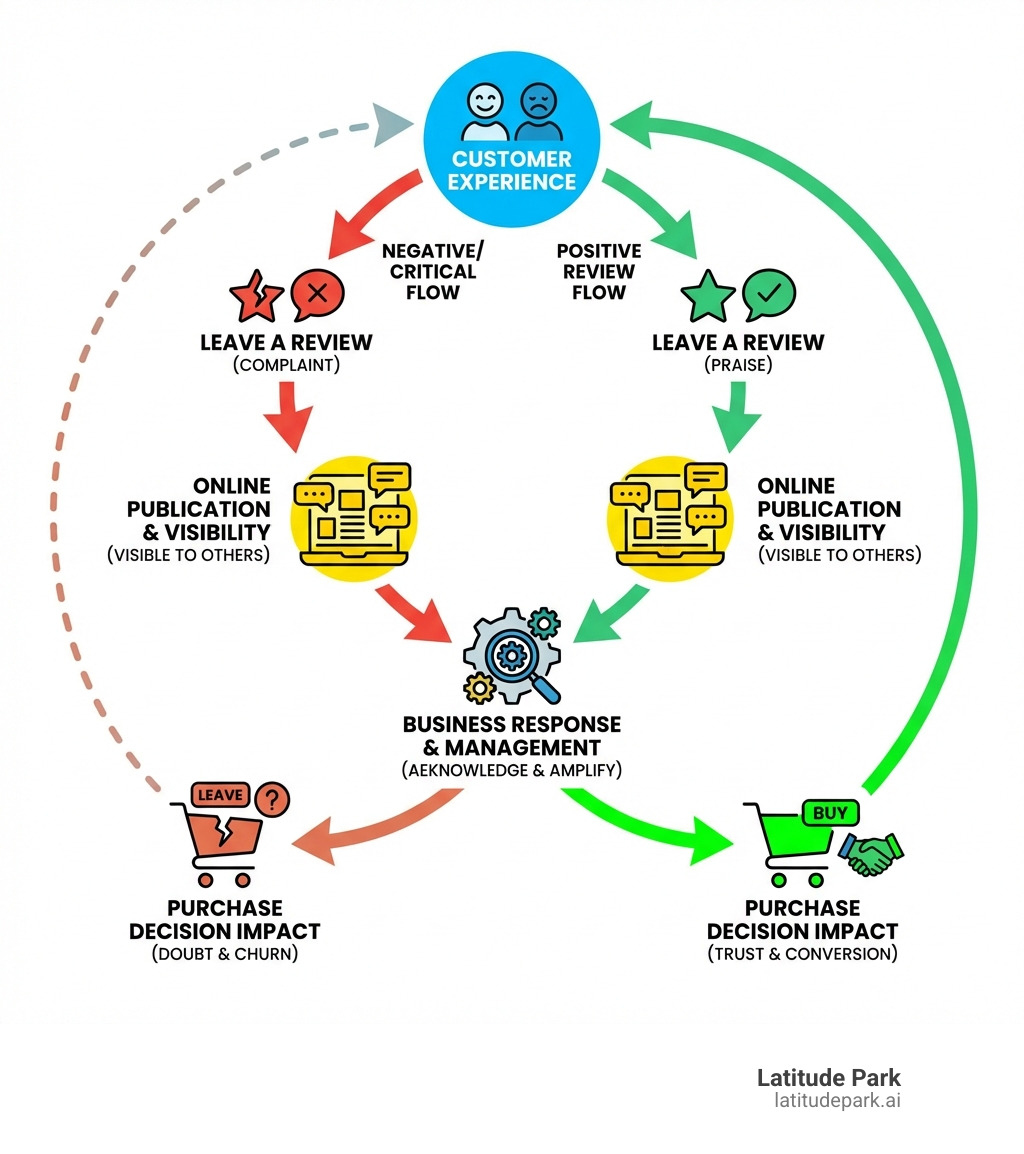
Manage online reviews terms simplified:
The Business Impact of Active Review Management
If you think ignoring that one grumpy review from three years ago is harmless, we have some tough news. Research shows that 95% of customers will spread the word when a business interaction goes poorly. Contrast that with the fact that only 47% of people proactively share a positive experience, and you can see why the scales are naturally tilted against you.
When we actively manage online reviews, we aren’t just doing “damage control.” We are building a customer-obsessed organization. Reviews are the modern word-of-mouth, and their impact on your bottom line is measurable.
Revenue and Acquisition
The financial difference between a mediocre rating and an excellent one is staggering. Customers tend to spend 30% more money at businesses with “excellent” reviews. Furthermore, 63% of consumers are willing to pay up to 15% more if they are convinced they will receive a better experience from a highly-rated company.
| Metric | 3-Star Rating Impact | 5-Star Rating Impact |
|---|---|---|
| Purchase Probability | Lower; 86% of shoppers hesitate | 270% increase (with just 5 reviews) |
| Customer Trust | Only 49% will use the business | 75% of consumers trust the company |
| Annual Sales Risk | One bad review: $750 – $3,000 loss | Maximum conversion potential |
| Consumer Preference | 60% avoid the business | 82% convinced to purchase |
Brand Loyalty and SEO
Beyond the immediate sale, managing your reputation fosters long-term brand loyalty. When customers see a business engaging with feedback, they feel valued. This engagement also serves as a powerful signal to search engines.
Online reviews impact your Local SEO significantly. Google looks for “signals” that your business is prominent and trustworthy. A high volume of fresh, positive reviews combined with active responses tells Google that your business is relevant, helping you climb the local search rankings. If you neglect this, you aren’t just losing customers; you’re losing visibility.
To dive deeper into the “why” behind these numbers, check out our article: Are Online Reviews Important? Yes, and Here’s Why.
Where to Focus: Choosing the Right Review Platforms
Not all review platforms are created equal. Depending on your industry, a five-star rating on one site might be worth ten on another. To manage online reviews effectively, we recommend a tiered approach.
1. Cross-Sector Giants
These are the heavy hitters that apply to almost every business.
- Google Business Profile: This is the most critical platform for local search. Reviews here appear directly in Google Maps and Search results.
- Yelp: While often associated with restaurants, Yelp is a major player for all local services. Interestingly, Yelp requires business owners to use a real photo before messaging customers, emphasizing its focus on human connection.
2. Sector-Specific Platforms
Industry-specific sites often carry more weight with “high-intent” researchers.
- Travel & Hospitality: TripAdvisor features over 8 million businesses.
- Home Services: Platforms like Angi or specialized trades directories.
- B2B & Software: G2, Capterra, and TrustRadius.
3. Social Media and Marketplaces
Social media has shifted how people give feedback. Facebook, for instance, has moved from star ratings to a “recommendation” system (Yes/No). Knowing how to manage reviews on Facebook is essential because it’s where your customers are already hanging out.
For brands selling products, online marketplaces like Amazon are the primary battleground. Having just five reviews on a product increases the probability of a sale by 270% compared to products with no reviews.
Claiming Your Presence
The first step is to claim your profiles. Many businesses have “unclaimed” listings created automatically by the platform or by a customer. If you don’t claim them, you can’t respond. We suggest performing a “social footprint” audit to find where your brand is being discussed.
Proven Strategies to Manage Online Reviews Effectively
You’ve claimed your profiles. Now, how do you actually handle the influx of feedback? Successful brands don’t just “wing it”; they follow a proactive strategy.
The Power of the Response
A landmark Harvard Business Review study analyzed tens of thousands of hotel reviews and found that hotels that respond to reviews receive 12% more reviews overall, and their average ratings increase by 0.12 stars.
Best Practices for Responding:
- Be Prompt: Aim to respond within 24-48 hours. This shows you are attentive.
- Stay Polite: As Google Business Support advises, never get personal or defensive. Even if the reviewer is being unfair, your response is for the future customers reading the exchange.
- Personalize It: Use the reviewer’s name and recap their specific points. Avoid robotic, “cookie-cutter” replies.
- Take it Offline: For complex complaints, provide a direct contact method (email or phone) to resolve the issue privately.
Handling Negative Feedback
Negative reviews aren’t the end of the world. In fact, a mix of positive and negative feedback can actually make your brand look more trustworthy. The key is how you handle it.
- Investigate: Talk to your team to find out what actually happened.
- Apologize: Even if you aren’t “wrong,” you can apologize for the customer’s experience.
- Show Action: Tell the customer (and the public) what you are doing to fix the problem.
For a deeper dive into Google-specific strategies, see our Google Reviews Management Complete Guide.
Proactive Review Generation
Don’t wait for reviews to happen; make them happen. Remind your customers to leave feedback via:
- Direct Links/QR Codes: Google allows you to create a link specifically for review requests.
- Post-Purchase Emails: Automate requests to go out shortly after a service is completed.
- Incentives Policy: Be careful here! Google strictly prohibits offering free goods or discounts in exchange for reviews. This is considered “fake engagement” and can get your profile suspended. Instead, focus on why you should always encourage user reviews based on the quality of your service.
Essential Features of Review Management Software
For a single-location boutique, manual management is possible. For a franchise with 50 locations? It’s a nightmare. This is where software for online review management becomes a lifesaver.
When choosing a tool to manage online reviews, look for these key features:
1. Centralized Dashboard
You shouldn’t have to log into ten different sites. A good tool aggregates reviews from Google, Facebook, Yelp, and industry sites into one place.
2. Sentiment Analysis and Business Intelligence
Advanced tools use AI to scan your reviews for trends. Are people complaining about the wait time at your Chicago location? Is the staff in Dallas getting rave reviews? This Digital Reputation Management provides actionable insights that can improve your actual operations.
3. Automation and Triggers
Software can automatically send review requests via SMS or email the moment a transaction is closed. This “strike while the iron is hot” approach significantly boosts review volume.
4. Multi-Location Reporting
For franchises, you need to see the big picture and the granular details. You should be able to compare the reputation of different regions or individual franchisees to identify who needs more support.
Check out our Online Review Management Complete Guide for a full breakdown of how to integrate these tools into your workflow.
Common Questions About Online Reputation
What is a “good” rating when you manage online reviews?
While we all strive for 5.0, a “perfect” score can actually raise eyebrows. Consumers often find a rating between 4.0 and 4.5 stars to be the most trustworthy. It suggests that the business is real and that the reviews are authentic.
However, keep in mind that 49% of consumers won’t even consider a business with less than a four-star rating. If you’re sitting at a 3.8, you are likely losing half of your potential local traffic. For more on this, read What Are the Benefits of Online Reviews.
How should businesses handle fake feedback as they manage online reviews?
Fake reviews are a reality of the digital age. If you spot a review that violates platform policies (e.g., profanity, spam, or a conflict of interest), you can report it for removal.
On Google, you can use the Reviews Management Tool to flag inappropriate content and even appeal a decision if your initial request is denied. Google won’t remove a review just because you disagree with it; it must violate their specific content policies.
How do reviews impact search engine optimization?
Reviews are a massive “credibility signal” for SEO.
- Keyword Relevance: When customers mention specific products or services in their reviews, it helps you rank for those keywords.
- Click-Through Rate (CTR): A higher star rating makes your listing more attractive, leading to more clicks, which tells search engines your result is high-quality.
- Freshness: Frequent new reviews tell Google your business is active and operational.
Conclusion
In the modern marketplace, your brand isn’t what you say it is — it’s what your customers say it is. Learning to manage online reviews is no longer optional; it is a core component of business growth and risk mitigation.
At Latitude Park, we specialize in helping multi-location franchises navigate these complexities. We understand that managing a reputation across dozens of cities requires a strategic, data-driven approach. By combining the right software with a proactive response culture, you can turn your customer feedback into your greatest competitive advantage.
Ready to take control of your brand’s digital presence? Explore our Review Management Ultimate Guide or request a reputation management consultation with our team today. We’ll help you build a strategy that ensures your five-star secrets are heard loud and clear.