When you run a small business, your online reputation isn't just a marketing buzzword—it's the active, ongoing process of shaping how the public sees you. This means monitoring online chatter, responding to feedback, and intentionally building a positive digital footprint. It's not about playing defense; it’s about proactively building an image that customers trust and that drives real revenue. For example, a local restaurant owner who regularly checks Google reviews and thanks customers for their feedback is practicing reputation management, just as much as a large corporation with a dedicated PR team.
Why Your Online Reputation Is Your Most Valuable Asset

Let's be real. A strong reputation isn't just a "nice-to-have" anymore. It's a direct line to your bottom line. For most potential customers, your digital presence is their first—and sometimes only—interaction with your brand. Think of it as your modern-day storefront window.
Imagine a local bakery that sees a 20% sales dip after a handful of negative reviews go unanswered. Now, picture a competitor down the street who actively engages with all feedback, both good and bad, and builds a loyal, growing community around their brand. The product might be similar, but the perception shaped online makes all the difference. That second baker isn't just selling pastries; they're selling trust.
The Financial Impact of Digital Perception
Your online reputation directly impacts your bank account. It's that simple. Today's customers lean heavily on reviews and search results to decide where to spend their money, influencing everything from foot traffic to e-commerce sales. Ignoring this is like leaving your front door unlocked for competitors to stroll right in. A practical insight is that even a half-star improvement in your average rating on a platform like Yelp can lead to a measurable increase in peak-hour bookings for a restaurant.
This tight link between perception and profit is why proactive small business online reputation management has become a core business function. It's no longer a task you can push to the side; it’s an essential activity for survival and growth.
The numbers are pretty stark: a staggering 93% of consumers say online reviews influence whether they trust and ultimately choose a brand. On top of that, 74% will ditch a purchase if they find negative content on the first page of search results.
This shows that what people find online has immediate, tangible financial consequences. For a deeper dive into the foundational role of your digital presence, this article on the critical importance of online reputation for businesses is a great read.
From Passive Awareness to Active Strategy
Many small business owners mistakenly think old-school public relations is the same as reputation management, but there’s a massive gap between the two. Shockingly, only 17% of businesses have an active online reputation management (ORM) plan. The rest are still relying on older, less direct methods, which creates a huge opportunity for those of us willing to engage.
The goal is to shift from a reactive, "uh-oh" stance to a proactive one. Instead of waiting for a bad review to send you scrambling, you should be building a foundation of trust so solid that it can easily weather the occasional bit of criticism. For instance, a proactive strategy involves asking every satisfied customer for a review, thereby building a "cushion" of positive feedback. This transforms your online presence from a potential liability into your most powerful asset.
For some great ideas on how to get started, check out these effective strategies for building and managing your brand's online reputation.
Building Your Foundational Monitoring System
You can't manage what you don't measure. So, the very first move in taking control of your small business online reputation management is to set up a simple but effective listening post. This doesn't mean you need to shell out for expensive software or hire a dedicated team; it just takes a bit of consistency and a couple of free tools.
Your goal is to know what people are saying about you online, as soon as they say it.
The cornerstone of this whole system is what I call the "15-Minute Daily Reputation Check." It’s a quick routine that keeps you in the loop without swallowing your entire morning. A practical example is starting your day by opening three tabs: your Google Business Profile, your Facebook page, and your email inbox with alerts. This habit ensures you're never caught off guard.
Setting Up Your Keyword Alerts
The easiest place to start is with Google Alerts. It's a free service that shoots you an email whenever it finds new search results—like news articles, blog posts, or forum discussions—that contain keywords you've told it to watch. Think of it as your digital smoke detector.
To get going, you'll want to create alerts for a few key things:
- Your Business Name: This one's obvious, but absolutely essential. (e.g., "Main Street Cafe")
- Common Misspellings: Don't forget how customers might get it wrong. (e.g., "Mainstreet Caffe")
- Your Name: Especially if you're the face of your business. (e.g., "Jane Doe")
- Key Product or Service Names: This is crucial if they are unique to your brand. (e.g., "Main Street's Signature Roast")
As you can see in the image above, setting up these alerts is a breeze. The interface lets you pop in your search term, see a preview of what kind of results to expect, and decide how often you want to get notifications. This simple setup ensures you're automatically in the know about new mentions across the web.
The Power of Proactive Monitoring
Let's talk about how this plays out in the real world. I once worked with a freelance photographer who set up alerts for her name, her business name, and a common typo of her business name. For weeks, it was crickets. Then, one morning, an alert popped up. A local lifestyle blogger had written a glowing feature about her recent work—something she never would have seen otherwise.
By discovering this positive mention almost immediately, she was able to thank the author publicly and share the article across her own social media channels. This transformed a passive mention into a powerful marketing moment, driving new inquiries and reinforcing her brand's credibility.
This little story gets to the heart of why monitoring is so important. It’s not just about catching the bad stuff; it’s about amplifying the good. A key insight is that the speed of your response matters. A quick thank-you makes the person who mentioned you feel valued and more likely to do so again.
Expanding Your Listening Tour
Beyond Google Alerts, your monitoring system needs to include your primary social media platforms. Most have built-in notification systems that ping you for tags, mentions, and comments. Get into the habit of quickly scanning these notifications every day. A practical tip is to turn on push notifications for your business apps during work hours so you can see mentions in real-time.
This simple mix of automated web alerts and manual social checks forms a solid, foundational monitoring system that puts you firmly in control of your online story.
Mastering the Art of Online Review Management
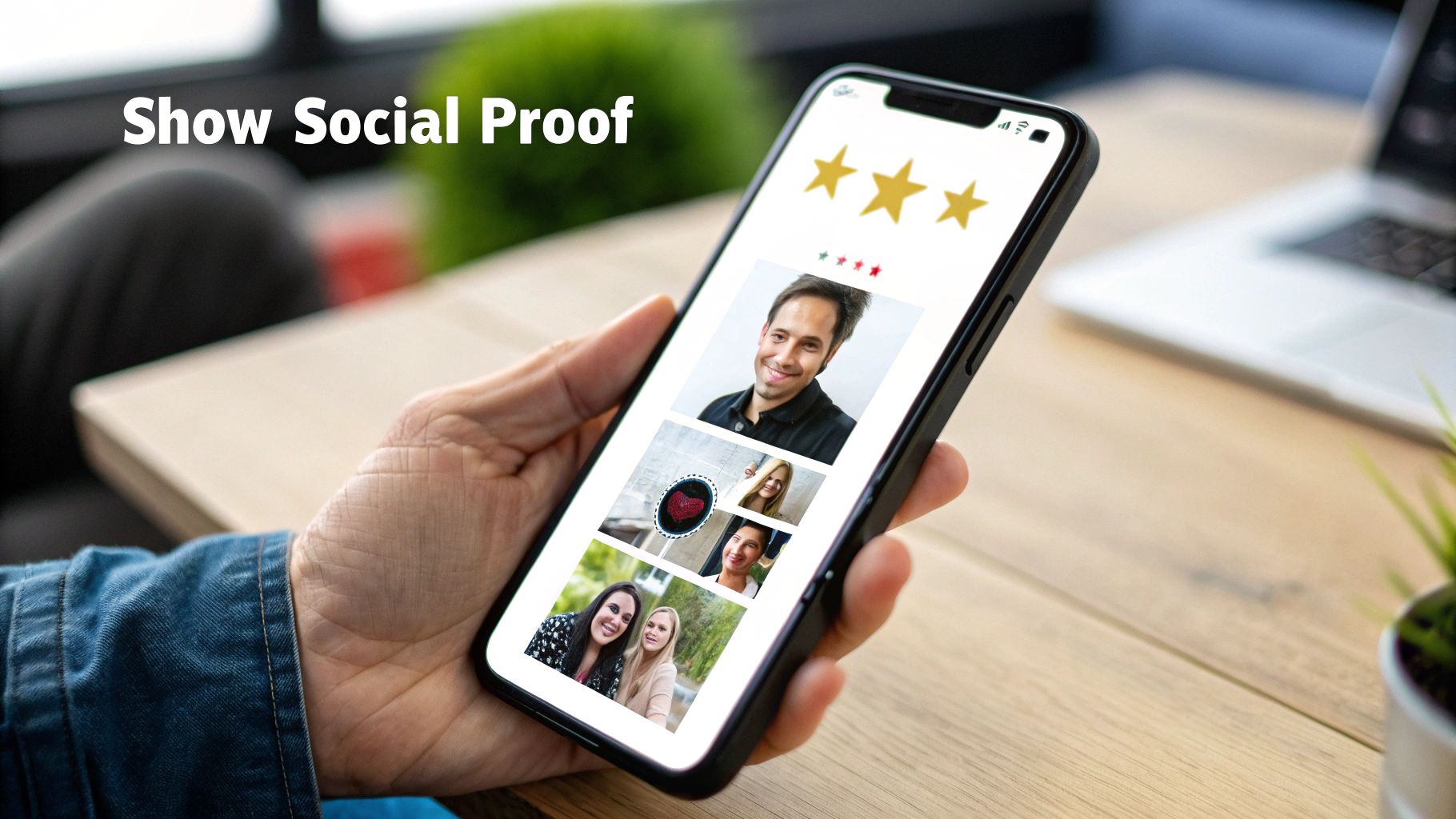
Let's be honest: online reviews are the new word-of-mouth. They're the social proof that can turn a curious browser into a loyal customer, and they serve as the real-time heartbeat of your digital reputation. Managing them well is about more than just asking for feedback—it’s about actively shaping the conversation around your brand.
It's no secret that reviews are a huge deal. The data backs it up: a staggering 93% of consumers say reviews influence their buying decisions. What's even more telling is that over half of them (52%) won't even consider a business unless it has at least a 4-star average. That’s a high bar, which means the quality of your reviews is just as critical as the quantity.
How to Ask for Reviews Without Being Needy
The secret to getting more reviews is simple: ask at the right time and make it ridiculously easy for your customers. You want the request to feel like a natural part of a great experience, not an awkward chore.
Think about these real-world scenarios:
- For a Contractor: You’ve just finished a kitchen remodel and the client is thrilled. As you're wrapping up the final walkthrough, you can send a quick follow-up text: "Hi [Client Name], it was a pleasure bringing your new kitchen to life. If you have a moment, sharing your experience on Google would mean the world to our team. Here's a direct link: [link]."
- For a Coffee Shop: Place a small, well-designed card with a QR code right by the register. It could say something simple like, "Love our coffee? Leave us a review!" That QR code can take them straight to your Google, Yelp, or Facebook review page.
The goal is to eliminate any and all friction. A direct link or a quick scan is infinitely more effective than a vague, "Please review us online."
The Art of Responding to All Feedback
Here's a practical insight I’ve learned over the years: your response to a review is often more important than the review itself. It’s a public performance of your customer service philosophy, and everyone is watching. To really nail your online reputation, it's vital to get good at analyzing customer feedback and using those insights.
When a glowing 5-star review comes in, don't just reply with a generic "Thanks." Personalize it! Mention something specific from their comment. For instance, "Thank you so much for the kind words, Sarah! We're thrilled you enjoyed the hazelnut latte—it's one of our favorites, too. Hope to see you again soon!" This tiny extra step shows you're paying attention.
But what about negative feedback? This is where you can truly set yourself apart. A calm, professional, and solution-focused response can turn a critic into a fan and show potential customers that you stand behind your service.
The Perfect Negative Review Response:
"Hi Mark, thank you for taking the time to share your feedback. We are so sorry to hear that your experience did not meet our standards—or yours. This is certainly not the level of service we aim to provide. We would appreciate the opportunity to learn more and make this right. Please email our manager, Jessica, directly at jessica@[yourbusiness].com so we can address your concerns personally."
This response is effective because it accomplishes four critical goals:
- It validates the customer's feelings without getting defensive.
- It apologizes and reinforces your commitment to high standards.
- It moves the conversation offline to resolve the specific issue privately.
- It shows everyone else that you are accountable and proactive.
To make this easier, I've put together a quick guide for responding to different types of reviews. Having a few go-to templates can help you and your team respond quickly and effectively every time.
Effective Responses to Customer Reviews
This table provides clear, actionable templates for responding to different types of online reviews to help manage public perception effectively.
| Review Type | Key Elements of Your Response | Example Snippet |
|---|---|---|
| Glowing Positive (5-Stars) | Thank them by name. Reference a specific detail from their review. Add a warm, personal touch and invite them back. | "Hi Jane, thank you for the wonderful review! We're so glad you loved the patio seating. We look forward to seeing you again soon!" |
| Generally Positive (4-Stars) | Thank them for the feedback. Acknowledge any minor issues they mentioned. Reassure them you're always working to improve. | "Thanks for the great feedback, Tom! We appreciate you pointing out the wait time and are actively working on it. Hope to earn that 5th star next time!" |
| Mixed/Neutral (3-Stars) | Thank them for their honest perspective. Apologize that the experience wasn't perfect. Invite them to discuss it further offline. | "Thank you for sharing your experience. We're sorry to hear we missed the mark. We'd love to learn more—please reach out to us at manager@email.com." |
| Clearly Negative (1-2 Stars) | Apologize sincerely and promptly. Validate their frustration. Take ownership and move the conversation offline to resolve it. | "Hi Sam, we are truly sorry your experience was so frustrating. This isn't our standard. Please contact our manager directly so we can make this right." |
Ultimately, a thoughtful response strategy shows that you're not just a faceless business, but a team of real people who genuinely care about the customer experience. This builds trust and, over time, a rock-solid reputation.
Handling Negative Feedback and Malicious Reviews
No matter how great your service is, negative feedback is going to happen. It's just part of being in business. How you handle it is what defines your brand's integrity and is a critical part of small business online reputation management. Your response is your playbook for turning a potential crisis into a moment of strength.
The first step is knowing what you're up against. Is it a legitimate complaint from an unhappy customer, or a malicious attack designed to do harm?
A genuine negative review, while it might sting, is actually a gift. It’s a free look into your customer experience and a chance to show everyone watching how you handle problems. The worst thing you can possibly do is ignore it or get defensive. But not all bad reviews are created equal. Sometimes, you'll be hit with fake or malicious content—often planted by a competitor or someone with a grudge.
Distinguishing Genuine Feedback From Fake Reviews
Learning to spot the difference is your first line of defense. After years of watching these play out, I’ve seen a few tell-tale signs.
Here’s what to look for:
- Vague vs. Specific: A real customer will almost always give you details. They’ll mention the day they visited, the product they bought, or the employee they spoke with. A fake review is usually full of hot air—general complaints like "terrible service" with zero verifiable information.
- Emotional vs. Factual Tone: Unhappy customers are definitely emotional, but fake reviews often dial it up to 11. The language can be overly aggressive or dramatic, clearly intended to inflict maximum damage rather than find a solution.
- Reviewer History: This is a big one. Click on the reviewer's profile. Is their account brand new with only one review (yours)? Do they have a long history of leaving nothing but 1-star rants for dozens of businesses? These are massive red flags.
A local gym I know was targeted by a string of 1-star reviews over a single weekend. Every single one came from a new profile with no other activity, and they all used similar, vague language about "rude staff." Recognizing this pattern was the key to getting that malicious content taken down.
Creating a De-escalation Framework
When you get a legitimate negative review, remember that your response is a public performance. Your goal is to de-escalate, show you care, and pull the conversation offline. You can learn more about why dealing with an unhappy customer is so important for your brand.
For malicious reviews, the game is different. Your public response should still be calm and professional, but your real focus is on reporting it. Gather your evidence—like the patterns I mentioned above—and use the reporting tools on platforms like Google or Yelp. In your report, state that you have no record of this person as a customer and that the review seems to violate the platform's terms of service.
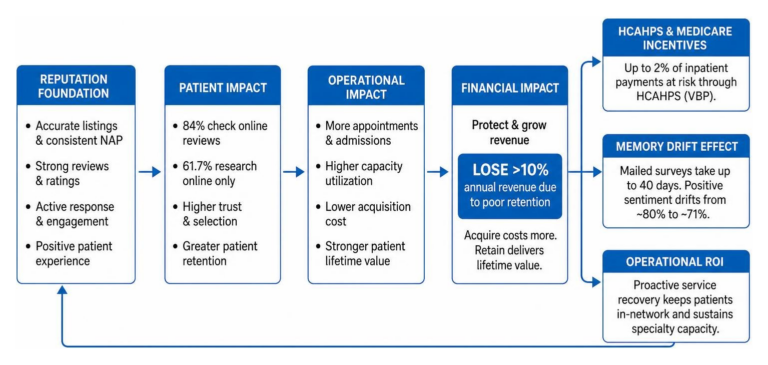
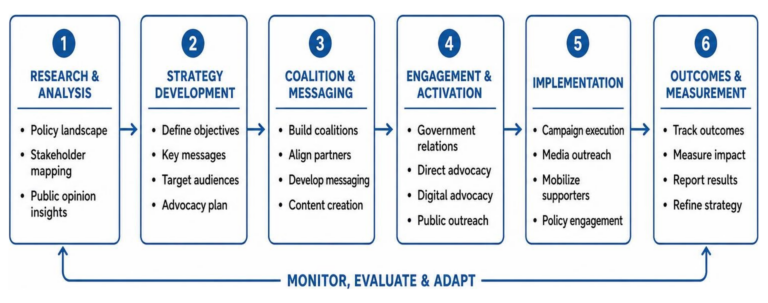
The entire process of managing your reputation, from auditing to handling feedback, is a cycle.
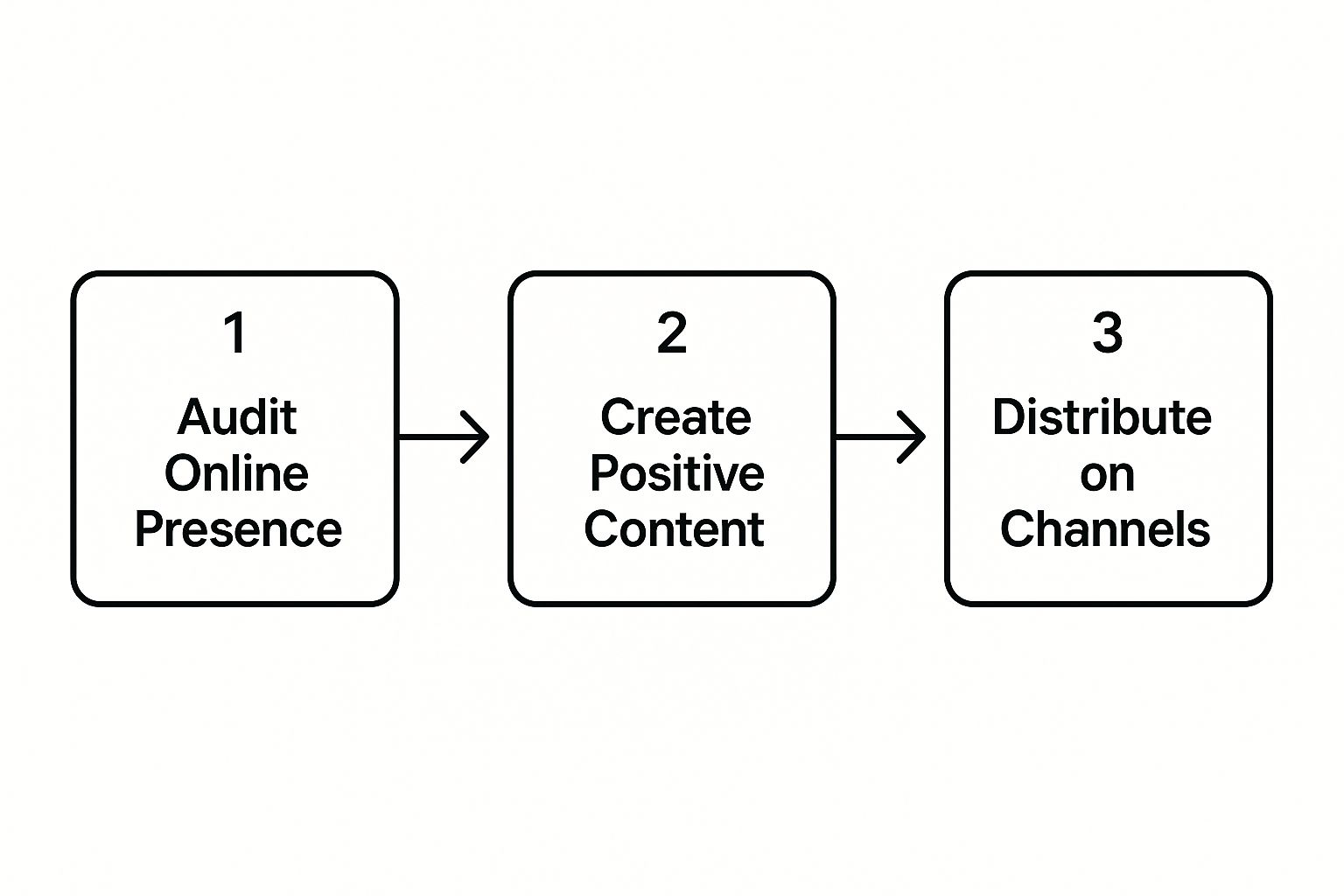
This flow shows how auditing and content creation are the foundations you need before you can effectively tackle negative feedback.
The fight against fake feedback has gotten so intense that even the government is stepping in. The Federal Trade Commission (FTC) banned fake and AI-generated reviews in August 2024 after seeing a jaw-dropping 758% spike in this kind of content since 2020. Why? Because 85% of consumers trust online reviews as much as they trust a recommendation from a friend, making their authenticity incredibly important.
For a deeper dive into protecting your brand when things get heated, this guide to social media crisis management offers an essential framework that every business owner should know.
Proactively Building a Positive Digital Footprint
The best strategy for small business online reputation management isn't about playing defense; it’s about going on offense. Instead of just waiting around to react to whatever feedback trickles in, you should be building a digital presence so strong and positive that one stray negative comment barely makes a ripple.
This proactive mindset means creating a library of high-quality, authoritative content that you own and control. When you do this, you start to dominate the search results for your own brand name. You’re pushing all your good stuff to the top and burying anything negative that might pop up. It’s all about telling your own story before someone else does.
Creating Content That Builds Authority
Think beyond just collecting reviews. Your expertise is your most powerful marketing tool. By generously sharing what you know, you position your business as a trusted resource, not just another company trying to make a sale. This builds a deep layer of trust that a five-star rating, on its own, can't quite achieve.
Let’s make this real with a couple of examples:
- A Local Plumber: Instead of just running another ad, they could start a blog with posts like, "5 Simple Ways to Prevent Common Household Leaks" or "When to Call a Plumber vs. Grabbing the Wrench Yourself." This content actually helps people and quietly establishes the plumber as the go-to expert in town.
- A Financial Advisor: They could film short, helpful videos for social media breaking down intimidating topics, like "What's the Real Difference Between a Roth IRA and a Traditional IRA?" This makes them seem approachable and builds instant credibility.
This kind of content does two jobs at once. It helps potential customers solve a real problem while showcasing your deep knowledge, creating a positive vibe around your brand.
Owning Your Narrative Across Platforms
Your website and your social media channels are your digital home base. These are the places where you have 100% control over the message, the look, and the feel. You need to use them consistently to tell your brand’s story and remind people why you’re great at what you do.
A proactive content strategy is like building a fortress of positive sentiment around your brand. When you control the narrative across multiple platforms, you create a powerful buffer that protects your reputation from isolated negative attacks.
This means regularly publishing content that puts your best foot forward. You can share customer success stories (with their permission, of course!), post behind-the-scenes photos of your business in action, or celebrate team milestones. Every single piece of content is another positive asset that Google can index and show to potential customers. Building that solid foundation is critical; you can learn more about the importance of a proactive online review strategy.
A Simple Content Plan to Get Started
You don't need a huge marketing department to pull this off. A simple, consistent plan is all it takes to start building up your positive digital footprint.
Here’s a basic loop to get you going:
- Brainstorm 5-10 Common Questions: What do customers ask you all the time? These are your first, and best, content ideas.
- Pick Your Format: Is the answer best delivered as a quick blog post, a short video, or a simple infographic? Don't overthink it.
- Create One Thing a Week: Just start small. Consistency is far more important than cranking out a ton of content right away.
- Share It Everywhere: Post your new content on your website, your Google Business Profile, and any social media channels where your customers hang out.
By repeating this simple process, you steadily build a library of helpful, positive content that strengthens your reputation, boosts your search rankings, and builds real, lasting trust with your audience.
Common Questions About Reputation Management
Even with a solid plan, you’re bound to have questions about small business online reputation management. It's only natural. Let's tackle some of the most common ones I hear from business owners, with direct, no-fluff answers to help you make smart decisions without getting overwhelmed.
How Much Time Should I Dedicate to This Each Week?
Look, consistency beats intensity every single time. The goal isn't to spend hours glued to your screen, but to build a sustainable habit that keeps you ahead of the curve.
I always recommend a "15-Minute Daily Reputation Check." Use this time to quickly scan for new reviews, check your social media tags, and glance at any alerts you've set up. This small daily commitment is your first line of defense and keeps you on top of anything that needs an immediate response.
Beyond that, try to block out 1-2 hours per week for more focused work. This is your time for thoughtfully responding to feedback, maybe brainstorming a quick blog post, or filming a short, helpful video. This steady, consistent effort is far more effective than occasional, frantic clean-up sessions after a problem has already spiraled out of control.
Are Paid Reputation Management Tools Worth It?
Honestly, when you're just starting out, the answer is usually no. Free tools like Google Alerts, combined with manually checking your most important platforms (like your Google Business Profile and Facebook page), are more than enough. They get the job done without adding another subscription to your budget.
But there comes a point where it makes sense to upgrade. You should start considering a paid tool when:
- Manual monitoring starts eating up more than a few hours a week.
- You're juggling multiple business locations and can't keep track of them all.
- The sheer volume of mentions and reviews becomes too high to handle efficiently.
A practical insight: when you find yourself spending more time collecting data than acting on it, it's time to invest in a tool. These platforms save a ton of time by pulling all your mentions into a single, easy-to-read dashboard, giving you a much clearer and quicker picture of your online health.
The real value of a paid tool isn't just about seeing reviews; it's about reclaiming your time. If a $50/month tool saves you five hours of work, it's a fantastic investment in your own productivity.
What Is the Best Way to Ask for a Review?
Timing and simplicity are everything. You want to ask right after a positive customer experience, when their satisfaction and goodwill are at their absolute peak. Don't wait.
Personalize the request and, most importantly, make it frictionless. A simple text or email can work wonders. For example: "Hi [Customer Name], we loved helping you with [service/product] today. If you have a moment, sharing your experience on Google would mean the world to us. Here’s a direct link: [link]."
That direct link is the most critical part. It removes any guesswork or extra steps for the customer and dramatically increases the chances they’ll actually follow through.
Can I Just Delete a Bad Review?
This is a big one. On third-party sites like Google, Yelp, or TripAdvisor, you cannot delete a review yourself. The platform holds all the power. The only time a review might be removed is if it clearly violates that platform's specific policies, like containing hate speech, spam, or an obvious conflict of interest.
Instead of focusing on deletion—which you can't control—put your energy into your public response. A professional, helpful reply shows potential customers that you're accountable and genuinely dedicated to good service. If you truly believe a review is fake or malicious, your only option is to use the platform's reporting tool to flag it for removal by their moderation team. A practical example of a reportable review would be one left by a disgruntled ex-employee, which is a clear conflict of interest.
Ready to take control of your online reputation and turn it into a powerful asset for growth? The experts at Latitude Park specialize in SEO, targeted ads, and complete reputation management for franchises and small businesses. Let us help you build a digital presence that drives real results. Learn more about our services at Latitude Park.