Why Multi-Location Digital Advertising is Critical for Modern Franchises
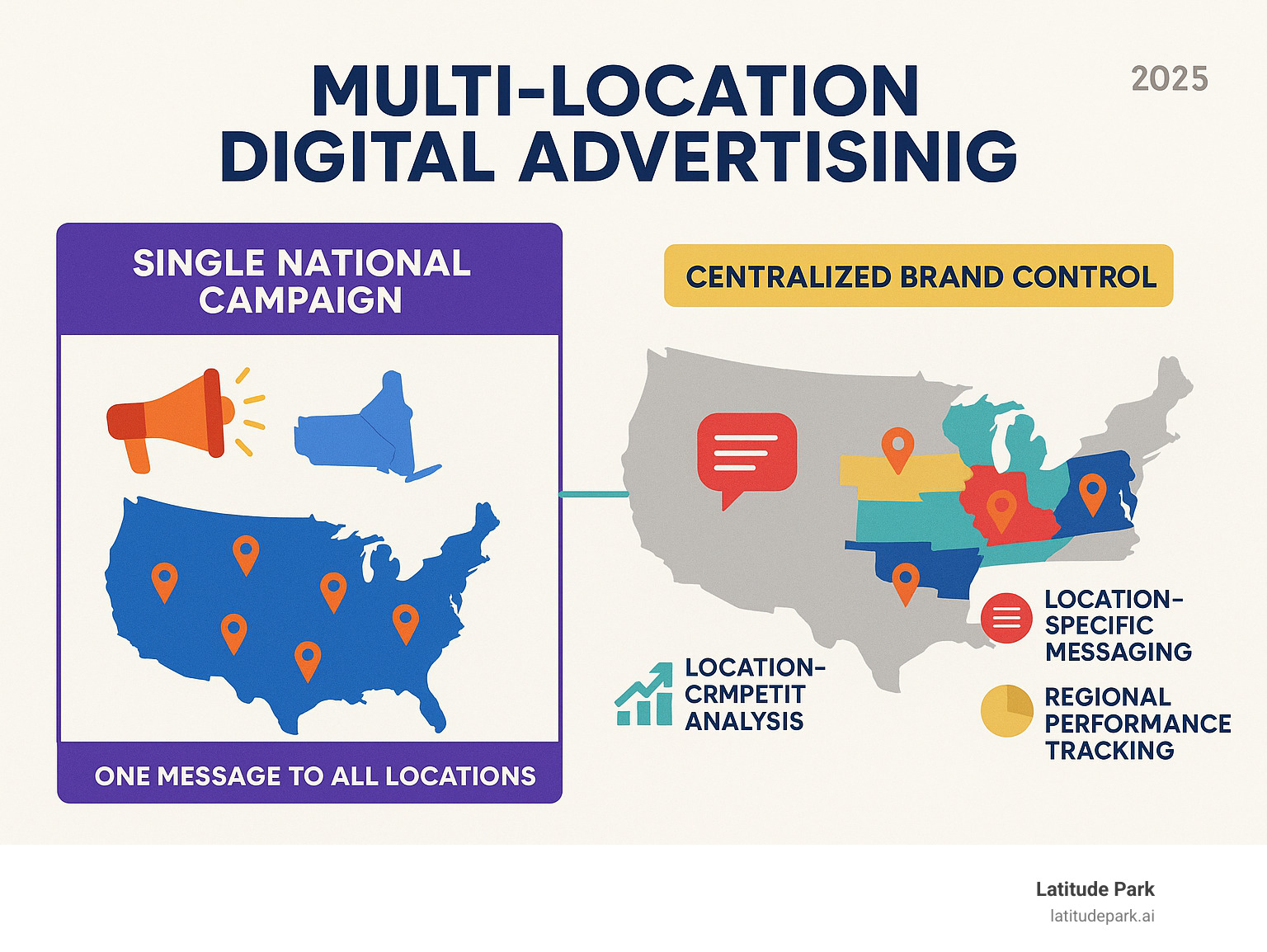
Multi-location digital advertising is a strategic approach that tailors marketing campaigns to specific geographic markets while maintaining consistent brand messaging across all locations. This method considers local demographics, competition, and consumer behavior to maximize campaign effectiveness by using geographic targeting, localized messaging, and location-specific performance tracking, all under centralized brand control.
The stakes have never been higher. Google reports a 150% increase in local searches over the past two years, with customers increasingly searching for businesses “near me.” This shift means your advertising must speak directly to local audiences while maintaining the brand consistency that builds trust.
Running a business with multiple locations can feel like you’re constantly juggling. As one marketing expert noted: “Everything needs to be built from the ground up, as every location comes with its own audience, competition, and quirks.” The challenge isn’t just creating great ads—it’s creating ads that work everywhere while feeling local everywhere.
I’m Rusty Rich, President and founder of Latitude Park, and I’ve spent over 15 years helping franchises steer the complexities of multi-location digital advertising. Since 2009, I’ve grown my agency into a full-service team that specializes in building scalable advertising strategies that drive measurable growth across hundreds of franchise locations.
Crafting Your Multi-Location Digital Advertising Strategy
Effective multi-location digital advertising is about creating campaigns that feel both unmistakably “you” and genuinely local. The magic happens when you balance brand consistency with local personalization. Your customers should recognize your brand anywhere, but the message should feel crafted for their community. This isn’t about creating hundreds of different brands—it’s about speaking your brand’s language with a local accent.
For example, a coffee shop chain might always emphasize quality beans (brand consistency), but a Seattle location could highlight rainy-day comfort drinks, while a Miami location focuses on refreshing iced beverages (local personalization).
This approach is built on solid audience research. We dive into demographics, explore cultural nuances, identify local events, and analyze competitors in each market. Understanding local communication preferences—whether customers prefer calls, texts, or social media—is also crucial. This localized strategy not only improves ad performance but also significantly boosts your local SEO, making you more visible in those critical “near me” searches. For more insights, see The Power of Consistent Branding Across Franchise Locations.
Establish Centralized Brand Guidelines
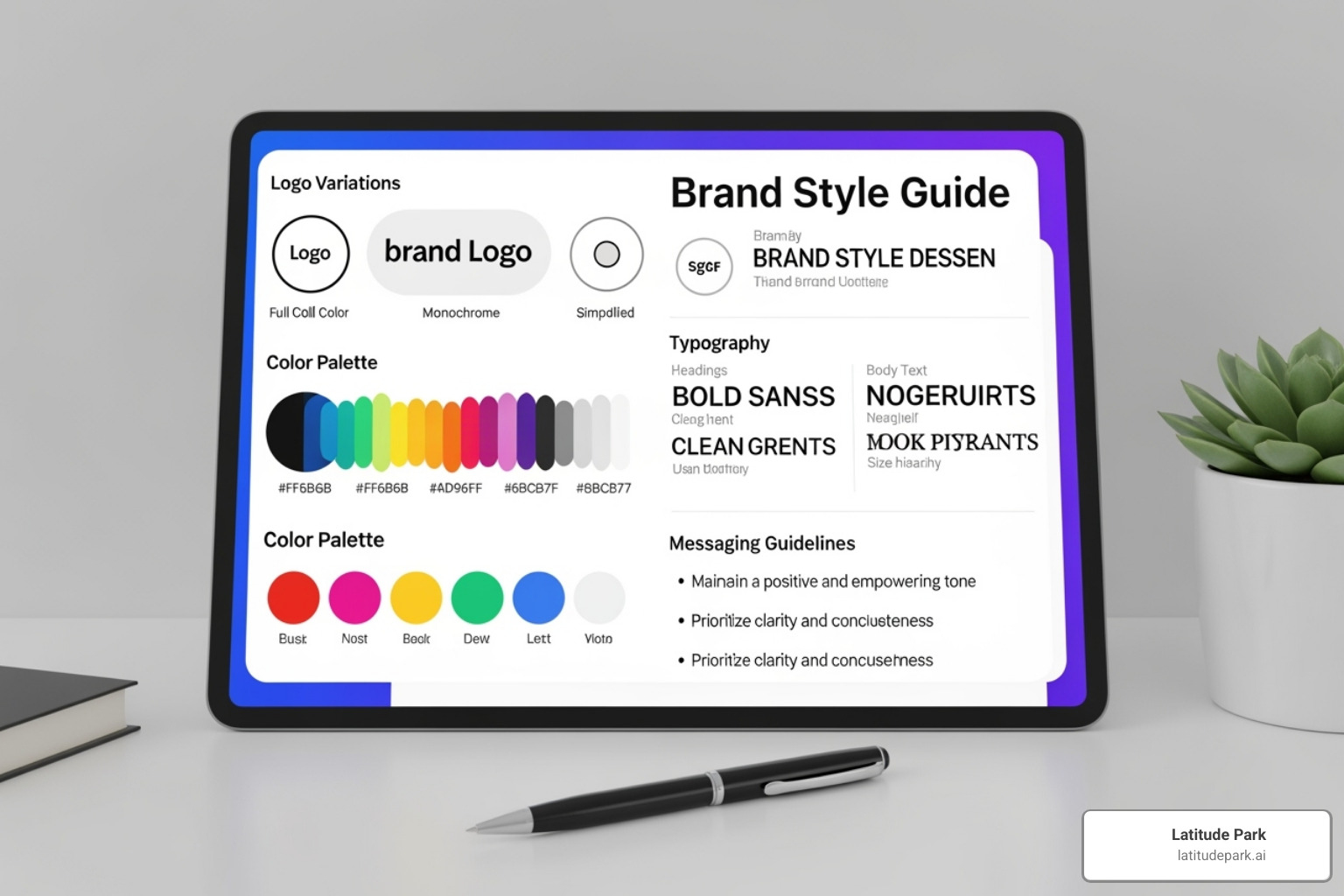
Your brand guidelines are a recipe that ensures consistency, but they should empower local teams, not stifle them. Start with a centralized digital brand guide covering your brand voice, messaging pillars, logo usage, colors, and typography. This gives everyone the tools to represent your brand confidently.
Modern collaborative tools like Notion or ClickUp make it easy to create living resources that are always updated and accessible. The goal is empowerment. When your team in Phoenix understands your brand’s personality, they can craft campaigns authentic to their market while staying true to your core identity. This balance builds the trust that drives success. For more on this, visit our guide on Consistent Franchise Branding Excellence.
Understand and Tailor to Local Audiences
Successful multi-location digital advertising respects that every location is a unique ecosystem. A campaign that works in Denver won’t necessarily work in Detroit. You must consider:
- Demographics: Age, income, family structures, and lifestyles vary greatly. A college town needs a different approach than a retirement community.
- Cultural nuances: Regional slang, local customs, and community values influence how people respond to ads. These details show you understand the audience.
- Local events: Tying campaigns to festivals, sports seasons, or traditions makes your ads feel timely and connected.
- Competitive landscape: Analyzing local competitors helps you find your unique position and informs your messaging and budget.
- Communication preferences: Some communities prefer phone calls, while others expect live chat or social media. Adapting improves the customer experience.
This deep local understanding improves ad performance and your overall digital presence, strengthening community connections. Learn more about optimizing for local search in our guide on Local SEO Optimizing Website for Local Search Results.
Localize Ad Creatives and Messaging
This is where you translate local insights into compelling ads. Your brand guidelines meet local flair to create campaigns that are both professional and personal.
- Location-specific copy: Instead of “Find great pizza near you,” try “Find Kansas City’s newest deep-dish spot in Prairie Village.” Specific references signal that you belong.
- Local landmarks: Mentioning a nearby park or well-known street creates instant familiarity and builds trust.
- Regional promotions: A back-to-school promotion that names the local university shows you’re connected to the community rhythm.
- Culturally relevant imagery: Use photos of local people and scenery. Imagery that reflects the actual community you’re serving is far more effective than generic stock photos.
- Dynamic text insertion: Ad platforms can automatically insert location-specific info, like “Find the Best Coffee in {Austin}!” This creates custom messaging at scale.
The secret is making every ad feel like it was created for that community while maintaining brand consistency. This approach significantly improves click-through and conversion rates. For more advanced techniques, explore our insights on On-Page SEO Tactics for Multi-location Brands.
Choosing and Mastering the Right Advertising Platforms
Picking the right platforms for your multi-location digital advertising strategy isn’t about casting the widest net. It’s about smart, targeted spending. The secret sauce lies in geotargeting and geofencing. Geotargeting delivers ads to people in specific areas (like a ZIP code or a radius around your store), while geofencing creates virtual boundaries around locations, allowing you to target people who enter a competitor’s parking lot, for example.
This precision is what makes Digital Advertising for Multi-location Businesses so effective, especially when combined with solid Local SEO for Multiple Locations.
Google Ads for Local Dominance
Google Ads is essential for capturing customers with immediate local intent. When someone searches “pizza near me,” you want to be the first result they see.
Your Google Business Profile is your digital storefront and is absolutely critical. Every location needs accurate contact info, hours, photos, and consistent NAP (Name, Address, Phone number) data. For details on why this matters, check out Why Local Business Listing is Essential.
Use location extensions to display your address and phone number directly in your ads. For retail, local inventory ads show shoppers what’s in stock at their nearest store. Performance Max for local goals is Google’s automated campaign type that optimizes across all its properties to drive store visits.
The key is to find the sweet spot with targeting—reaching enough people within a specific radius, ZIP code, or city without wasting money on those too far away. For a complete guide, see our Google Ads Local Business Guide.
Social Media for Hyper-Targeted Engagement
While Google Ads captures existing demand, social media creates it. These platforms allow for incredibly specific targeting within any geographic area.
Meta (Facebook and Instagram) is especially powerful. Its targeting can be scarily precise, letting you reach specific demographics and interests in a given location. You can also create custom and lookalike audiences from your local customer lists. Local awareness ads are designed to maximize reach near your business and drive foot traffic.
LinkedIn is ideal for B2B multi-location businesses, allowing you to target by company size, industry, and job title within specific cities. TikTok is increasingly important for reaching younger audiences with location-based targeting that taps into local trends.
| Platform | Key Local Targeting Features | Best For |
|---|---|---|
| Meta (Facebook, Instagram) | Detailed demographic & interest targeting, Custom & Lookalike Audiences, Local Awareness Ads | Broad local reach, engagement, foot traffic, and lead generation. |
| Target by company, industry, job title within specific regions | B2B businesses, professional services, and recruitment. | |
| TikTok | Location-based ad delivery, leveraging local trends | Reaching younger, mobile-first audiences and building brand awareness. |
For a deeper dive, explore our guides on Multi-location Social Media Marketing and Multi-location Localized Social Media Ads.
The Advantages of Automated Digital Advertising
Managing campaigns for hundreds of locations manually is a nightmare. This is where automated digital advertising and programmatic advertising are lifesavers.
Programmatic advertising uses technology to automate ad buying, with algorithms bidding on impressions in milliseconds. Dynamic Creative Optimization automatically adapts your ads based on the viewer’s location and context—someone in Phoenix might see a sunny ad, while someone in Seattle sees a cozy one.
This technology offers precise regional targeting, cross-device tracking, and dramatic improvements in efficiency. It allows your team to focus on high-level strategy instead of manual campaign tweaks, ultimately leading to better ROI.
Budgeting, Measuring, and Optimizing for Maximum ROI
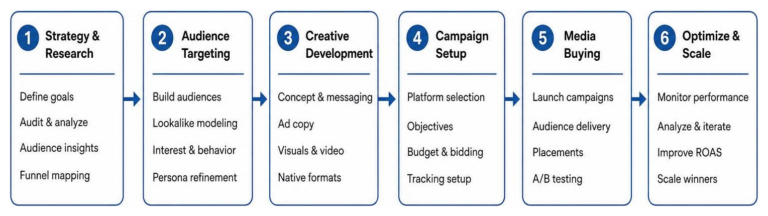
Launching your multi-location digital advertising campaigns is just the start. The real magic is in the tracking, measuring, and fine-tuning that squeezes every bit of value from your ad budget. The businesses that succeed aren’t the ones with the biggest budgets; they’re the ones that are smartest about how they allocate and optimize their spending.
How to Allocate Your Ad Budget Across Locations
Don’t just divide your budget equally. An effective budget reflects the reality of each location. We analyze factors like market potential, historical performance, population density, and the competitive landscape. A location in a dense urban area with a proven track record deserves a larger slice of the pie than an experimental market.
I recommend a tiered budget approach. Categorize locations into performance tiers: top performers, steady growers, and new markets. Top-tier locations get the largest share, while new locations start small as you test what works.
Most importantly, keep your spending flexible. Monitor performance weekly and be ready to shift funds from underperforming campaigns to those delivering strong results. This dynamic approach can significantly improve your overall ROI.
Key Performance Metrics to Track
If you’re not measuring the right things, you’re flying blind. Focus on the metrics that impact your bottom line, not vanity metrics like impressions.
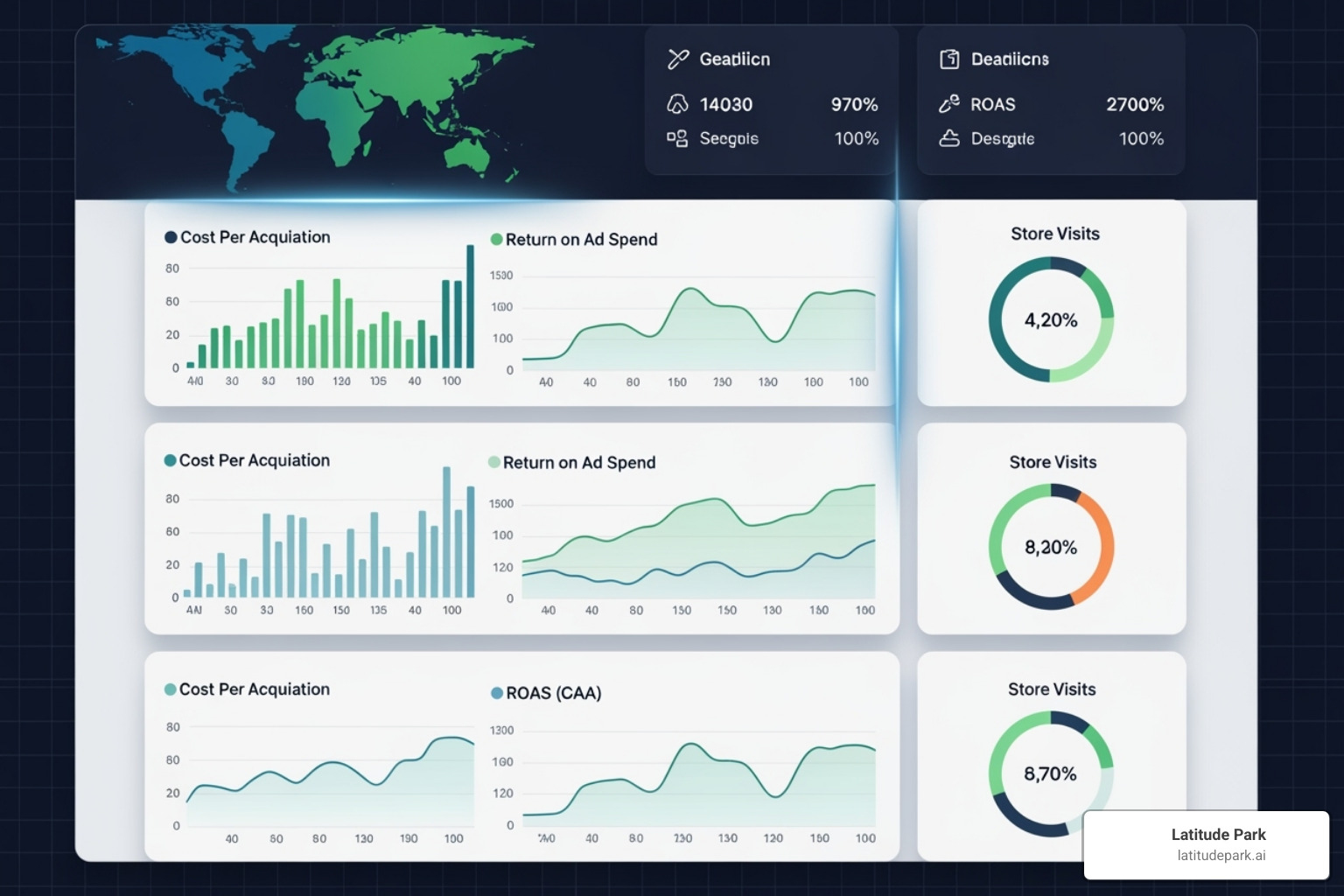
- Cost Per Acquisition (CPA) by location: This is your north star. It tells you exactly how much it costs to get a customer in each market.
- Return On Ad Spend (ROAS) by location: This gives you the clearest picture of profitability. Aim for at least a 3:1 ROAS ($3 in revenue for every $1 spent).
- Store visits: For brick-and-mortar businesses, tracking when a digital ad leads to a physical visit is invaluable for proving real-world results.
- Click-through rate (CTR): While not a conversion metric, a low CTR can indicate that your ad creative or targeting needs adjustment for a specific local audience.
- Phone call tracking: Essential for service-based franchises, this shows which ads are driving calls by using unique numbers for different campaigns.
For more on maximizing ad performance, see our guide on High Performance Meta Ads.
The Role of A/B Testing in Optimization
A/B testing is essential for multi-location digital advertising. What works in Miami might fail in Minneapolis; only systematic testing will tell you for sure. It removes guesswork and provides data-driven answers.
Continuously test different elements by location, as national averages don’t tell the whole story. Key areas for testing include:
- Ad copy: Test straightforward offers versus creative headlines.
- Visuals: Compare local landmarks against lifestyle imagery.
- Offers: See if percentage discounts outperform dollar-off deals or value-adds.
- Calls-to-action: Small wording changes like “Shop Now” vs. “Get Started” can have a big impact.
- Landing pages: Optimize the post-click experience with different layouts and content to maximize conversions.
For more on integrating testing into your strategy, read our article on a Scalable Social Media Strategy for Multi-location Franchises.
Overcoming Common Challenges
Managing multi-location digital advertising is one of the most complex challenges in marketing. Without a solid strategy, you face common headaches like message fragmentation, where your brand voice becomes diluted and inconsistent across locations. You also run into data nightmares, with uncoordinated campaigns leading to messy tracking and an inability to see the big picture.
Furthermore, resource limitations are a constant struggle. Local franchisees rarely have dedicated marketing teams, and corporate departments are often stretched thin. This can cause campaigns to fizzle out from a lack of ongoing management.
Centralizing Management with the Right Tools
The solution isn’t micromanagement but creating structure with the right tools. This approach provides support without stifling local creativity.
- Listing management platforms like Yext or BrightLocal solve a foundational problem by syncing your Name, Address, and Phone number (NAP) across hundreds of online directories, which is crucial for local SEO.
- Social media management platforms allow for content calendars and approval workflows, ensuring brand consistency while still permitting local customization.
- Centralized analytics dashboards bring all your performance data into one place, making it easy to spot trends and reallocate budgets effectively.
- Digital asset management (DAM) systems act as a brand-approved library for logos, photos, and ad templates, ensuring all materials are current and on-brand.
Ensuring Brand Consistency with Local Flexibility
The secret is a framework that feels supportive, not restrictive. Think of it as providing a recipe rather than rigid rules.
- Localized playbooks provide specific examples of how to adapt brand messaging for different types of markets (e.g., college towns vs. business districts).
- Pre-approved templates give local teams a flexible starting point for creating ads, allowing them to insert local details while maintaining visual consistency.
- Tiered user permissions balance control and freedom, allowing local managers to make adjustments within guidelines while requiring corporate approval for major changes.
- Collaborative workflows and regular training ensure that local insights flow back to corporate and that everyone understands the why behind the strategy, turning local teams into better brand ambassadors.
Frequently Asked Questions about Multi-Location Advertising
Over my 15 years in this space, I’ve heard the same questions from franchise owners and multi-location business managers. Here are the most common ones.
What is the main difference between multi-location and national advertising?
The core difference is relevance. Multi-location digital advertising is like a custom suit, custom to each geographic market’s culture, competition, and consumer behavior. It focuses on driving local actions like store visits and phone calls. National advertising is an off-the-rack approach, broadcasting one uniform message to build general brand awareness. National campaigns say, “We exist everywhere,” while multi-location campaigns say, “We’re here in your neighborhood and understand you.”
How do I ensure my online business listings are accurate for all locations?
Manually managing hundreds of listings is nearly impossible. The smartest approach is to use a listing management platform. These tools act as a central dashboard to sync your business Name, Address, and Phone number (NAP) across all major directories like Google, Yelp, and Bing. This saves countless hours and prevents lost customers due to incorrect information. However, you can’t just set it and forget it. Regular auditing of hours and contact details is crucial to maintain accuracy.
Can a small business with only two or three locations benefit from this strategy?
Absolutely. Many owners think multi-location digital advertising is only for large chains, but that’s a misconception. Even with just a few locations, each market has a unique personality. Your customers, competition, and local events will differ. Applying multi-location principles allows you to create more relevant ads, improve your local SEO for “near me” searches, and compete more effectively against local businesses in each specific area. It helps you build the right foundation for growth from the very beginning.
Conclusion
Multi-location digital advertising is the bridge between your brand’s vision and the customers walking through your doors. Success comes down to one truth: you must think globally but act locally. The businesses that thrive master the delicate balance of maintaining rock-solid brand consistency while empowering each location to speak its community’s language.
Your centralized brand guidelines are your North Star, while local personalization ensures you’re never a faceless corporation. By combining powerful platforms like Google Ads and Meta with smart budgeting and relentless testing, you can build genuine connections in hundreds of communities simultaneously.
The challenges of managing consistency and data are real, but the right tools and processes turn your multi-location network into a competitive advantage. Consumers are searching locally more than ever, and they want businesses that understand their neighborhoods. This shift is your franchise’s moment to shine.
At Latitude Park, we’ve built our practice around helping franchises steer these exact waters. We know that effective multi-location advertising isn’t just about running more campaigns—it’s about creating a scalable system that delivers real growth to every location in your network.
Ready to turn your multi-location advertising from a challenge into your greatest growth engine? Let’s build something remarkable together.
Get expert help to scale your franchise advertising