
Why White Label Reputation Management Is the Smartest Add-On for Growing Agencies
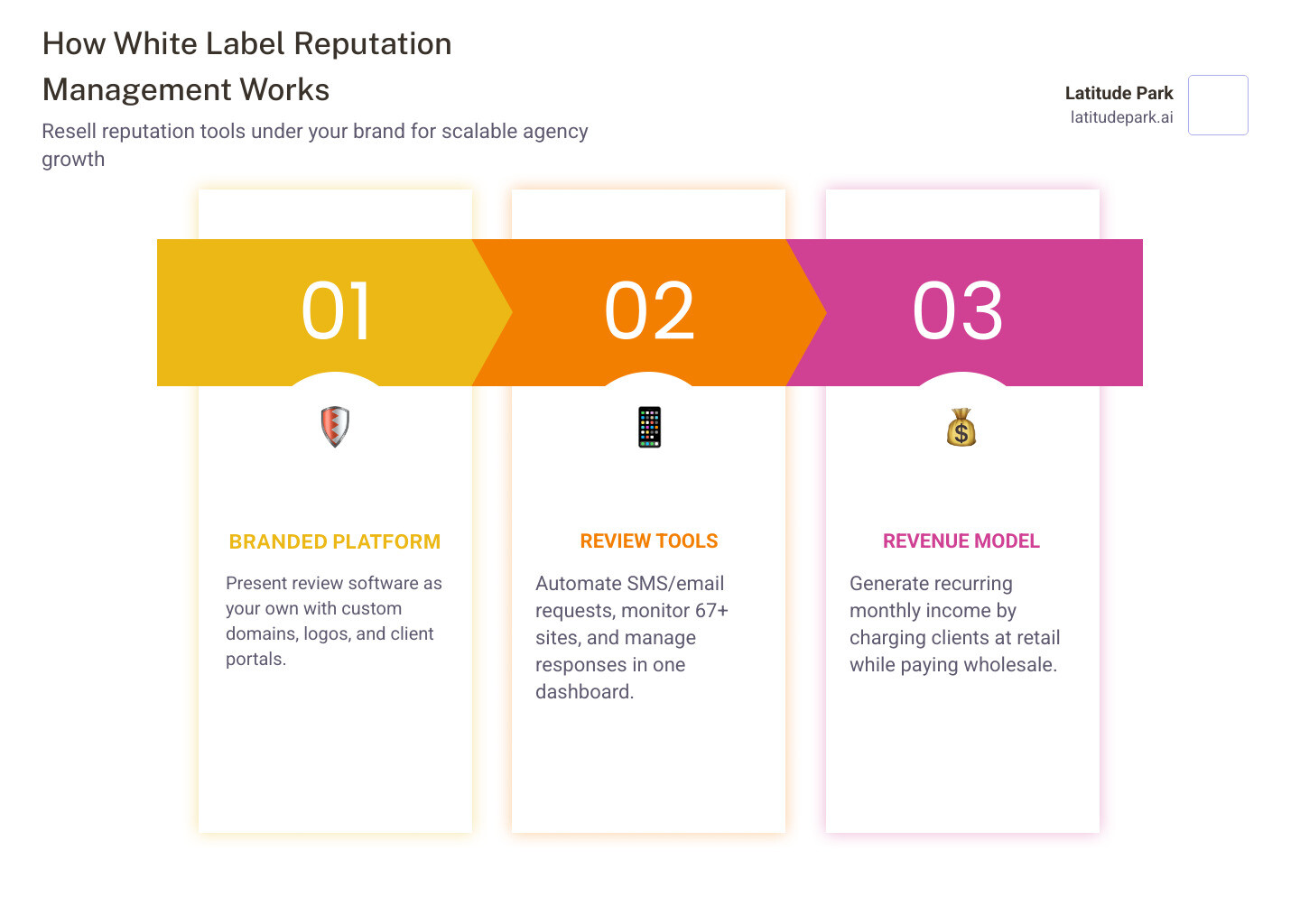
White label reputation management is a service model where an agency resells reputation management software and services to clients under its own brand – without building the technology in-house.
Here’s a quick breakdown of how it works:
| What It Is | What It Does for Your Agency |
|---|---|
| Branded software platform | You present it as your own product |
| Review generation tools | Automates review requests via SMS and email |
| Review monitoring and responses | Tracks reviews across 67+ sites in one dashboard |
| White-labeled reports | Clients see your logo, not the vendor’s |
| Recurring revenue model | Charge clients monthly while paying wholesale rates |
Online reviews aren’t just nice to have anymore. 93% of customers read reviews before making a purchase. And 94% say a bad review has convinced them to avoid a business entirely. For franchise marketers managing reputation across dozens or hundreds of locations, that’s a massive risk – and a massive opportunity.
The Online Reputation Management industry is now worth over $1 billion and is growing at roughly 6.7% per year through 2030. Agencies that add white label reputation management to their service stack are positioned to capture that growth – without the overhead of building a tool from scratch.
I’m Rusty Rich, President of Latitude Park and a digital agency founder with over 15 years of experience helping multi-location brands and franchises grow their online presence – including through white label reputation management strategies that drive real, measurable results. In this guide, I’ll walk you through the platforms worth considering and exactly what to look for before you buy.
For broader context, it also helps to understand how online reputation management fits into the wider digital marketing mix and why it has become such a critical service for agencies.
Relevant articles related to white label reputation management:
What White Label Reputation Management Means for Agencies
For agencies, white label reputation management is really about ownership without the engineering headache. We get a proven platform, put our brand on it, and offer review generation, monitoring, responses, and reporting as our own service.
That matters because review management is one of those rare services clients immediately understand. More reviews, better ratings, faster responses, stronger trust. No long explanation needed. No interpretive dance required.
What is white label reputation management?
At its core, white label reputation management is a reseller model. A software provider builds the infrastructure, and the agency presents the solution under its own brand through a branded dashboard, custom domain, client portal, and reports.
A typical setup includes:
- Review request campaigns by SMS and email
- Monitoring across major review sites
- Response workflows and team permissions
- Widgets to display reviews on client websites
- Branded reports for monthly retention
- Agency-level controls for many clients or locations
It is especially useful for agencies serving multi-location brands, franchise systems, local businesses, and service-area companies. If we already manage SEO, paid media, listings, websites, or social, reputation management fits naturally into the stack. For more on the service model itself, see How To Master White Label Online Reputation Management Without Hiring A Pr Team.
How white label reputation management software works
Most platforms follow the same basic flow:
- Connect business profiles and review sources.
- Import customer contacts or sync with a CRM.
- Trigger review requests after a purchase or service event.
- Route happy customers toward public review sites.
- Capture less-happy feedback internally for recovery.
- Monitor new reviews in one inbox.
- Use templates or AI assistance to draft responses.
- Generate reports showing rating trends, review volume, and location performance.
Common capabilities include:
- SMS and email review requests
- QR codes for in-store review generation
- Review funnels and landing pages
- Unified monitoring dashboards
- Sentiment alerts for negative reviews
- AI-assisted replies
- Website widgets and testimonial streams
- Scheduled PDF or dashboard reports
- CRM integrations, webhooks, and API access
This is where software creates leverage. A team that would normally need spreadsheets, inbox filters, manual follow-up, and too much coffee can often run the entire workflow from one place.
White label reputation management vs an in-house reputation team
An in-house team gives maximum control, but it is usually slower and more expensive to build.
Here is the practical difference:
| White Label Platform | In-House Build |
|---|---|
| Faster launch | Longer setup time |
| Lower upfront cost | Higher staffing and software costs |
| Existing automations | Must build workflows yourself |
| Easier to scale from 10 to 500+ locations | Scaling usually requires more hires |
| Predictable margins | More operational overhead |
| Vendor onboarding and support | Internal training burden |
For many agencies, the better choice is not people versus software. It is people plus software. We use the platform to automate the repetitive parts, then keep strategy, escalation, and client communication in-house.
Must-Have White Label Reputation Management Features Before You Buy
Not every platform that says “white label” is truly white label. Sometimes it means little more than a logo swap. That is not enough if we want a polished client experience.
Review generation, monitoring, and response tools
Start with the core job: getting more reviews and managing them efficiently.
Look for:
- SMS and email review requests
- Bulk invite uploads
- QR codes and landing pages
- Drip follow-ups for non-responders
- Monitoring for Google, Facebook, and key industry sites
- Unified inbox for replies
- Escalation rules for negative feedback
- Response templates
- AI assistance for drafting replies
Google reviews matter a lot here. They are one of the top factors influencing local pack visibility, so reputation management is not just about public perception. It also supports local SEO. If you want a deeper tactical breakdown, see More info about review management services.
Branding, reporting, and client management features
The best white label reputation management tools give us real brand ownership, not vendor cosplay.
Prioritize:
- Custom logo and colors
- Custom domain or domain masking
- Custom favicon
- Branded emails
- Branded client dashboards
- White-labeled PDFs and scheduled reports
- Role permissions for agency team and clients
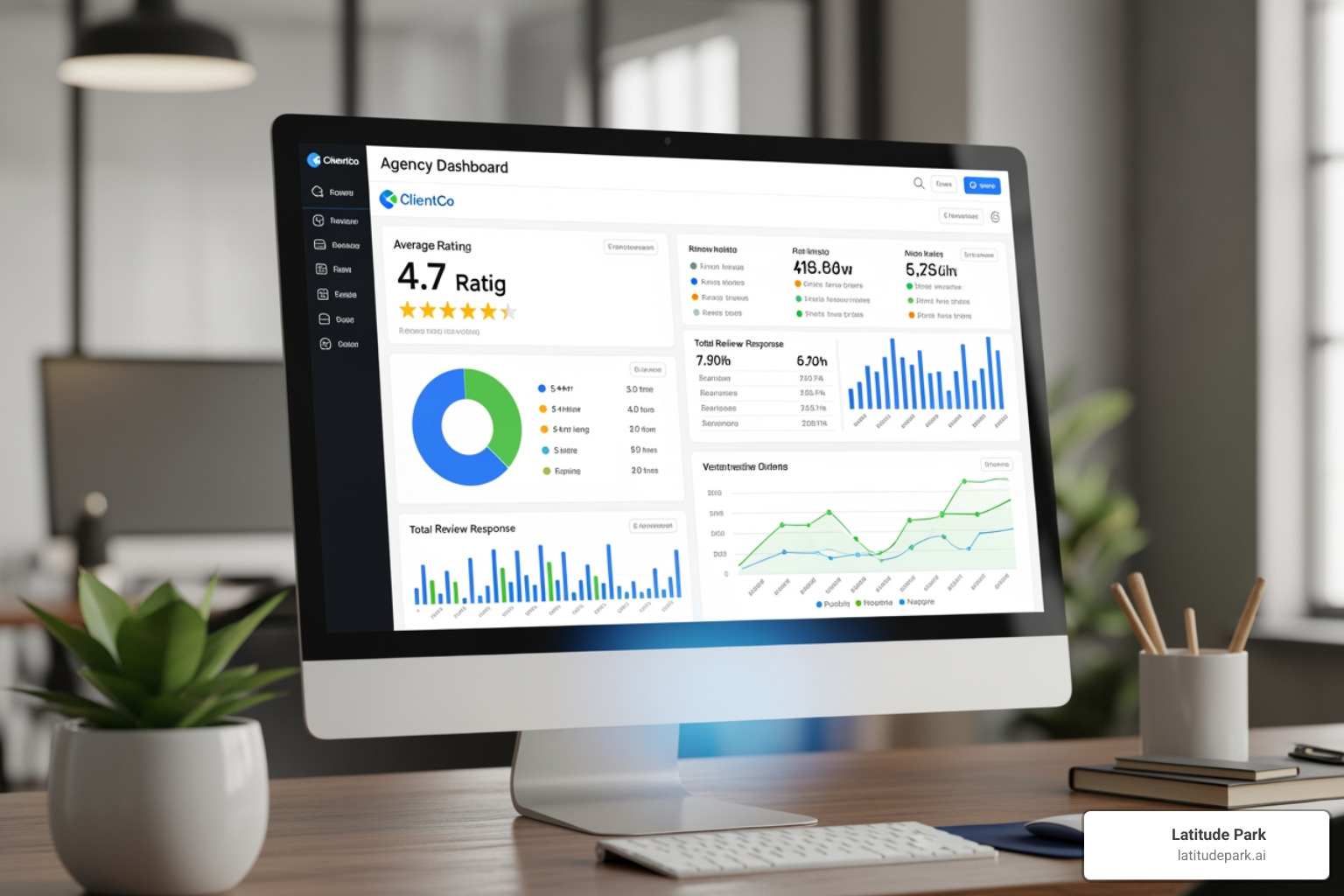
- Multi-location rollup reporting
- Reseller-friendly billing controls
For agencies serving franchise groups, rollup views are especially important. We need to show both system-wide trends and location-level performance without building separate report decks every month.
Integrations, automation, and support resources
Integrations are where good platforms become scalable platforms.
Helpful features include:
- CRM sync for customer lists
- Zapier or webhook support
- Billing integrations such as Stripe
- SMS provider connections
- API access for advanced workflows
- Onboarding help and training
- Sales collateral for pitching the service
- Audit reports or ROI calculators
- Knowledge base and ticket support
Some providers also support local-language reporting, AI-assisted responses in multiple languages, and branded billing. Those features can make a big difference when scaling. If the vendor offers prospect audit tools, even better. Instant trust-score or reputation snapshots can help close deals faster than a generic sales pitch.
The Best White Label Reputation Management Platforms: What to Compare
Because search intent here is commercial, let us talk about what buyers should compare before choosing a platform. We are not looking for the flashiest dashboard. We are looking for margin, flexibility, and long-term fit.
Useful comparison points include pricing structure, depth of white-label branding, review-site coverage, integrations, reporting quality, and support for multi-location clients.
Pricing models and what agencies actually pay
The biggest pricing structures are:
- Per location
- Per seat
- Flat monthly fee
- Custom enterprise pricing
Research shows agency plans can start around $400 per month for 10+ seats in one model, while some newer tools promote flat pricing around $99 per month for unlimited clients and locations. Both models can work, but they scale very differently.
What to verify before signing:
- Monthly versus annual pricing
- Setup or onboarding fees
- SMS charges
- Email volume caps
- AI reply credits
- White-label dashboard add-on fees
- Extra cost for API access
- Premium support tiers
- Billing transaction fees
A cheap plan can become expensive fast if every text, user, or location triggers an extra charge.
Scalability for agencies, SEO specialists, and web designers
Different agency types need different things.
- Digital agencies need client management, automation, and reporting.
- SEO specialists need local SEO tie-in, Google review monitoring, and location reporting.
- Web designers benefit from widgets and embedded review streams that turn websites into social proof machines.
- Consultants want low overhead and fast onboarding.
- Franchise marketers need portfolio-level controls, permissions, and scalable workflows across many locations.
If we manage 10 locations today and 500 tomorrow, per-location pricing may squeeze margins. If we manage a smaller portfolio but need stronger hands-on support, seat-based or managed options may still make sense.
Common limitations and extra fees to watch for
This is the unfun but money-saving section.
Watch for:
- Caps on review sources monitored
- User limits by plan
- White-label branding sold as an add-on
- API access hidden behind enterprise tiers
- AI usage limits
- Charges for local-language support
- Migration fees
- Contract lock-ins
- Restricted export options at cancellation
True white labeling should include a branded experience, not just a logo in the top-left corner pretending to do all the work.
How Agencies Use White Label Reputation Management to Win and Retain Clients
The best agencies do not just “turn on review software.” They build an operating system around it.
Review generation campaigns that increase review volume
Effective campaigns are simple, timely, and consistent.
Best practices:
- Send requests soon after the service or transaction
- Use SMS first when appropriate for faster open rates
- Follow up once or twice, not ten times like an overeager robot
- Use QR cards in-store or on-site
- Create landing pages with clear next steps
- Segment by location, service, or customer type
- Automate weekly uploads or CRM triggers
A lot of agencies win quick results by uploading customer lists weekly and sending review requests in batches. For idea expansion, see More info about review generation strategies.
Monitoring, responses, and reputation recovery at scale
Monitoring is where agencies protect accounts.
A strong process looks like this:
- New review arrives
- Positive review gets a timely branded response
- Neutral or negative review triggers an alert
- Serious issues escalate to the client or internal team
- The response follows an SLA
- Trends get flagged in monthly reporting
AI can help draft replies, but human review still matters, especially for complaints. We recommend using AI for speed and consistency, then letting account managers handle escalations and brand nuance. For more tactical guidance, see More info about Google reviews management.
Reporting, widgets, and proof of ROI for monthly retainers
This is where retention happens.
Branded reports should show:
- Review volume growth
- Average rating trend
- Response rate and response speed
- Location-by-location comparison
- Sentiment patterns
- Review source breakdown
- Local SEO signals tied to Google review activity
On the front-end, widgets and testimonial streams help put earned trust to work. Reviews should not just sit on third-party sites. They should appear on landing pages, franchise location pages, and conversion-focused web builds.
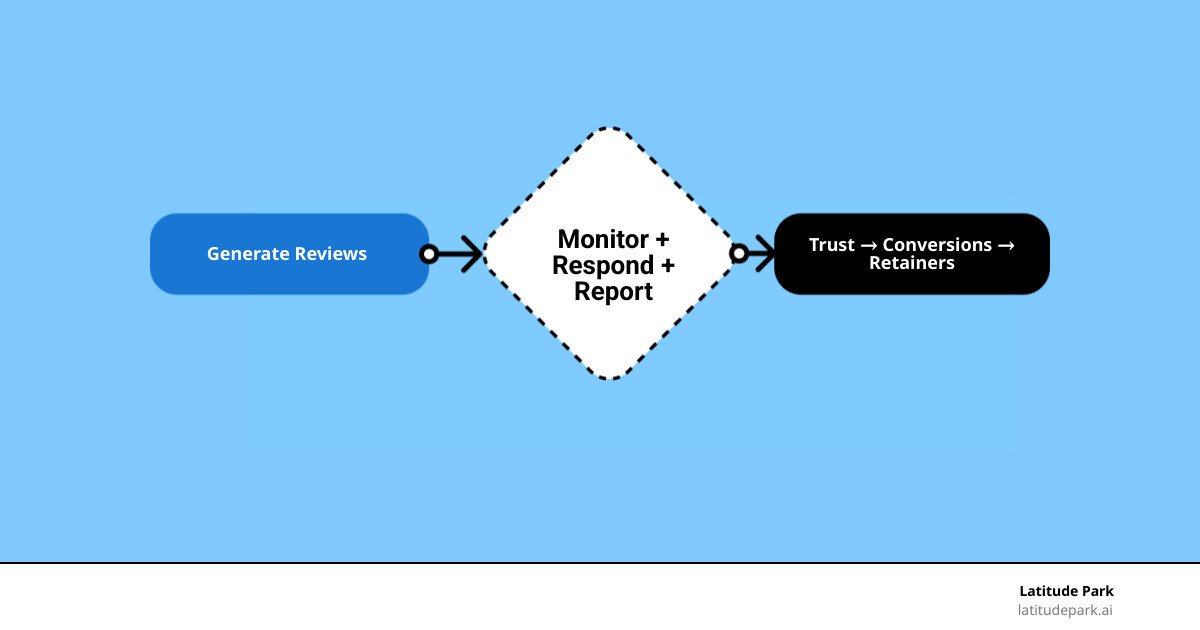
This creates a nice loop:
- More customers leave reviews.
- Better reviews improve trust.
- Stronger trust improves conversion.
- Better visibility and proof justify the retainer.
For more on this connection, read More info about earning more 5-star reviews.
Costs, Onboarding, and Choosing the Right White Label Reputation Management Platform
A platform might look amazing in a demo and still be a terrible fit. Buying well means planning rollout, margin, and operational effort.
How to get started with white label reputation management
A practical setup process usually looks like this:
- Start with a trial or demo account.
- Add brand settings, logo, colors, and domain.
- Build review request templates.
- Connect review sources and integrations.
- Import locations and user permissions.
- Launch a pilot with a few clients or locations.
- Create SOPs for invites, responses, escalations, and reports.
- Expand after proving workflow and margin.
For agencies, we recommend starting with one service package and one onboarding checklist. Standardization beats improvisation every time.
Questions to ask before signing a contract
Ask these before you commit:
- Who owns the data?
- Can we export reviews, reports, and contacts?
- Are there cancellation penalties?
- Is white labeling included or extra?
- What review sites are supported?
- Are SMS and AI billed separately?
- What does onboarding include?
- What are support hours and response times?
- Is there API or webhook access?
- How are roles and permissions handled?
- Is there roadmap visibility for future features?
- What security and compliance standards apply?
These questions help avoid the classic surprise of “great platform, unfortunate invoice.”
Best-fit recommendations by agency type
Here is how we think about fit:
- Local SEO agencies: prioritize Google review workflows, location reporting, and review widgets.
- Franchise marketing agencies: prioritize multi-location rollups, permissions, automations, and predictable pricing.
- Web design agencies: prioritize embeddable widgets and easy client dashboards.
- Consultants and freelancers: prioritize low overhead and fast setup.
- Enterprise resellers: prioritize API access, billing controls, and account hierarchy.
At Latitude Park, we care most about what works for complex multi-location organizations. That means scalable workflows, clear reporting, and a branded experience clients can trust.
Frequently Asked Questions About White Label Reputation Management
Who benefits most from white label reputation management?
The biggest winners are:
- Digital agencies
- SEO freelancers
- Web designers
- Franchise marketers
- Marketing consultants
- Reputation management resellers
- Multi-location service businesses
If you already serve local or location-based businesses, this service is a natural fit. It turns trust into a managed asset instead of leaving it to chance. You can also explore our broader resource library in Category/Online Reputation.
Is white label reputation management worth it for small agencies?
Yes, often especially for small agencies.
Why:
- Low upfront overhead compared with building software
- Fast launch
- Easy monthly retainer model
- Strong upsell path from SEO, web, or social services
- Sticky recurring value through reporting and monitoring
Review management is one of the easier recurring services to explain and sell because clients already understand the business value. For more perspective, see 11 Reasons To Hire Review Management Services For Your Business.
Can white label reputation management improve local SEO?
Yes. It supports local SEO in several ways.
- Fresh Google reviews are a local ranking signal
- Review quantity and quality influence trust
- Active responses show engagement
- Better ratings improve click-through behavior
- Reviews create keyword-rich user-generated content
Research cited above notes that Google reviews are among the top three factors affecting local pack appearance. If local visibility matters, review management belongs in the SEO conversation. For more, see More info about the benefits of Google reviews.
Conclusion: Choose a White Label Reputation Management Platform You Can Scale With
The best white label reputation management platform is not the one with the longest feature list. It is the one that fits your margins, supports your workflows, and scales with your client base.
For agencies like ours that care about multi-location growth, the right platform should provide:
- Real white labeling
- Strong review generation and monitoring
- Fast reporting
- Useful integrations
- Predictable pricing
- Support that does not disappear after onboarding
When we add reputation management the right way, we create a stronger client experience, open up recurring revenue, and make our agency harder to replace. That is good business.
If you are ready to build a branded review management offering that supports long-term growth, explore More info about review management services and our broader reputation management services.