Why Local Reputation Management Decides Who Gets the Customer
Local reputation management is the ongoing process of monitoring, responding to, and improving how your business appears across Google, review platforms, social media, and online directories — so that more potential customers choose you over the competition.
Here’s what it covers at a glance:
- Monitor — Track what customers say across Google, Yelp, Facebook, and other platforms
- Respond — Reply to reviews (positive and negative) promptly and professionally
- Generate — Actively encourage satisfied customers to leave reviews
- Optimize — Keep your business listings accurate and complete everywhere they appear
- Improve — Use customer feedback to fix real operational problems
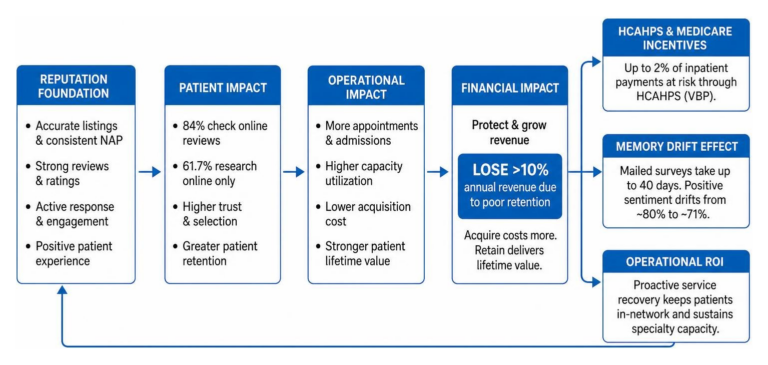
The numbers tell a clear story. 98% of consumers read online reviews before visiting a local business. And 87% won’t even consider a business with a low rating. Your Google star rating isn’t just a vanity metric — it’s the first thing a potential customer sees before they ever visit your website or walk through your door.
Think of your online reputation as your digital storefront. Just as a dirty or confusing physical storefront drives people away, a thin review profile or a string of unanswered complaints quietly kills conversions every single day.
For franchise marketing managers, the stakes are even higher. You’re not managing one reputation — you’re managing dozens or hundreds, each capable of lifting or dragging down the whole brand.
I’m Rusty Rich, President of Latitude Park, a full-service digital advertising agency I’ve built since 2009 helping small businesses and growing franchises strengthen their online presence — and local reputation management sits at the core of nearly every growth strategy we deploy. In this guide, I’ll walk you through exactly how to build, protect, and scale a winning local reputation across every location you manage.
Must-know local reputation management terms:
- automotive online reputation management
- brand reputation management social media
- local SEO review strategy
The Core Pillars of Local Reputation Management
In April 2026, the digital landscape is more crowded than ever. Managing your reputation isn’t just about “being nice” to customers; it’s a strategic defensive and offensive maneuver. We often view it as a digital shield that protects your brand from the inevitable occasional misstep while simultaneously acting as a magnet for new leads.
Building a solid foundation requires a shift in mindset. You must move from reactive “damage control” to proactive brand building. This involves a comprehensive Business Online Reputation Management Guide that integrates your offline service quality with your online persona. When these two are in sync, you create Reviews Reputation that feels authentic to the consumer.

How Online Reviews Impact Local Reputation Management and SEO
If you want to dominate your local market, you need to live in the Google 3-Pack—the top three local search results that appear on Google Maps. Research shows that businesses in the 3-Pack receive 126% more traffic and 93% more actions (calls, clicks, or direction requests) than those ranked in positions 4 through 10.
But how do you get there? Google’s algorithm prioritizes three things: relevance, distance, and prominence. Local reputation management directly feeds the “prominence” factor.
- Review Volume: Top-ranked Google Business Profiles (GBPs) average 404 reviews, while those in positions 3-5 average 280.
- Star Rating: Increasing your average by just one full star can improve your conversion rate by a staggering 44%.
- Review Freshness: For every 10 new reviews you earn, your conversion rate typically improves by 2.8%.
Understanding the Benefits Of Google Reviews is the first step toward realizing that online reviews are essential for ranking. Google trusts what your customers say more than what you say about yourself.
The Role of NAP Consistency in Local Reputation Management
NAP stands for Name, Address, and Phone number. It sounds “boring but crucial,” as some experts say, but it is the bedrock of local search visibility. If your business is listed as “LP Marketing” on Yelp, “Latitude Park” on Google, and “Lat Park” on Facebook, search engines get confused.
Inconsistent data erodes trust with both Google and your customers. Imagine a customer driving to an address listed on a secondary directory only to find an empty lot because you moved six months ago. That’s an instant 1-star review waiting to happen. We use Power Listings to ensure that your data is synchronized across the entire ecosystem of local directories, from Apple Maps to Bing and niche industry sites.
Mastering the Google Business Profile and Local Listings
Your Google Business Profile (GBP) is effectively your second homepage. In many cases, it’s the only page a customer sees before deciding to call you. Mastering local reputation management starts with claiming and fully optimizing this profile.
Start by ensuring every section is filled out—hours of operation, service areas, and specific service attributes. Use high-quality photos (businesses with photos receive 42% more requests for directions) and post regular updates. This isn’t a “set it and forget it” task; it requires active Google Reviews Management to keep the profile “warm” in the eyes of search algorithms.
Strategies for Generating High-Quality Reviews
You can’t just wait for reviews to happen. If you do, the only people who will post are the “angry 2%” who had a bad day. To build a stellar reputation, you need a system to capture the “silent majority” of happy customers.
- SMS and Email Requests: Send a friendly text or email immediately after a service is completed.
- QR Codes: Place these at your checkout counter or on receipts to make the process frictionless.
- Staff Training: Empower your team to recognize “reputation moments.” If a customer says, “Wow, this was great!”, that is the cue to ask for a review.
- Review Velocity: Aim for a steady stream of reviews rather than a sudden burst, which can look suspicious to spam filters.
We cannot overstate the importance of a proactive review strategy. When you encourage user reviews, you aren’t just getting stars; you’re getting “keyword-rich” content that helps you rank for specific services like “best HVAC repair near me.”
Leveraging Social Media and Community Involvement
Your local reputation extends beyond review sites. Being an active part of your community humanizes your brand. This includes:
- User-Generated Content (UGC): Sharing a customer’s photo of your product on your Instagram page.
- Local Partnerships: Collaborating with a neighboring non-competing business for a cross-promotion.
- Event Sponsorship: Sponsoring a local Little League team or a charity 5K.
These actions create “social proof” that builds empathy and loyalty. Our Social Marketing Reputation Guide highlights how managing your brand on social media creates a feedback loop that supports your local SEO efforts.
Professional Response Strategies for Positive and Negative Feedback
How you respond to a review is often more important than the review itself. Over 90% of consumers are influenced by owner responses. A thoughtful response to a 1-star review can actually build more trust than a dozen 5-star reviews with no replies.
| Star Rating | Response Strategy | Key Goal |
|---|---|---|
| 5-Stars | Thank them by name, mention a specific detail they liked, and invite them back. | Reinforce loyalty and boost SEO with keywords. |
| 4-Stars | Thank them and ask what could have made the experience a 5-star one. | Show commitment to perfection. |
| 1-3 Stars | Apologize (even if you aren’t wrong), stay professional, and offer to take it offline. | Publicly demonstrate integrity and resolve the issue. |
Speed matters. 40% of consumers expect a response to a negative review within 24 hours. Use an Online Review Management Complete Guide to develop templates that keep your tone consistent. When you learn how to manage online reviews, you are writing for the next customer who reads the exchange, not just the disgruntled reviewer.
Identifying and Reporting Fake or Spam Reviews
Not every negative review is legitimate. Sometimes, competitors or disgruntled former employees may post fake content. Google has clear policies against “Conflict of Interest” and “Spam and Fake Content.”
If you encounter a suspicious review (e.g., the reviewer has never visited your area, or they’ve posted the same 1-star review for five different businesses in the same hour), document it thoroughly. Use our Reputation Management Ultimate Guide to follow the official reporting and appeals process. Never engage in a “flame war” with a troll; let the platform’s moderation tools do the work.
Using Feedback to Improve Operations and Experience
Negative reviews are actually free business intelligence. If five people complain that your front desk staff is rude or that your waiting room is cold, you don’t have a “reputation problem”—you have an “operational problem.”
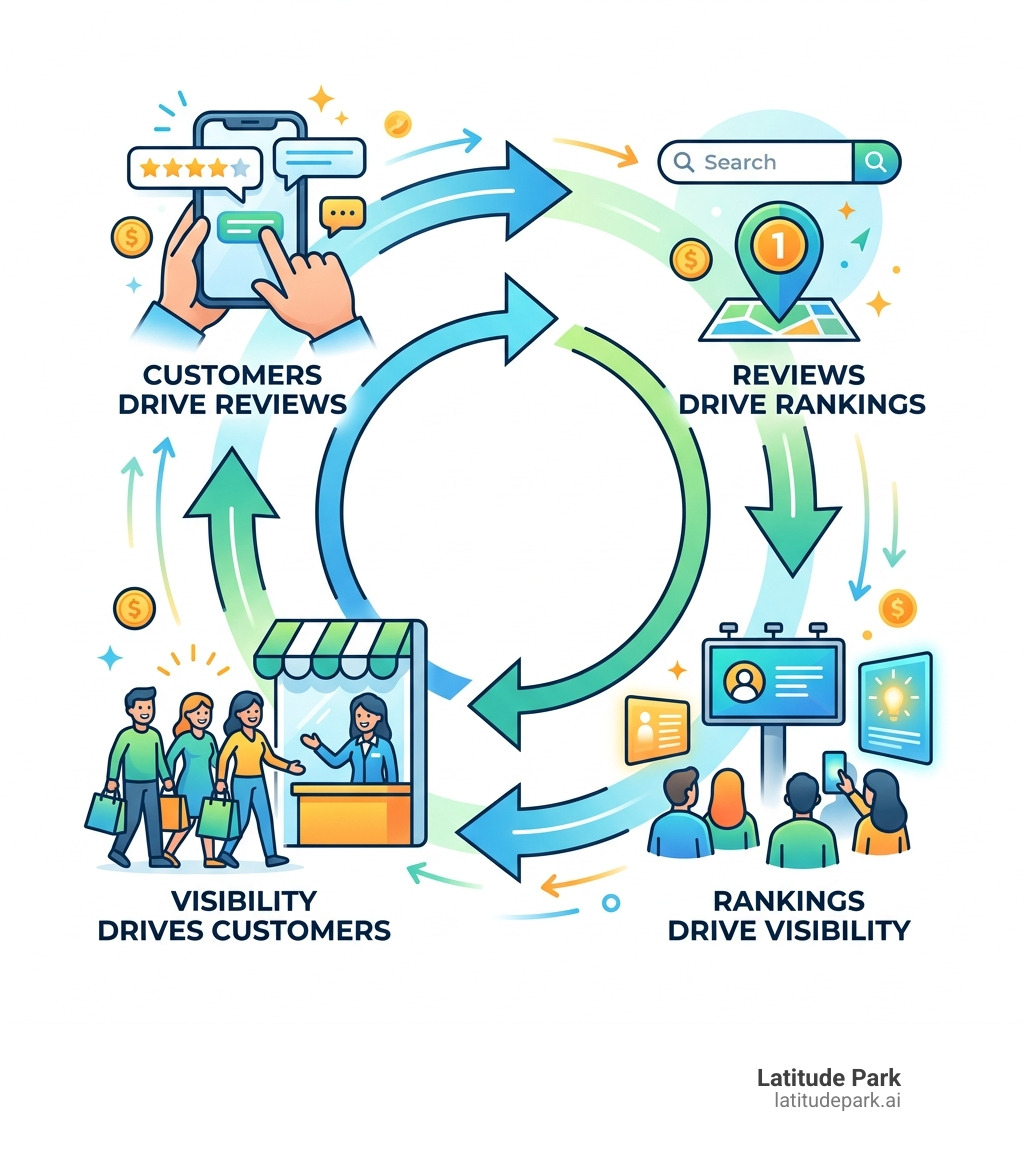
By performing sentiment analysis on your reviews, you can identify structural fixes that improve the customer experience. This is the “growth loop” in action: fixing the issue leads to better service, which leads to better reviews, which leads to better rankings. This is a core part of building and managing a brand’s online reputation.
Scaling Reputation for Multi-Location Businesses
Managing local reputation management for a single shop is one thing; doing it for 500 franchise locations is another beast entirely. Multi-location brands face the challenge of maintaining brand consistency while allowing for local flavor.
We recommend using centralized dashboards that offer:
- Role-Based Access: Allow local managers to respond to reviews while corporate maintains oversight.
- Aggregated Reporting: See which regions are underperforming in star ratings.
- Brand Voice Control: Provide approved response templates to ensure a consistent small business reputation.
Working with an Online Review Management Agency can help bridge the gap between corporate goals and local execution.
Common Mistakes to Avoid in Local Reputation Marketing
Even with the best intentions, businesses often stumble. Here are the “deadly sins” of reputation management:
- Incentivizing Reviews: Offering discounts or gifts for 5-star reviews is a violation of Google’s terms and can lead to profile suspension.
- Being Defensive: Arguing with a customer in public makes you look petty, even if you’re right.
- Ignoring Reviews: Silence is a statement. It tells potential customers you don’t care.
- Inconsistent NAP: As discussed, don’t let your data get messy.
Check out our Online Review Management For Dummies guide for a deeper dive into these common pitfalls.
Tools and Software for Monitoring at Scale
In 2026, manual monitoring is no longer feasible. You need tools that offer:
- Automated Alerts: Get notified the second a review is posted.
- AI Review Listening: Use AI to summarize the “vibe” of thousands of reviews instantly.
- Competitive Tracking: Monitor up to five local competitors to see how your “RepScore” stacks up.
Finding the top solutions to manage online reviews will save your team hundreds of hours and ensure no customer feedback falls through the cracks.
Frequently Asked Questions about Local Reputation
How long does it take to see results from reputation management?
Most businesses see measurable improvements in search visibility and map views within 30 to 60 days. However, the impact is compounding. As your review volume grows and your data stays accurate, your rankings will stabilize and your call volume will steadily increase.
Can I offer discounts in exchange for Google reviews?
No. This is a major policy violation. Google and other platforms like Yelp are very strict about “review gating” or incentivizing feedback. Instead, focus on making the request easy and ethical. Most customers are happy to leave a review if you simply ask them at the right time.
When should I hire a professional reputation service?
You should consider professional help if you are managing multiple locations, if your brand has suffered severe reputational damage (like a PR crisis), or if your team simply lacks the bandwidth to respond to reviews within 24 hours. There are at least 11 reasons to hire review management services that can help you scale faster than doing it DIY.
Conclusion
At Latitude Park, we know that local reputation management is the engine that drives local growth. Whether you are a single-location small business or a sprawling franchise, your online reputation is your most valuable asset. By combining operational excellence with a proactive digital strategy, you can turn your “digital storefront” into a lead-generation machine.
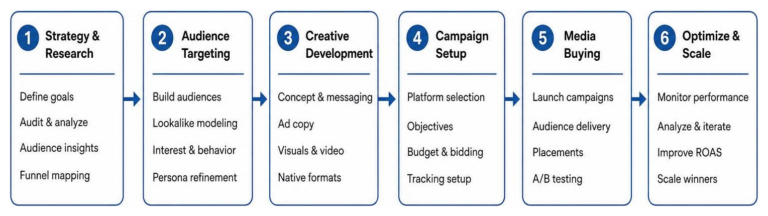
We specialize in franchise marketing, helping multi-location businesses navigate the complexities of Meta advertising and tailored campaign structures. If you’re ready to take control of your stars and start winning the local search game, we’re here to help.