Why People Don’t Want to Buy Reputation Management Software (And Why They’re Wrong)
Why Most Businesses Are Sleeping on Reputation Monitoring Software
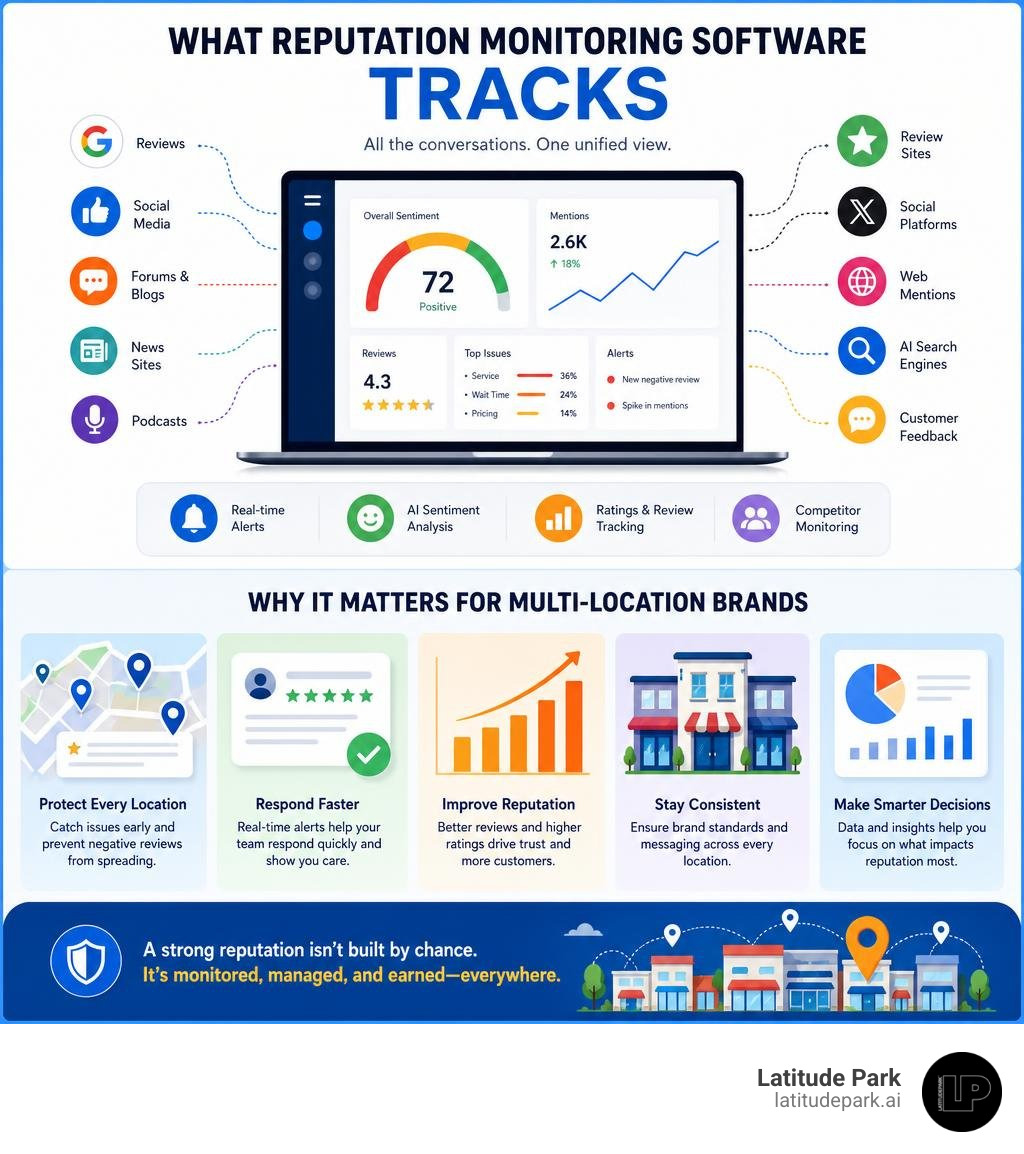
Reputation monitoring software is a tool that automatically tracks what people say about your brand across the web — reviews, social media, news, AI search engines, and more — and alerts you so you can respond before small problems become big ones.
Here’s what it does in plain terms:
- Collects mentions of your brand from dozens of channels into one dashboard
- Scores sentiment (positive, neutral, negative) using AI
- Sends real-time alerts when something needs your attention
- Tracks star ratings, review volume, and competitor performance over time
- Helps teams respond faster and stay consistent across every location
Think about the last time a customer left a one-star review that sat unanswered for a week. Or a complaint that went viral before anyone on your team noticed. For franchise and multi-location brands, that kind of blind spot isn’t just embarrassing — it’s expensive. Research shows that improving reputation performance can generate over $108,000 in measurable value per location. Yet many marketing managers still rely on manual tracking, spreadsheets, or the occasional Google Alert to stay on top of their brand’s online presence.
That gap between what’s possible and what most businesses actually do is exactly what this guide addresses.
I’m Rusty Rich, President of Latitude Park, a full-service digital advertising agency, and I’ve spent years helping franchises and growing businesses use reputation monitoring software to protect their brand and drive real revenue. In the sections ahead, I’ll cut through the common objections and show you what modern tools actually do — and why the cost of not using them is far higher than the cost of the software itself.
Reputation monitoring software word roundup:
The Misconceptions Blocking Investment in Reputation Monitoring Software
When we talk to business owners and franchise marketing directors, we often hear the same objections. “It’s too expensive,” “We don’t have the time to learn another tool,” or “We’re already keeping an eye on things.”
These objections usually stem from a misunderstanding of what modern reputation monitoring software actually does. Many decision-makers assume these tools are just glorified notification systems that send an email whenever someone types their brand name. In reality, modern platforms serve as operational nerve centers. They don’t just find mentions; they organize workflows, analyze emotional nuances, and help you scale your operations.
By letting these misconceptions dictate your strategy, you leave your brand vulnerable to sudden public relations crises, declining local search rankings, and lost revenue. To build a sustainable brand in 2026, you must understand how to win at local marketing. For a deeper look at this strategy, check out The Essential Guide to Winning Local Reputation Marketing.
“We Can Just Track Mentions Manually”
The “manual tracking” argument is one of the most common traps businesses fall into. On paper, it sounds simple: have an intern or a customer service representative check Google, Facebook, and Yelp once a day.
In practice, manual tracking is a recipe for missed opportunities and delayed responses. Here is why manual tracking fails:
- Human Error and Burnout: Checking dozens of websites every day is tedious. It is incredibly easy for a team member to miss a review buried on a secondary site or overlook a negative comment on an older social media post.
- The Speed Gap: In 2026, customers expect near-instant responses. If a critical review sits unanswered for 24 to 48 hours because your team only checks platforms on weekdays, the damage is already done.
- Hidden Channels: Your customers aren’t just talking on Google and Yelp. They are discussing your brand on Reddit, public Telegram channels, industry-specific forums, and online news portals. Tracking these manually across the web is practically impossible.
Relying on manual tracking means you are always playing defense—and you are usually playing it too late. To understand how to transition away from manual tracking, read our Online Review Management Complete Guide.
“It’s Too Expensive for Our Business”
Many businesses view reputation monitoring software as an administrative expense rather than an investment that drives ROI. They look at the monthly subscription fee and see a cost center.
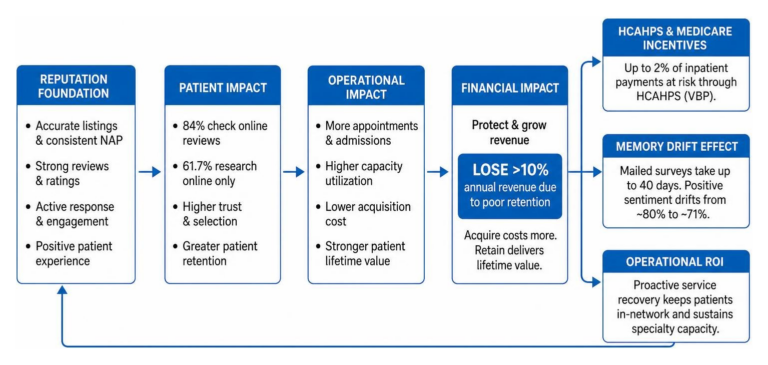
However, the data tells a completely different story. Implementing dedicated reputation software creates measurable financial value. Across multi-location brands, higher reputation performance has been shown to create $108,000 in measurable value per location through increased customer acquisition, better retention, and improved local search visibility.
When you fail to manage your reviews, you lose customers to competitors who look more reliable online. A single star rating increase can directly impact your bottom line. To learn how automated tools pay for themselves, read Why Review Management Is the Secret Weapon for Small Business.
How Modern Reputation Monitoring Software Actually Works
Modern reputation software does not simply scrape the web for your brand name. It uses sophisticated data pipelines, natural language processing (NLP), and API integrations to build a real-time map of your brand’s digital presence.
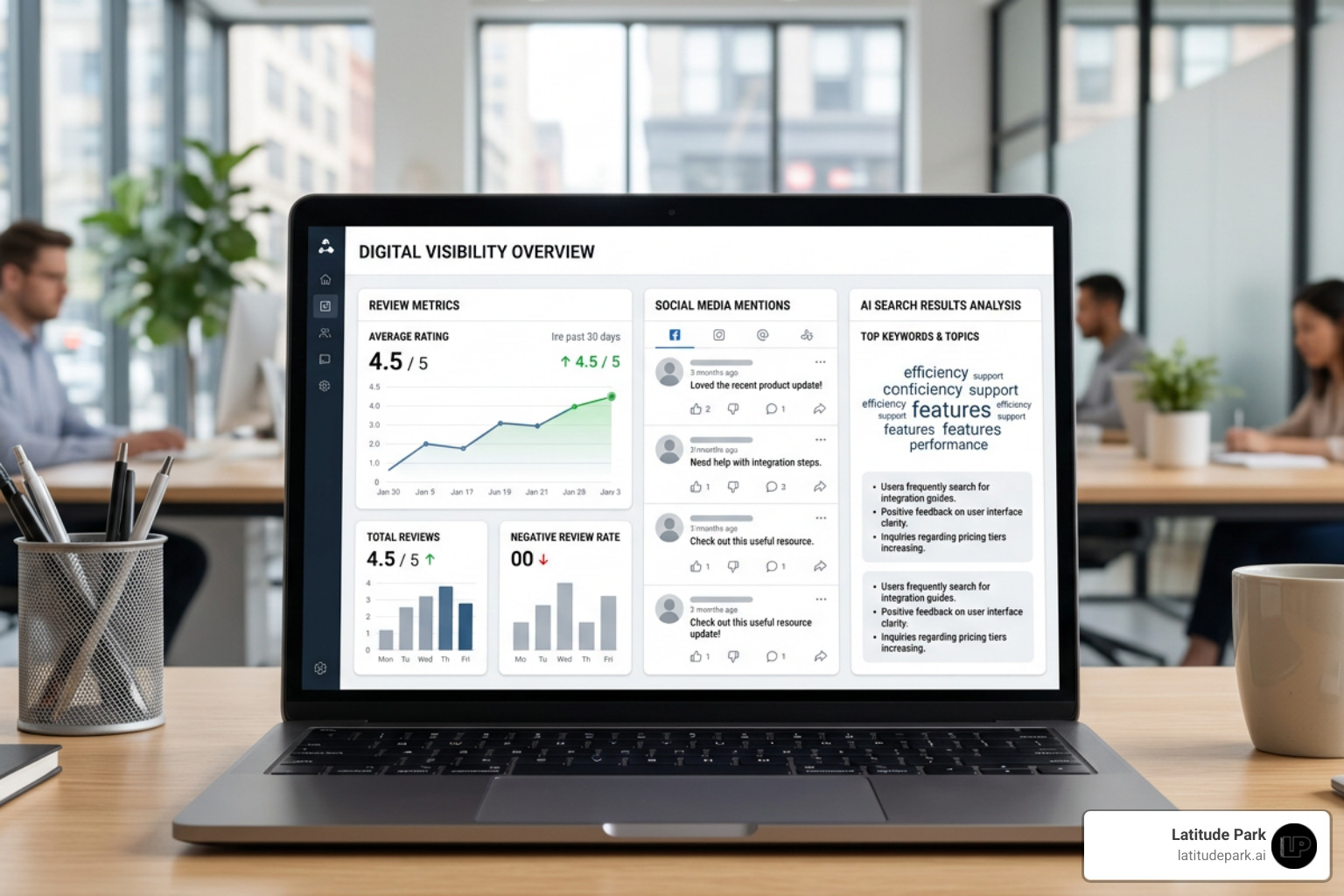
When a customer posts a review, writes a blog post, or mentions your brand in a podcast, the software captures the data point immediately. It then parses the text to understand who said it, where they said it, how many people saw it, and whether the sentiment was positive, negative, or neutral. This data is then routed to a centralized inbox where your team can address it based on pre-set priority rules.
Core Features of Modern Reputation Monitoring Software
To understand the value of these platforms, it helps to look at the core features that set professional software apart from basic tracking:
- Review Aggregation: Pulls reviews from hundreds of platforms—including Google, Facebook, Yelp, Trustpilot, and industry-specific sites—into a single, unified inbox.
- Automated Review Generation: Sends automated, personalized feedback requests via SMS or email immediately after a customer transaction to consistently generate fresh, positive reviews.
- NLP Sentiment Analysis: Uses Natural Language Processing to automatically categorize feedback by emotion (such as joy, anger, or frustration) and topic, pointing out exactly what customers love or dislike about your business.
- Workflow and SLA Tracking: Allows enterprise and franchise teams to assign reviews to specific locations, set response deadlines (SLAs), and track internal resolution times.
Platforms like Reptor — AI-Powered Reputation Monitoring and operational tools like the Aiplex Bridge Reputation Management Platform demonstrate how these features work together to keep brands in control. For a broader overview of how these platforms fit into your business, read our Business Online Reputation Management Guide.
The Role of AI in Reputation Monitoring Software
By 2026, artificial intelligence has fundamentally changed how we monitor brand perception. Traditional tools only tracked written text on standard search engines and social media networks. Today, AI-driven reputation software covers emerging channels that were previously complete blind spots.
For example, platforms like Reptor — AI-Powered Reputation Monitoring now monitor AI search engines such as ChatGPT, Gemini, Perplexity, and Claude. When a potential customer asks an LLM, “What is the best franchise marketing agency in my area?” or “Are there any complaints about this company?”, the software tracks how your brand is represented in those AI-generated answers.
AI also monitors real-time autocomplete suggestions on search engines, tracking when negative terms like “scam,” “lawsuit,” or “complaints” begin to trend alongside your brand name. Furthermore, advanced AI tools can now listen to audio podcasts, scanning transcripts to detect spoken brand mentions with exact timestamps.
If a negative mention does slip through, smart platforms like Wisseo’s Brand Monitoring Tool go a step further by using AI to generate prioritized action plans and custom removal drafts for high-authority negative mentions.
The Real Business Value: Protecting and Improving Your Brand
The ultimate goal of reputation monitoring is to build trust. Trust is the primary engine behind customer loyalty, local search engine optimization (SEO), and conversion rates.
When your business consistently monitors and responds to online feedback, you see a direct lift in your public metrics. For example, brands that implement dedicated reputation systems routinely see their overall star ratings jump from a 4.2 to a 4.6 average. In highly competitive local markets, that decimal shift is often the difference between ranking in Google’s Local Pack or being pushed to page two.
| Feature / Capability | Manual Tracking | Automated Software |
|---|---|---|
| Response Speed | Slow (often 24-48+ hours) | Real-time (often under 15 minutes) |
| Channel Coverage | Limited to 3-4 major platforms | 20+ channels (including AI, podcasts, forums) |
| Sentiment Analysis | Subjective, manual sorting | Automated NLP emotion & topic tracking |
| Workflow Management | Spreadsheets and messy emails | Built-in ticketing, SLAs, and approvals |
| Review Generation | Inconsistent, manual requests | Automated SMS/Email post-transaction campaigns |
These improvements aren’t just limited to retail and home services. In healthcare networks, centralizing listings and managing patient feedback has driven average ratings from a mediocre 3.3 up to an impressive 4.8 stars. To explore strategies for building this level of brand trust, read our guide on Effective Strategies Building Managing Brand Online Reputation.
Crisis Management and Real-Time Alerts
A single unaddressed issue can quickly spiral into a full-blown brand crisis. If a customer posts a highly critical video or a regulatory concern goes live on a news portal, your PR team needs to know immediately—not tomorrow morning.
Modern reputation software acts as an early warning system. By using anomaly detection, the software monitors spikes in mention volume or sudden drops in sentiment. If the system detects an unusual pattern, it triggers an instant alert.
For larger organizations, platforms like Hootsuite’s Reputation Management Tools and Brand24’s Media Monitoring Software allow teams to set up structured escalation policies. This ensures that critical customer service issues are routed to support agents, while high-stakes media mentions go straight to the PR and legal teams. To learn how to integrate these workflows into your social strategy, read the Social Marketing Online Reputation Management Guide.
Multi-Location and Franchise Brand Benefits
For franchise networks and multi-location brands, reputation management is exceptionally complex. You aren’t just managing one corporate brand; you are managing the individual reputations of dozens, hundreds, or thousands of local business listings.
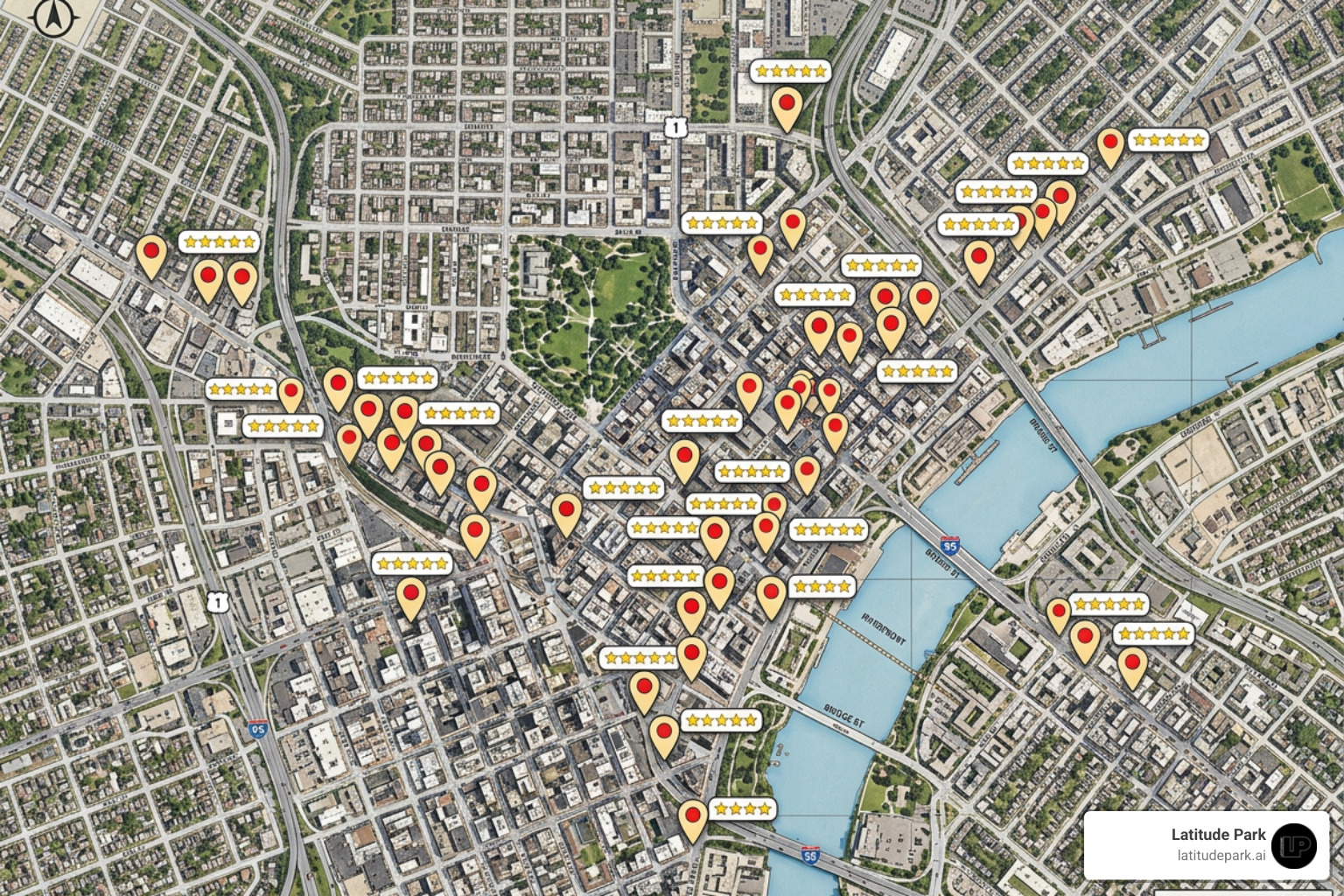
Without centralized software, corporate marketing teams have no way of knowing if local managers are responding to reviews, keeping their business listings accurate, or maintaining brand standards. Reputation software solves this by providing a “hub-and-spoke” model:
- Corporate Dashboard: Gives executives a bird’s-eye view of all locations, showing overall sentiment, response rates, and local search rankings.
- Local Access: Gives individual franchise owners or local managers the tools to respond to their own reviews, using pre-approved templates to maintain brand consistency.
- Listing Accuracy: Automatically updates operating hours, addresses, and phone numbers across all major directories to prevent customer confusion.
This structure ensures that every location benefits from corporate brand equity while maintaining the local touch necessary to win search rankings. To learn how to select the right platform for your multi-location business, read Your Business’s Digital Shield: Picking the Perfect Online Reputation Partner. For social-specific strategies, see our guide on Brand Reputation Management Social Media.
Frequently Asked Questions About Reputation Monitoring
To help you make an informed decision, we’ve compiled answers to some of the most common questions businesses ask when researching reputation tools.
What is the difference between reputation monitoring and social listening?
While they sound similar, reputation monitoring and social listening serve different purposes:
- Social Listening: Focuses on broad market research, tracking industry trends, generic keywords, and competitor mentions to understand overall market sentiment. It is primarily analytical.
- Reputation Monitoring: Focuses on direct, actionable brand interactions. It pulls in specific reviews, direct mentions, and customer feedback, routing them into structured ticketing workflows with SLAs so your team can respond and resolve issues in real time.
Which industries benefit the most from reputation software?
Any business that relies on local search or public trust benefits from reputation software, but some industries find it absolutely essential:
- Franchises and Multi-Location Retail: Where local search rankings and brand consistency across regions are critical for driving foot traffic.
- Healthcare and Medical Practices: Where maintaining patient trust and HIPAA-compliant communication is paramount.
- Hospitality and Restaurants: Where star ratings directly dictate weekend booking rates and customer volume.
To see how different platforms stack up across these industries, read our guide on the Top Sites for Managing Your Online Reputation Without Losing Your Mind.
What metrics and KPIs should we track?
To measure the success of your reputation efforts, we recommend tracking these key performance indicators:
- Net Promoter Score (NPS) Improvement: Tracking how converting customer feedback into direct business changes raises your overall customer satisfaction. Many brands see their NPS jump from a 24 to a 39 after implementing structured feedback loops.
- Average Star Rating: Aim to move your average rating into the 4.5 to 4.8 range, which maximizes conversion rates on local search directories.
- Response Time: Measure how quickly your team responds to negative feedback. Getting your response time under two hours significantly improves customer retention.
- Share of Voice (SoV): Track how often your brand is mentioned compared to your local competitors across news, social media, and AI search results.
For practical tips on driving these metrics up, check out Five-Star Secrets: Top Solutions to Manage Online Reviews.
Conclusion
In 2026, your online reputation is your most valuable asset. It shapes how search engines rank your locations, how AI models describe your services, and whether a potential customer decides to click your website or walk through your doors. Relying on manual tracking or ignoring your online feedback is no longer a viable business strategy.
Implementing reputation monitoring software is not an administrative cost—it is a strategic growth engine that protects your brand, coordinates your teams, and drives measurable revenue.
At Latitude Park, we specialize in helping multi-location franchise brands scale their digital presence. From advanced Meta (Facebook) advertising campaigns to comprehensive review acquisition strategies, we build tailored marketing structures that address the unique needs of franchise networks. Ready to take control of your brand’s online narrative and turn customer feedback into a revenue driver?
Get Started with Review Management today and see how Latitude Park can help your franchise grow.